Laboratory of Plant Physiology, Department of Biology and Plant Ecology, Faculty of Biology, University of Bialystok, 15-245 Bialystok, Poland.
Department of Botany, Institute of Biology, Warsaw University of Life Sciences-SGGW, 02-787 Warsaw, Poland.
Int J Mol Sci. 2021 Aug 5;22(16):8435. doi: 10.3390/ijms22168435.
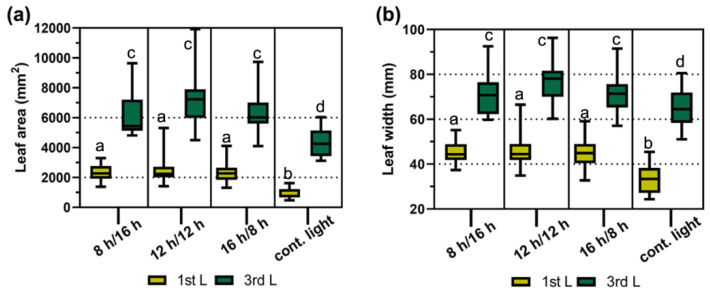
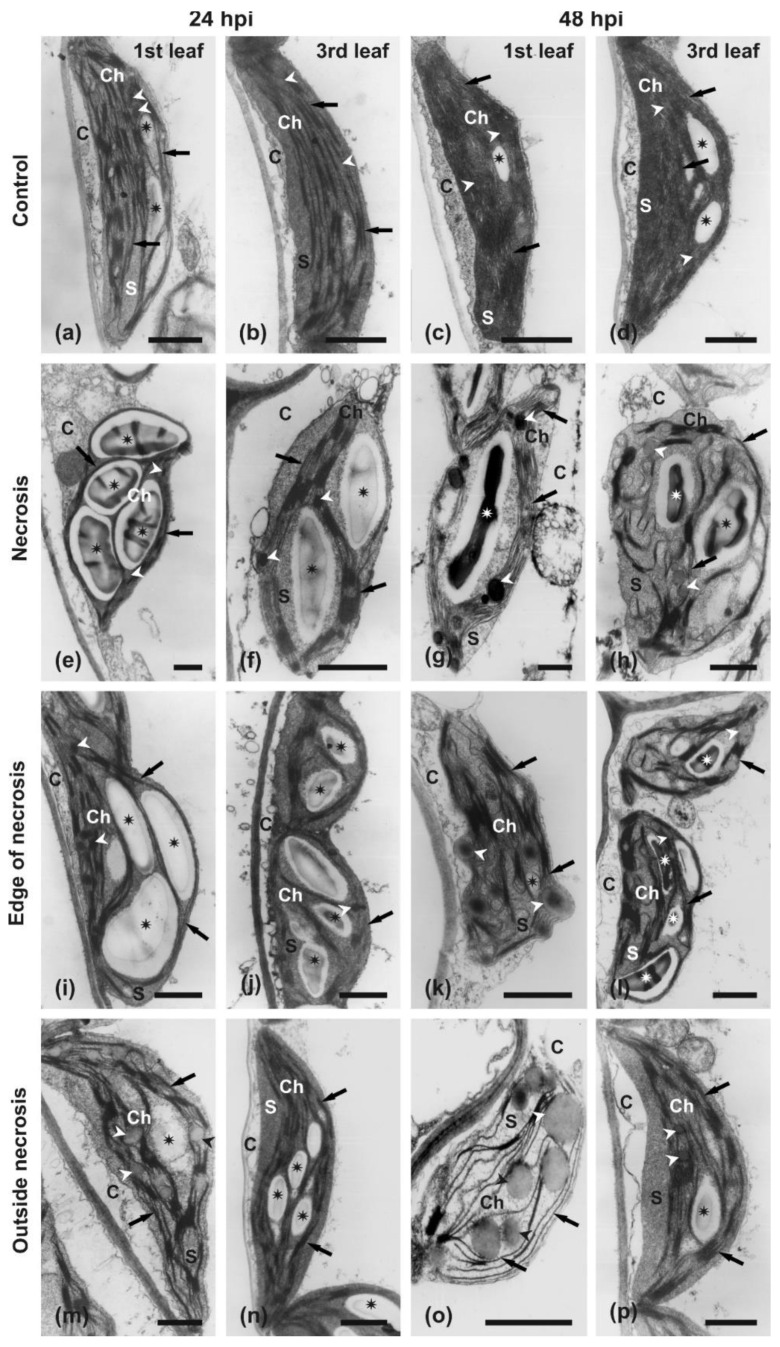
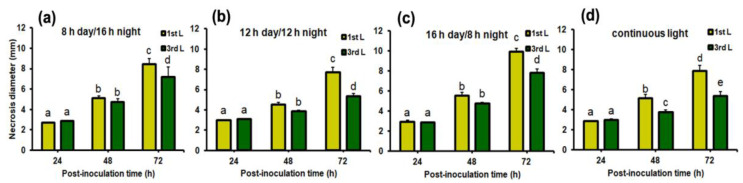
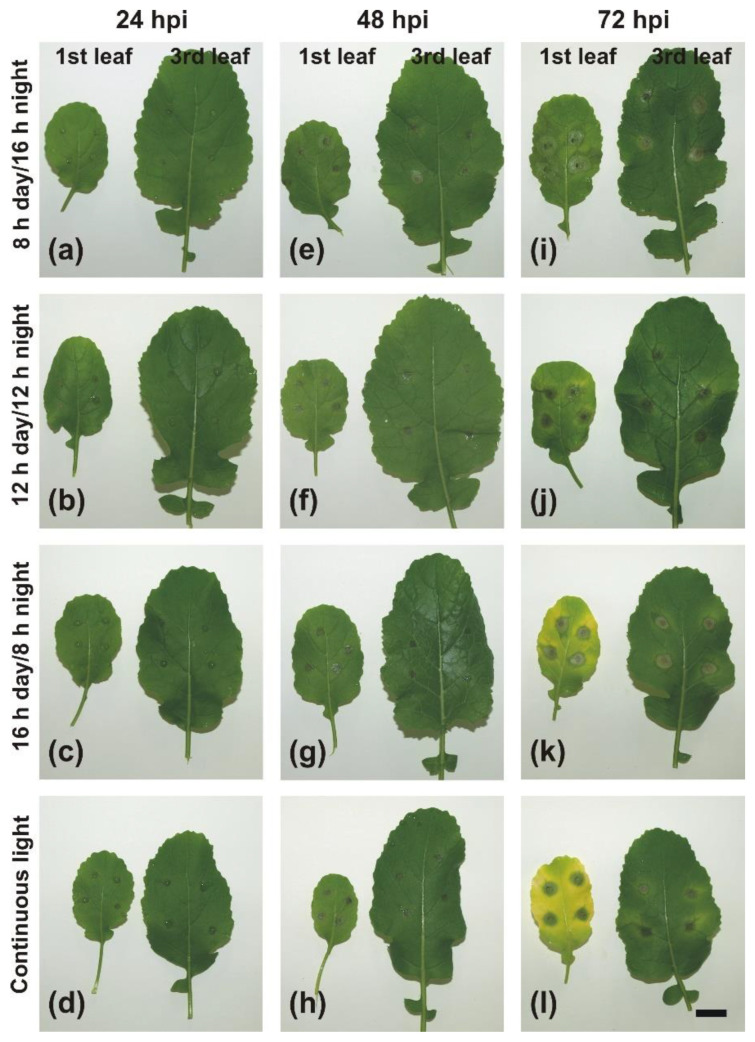
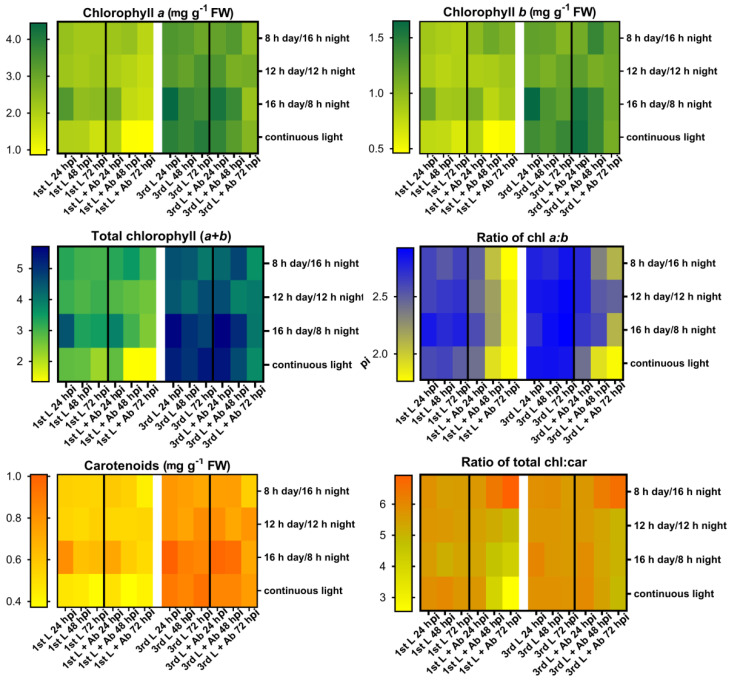
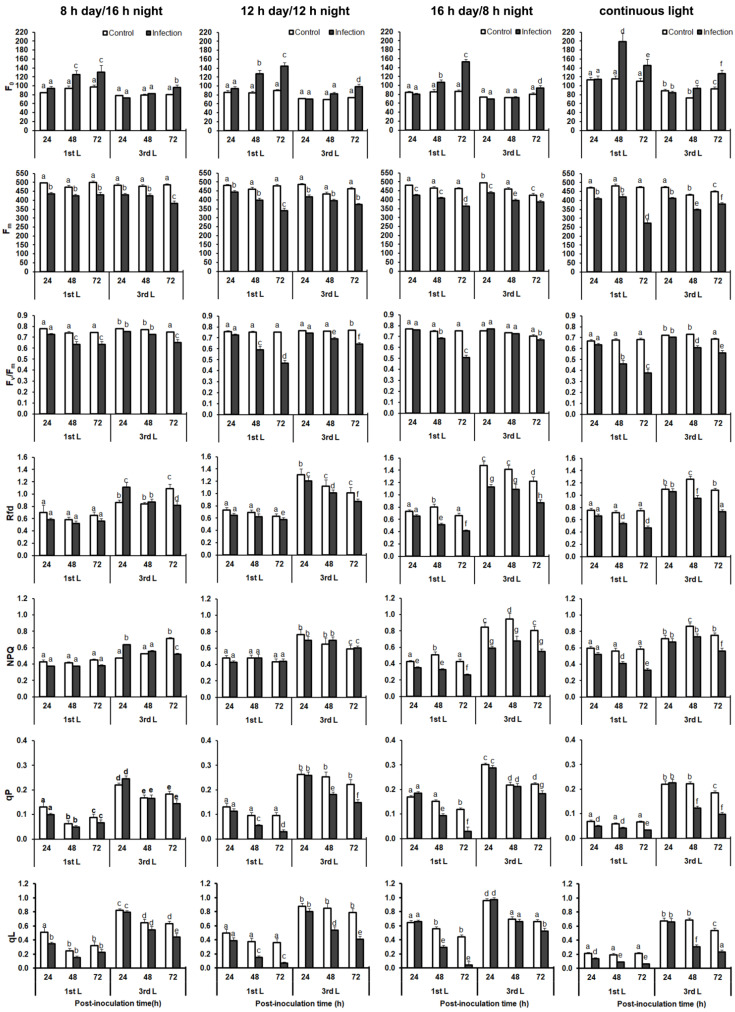
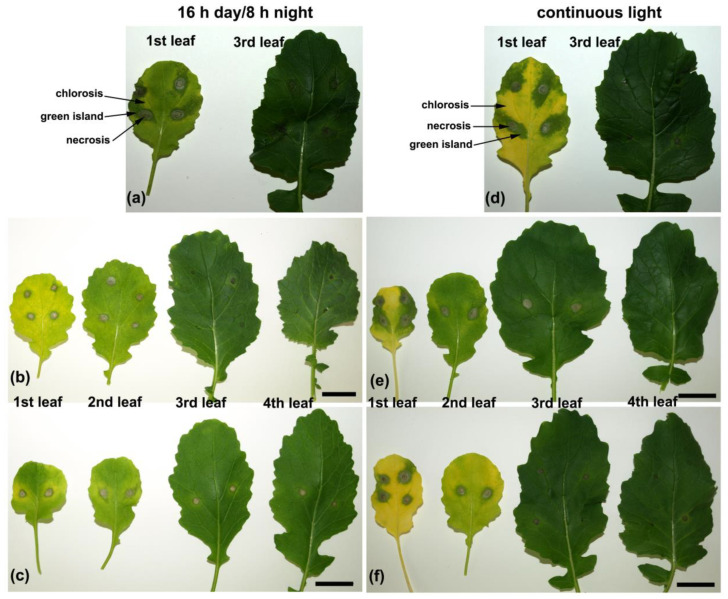
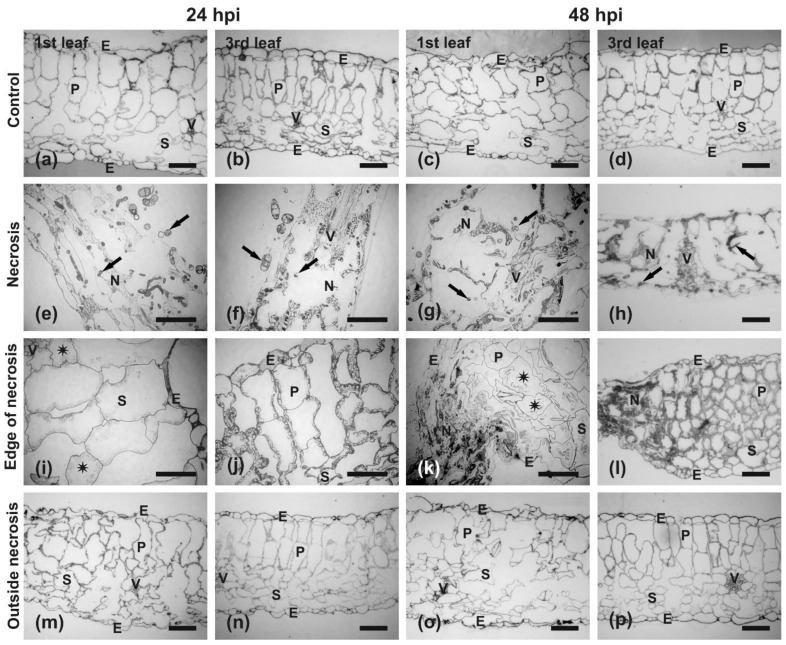
The main goal of growing plants under various photoperiods is to optimize photosynthesis for using the effect of day length that often acts on plants in combination with biotic and/or abiotic stresses. In this study, plants were grown under four different day-length regimes, namely., 8 h day/16 h night, 12 h day/12 h night, 16 h day/8 h night, and continuous light, and were infected with a necrotrophic fungus . The development of necroses on leaves was strongly influenced by leaf position and day length. The largest necroses were formed on plants grown under a 16 h day/8 h night photoperiod at 72 h post-inoculation (hpi). The implemented day-length regimes had a great impact on leaf morphology in response to infection. They also influenced the chlorophyll and carotenoid contents and photosynthesis efficiency. Both the 1st (the oldest) and 3rd infected leaves showed significantly higher minimal fluorescence (F) compared to the control leaves. Significantly lower values of other investigated chlorophyll fluorescence parameters, e.g., maximum quantum yield of photosystem II (F/F) and non-photochemical quenching (NPQ), were observed in both infected leaves compared to the control, especially at 72 hpi. The oldest infected leaf, of approximately 30% of the plants, grown under long-day and continuous light conditions showed a 'green island' phenotype in the form of a green ring surrounding an area of necrosis at 48 hpi. This phenomenon was also reflected in changes in the chloroplast's ultrastructure and accelerated senescence (yellowing) in the form of expanding chlorosis. Further research should investigate the mechanism and physiological aspects of 'green islands' formation in this pathosystem.
在不同光周期下种植植物的主要目标是优化光合作用,以利用通常与生物和/或非生物胁迫相结合作用于植物的日照长度效应。在这项研究中,植物在四种不同的日长制度下生长,分别是 8 小时光照/16 小时黑暗、12 小时光照/12 小时黑暗、16 小时光照/8 小时黑暗和连续光照,并感染了一种坏死型真菌。叶片坏死的发展强烈受到叶片位置和日长的影响。在接种后 72 小时(hpi),在 16 小时光照/8 小时黑暗光周期下生长的植物上形成的坏死最大。实施的日长制度对感染后叶片形态有很大影响。它们还影响叶绿素和类胡萝卜素含量以及光合作用效率。与对照叶片相比,第 1 片(最老的)和第 3 片感染叶片的最小荧光(F)明显更高。与对照相比,在感染叶片中还观察到其他研究的叶绿素荧光参数的显著更低值,例如,光合作用系统 II 的最大量子产量(F/F)和非光化学猝灭(NPQ),尤其是在 72 hpi 时。在长日和连续光照条件下生长的大约 30%的植物中,最老的感染叶片在 48 hpi 时表现出“绿岛”表型,形成一个绿色环围绕坏死区域。这种现象也反映在叶绿体超微结构的变化和以扩展黄化为形式的加速衰老(变黄)中。进一步的研究应该调查这种病理系统中“绿岛”形成的机制和生理方面。