Department of Science in Korean Medicine, Kyung Hee University, 24 Kyungheedae-ro, Dongdaemun-gu, Seoul 02447, Korea.
Department of Pharmacology, Yong Loo Lin School of Medicine, National University of Singapore, Singapore 117600, Singapore.
Int J Mol Sci. 2022 Aug 30;23(17):9848. doi: 10.3390/ijms23179848.
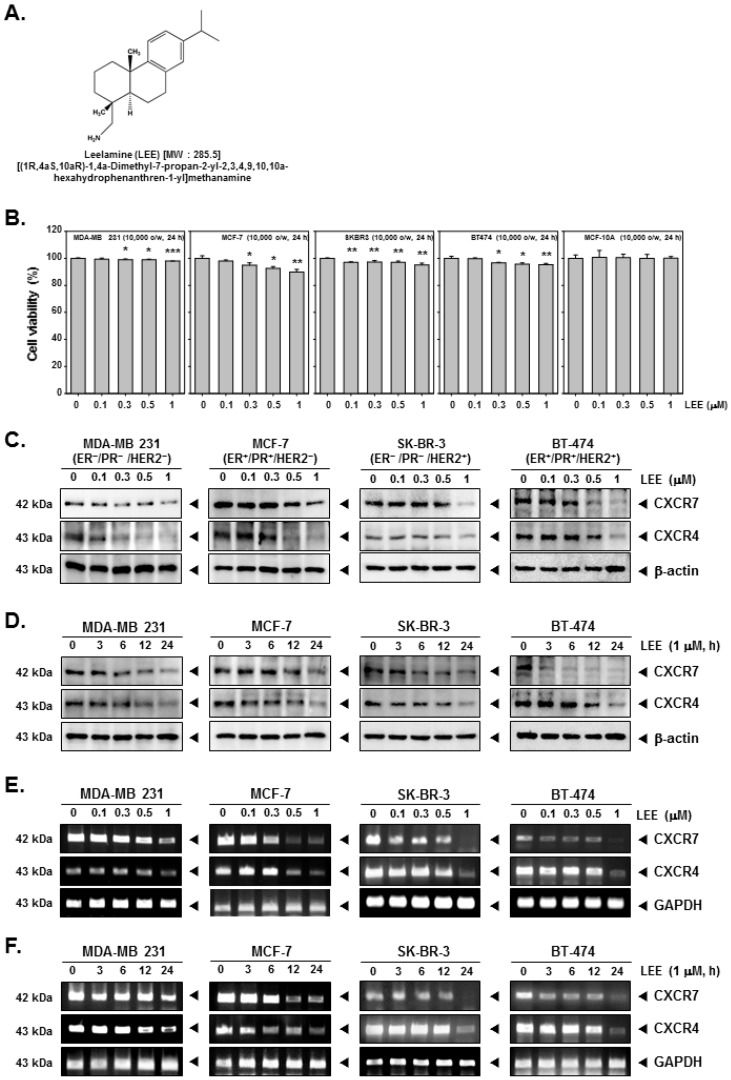
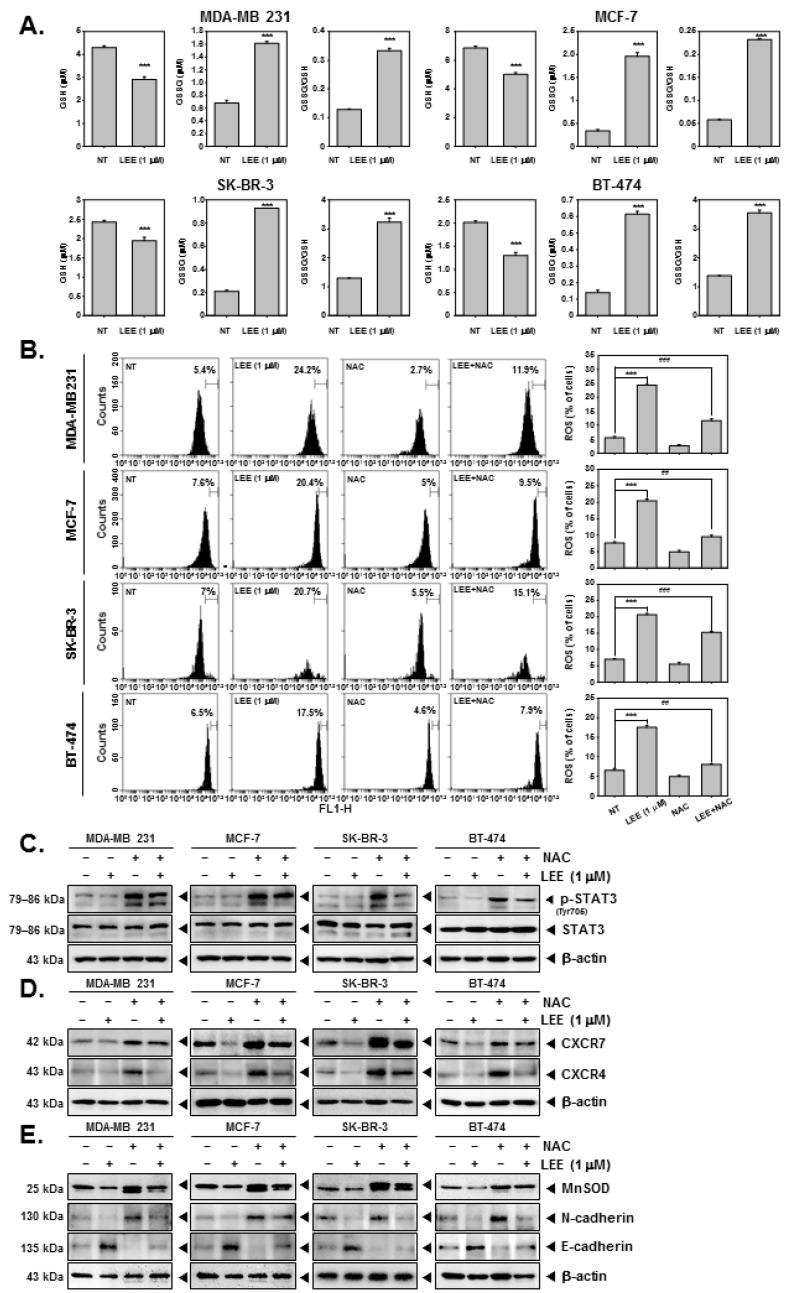
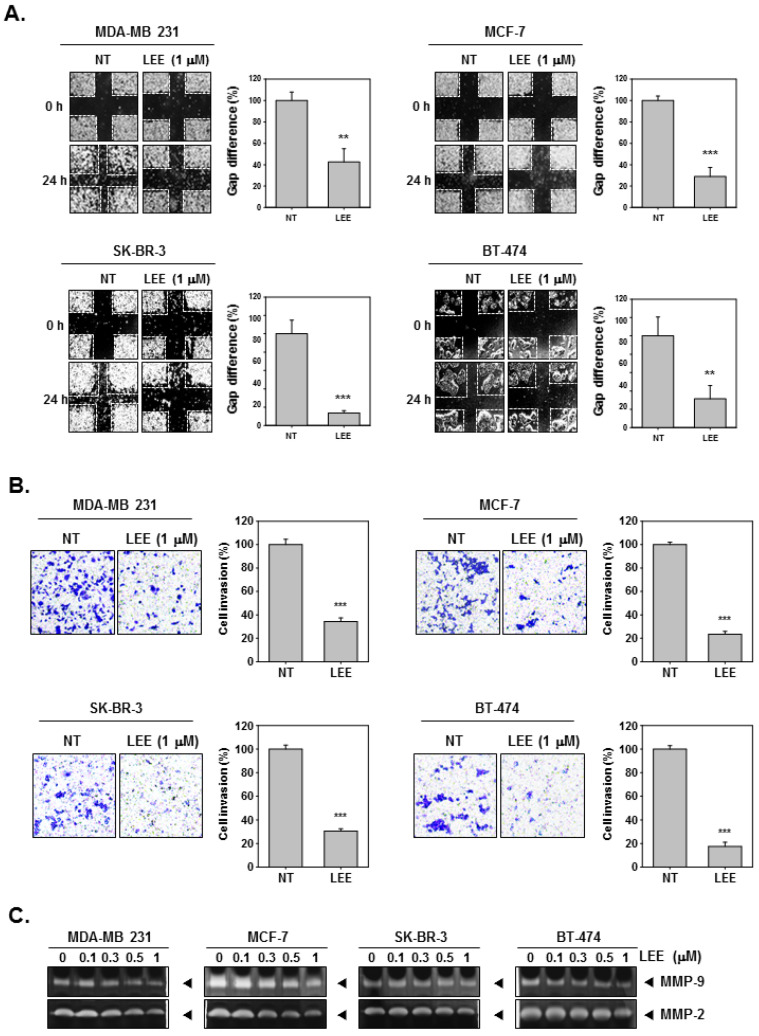
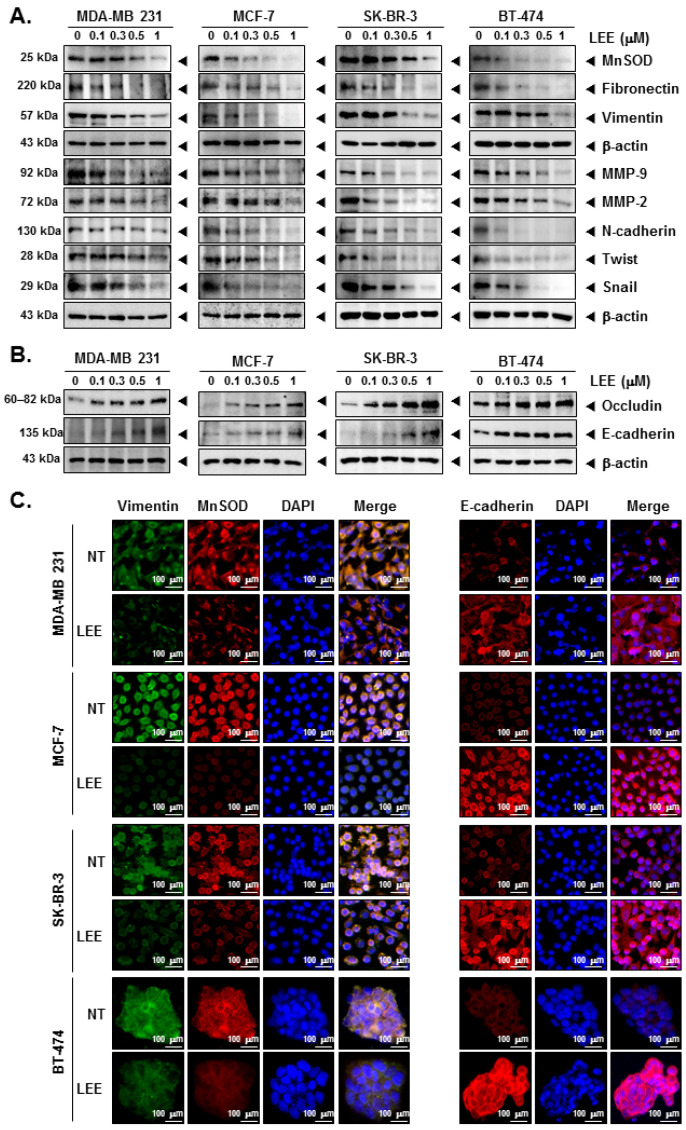
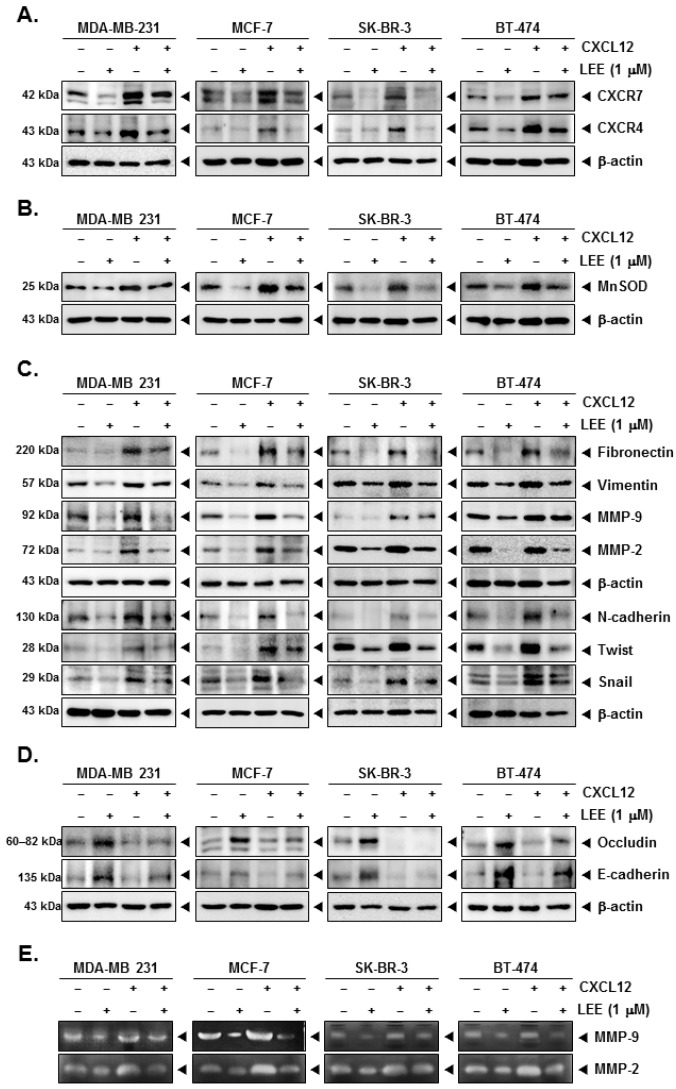
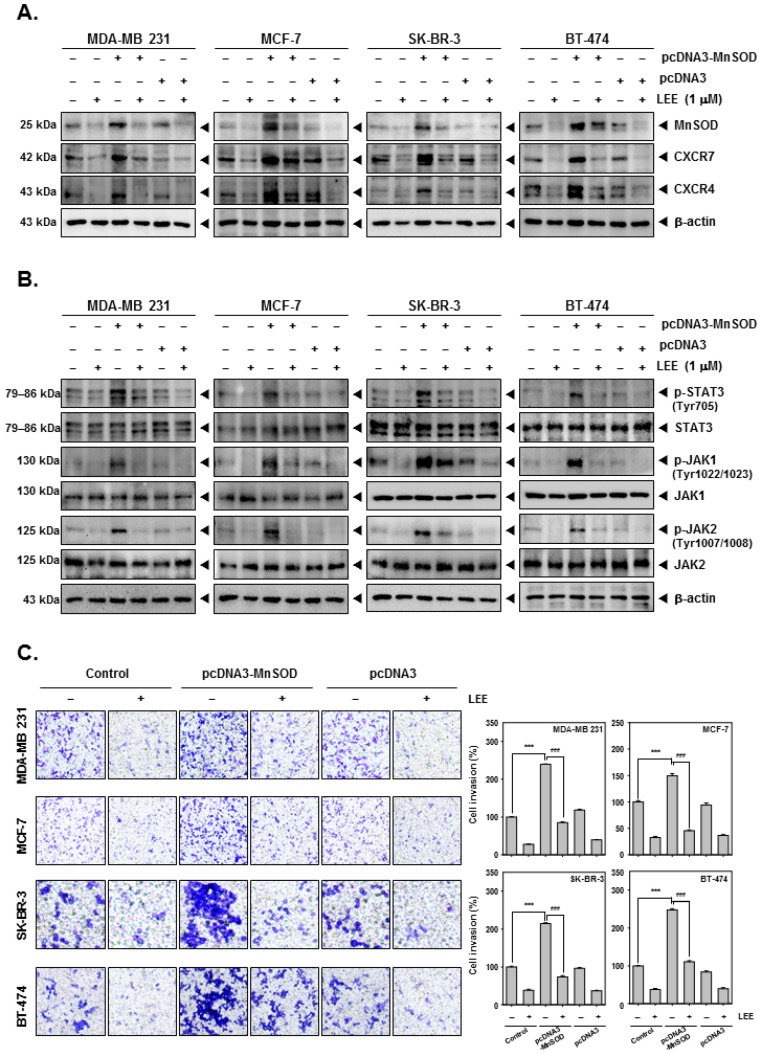
CXCR7 and CXCR4 are G protein-coupled receptors (GPCRs) that can be stimulated by CXCL12 in various human cancers. CXCR7/4-CXCL12 binding can initiate activation of multiple pathways including JAK/STAT and manganese superoxide dismutase (MnSOD) signaling, and initiate epithelial-mesenchymal transition (EMT) process. It is established that cancer cell invasion and migration are caused because of these events. In particular, the EMT process is an important process that can determine the prognosis for cancer. Since the antitumor effect of leelamine (LEE) has been reported in various previous studies, here, we have evaluated the influence of LEE on the CXCR7/4 signaling axis and EMT processes. We first found that LEE suppressed expression of CXCR7 and CXCR4 both at the protein and mRNA levels, and showed inhibitory effects on these chemokines even after stimulation by CXCL12 ligand. In addition, LEE also reduced the level of MnSOD and inhibited the EMT process to attenuate the invasion and migration of breast cancer cells. In addition, phosphorylation of the JAK/STAT pathway, which acts down-stream of these chemokines, was also abrogated by LEE. It was also confirmed that LEE can induce an imbalance of GSH/GSSG and increases ROS, thereby resulting in antitumor activity. Thus, we establish that targeting CXCR7/4 in breast cancer cells can not only inhibit the invasion and migration of cancer cells but also can affect JAK/STAT, EMT process, and production of ROS. Overall, the findings suggest that LEE can function as a novel agent affecting the breast cancer.
趋化因子受体 7(CXCR7)和趋化因子受体 4(CXCR4)是 G 蛋白偶联受体(GPCRs),可被各种人类癌症中的趋化因子配体 12(CXCL12)刺激。CXCR7/4-CXCL12 结合可以启动多种途径的激活,包括 JAK/STAT 和锰超氧化物歧化酶(MnSOD)信号通路,并启动上皮-间充质转化(EMT)过程。已经确定这些事件导致癌细胞的侵袭和迁移。特别是,EMT 过程是一个重要的过程,可以决定癌症的预后。由于先前的研究已经报道了 leelamine(LEE)的抗肿瘤作用,因此,我们评估了 LEE 对 CXCR7/4 信号轴和 EMT 过程的影响。我们首先发现 LEE 抑制了 CXCR7 和 CXCR4 的蛋白和 mRNA 表达,并显示出抑制这些趋化因子的作用,即使在 CXCL12 配体刺激后也是如此。此外,LEE 还降低了 MnSOD 的水平,并抑制了 EMT 过程,从而减轻了乳腺癌细胞的侵袭和迁移。此外,作为这些趋化因子下游的 JAK/STAT 通路的磷酸化也被 LEE 阻断。还证实 LEE 可以诱导 GSH/GSSG 的不平衡并增加 ROS,从而产生抗肿瘤活性。因此,我们确定针对乳腺癌细胞中的 CXCR7/4 不仅可以抑制癌细胞的侵袭和迁移,还可以影响 JAK/STAT、EMT 过程和 ROS 的产生。总的来说,这些发现表明 LEE 可以作为一种新型药物作用于乳腺癌。