Department of Biochemical Sciences "Alessandro Rossi Fanelli", Sapienza University of Rome, Piazzale Aldo Moro 5, I-00185 Rome, Italy.
Department of Physiology and Pharmacology "Vittorio Erspamer", Sapienza University of Rome, Piazzale Aldo Moro 5, I-00185 Rome, Italy.
Int J Mol Sci. 2022 Aug 30;23(17):9853. doi: 10.3390/ijms23179853.
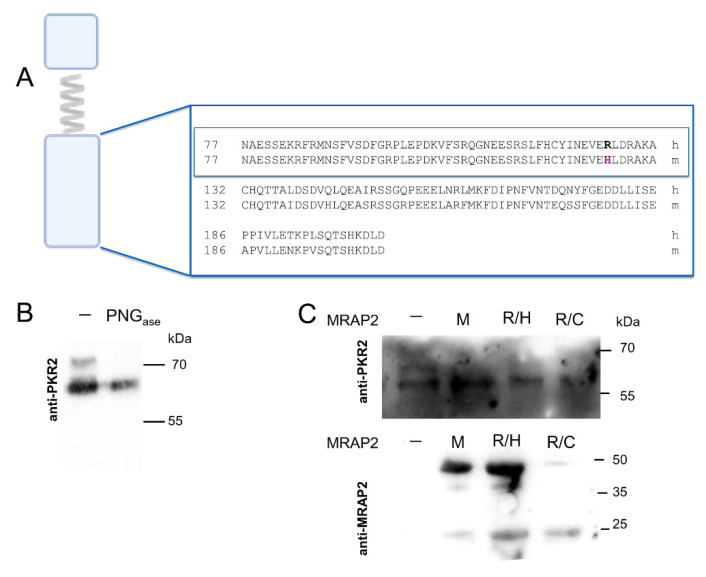
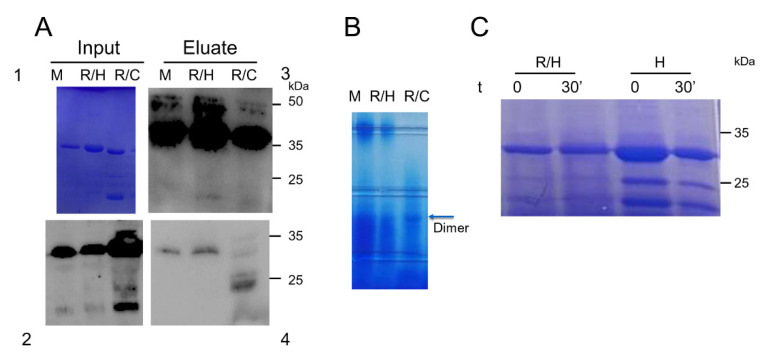
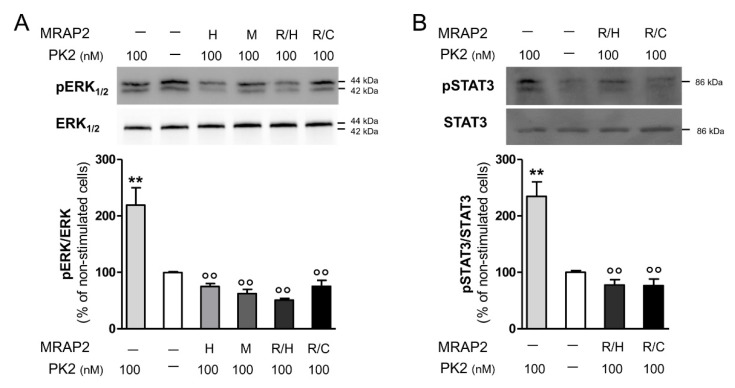
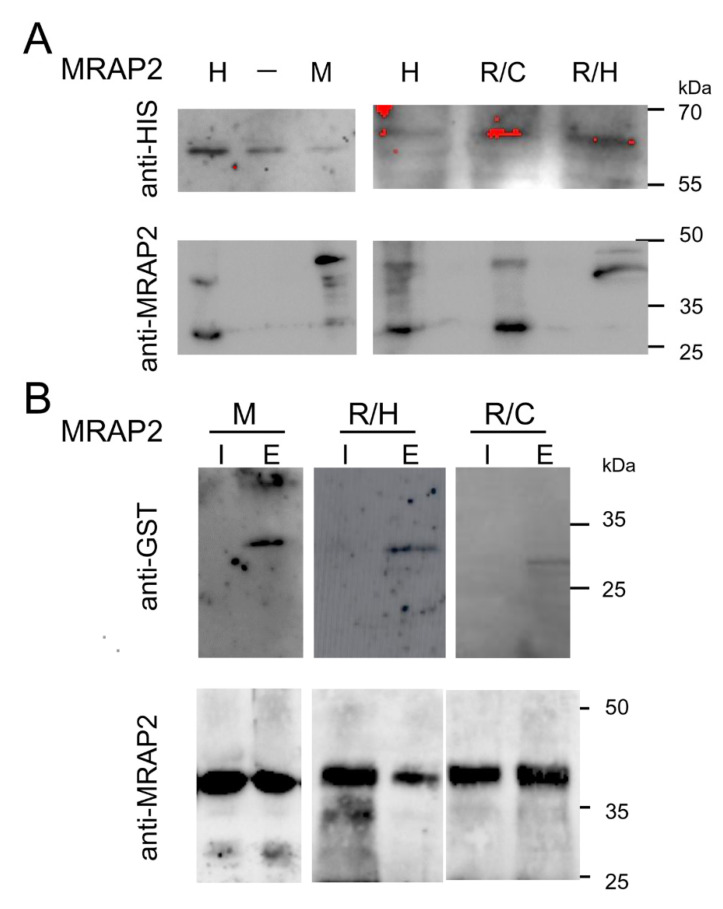
MRAP2 is a small simple transmembrane protein arranged in a double antiparallel topology on the plasma membrane. It is expressed in the paraventricular nucleus of the hypothalamus, where it interacts with various G protein-coupled receptors, such as the prokineticin receptors, and regulates energy expenditure and appetite. The aim of this work was to analyze the functional role of the specific arginine residue at position 125 of MRAP2, which affects protein conformation, dimer formation, and PKR2 binding. Results obtained with the MRAP2 mutants R125H and R125C, which are found in human patients with extreme obesity, and mouse MRAP2, in which arginine 125 is normally replaced by histidine, were compared with those obtained with human MRAP2. Understanding the mechanism by which MRAP2 regulates G protein-coupled receptors helps in elucidating the metabolic pathways involved in metabolic dysfunction and in developing new drugs as specific targets of the MRAP2-PKR2 complex.
MRAP2 是一种小的简单跨膜蛋白,在质膜上呈双反向平行拓扑排列。它在下丘脑室旁核表达,与各种 G 蛋白偶联受体(如促动力素受体)相互作用,调节能量消耗和食欲。这项工作的目的是分析 MRAP2 第 125 位特定精氨酸残基的功能作用,该残基影响蛋白质构象、二聚体形成和 PKR2 结合。与人肥胖症患者中发现的 MRAP2 突变体 R125H 和 R125C 以及正常取代精氨酸为组氨酸的小鼠 MRAP2 相比,比较了与人 MRAP2 获得的结果。了解 MRAP2 调节 G 蛋白偶联受体的机制有助于阐明代谢功能障碍中涉及的代谢途径,并开发作为 MRAP2-PKR2 复合物特异性靶标的新药物。