Program in Integrative Cell Signaling and Neurobiology of Metabolism, Yale University School of Medicine, New Haven, CT, 06520, USA; Department of Obstetrics, Gynecology, and Reproductive Sciences, Yale University School of Medicine, New Haven, CT, 06520, USA.
Program in Integrative Cell Signaling and Neurobiology of Metabolism, Yale University School of Medicine, New Haven, CT, 06520, USA; Department of Obstetrics, Gynecology, and Reproductive Sciences, Yale University School of Medicine, New Haven, CT, 06520, USA; Department of Neuroscience, Yale University School of Medicine, New Haven, CT, 06520, USA; Department of Comparative Medicine, Yale University School of Medicine, New Haven, CT, 06520, USA; Department of Clinical Medicine and Surgery, University of Naples "Federico II", Naples, Italy.
Mol Metab. 2018 Dec;18:79-87. doi: 10.1016/j.molmet.2018.09.010. Epub 2018 Oct 4.
Melanocortin 2 receptor accessory protein 2 (MRAP2) has a critical role in energy homeostasis. Although MRAP2 has been shown to regulates a number of GPCRs involved in metabolism, the key neurons responsible for the phenotype of gross obesity in MRAP2 deficient animals are unclear. Furthermore, to date, all the murine MRAP2 models involve the prenatal deletion of MRAP2.
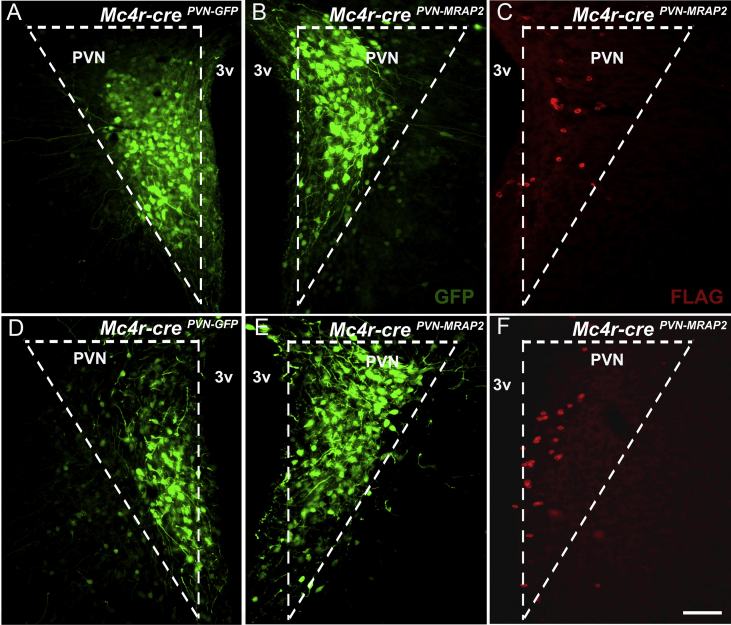
To target Melanocortin 4 receptor (MC4R)-expressing neurons in the hypothalamic paraventricular nucleus (PVN), we performed stereotaxic surgery using AAV to selectively overexpress MRAP2 postnatally in adult Mc4r-cre mice. We assessed energy homeostasis, glucose metabolism, core body temperature, and response to MC3R/MC4R agonist MTII.
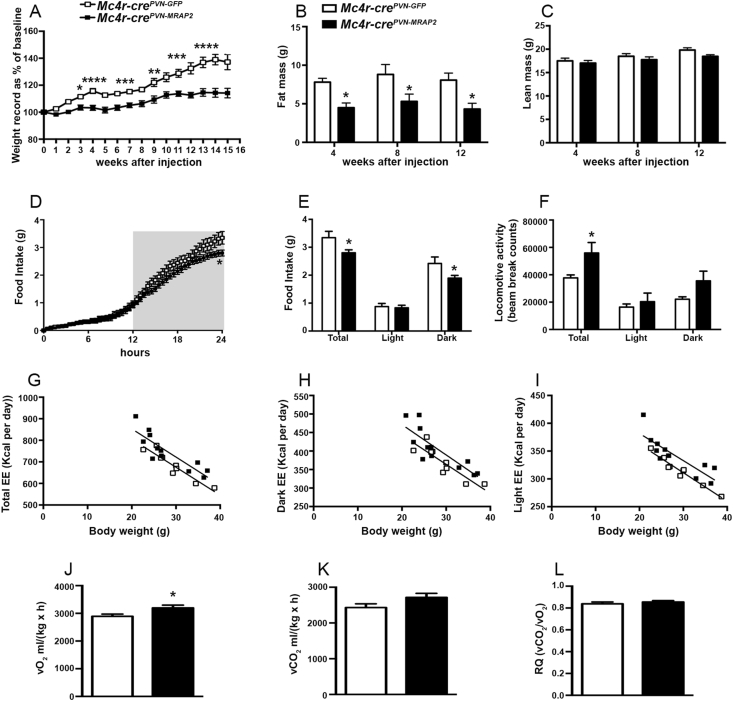
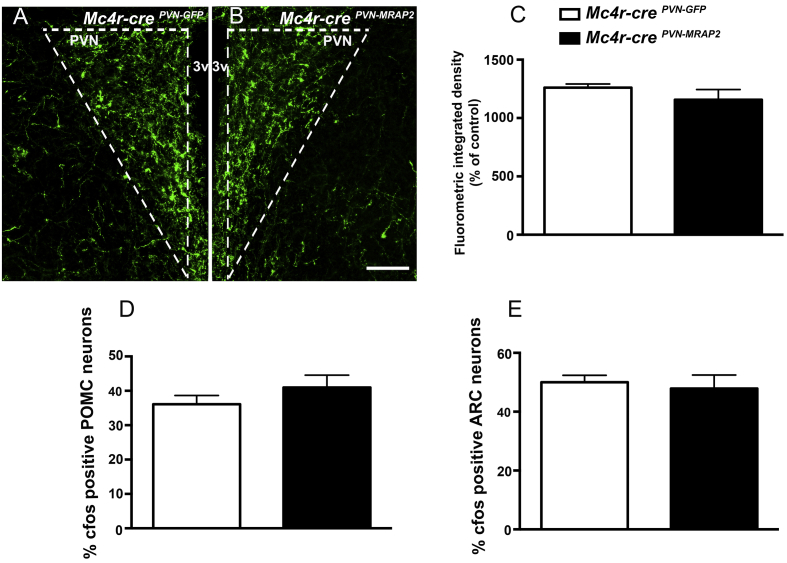
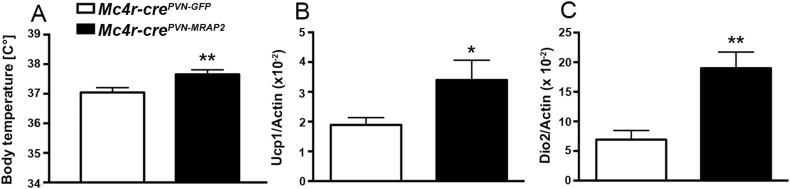
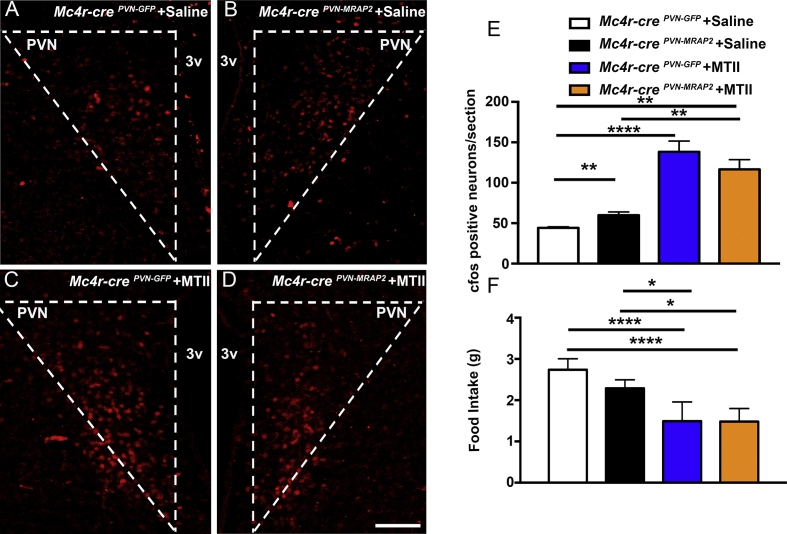
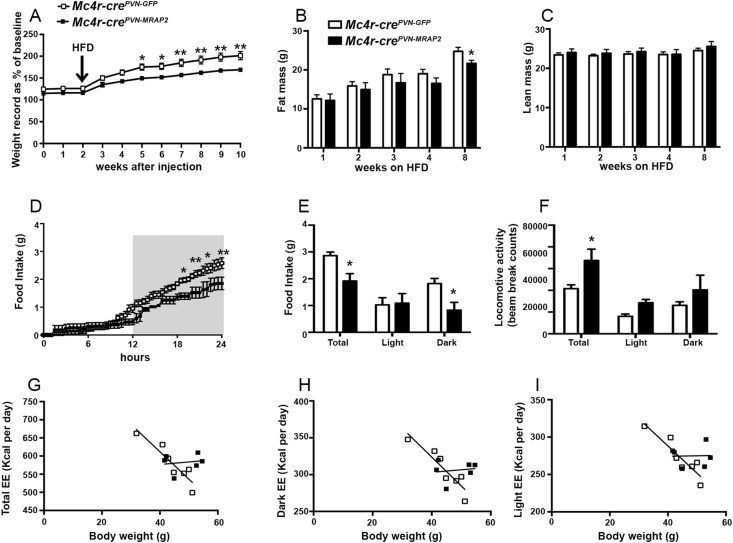
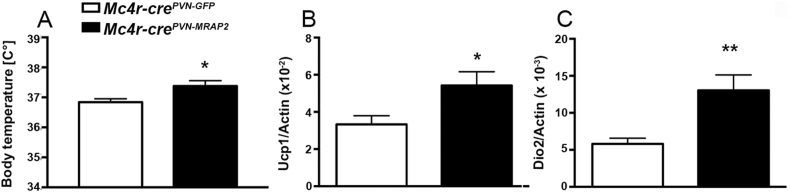
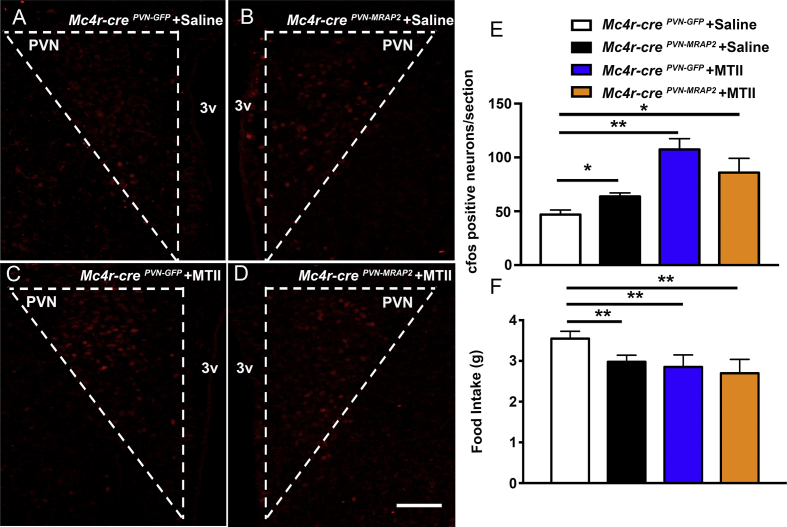
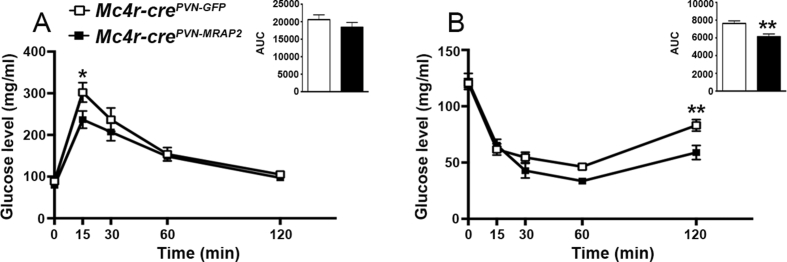
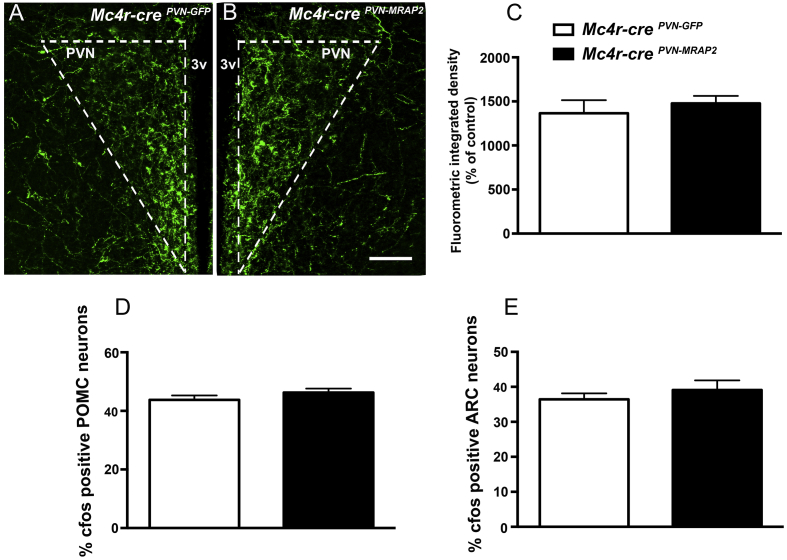
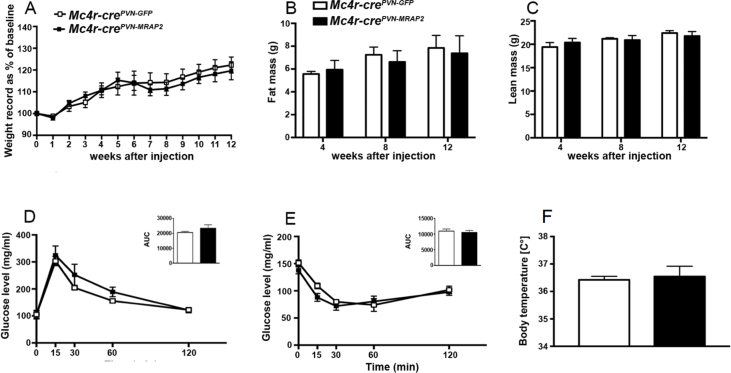
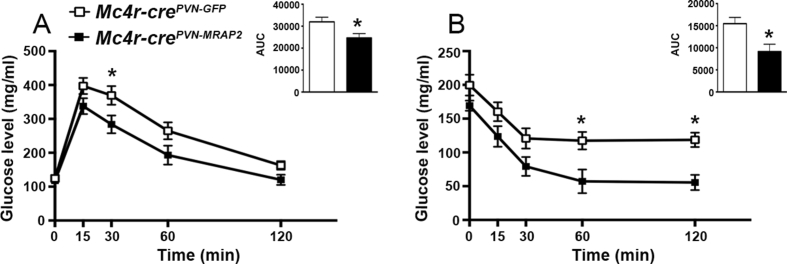
Mc4r-cre female mice on a standard chow diet had less age-related weight gain and improved glucose/insulin profile compared to control Mc4r-cre mice. These changes were associated with a reduction in food intake and increased energy expenditure. In contrast, Mc4r-cre male mice showed no improvement on a chow diet, but improvement of energy and glucose metabolism was observed following high fat diet (HFD) feeding. In addition, an increase in core body temperature was found in both females fed on standard chow diet and males fed on HFD. Mc4r-cre female and male mice showed increased neuronal activation in the PVN compared to controls, with further increase in neuronal activation post MTII treatment in females.
Our data indicate a site-specific role for MRAP2 in PVN MC4R-expressing neurons in potentiating MC4R neuronal activation at baseline conditions in the regulation of food intake and energy expenditure.
黑皮质素 2 受体辅助蛋白 2(MRAP2)在能量平衡中起着关键作用。虽然已经表明 MRAP2 调节了许多参与代谢的 GPCR,但导致 MRAP2 缺陷动物肥胖表型的关键神经元尚不清楚。此外,迄今为止,所有的小鼠 MRAP2 模型都涉及产前 MRAP2 的缺失。
为了靶向下丘脑室旁核(PVN)中表达黑皮质素 4 受体(MC4R)的神经元,我们使用 AAV 进行立体定向手术,在成年 Mc4r-cre 小鼠中选择性地在出生后过表达 MRAP2。我们评估了能量平衡、葡萄糖代谢、核心体温以及对 MC3R/MC4R 激动剂 MTII 的反应。
标准饲料喂养的 Mc4r-cre 雌性小鼠与对照 Mc4r-cre 小鼠相比,体重增长随年龄增长的幅度较小,葡萄糖/胰岛素谱得到改善。这些变化与摄食量减少和能量消耗增加有关。相比之下,Mc4r-cre 雄性小鼠在标准饲料喂养时没有改善,但在高脂肪饮食(HFD)喂养时,能量和葡萄糖代谢得到改善。此外,我们发现标准饲料喂养的雌性小鼠和 HFD 喂养的雄性小鼠的核心体温均升高。与对照组相比,Mc4r-cre 雌性和雄性小鼠的 PVN 神经元激活增加,在雌性小鼠接受 MTII 治疗后,神经元激活进一步增加。
我们的数据表明,MRAP2 在 PVN 中 MC4R 表达神经元中的特定部位发挥作用,在调节摄食量和能量消耗方面,在基线条件下增强 MC4R 神经元的激活。