Institute for Genetic and Biomedical Research, National Research Council, 07100 Sassari, Italy.
Institute for Genetic and Biomedical Research, National Research Council, 09042 Monserrato, Italy.
Int J Mol Sci. 2022 Sep 2;23(17):10058. doi: 10.3390/ijms231710058.
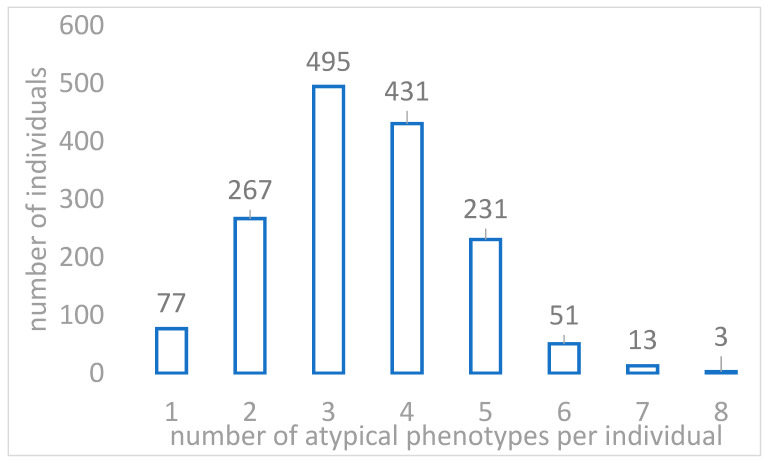
Pharmacogenetics (PGx) aims to identify the genetic factors that determine inter-individual differences in response to drug treatment maximizing efficacy while decreasing the risk of adverse events. Estimating the prevalence of PGx variants involved in drug response, is a critical preparatory step for large-scale implementation of a personalized medicine program in a target population. Here, we profiled pharmacogenetic variation in fourteen clinically relevant genes in a representative sample set of 1577 unrelated sequenced Sardinians, an ancient island population that accounts for genetic variation in Europe as a whole, and, at the same time is enriched in genetic variants that are very rare elsewhere. To this end, we used PGxPOP, a PGx allele caller based on the guidelines created by the Clinical Pharmacogenetics Implementation Consortium (CPIC), to identify the main phenotypes associated with the PGx alleles most represented in Sardinians. We estimated that 99.43% of Sardinian individuals might potentially respond atypically to at least one drug, that on average each individual is expected to have an abnormal response to about 17 drugs, and that for 27 drugs the fraction of the population at risk of atypical responses to therapy is more than 40%. Finally, we identified 174 pharmacogenetic variants for which the minor allele frequency was at least 10% higher among Sardinians as compared to other European populations, a fact that may contribute to substantial interpopulation variability in drug response phenotypes. This study provides baseline information for further large-scale pharmacogenomic investigations in the Sardinian population and underlines the importance of PGx characterization of diverse European populations, such as Sardinians.
药物遗传学(PGx)旨在确定决定药物治疗反应个体差异的遗传因素,以最大限度地提高疗效,同时降低不良反应的风险。估计与药物反应相关的 PGx 变体的流行率是在目标人群中大规模实施个体化医学计划的关键准备步骤。在这里,我们在 1577 个无关的测序撒丁岛人代表样本集中对 14 个临床相关基因的药物遗传学变异进行了分析,撒丁岛人是一个古老的岛屿人群,它代表了整个欧洲的遗传变异,同时还富含在其他地方非常罕见的遗传变异。为此,我们使用了基于临床药物遗传学实施联盟(CPIC)制定的指南的 PGxPOP 来识别与撒丁岛人最常见的 PGx 等位基因相关的主要表型。我们估计,99.43%的撒丁岛人可能至少对一种药物的反应异常,平均每个人预计会对大约 17 种药物的反应异常,对于 27 种药物,对治疗反应异常的人群比例超过 40%。最后,我们确定了 174 种药物遗传学变体,与其他欧洲人群相比,撒丁岛人群的这些变体的次要等位基因频率至少高出 10%,这一事实可能导致药物反应表型在不同人群之间存在显著差异。本研究为撒丁岛人群的进一步大规模药物基因组学研究提供了基线信息,并强调了对不同欧洲人群(如撒丁岛人)进行 PGx 特征分析的重要性。