Tsilimigras Diamantis I, Ntanasis-Stathopoulos Ioannis, Pawlik Timothy M
Department of Surgery, Division of Surgical Oncology, The Ohio State University Wexner Medical Center and James Comprehensive Cancer Center, Columbus, OH 43210, USA.
Department of Clinical Therapeutics, School of Medicine, Alexandra General Hospital, National and Kapodistrian University of Athens, 11527 Athens, Greece.
Cancers (Basel). 2022 Aug 31;14(17):4237. doi: 10.3390/cancers14174237.
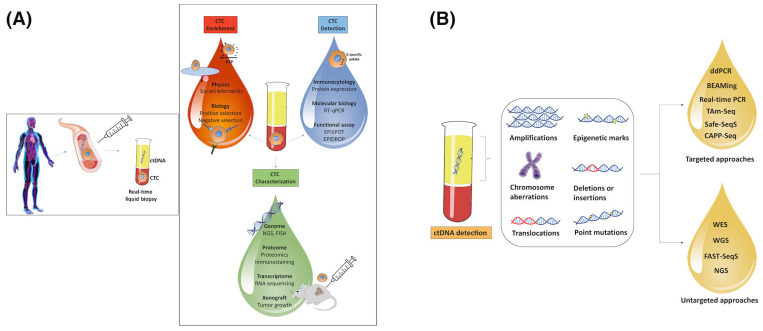
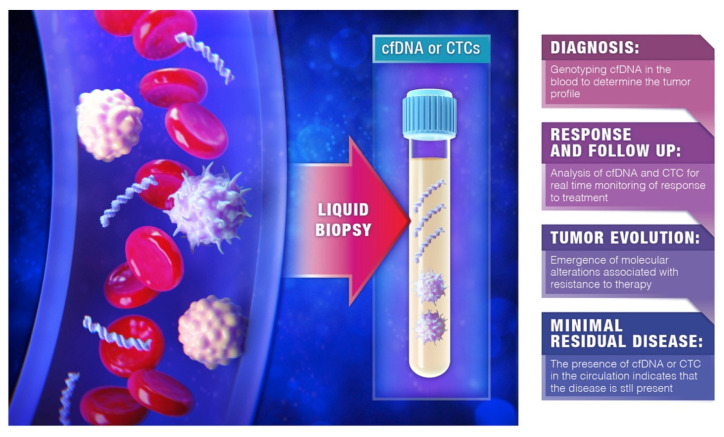
Tumor mutational analysis has been incorporated into the management of patients with CRLM since it can provide valuable prognostic information as well as guide peri-operative systemic treatment. Unlike tumor biopsy, liquid biopsy has emerged as a promising, non-invasive alternative that can detect cell-derived markers from a variety of body fluids and might better characterize all subclones present at a specific time point and allow sequential monitoring of disease evolution. Although not currently considered standard of care, an increasing number of cancer centers are nowadays routinely using liquid biopsies in the treatment of CRLM patients with promising results. The current review provides an overview of liquid biopsies in cancer therapeutics and focuses on the application of this relatively new approach on patients with CRLM.
肿瘤突变分析已被纳入结直肠癌肝转移(CRLM)患者的管理中,因为它可以提供有价值的预后信息,并指导围手术期的全身治疗。与肿瘤活检不同,液体活检已成为一种有前景的非侵入性替代方法,它可以从多种体液中检测细胞衍生的标志物,并且可能更好地表征特定时间点存在的所有亚克隆,并允许对疾病进展进行连续监测。尽管目前液体活检尚未被视为标准治疗方法,但如今越来越多的癌症中心在CRLM患者的治疗中常规使用液体活检,并取得了令人鼓舞的结果。本综述概述了液体活检在癌症治疗中的应用,并重点关注这种相对较新的方法在CRLM患者中的应用。