Scannavino Rafaella C P, Riccucci Giacomo, Ferraris Sara, Duarte Gabriel L C, de Oliveira Paulo T, Spriano Silvia
School of Dentistry of Ribeirão Preto, University of São Paulo, Ribeirão Preto 14040-904, SP, Brazil.
Department of Applied Science and Technology, Politecnico di Torino, 10126 Torino, Italy.
Nanomaterials (Basel). 2022 Aug 24;12(17):2916. doi: 10.3390/nano12172916.
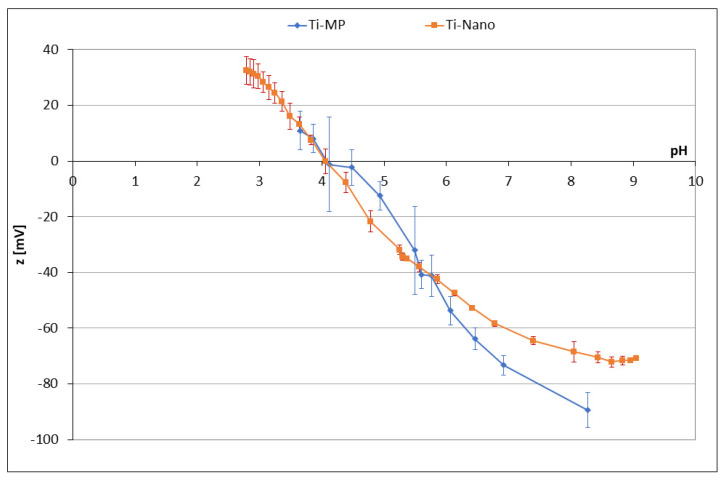
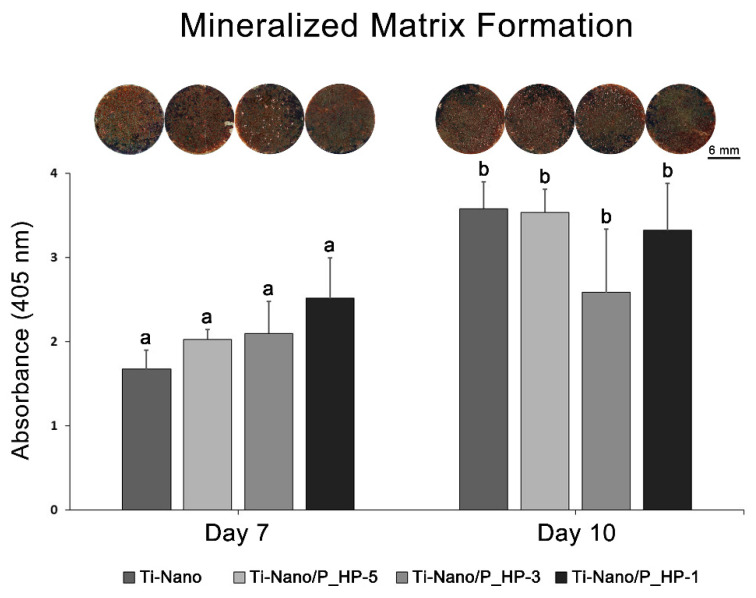
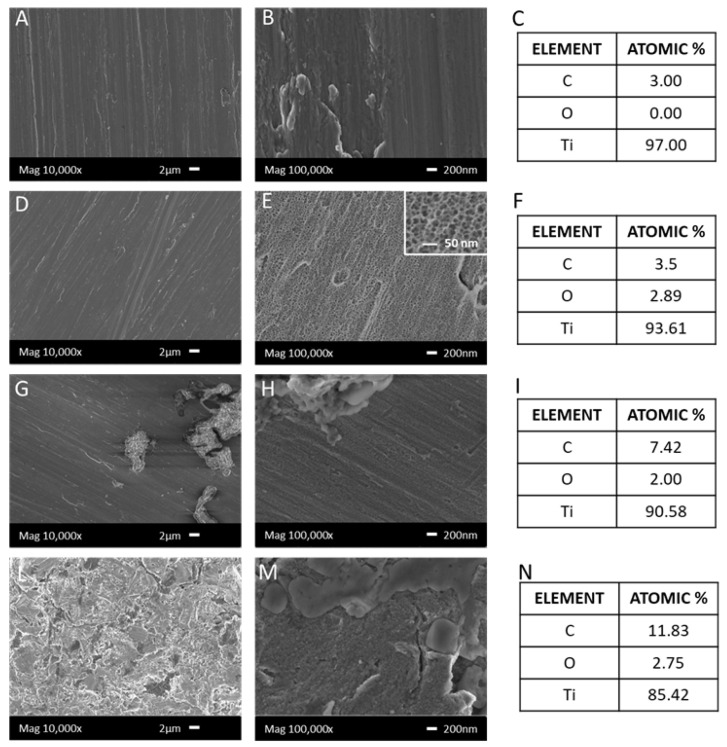
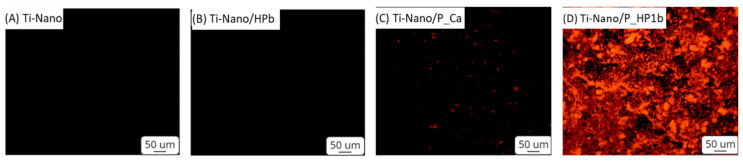
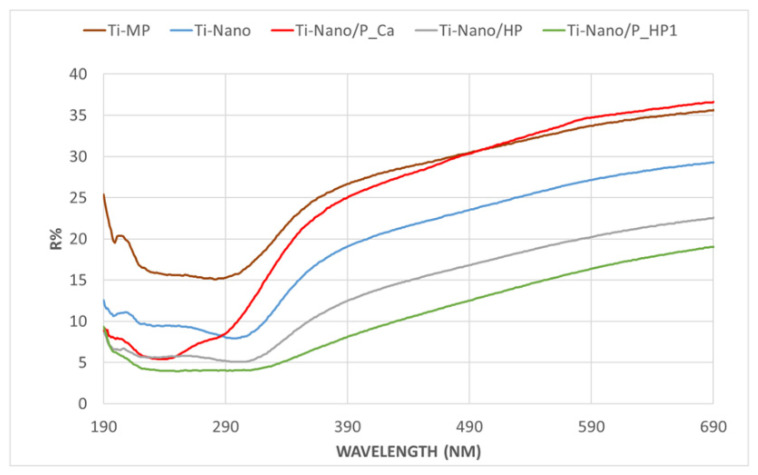
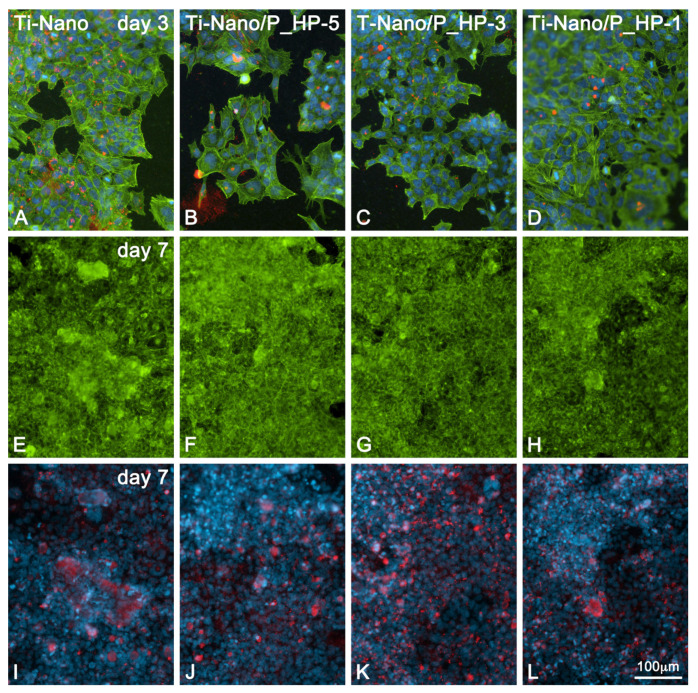
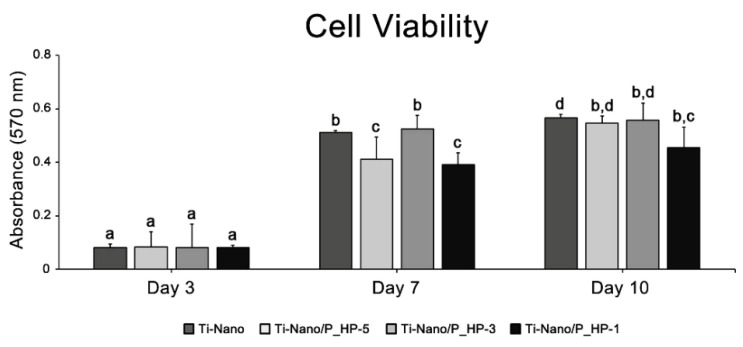
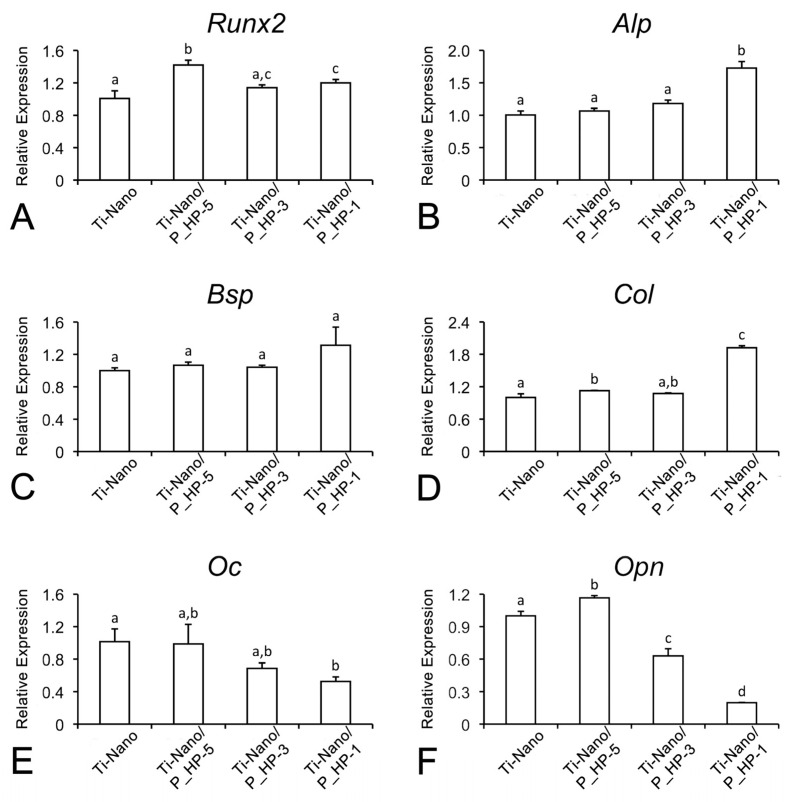
The study aimed to identify an effective mechanism of adsorption of polyphenols on a nano-textured Ti surface and to evaluate the osteogenic differentiation on it. The source of polyphenols was a natural extract from red grape pomace. A chemical etching was used to form an oxide layer with a nanoscale texture on Ti; this layer is hydrophilic, but without hydroxyl groups with high acidic-basic chemical reactivity. The samples were characterized by electron and fluorescence microscopies, UV-Vis spectroscopy, contact angle measurements, zeta potential titration curves, and Folin-Ciocâlteu test. The presence of an adsorbed layer of polyphenols on the functionalized surface, maintaining redox ability, was confirmed by several tests. Consistent with the surface features, the adsorption was maximized by dissolving the extract in a high-amino acid medium, with respect to an inorganic solution, exploiting the high affinity of amino acids for polyphenols and for porous titanium surfaces. The osteogenic differentiation was assessed on an osteoblastic cell line by immunofluorescence, cell viability, expression of key osteoblast markers, and extracellular matrix mineralization. The surfaces functionalized with the extract diluted in the range 1 × 10⁻¹ mg/mL resulted in having a greater osteogenic activity for the highest concentration, with lower values of cell viability; higher expression of alkaline phosphatase, bone sialoprotein, and collagen; and lower levels of osteopontin. In conclusion, the functionalization of a nano-textured Ti surface with polyphenols can potentially favor the osteogenic activity of osseointegrated implants.
该研究旨在确定多酚在纳米纹理钛表面的有效吸附机制,并评估其对成骨分化的影响。多酚的来源是红葡萄皮渣的天然提取物。采用化学蚀刻法在钛表面形成具有纳米级纹理的氧化层;该层具有亲水性,但没有具有高酸碱化学反应性的羟基。通过电子显微镜、荧光显微镜、紫外可见光谱、接触角测量、zeta电位滴定曲线和福林-西奥尔特试验对样品进行了表征。多项测试证实了功能化表面上存在保持氧化还原能力的多酚吸附层。与表面特征一致,相对于无机溶液,通过将提取物溶解在高氨基酸介质中,利用氨基酸对多酚和多孔钛表面的高亲和力,使吸附最大化。通过免疫荧光、细胞活力、关键成骨细胞标志物的表达和细胞外基质矿化,在成骨细胞系上评估成骨分化。用稀释范围为1×10⁻¹ mg/mL的提取物功能化的表面,在最高浓度下具有更大的成骨活性,但细胞活力值较低;碱性磷酸酶、骨唾液蛋白和胶原蛋白的表达较高;骨桥蛋白水平较低。总之,用多酚对纳米纹理钛表面进行功能化可能有利于骨整合植入物的成骨活性。