Tao Zhou-Shan, Zhou Wan-Shu, Xu Hong-Guang, Yang Min
Department of Trauma Orthopedics, The First Affiliated Hospital of Wannan Medical College, Yijishan Hospital, No. 2, Zhe Shan Xi Road, Wuhu 241001, Anhui, People's Republic of China.
Department of Geriatrics, The Second Affiliated Hospital of Wannan Medical College, No.123, Kangfu Road, Wuhu 241000, Anhui, People's Republic of China.
J Orthop Translat. 2020 Dec 28;27:67-76. doi: 10.1016/j.jot.2020.10.006. eCollection 2021 Mar.
The present work was aimed to evaluate the effect of valproic acid (VPA),Parathyroid hormone (1-34) (PTH)+VPA on Ti rods osseointegration in ovariectomized rats and further investigation of the possible mechanism.
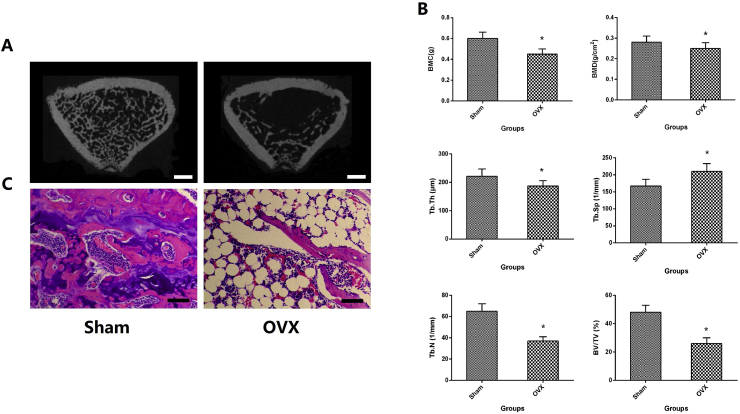
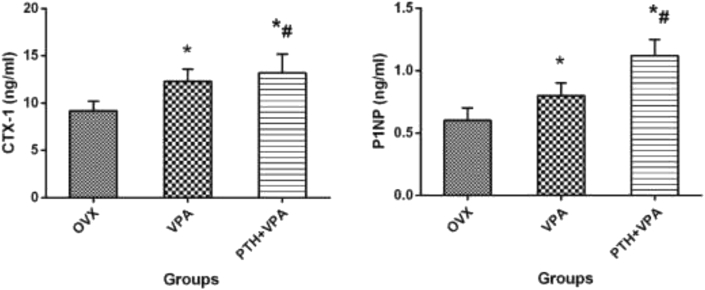
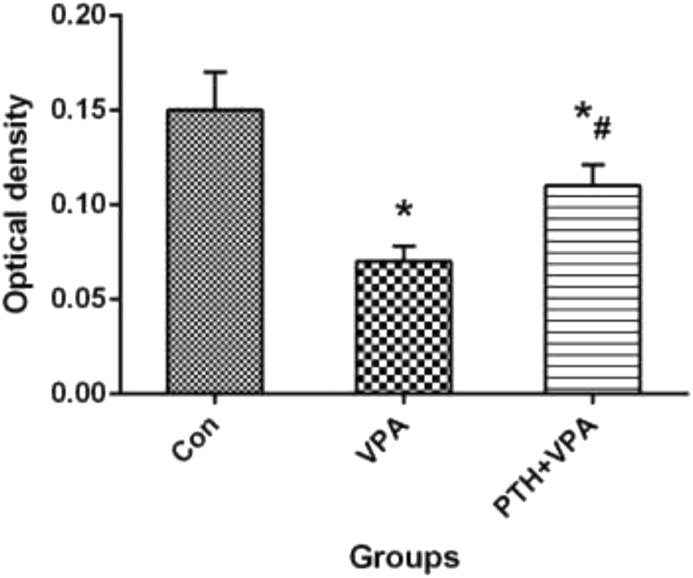
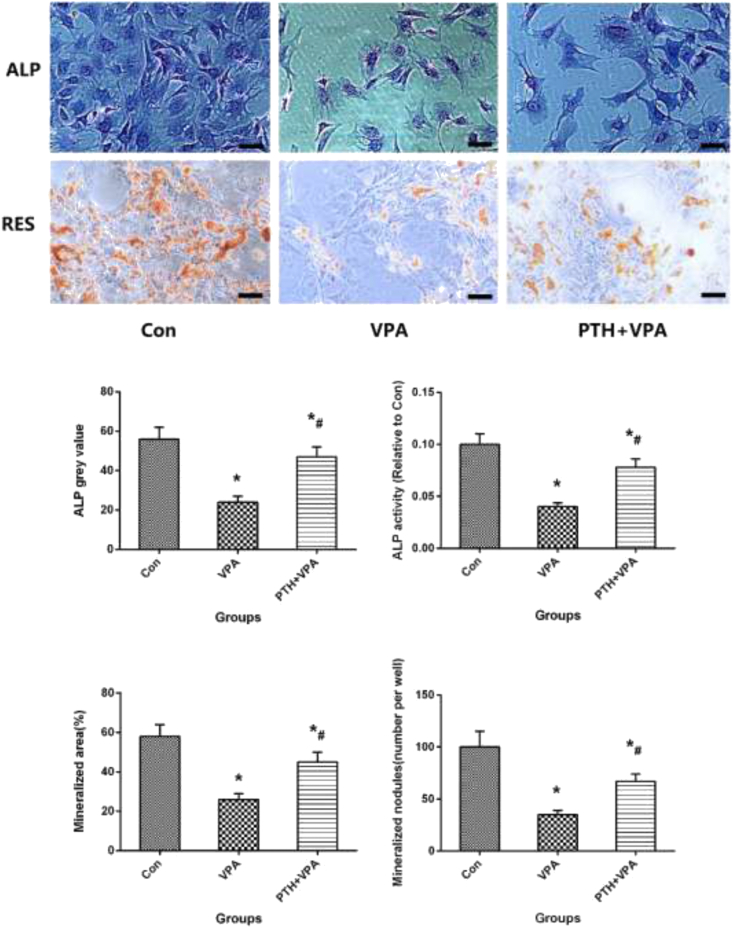
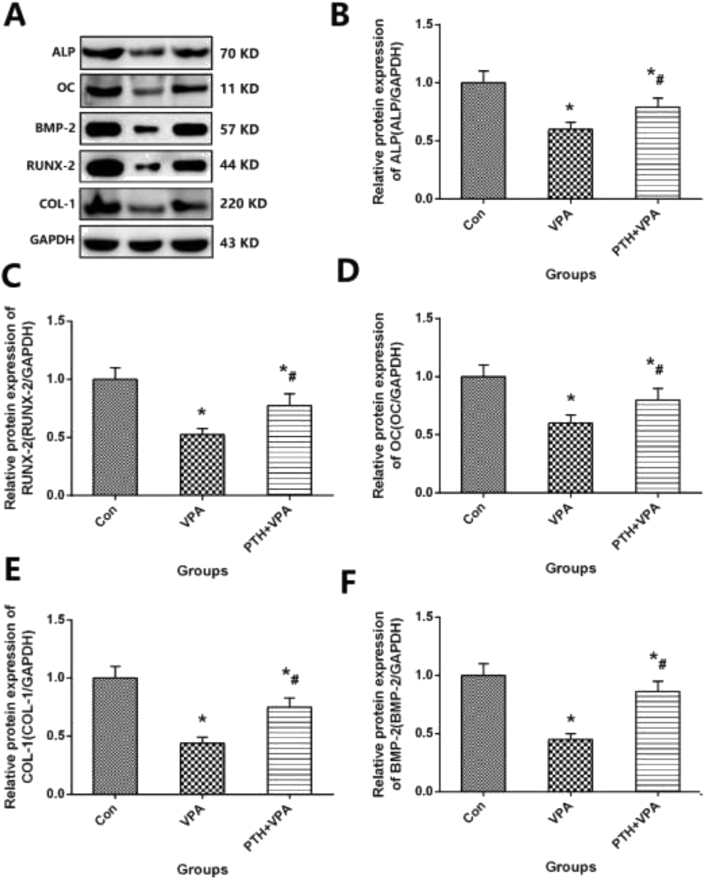
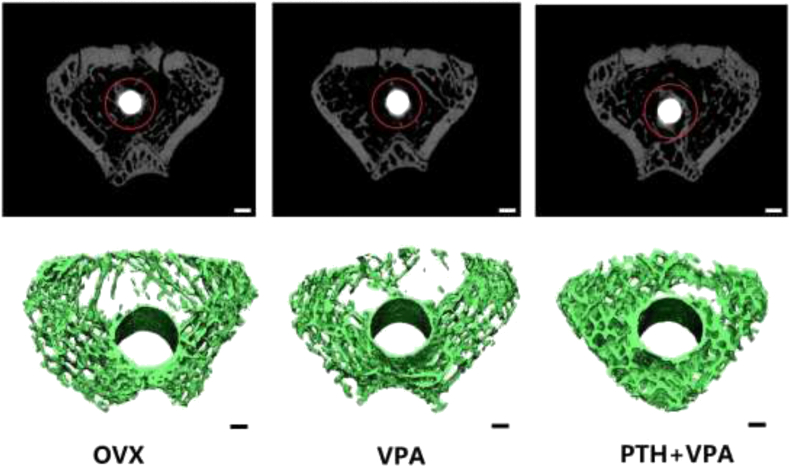
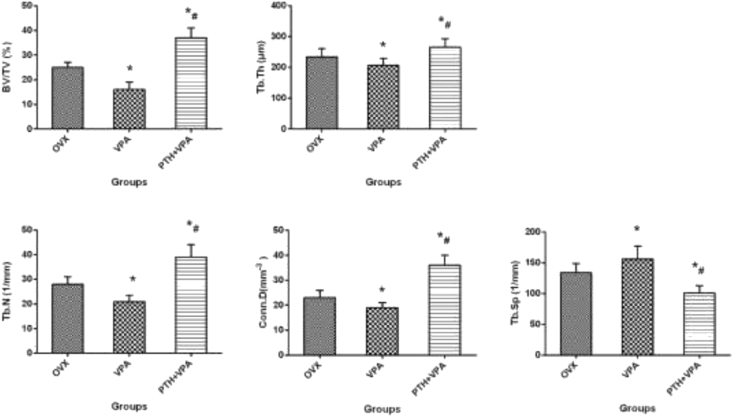
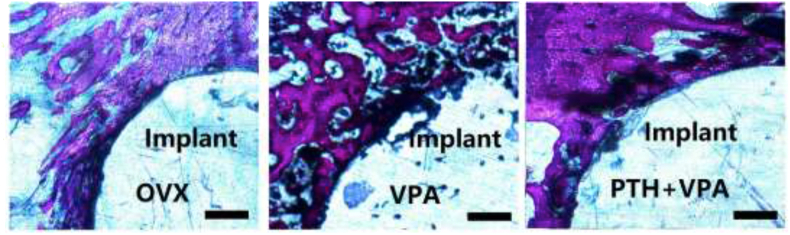
The MC3T3-E1 cells were co-cultured with VPA,PTH + VPA and induced to osteogenesis, and the cell viability,mineralization ability were observed by MTT and ALP staining,Alizarin Red staining and Western blotting. Twelve weeks after bilateral ovariectomy, all animals were randomly divided into four groups: group OVX and VPA,PTH + VPA, and all the rats received Ti implants and animals belong to group VPA,PTH + VPA received valproic acid (300 mg/day), valproic acid (300 mg/day) plus Parathyroid hormone (1-34) every 3 days (60 μg/kg), respectively, treatment until death at 12 weeks. Micro-CT, histology, biomechanical testing, bone metabolism index and Reverse transcription-quantitative polymerase chain reaction (RT-qPCR) analysis were used to observe the therapeutic effect and explore the possible mechanism.
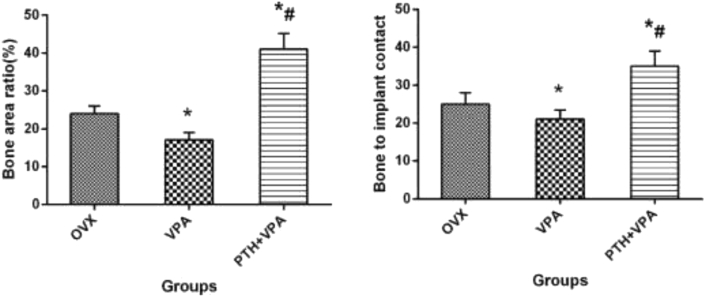
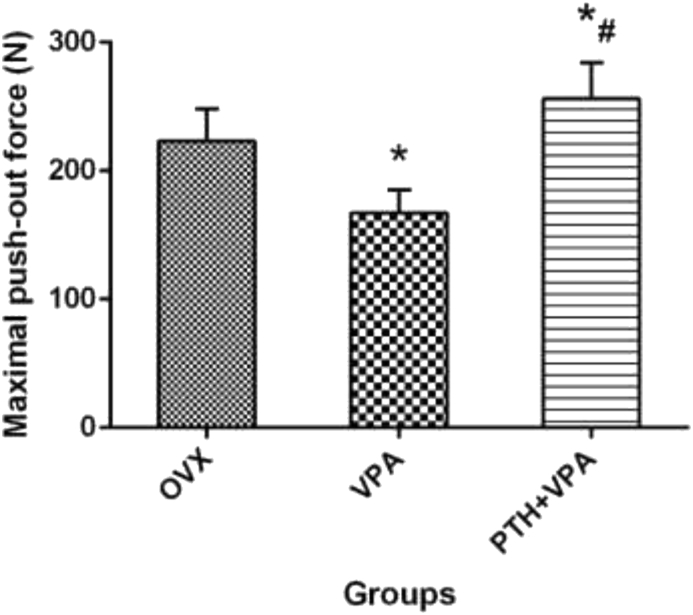
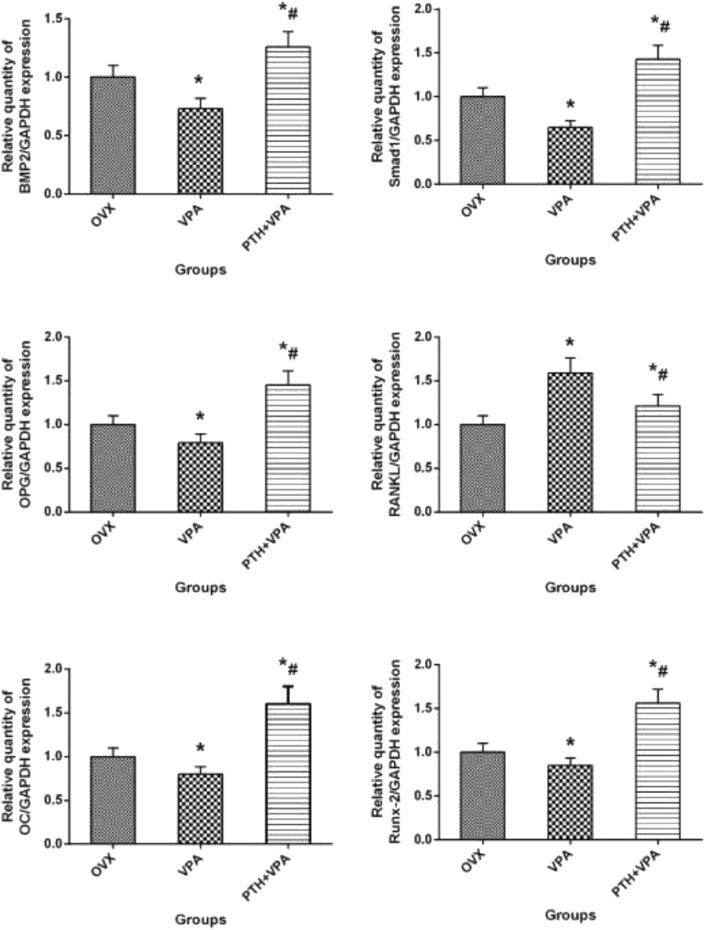
Results shown that VPA decreased new bone formation around the surface of titanium rods and push-out force other than group OVX. Histology, Micro-CT and biochemical analysis results showed combined application of systemic VPA showed harmful effects than OVX group on bone formation in osteopenia rats, with the worse effects on CTX-1, P1NP and microarchitecture as well as biomechanical parameters by down-regulated gene expression of Runx2, OCN, Smad1, BMP-2 and OPG, while up-regulated RANKL. However, after PTH treatment, the above indicators were significantly improved.
The present study suggests that systemic use of VPA may bring harm to the stability of titanium implants in osteoporosis, PTH can reverse the negative effect of VPA on the osseointegration of titanium rods in ovariectomized rats.
According to our research, when patients with epilepsy have osteoporotic fractures, after joint replacement or internal fixation, continue to use sodium valproate for anti-epileptic therapy, the possibility of postoperative loosening increases, again on the basis of It can be reversed with the anti-osteoporosis drug parathyroid hormone (1-34).
本研究旨在评估丙戊酸(VPA)、甲状旁腺激素(1-34)(PTH)+VPA对去卵巢大鼠钛棒骨整合的影响,并进一步探究其可能机制。
将MC3T3-E1细胞与VPA、PTH+VPA共同培养并诱导成骨,通过MTT法、碱性磷酸酶(ALP)染色、茜素红染色及蛋白质免疫印迹法观察细胞活力和矿化能力。双侧卵巢切除术后12周,将所有动物随机分为四组:OVX组、VPA组、PTH+VPA组,所有大鼠均植入钛棒,VPA组、PTH+VPA组大鼠分别给予丙戊酸(300mg/天)、丙戊酸(300mg/天)加甲状旁腺激素(1-34)(每3天60μg/kg),治疗至12周处死。采用显微CT、组织学、生物力学测试、骨代谢指标及逆转录-定量聚合酶链反应(RT-qPCR)分析观察治疗效果并探究可能机制。
结果显示,VPA组钛棒周围新骨形成及推出力低于OVX组。组织学、显微CT及生化分析结果表明,全身应用VPA对骨质疏松大鼠骨形成的有害作用比OVX组更明显,对I型胶原交联C末端肽(CTX-1)、I型前胶原氨基端前肽(P1NP)、骨微结构及生物力学参数的影响更差,其通过下调Runx2、骨钙素(OCN)、Smad1、骨形态发生蛋白-2(BMP-2)及骨保护素(OPG)的基因表达,同时上调核因子κB受体活化因子配体(RANKL)来实现。然而,PTH治疗后,上述指标显著改善。
本研究提示,全身应用VPA可能对骨质疏松状态下钛植入物的稳定性产生损害,PTH可逆转VPA对去卵巢大鼠钛棒骨整合的负面影响。
根据我们的研究,癫痫患者发生骨质疏松性骨折,在进行关节置换或内固定后,继续使用丙戊酸钠进行抗癫痫治疗,术后松动的可能性增加,在此基础上可使用抗骨质疏松药物甲状旁腺激素(1-34)进行逆转。