West China (Airport) Hospital, Sichuan University, Chengdu 610047, China.
Molecules. 2022 Aug 25;27(17):5439. doi: 10.3390/molecules27175439.
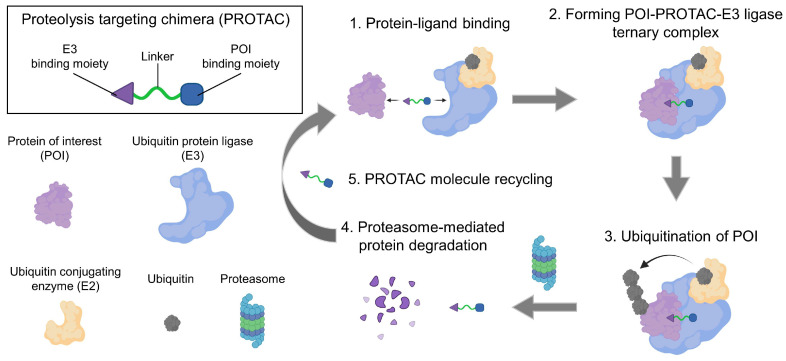
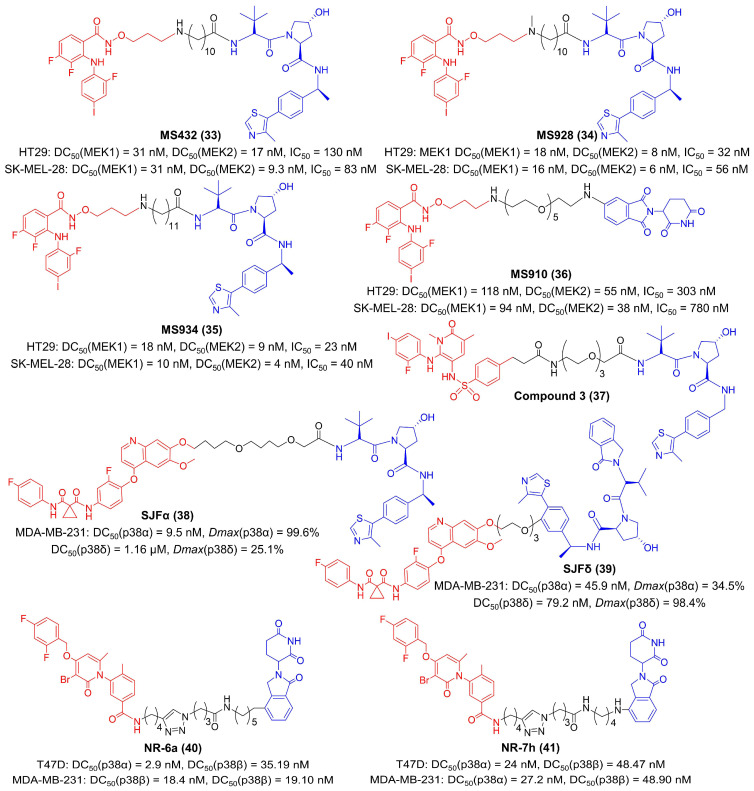
Unsatisfactory physicochemical properties of macromolecular drugs seriously hinder their application in tumor immunotherapy. However, these problems can be effectively solved by small-molecule compounds. In the promising field of small-molecule drug development, proteolysis targeting chimera (PROTAC) offers a novel mode of action in the interactions between small molecules and therapeutic targets (mainly proteins). This revolutionary technology has shown considerable impact on several proteins related to tumor survival but is rarely exploited in proteins associated with immuno-oncology up until now. This review attempts to comprehensively summarize the well-studied and less-developed immunological targets available for PROTAC technology, as well as some targets to be explored, aiming to provide more options and opportunities for the development of small-molecule-based tumor immunotherapy. In addition, some novel directions that can magnify and broaden the protein degradation efficiency are mentioned to improve PROTAC design in the future.
高分子药物不理想的理化性质严重阻碍了它们在肿瘤免疫治疗中的应用。然而,这些问题可以通过小分子化合物来有效解决。在小分子药物开发这一充满前景的领域中,蛋白水解靶向嵌合体(PROTAC)在小分子与治疗靶标(主要是蛋白质)之间的相互作用中提供了一种新的作用模式。这项革命性技术已在几种与肿瘤存活相关的蛋白上显示出了相当大的影响,但迄今为止,在与免疫肿瘤学相关的蛋白上的应用却很少。本综述试图全面总结已被深入研究和研究较少的适用于 PROTAC 技术的免疫学靶标,以及一些有待探索的靶标,旨在为基于小分子的肿瘤免疫治疗的发展提供更多的选择和机会。此外,还提到了一些可以提高 PROTAC 设计的放大和拓宽蛋白降解效率的新方向。