Chen Wen, Cheung H Y Kitty, McMillan Morgan, Turkington Thomas Kelly, Izydorczyk Marta S, Gräfenhan Tom
Ottawa Research and Development Centre, Agriculture and Agri-Food Canada, Ottawa, ON, Canada.
Department of Biology, University of Ottawa, Ottawa, ON, Canada.
Curr Res Food Sci. 2022 Aug 25;5:1352-1364. doi: 10.1016/j.crfs.2022.08.009. eCollection 2022.
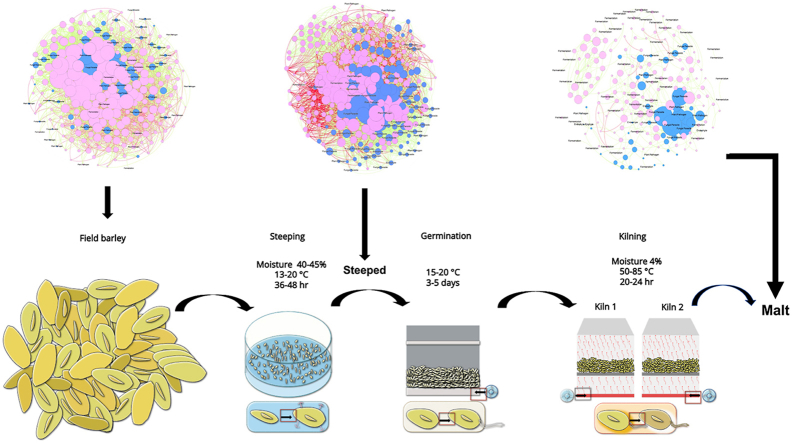
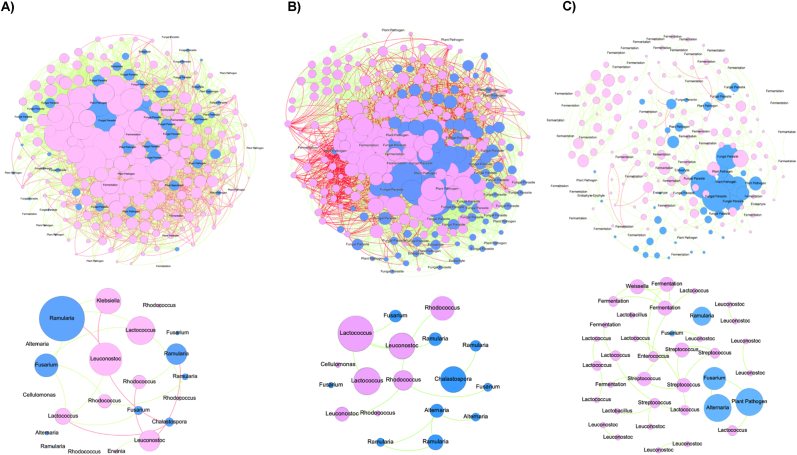
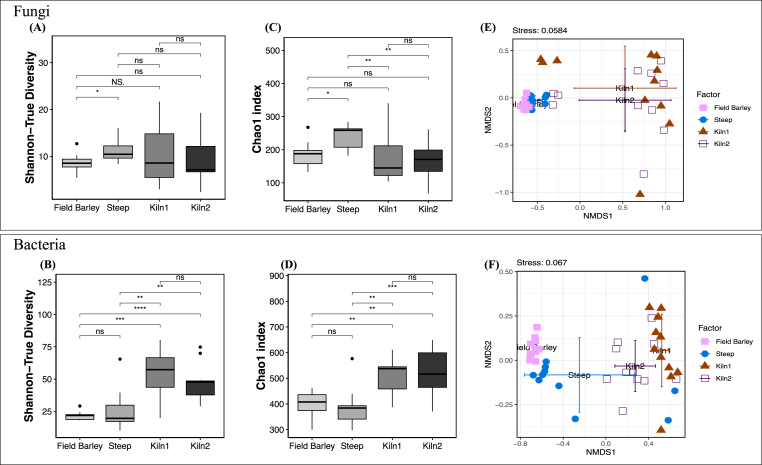
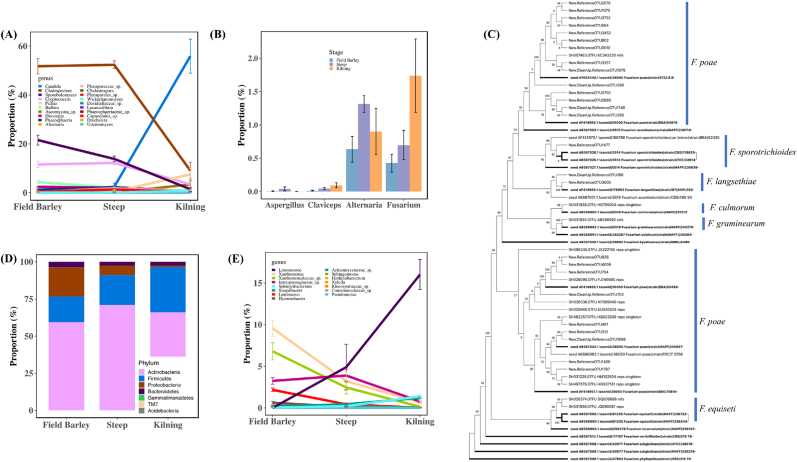
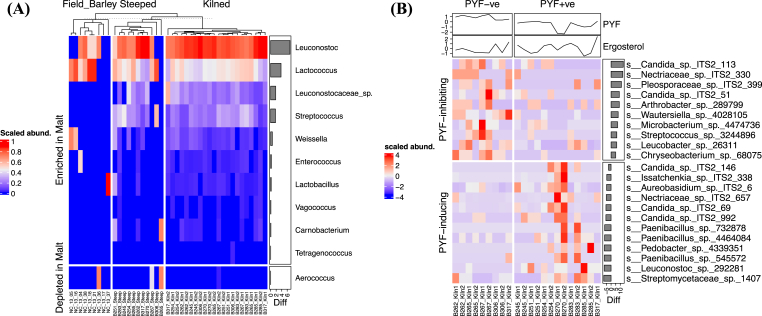
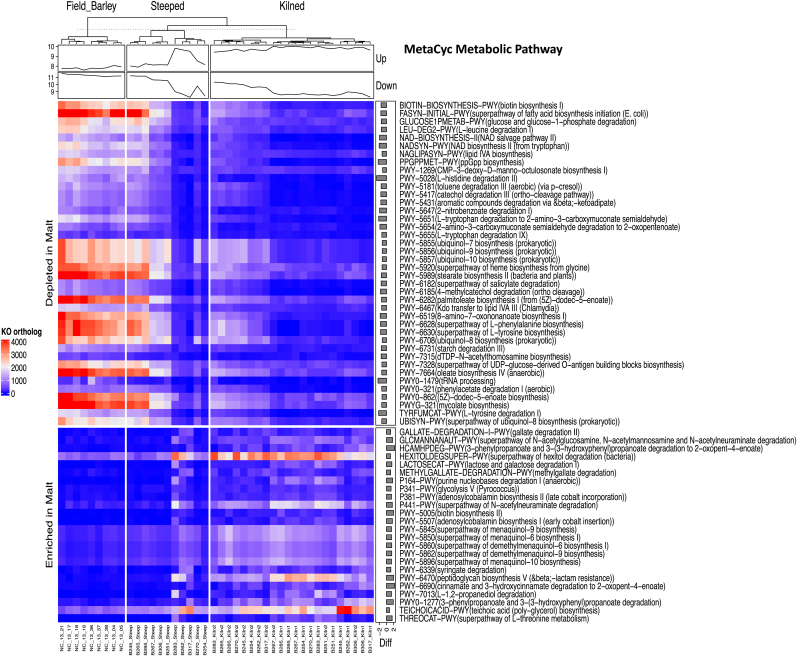
Microbial activity is present at every step of the malting process. It is, therefore, critical to manage the grain-associated microbial communities for the production of high-quality malts. This study characterized barley and malt epiphytic microbiota by metabarcoding the internal transcribed spacer (ITS) 2 region and the 16S rRNA gene V1-V4 metabarcodes, respectively. We elucidated the changes in the diversity and the compositional and functional changes of the grain-associated microbiota and inferred the impact of such changes on malting efficiency and premature yeast flocculation (PYF) of the commercial malt end product. Through the malting process, the fungal diversity decreased while bacterial community diversity increased. Lactic acid bacteria (LAB) and some mycotoxin-producing fungi (e.g. spp.) were found to be significantly enriched in malts. Most potential fungal pathogens, however, did not change in abundance through the malting process. Fungi (e.g. ) and bacteria (e.g. LAB, ) with the potential to generate organic acids or exhibit high hydrolytic enzymatic activity for degrading the endosperm cell walls and storage proteins were detected in greater abundance in kilned malt, suggesting their contribution to malting efficiency. Bacterial and fungal operational taxonomic units (OTUs) associated with PYF-positive malt were mainly identified as , and , while , and were associated with PYF-negative malt. The ecological networks of the field and steeped barley samples were found to be larger and denser, while that of the malt microbiome was smaller and less connected. A decrease in the proportion of negative interactions through the malting process suggested that malting destabilized the microbial networks. In summary, this study profiled the microbiota of commercial malting barley and malt samples in western Canada; the findings expanded our knowledge in the microbiology of malting while providing potential insights regarding the management of microbial-associated problems, such as PYF, in commercial malting.
微生物活动存在于麦芽制造过程的每一个步骤。因此,管理与谷物相关的微生物群落对于生产高质量麦芽至关重要。本研究通过分别对内部转录间隔区(ITS)2区域和16S rRNA基因V1-V4元条形码进行元条形码分析,对大麦和麦芽附生微生物群进行了表征。我们阐明了与谷物相关的微生物群的多样性、组成和功能变化,并推断了这些变化对商业麦芽最终产品的麦芽制造效率和过早酵母絮凝(PYF)的影响。在麦芽制造过程中,真菌多样性下降,而细菌群落多样性增加。发现乳酸菌(LAB)和一些产真菌毒素的真菌(如某些种)在麦芽中显著富集。然而,大多数潜在的真菌病原体在麦芽制造过程中的丰度没有变化。在烘焙麦芽中检测到更大量的具有产生有机酸或表现出高水解酶活性以降解胚乳细胞壁和储存蛋白潜力的真菌(如某些种)和细菌(如LAB、某些种),表明它们对麦芽制造效率有贡献。与PYF阳性麦芽相关的细菌和真菌操作分类单元(OTU)主要被鉴定为某些种、某些种和某些种,而某些种、某些种和某些种与PYF阴性麦芽相关。发现田间和浸泡大麦样品的生态网络更大、更密集,而麦芽微生物组的生态网络更小、连接更少。在麦芽制造过程中负相互作用比例的降低表明麦芽制造使微生物网络不稳定。总之,本研究描绘了加拿大西部商业麦芽大麦和麦芽样品的微生物群;这些发现扩展了我们在麦芽制造微生物学方面的知识,同时为商业麦芽制造中与微生物相关问题(如PYF)的管理提供了潜在的见解。