Department of Psychiatry and Psychotherapy, Jena University Hospital, Philosophenweg 3, Jena 07743, Germany.
Department of Psychiatry and Psychotherapy, Jena University Hospital, Philosophenweg 3, Jena 07743, Germany.
Psychiatry Res. 2022 Nov;317:114836. doi: 10.1016/j.psychres.2022.114836. Epub 2022 Sep 6.
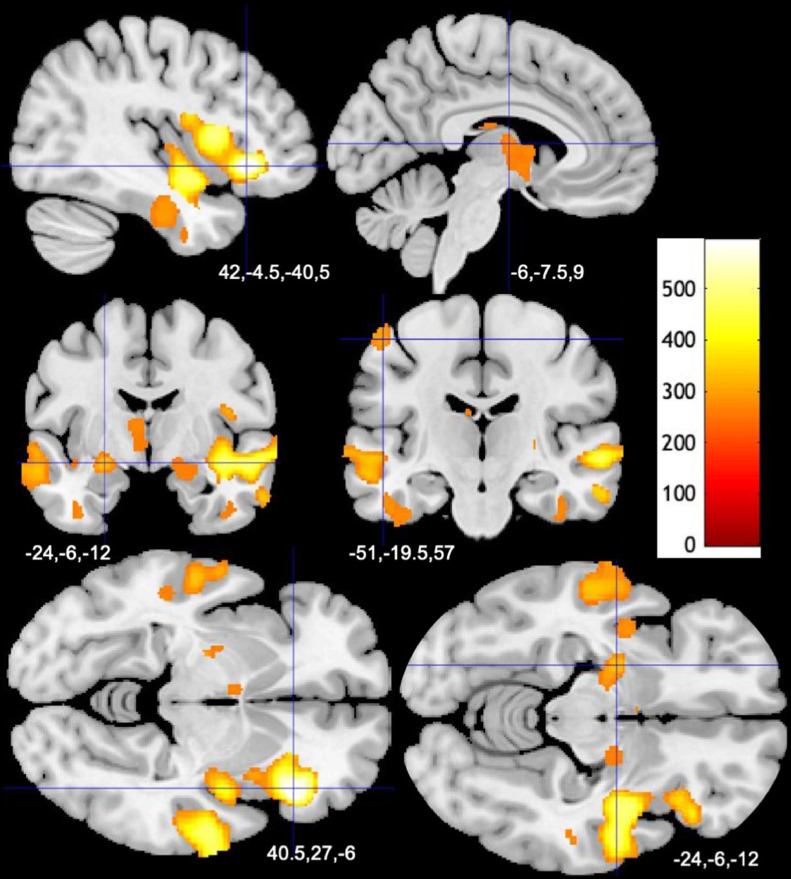
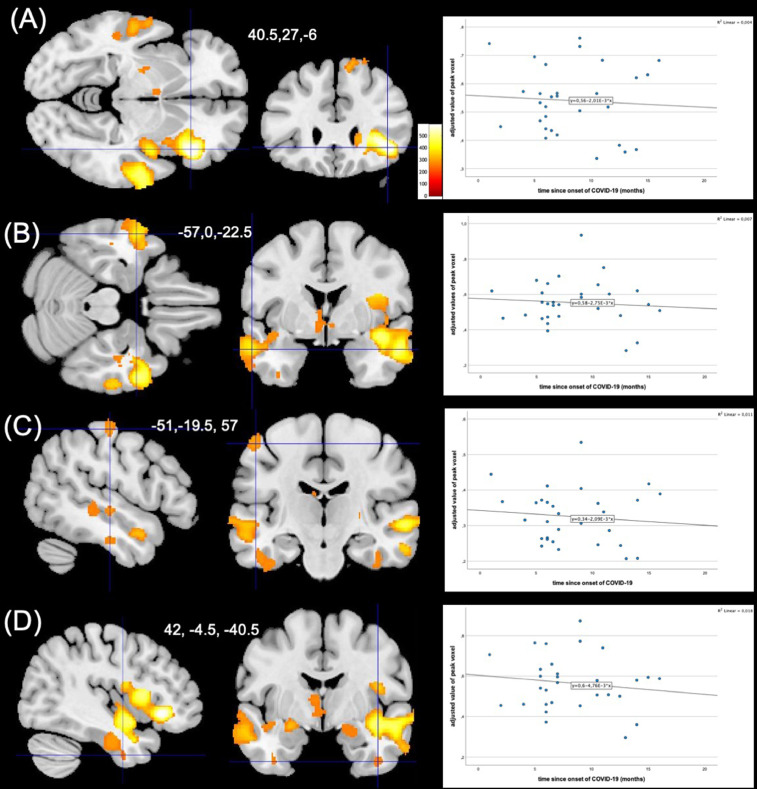
Neuropsychiatric symptoms are the most common sequelae of long-COVID. As accumulating evidence suggests an impact of survived SARS-CoV-2-infection on brain physiology, it is necessary to further investigate brain structural changes in relation to course and neuropsychiatric symptom burden in long-COVID. To this end, the present study investigated 3T-MRI scans from long-COVID patients suffering from neuropsychiatric symptoms (n = 30), and healthy controls (n = 20). Whole-brain comparison of gray matter volume (GMV) was conducted by voxel-based morphometry. To determine whether changes in GMV are predicted by neuropsychiatric symptom burden and/or initial severity of symptoms of COVID-19 and time since onset of COVID-19 stepwise linear regression analysis was performed. Significantly enlarged GMV in long-COVID patients was present in several clusters (spanning fronto-temporal areas, insula, hippocampus, amygdala, basal ganglia, and thalamus in both hemispheres) when compared to controls. Time since onset of COVID-19 was a significant regressor in four of these clusters with an inverse relationship. No associations with clinical symptom burden were found. GMV alterations in limbic and secondary olfactory areas are present in long-COVID patients and might be dynamic over time. Larger samples and longitudinal data in long-COVID patients are required to further clarify the mediating mechanisms between COVID-19, GMV and neuropsychiatric symptoms.
神经精神症状是长新冠的最常见后遗症。随着越来越多的证据表明 SARS-CoV-2 感染存活对大脑生理学有影响,有必要进一步研究与长新冠病程和神经精神症状负担相关的大脑结构变化。为此,本研究调查了患有神经精神症状的长新冠患者(n=30)和健康对照组(n=20)的 3T-MRI 扫描。通过基于体素的形态计量学进行全脑灰质体积(GMV)的比较。为了确定 GMV 的变化是否由神经精神症状负担和/或 COVID-19 症状的初始严重程度和 COVID-19 发病以来的时间预测,我们进行了逐步线性回归分析。与对照组相比,长新冠患者的 GMV 在几个簇中显著增大(跨越额颞叶区域、脑岛、海马体、杏仁核、基底节和两个半球的丘脑)。在其中四个簇中,COVID-19 发病以来的时间是一个显著的回归因子,呈反比关系。与临床症状负担没有关联。长新冠患者的边缘和二级嗅觉区的 GMV 改变存在,并且可能随着时间的推移而变化。需要更大的样本量和长新冠患者的纵向数据来进一步阐明 COVID-19、GMV 和神经精神症状之间的中介机制。