Bhatia Vikram, de Jesus Vivianne Cruz, Shaik Feroz Ahmed, Jaggupilli Appalaraju, Singh Nisha, Chelikani Prashen, Atukorallaya Devi
Manitoba Chemosensory Biology Research Group and Department of Oral Biology, University of Manitoba, Dr. Gerald Niznick College of Dentistry, Rady Faculty of Health Sciences University of Manitoba Winnipeg Manitoba Canada.
Children's Hospital Research Institute of Manitoba (CHRIM) Winnipeg Manitoba Canada.
FASEB Bioadv. 2022 Jun 30;4(9):574-584. doi: 10.1096/fba.2022-00032. eCollection 2022 Sep.
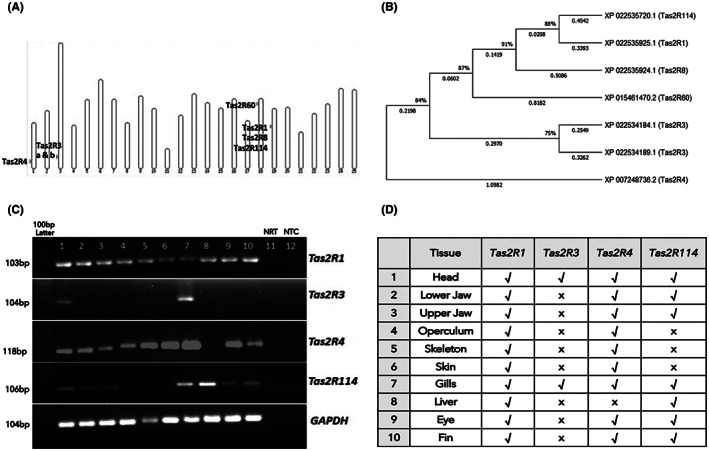
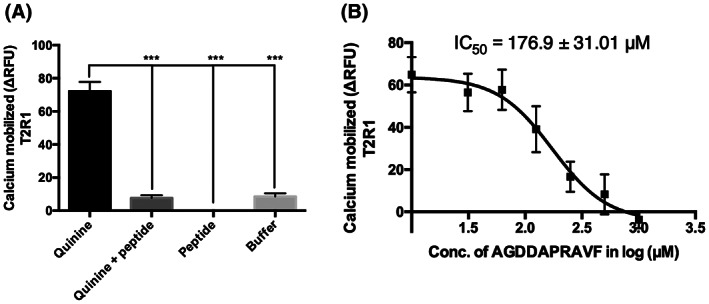
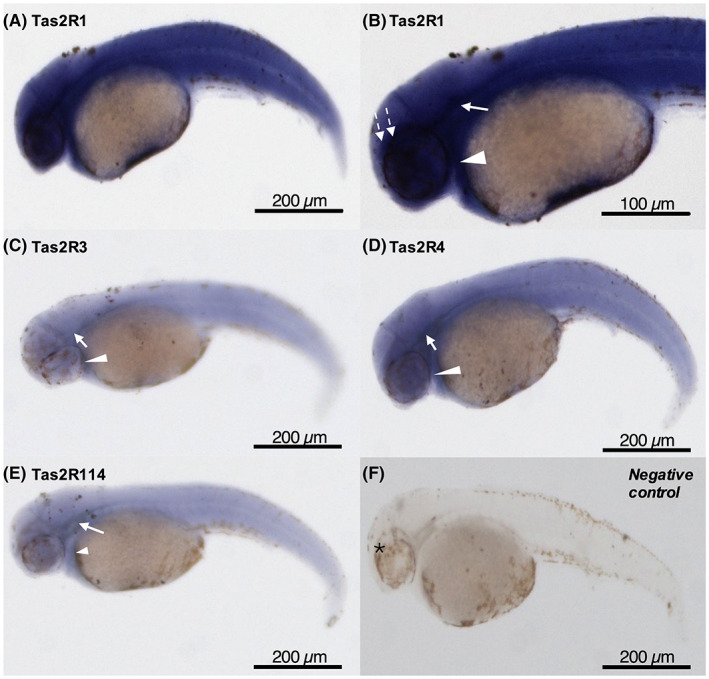
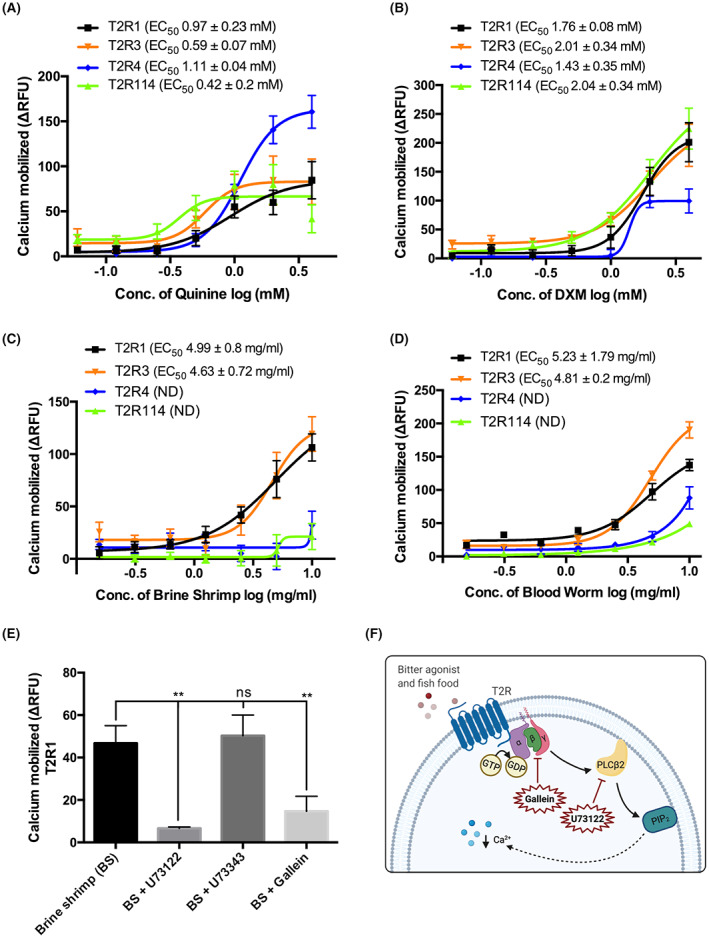
The chemical senses of olfaction and taste are well developed in fish and play a vital role in its various activities such as navigation, mate recognition, and food detection. The small teleost fish consists of interfertile river-dwelling and cave-dwelling populations, referred to as "surface fish" and "cavefish" respectively. An important anatomical feature of cavefish is the lack of eyes leading them to be referred to as blind fish and suggesting an enhanced functional role for other senses such as taste. In this study, we characterize the expression of bitter taste receptors (T2Rs or ) in and investigate their functionality in a heterologous expression system. The genome database of (ensemble and NCBI) showed 7 , among these , and are well characterized in humans and mice but not in . Therefore, the 4 were selected for further analysis and their expression in was confirmed by in situ hybridization and RT-PCR in early developmental stages. These are expressed in various oral and extraoral organs (liver, fins, jaws, and gills) in , and has maximum expression and is localized throughout the fish body. Using the heterologous expression of T2Rs in HEK293T cells coupled with cell-based calcium mobilization assays, we show that T2Rs are activated by commonly used fish food and known bitter agonists, including quinine. This study provides novel insights into the extraoral expression of T2Rs in and suggests their importance in extraoral food detection.
嗅觉和味觉这两种化学感官在鱼类中发育良好,在其诸如导航、配偶识别和食物探测等各种活动中发挥着至关重要的作用。小型硬骨鱼由可杂交的河流栖息种群和洞穴栖息种群组成,分别被称为“表层鱼”和“洞穴鱼”。洞穴鱼的一个重要解剖学特征是没有眼睛,这使得它们被称为盲鱼,并暗示味觉等其他感官具有增强的功能作用。在本研究中,我们对洞穴鱼中苦味受体(T2Rs或)的表达进行了表征,并在异源表达系统中研究了它们的功能。洞穴鱼的基因组数据库(Ensembl和NCBI)显示有7个T2Rs,其中,和在人类和小鼠中已有充分表征,但在洞穴鱼中尚未有相关研究。因此,选择了4个T2Rs进行进一步分析,并通过原位杂交和RT-PCR在早期发育阶段证实了它们在洞穴鱼中的表达。这些T2Rs在洞穴鱼的各种口腔和口腔外器官(肝脏、鳍、颌骨和鳃)中表达,并且有最高的表达水平且遍布鱼体。通过在HEK293T细胞中异源表达洞穴鱼T2Rs并结合基于细胞的钙动员测定,我们表明洞穴鱼T2Rs被常用的鱼类食物和已知的苦味激动剂(包括奎宁)激活。本研究为洞穴鱼中T2Rs的口腔外表达提供了新的见解,并表明它们在口腔外食物探测中的重要性。