Laboratory of Pathology, Instituto Oswaldo Cruz, Fiocruz, Rio de Janeiro, Brazil.
Brazilian National Institute of Science and Technology on Neuroimmunomodulation, Oswaldo Cruz Institute, Oswaldo Cruz Foundation, Rio de Janeiro, Brazil.
Front Immunol. 2022 Aug 25;13:955034. doi: 10.3389/fimmu.2022.955034. eCollection 2022.
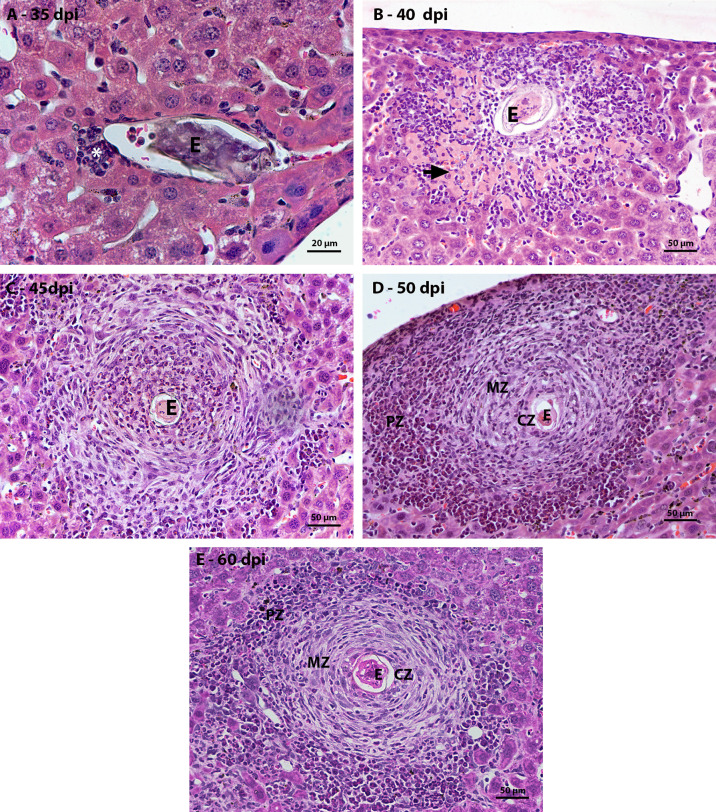
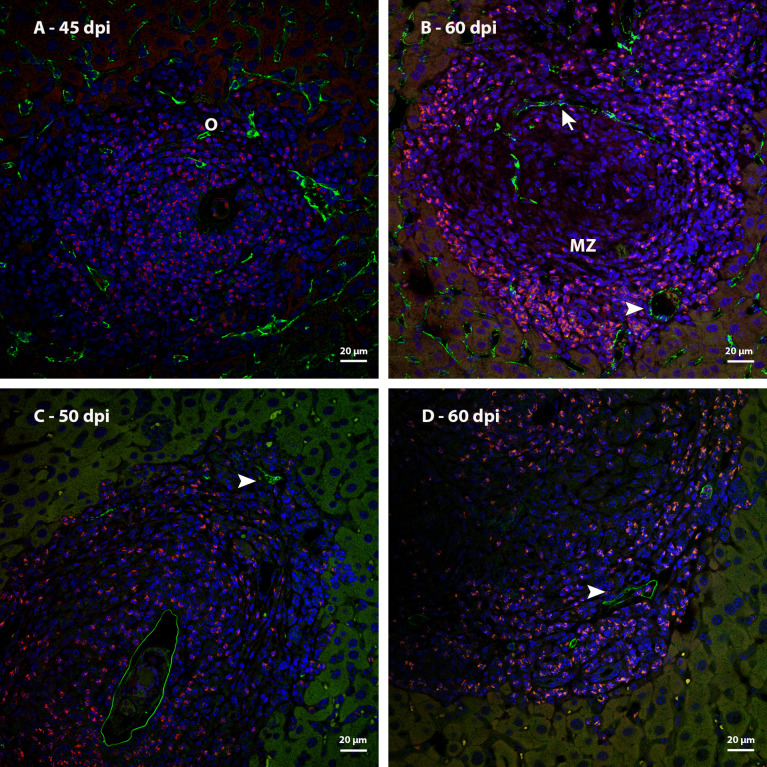
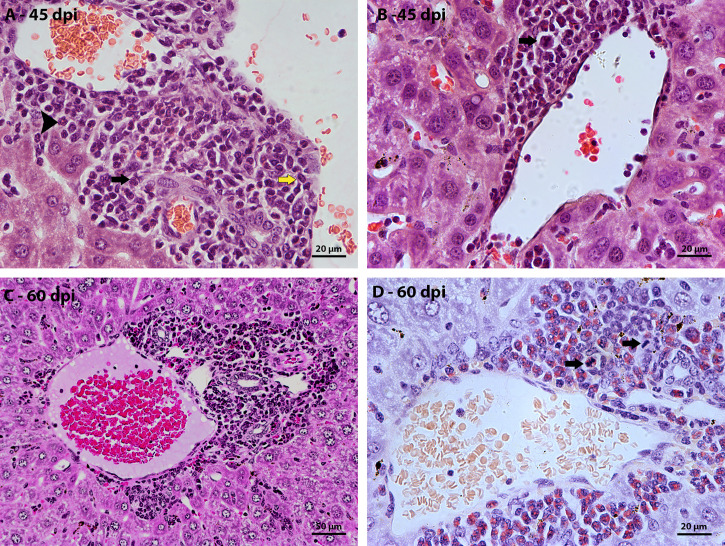
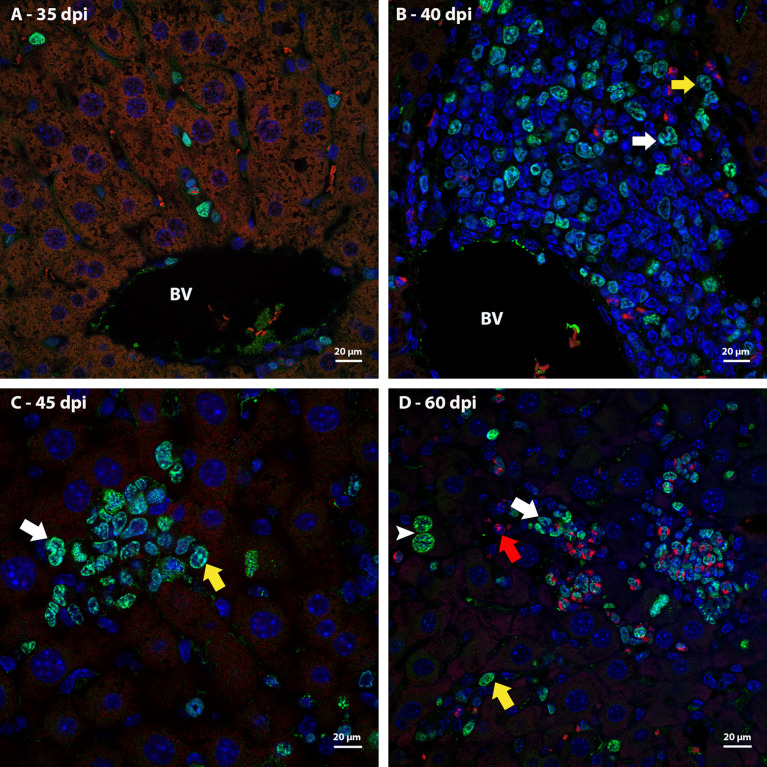
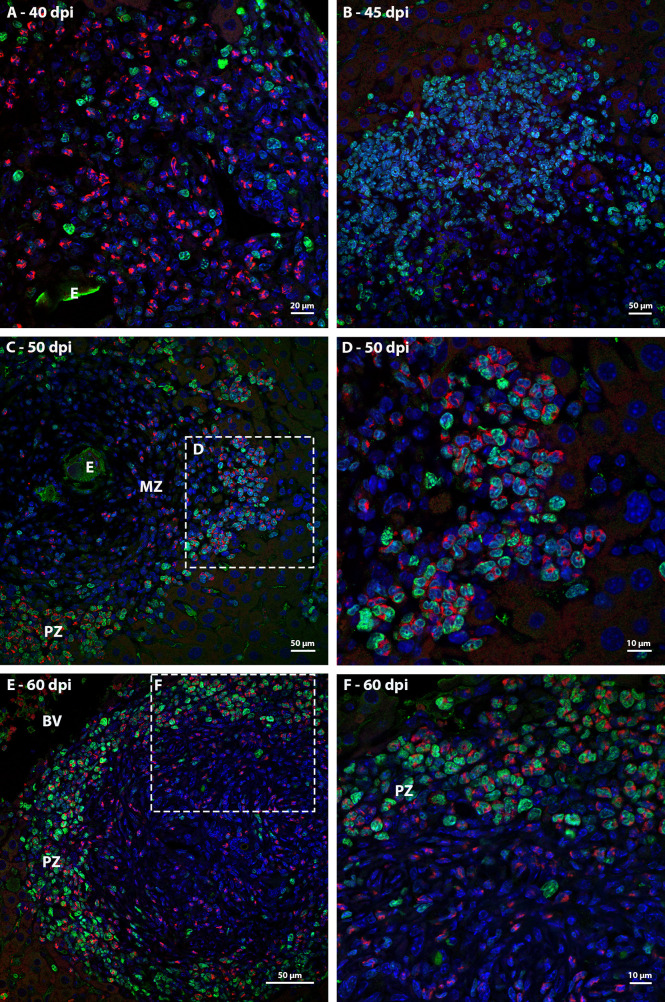
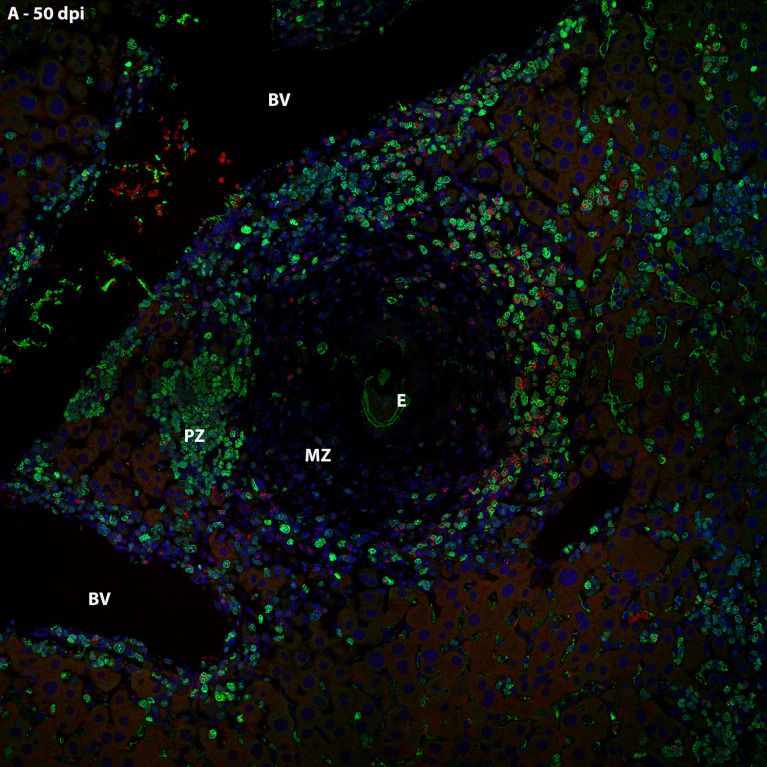
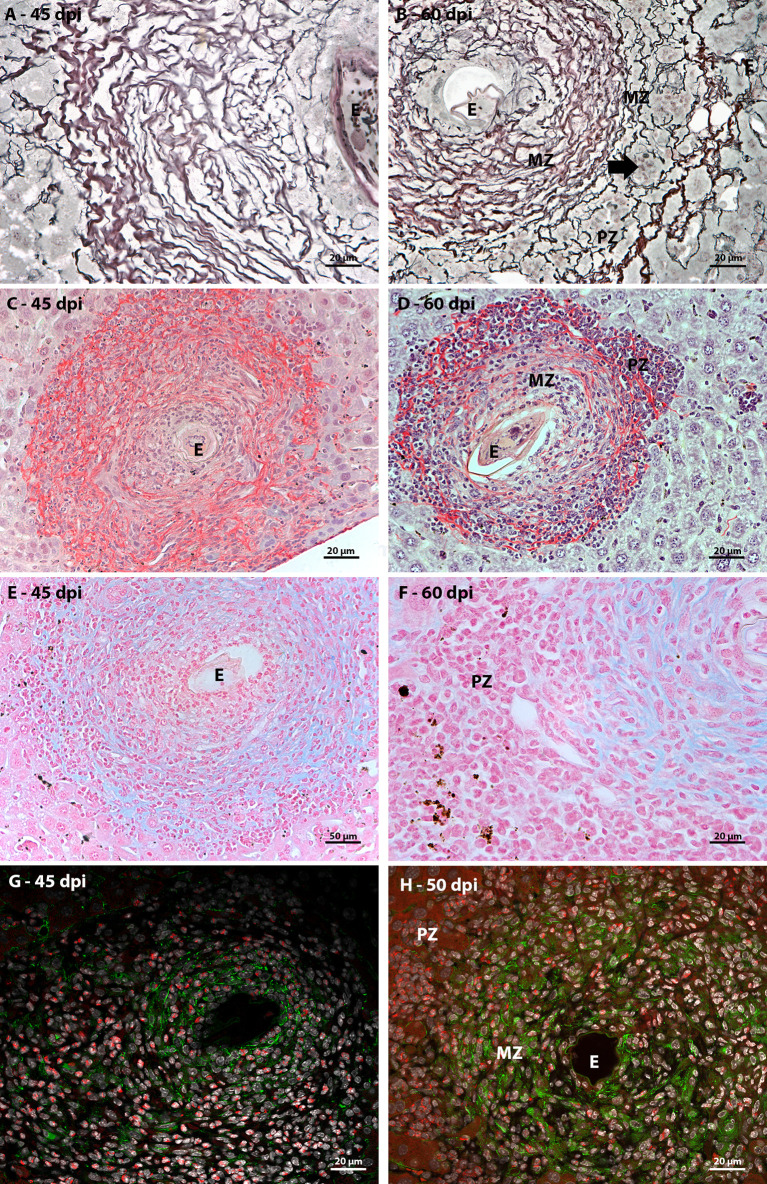
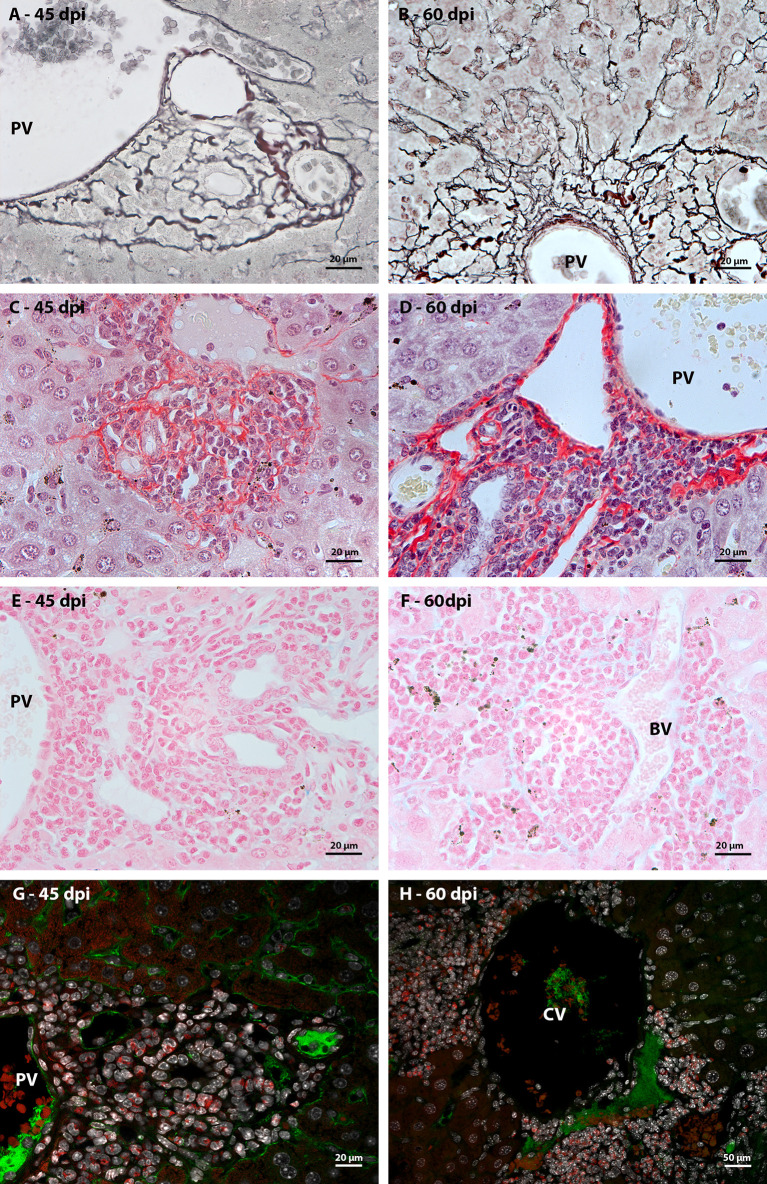
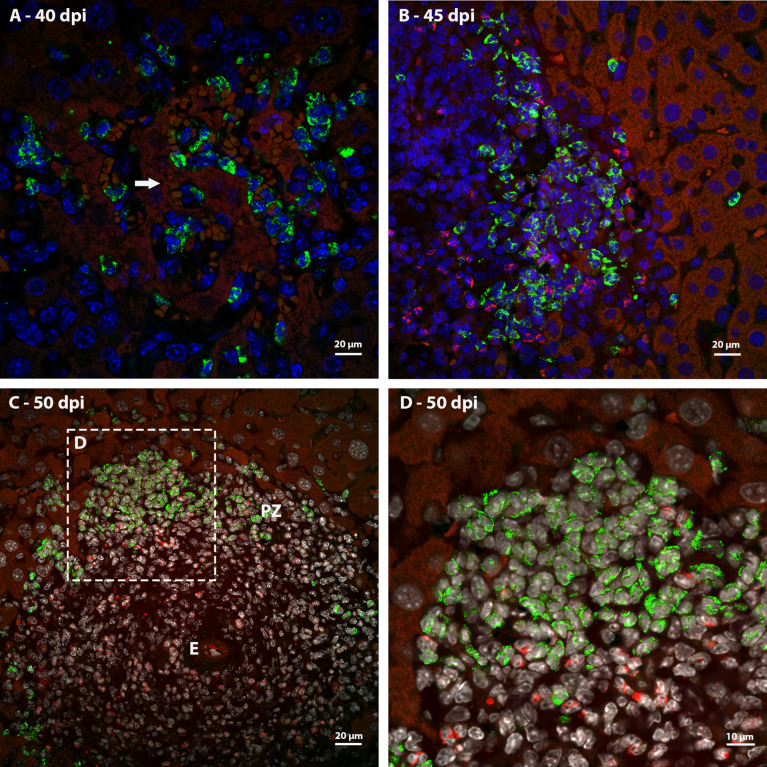
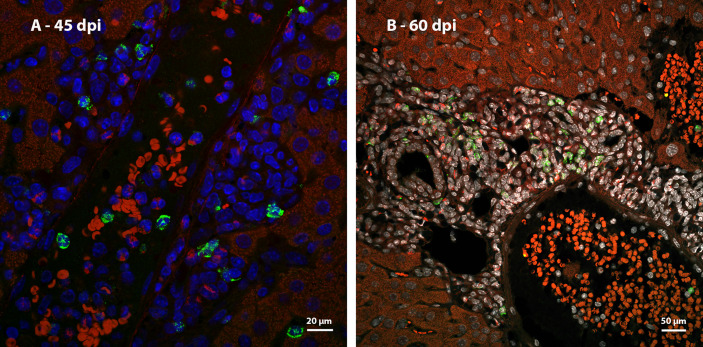
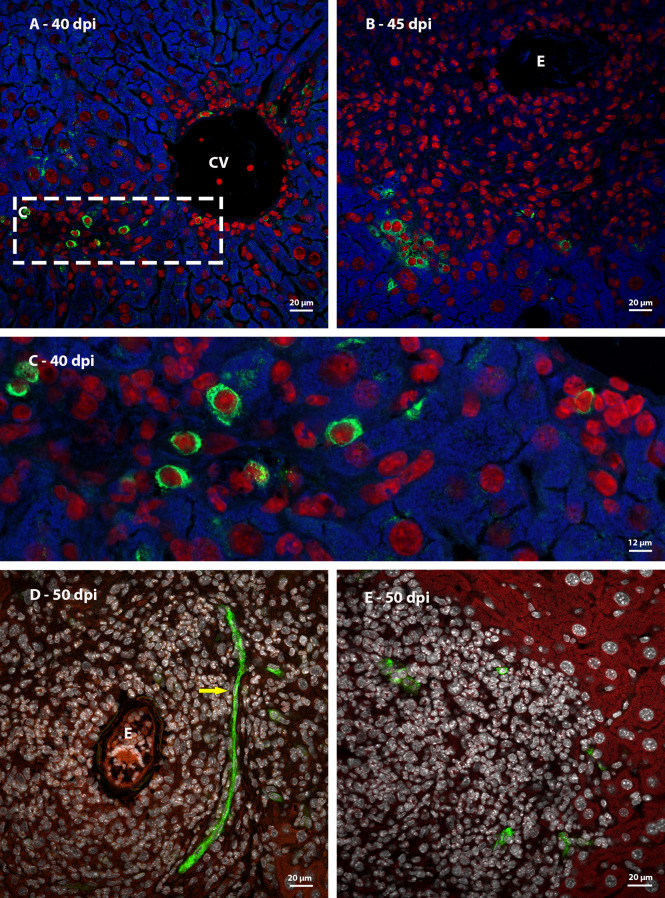
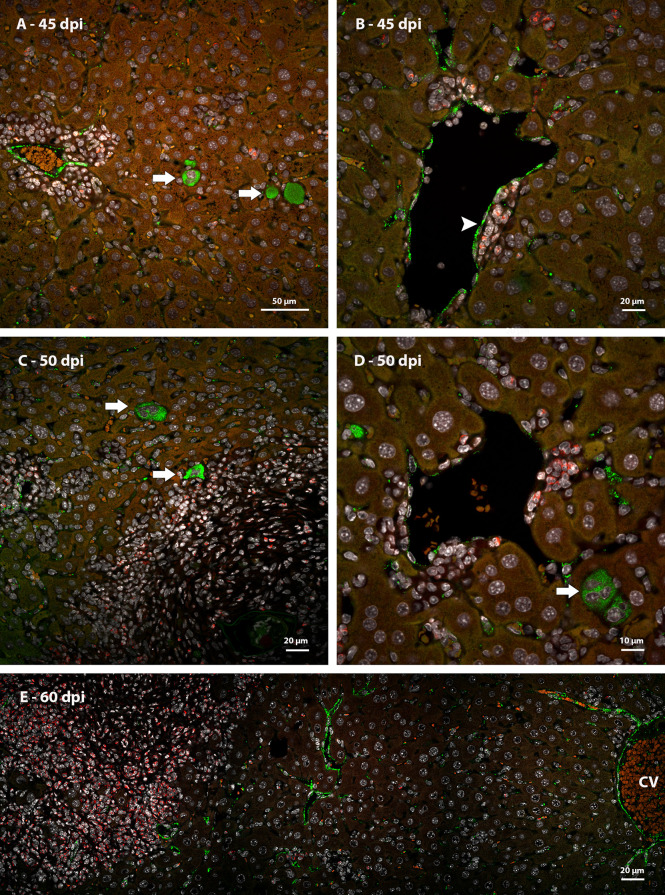
Many years ago, our research group has demonstrated extramedullary hematopoiesis in the peripheral zone of murine hepatic schistosomal granulomas. In the present study, we revisit this phenomenon using new technical and conceptual approaches. Therefore, newborn mice were percutaneously infected by cercariae and euthanized between 35- and 60-days post infection. Liver samples were submitted to histopathology and immunohistochemical analyses. Cells under mitosis and/or expressing Ki67 demonstrated the proliferation of hematopoietic cells both around the parasite's eggs trapped in the liver and around hepatic vessels. After 50 days post infection, proliferating cells at different levels on differentiation were located preferentially in the peripheral zone of the granulomas, around the vessels and inside the sinusoids. The presence of acidic and sulfated glycoconjugates, reticular fibers and the absence of fibronectin characterized the microenvironment for attraction and maintenance of hematopoiesis. Some neutrophils secreted MMP9 from the earliest points of infection, indicating degradation of the extracellular matrix in regions of histolysis and a possible chemoattraction of hematopoietic stem cells to the liver. Fall-3+ cells and Sca-1+ cells indicated that early hematopoietic progenitors could be mobilized to the liver. Groups of vWF+ megakaryocytes suggest chemoattraction of these cells and/or migration, proliferation, and differentiation of very immature progenitors to this organ. The increase of blood vessels and extramedullary hematopoiesis in this environment, where markers of immature hematopoietic and endothelial cells have been identified, points to the possibility of the presence of progenitors for endothelial and hematopoietic cells in the liver during the infection. There is also the possibility of concomitant migration of more differentiated hematopoietic progenitors, that proliferate and differentiate in the liver, and the occurrence of angiogenesis caused by inflammation or release of ovular antigens that stimulate the activation and proliferation of endothelial cells. Altogether, these data increase knowledge about a murine model that is of interest for investigating the pathology of the schistosomiasis and also the dynamics of hematopoiesis.
许多年前,我们的研究小组已经证明了在鼠类肝血吸虫肉芽肿的外周区存在骨髓外造血。在本研究中,我们使用新的技术和概念方法重新研究了这一现象。因此,新生小鼠经皮感染尾蚴,并在感染后 35-60 天内安乐死。肝组织标本进行组织病理学和免疫组织化学分析。处于有丝分裂和/或表达 Ki67 的细胞表明,在寄生虫卵被困在肝脏和肝血管周围的造血细胞增殖。感染后 50 天,处于不同分化水平的增殖细胞优先位于肉芽肿的外周区,围绕血管和窦内。酸性和硫酸化糖缀合物、网状纤维的存在以及纤连蛋白的缺乏,构成了吸引和维持造血的微环境特征。一些中性粒细胞从感染的最早点开始分泌 MMP9,表明在组织溶解区域的细胞外基质降解,以及造血干细胞向肝脏的可能趋化作用。Fall-3+细胞和 Sca-1+细胞表明,早期造血祖细胞可能被动员到肝脏。vWF+巨核细胞的聚集提示这些细胞的趋化作用,以及/或非常不成熟祖细胞向该器官的迁移、增殖和分化。在这个环境中,血管和骨髓外造血增加,其中已经鉴定出不成熟造血和内皮细胞的标志物,这表明在感染期间,肝脏中可能存在内皮细胞和造血细胞的祖细胞。也有可能同时迁移更分化的造血祖细胞,这些细胞在肝脏中增殖和分化,以及由炎症或卵抗原释放引起的血管生成,刺激内皮细胞的激活和增殖。总之,这些数据增加了对一种感兴趣的鼠类模型的认识,该模型可用于研究血吸虫病的病理学以及造血动力学。