Jiangsu Key Laboratory of New Drug Research and Clinical Pharmacy, Xuzhou Medical University, Xuzhou 221004, China.
Jiangsu Province Key Laboratory of Anesthesiology, NMPA Key Laboratory for Research and Evaluation of Narcotic and Psychotropic Drugs, Xuzhou Medical University, Xuzhou 221004, China.
Oxid Med Cell Longev. 2022 Sep 1;2022:4722647. doi: 10.1155/2022/4722647. eCollection 2022.
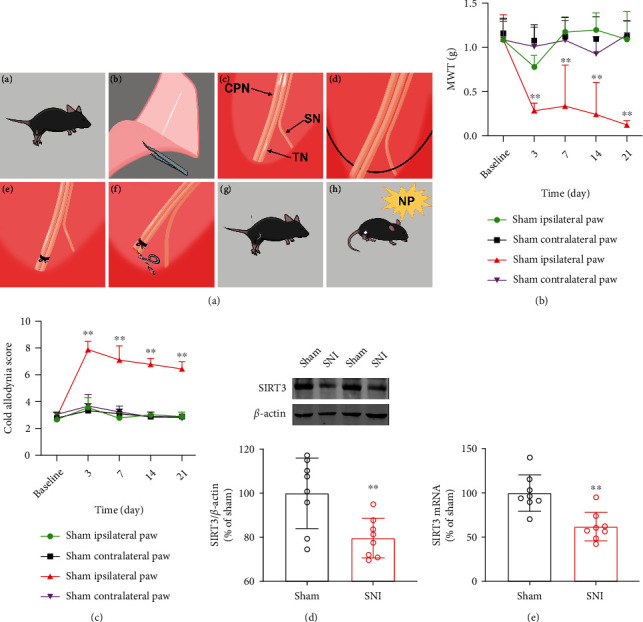
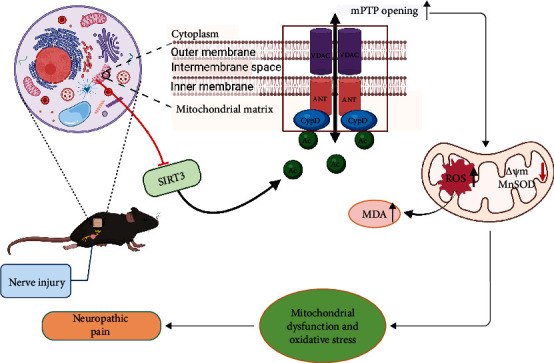
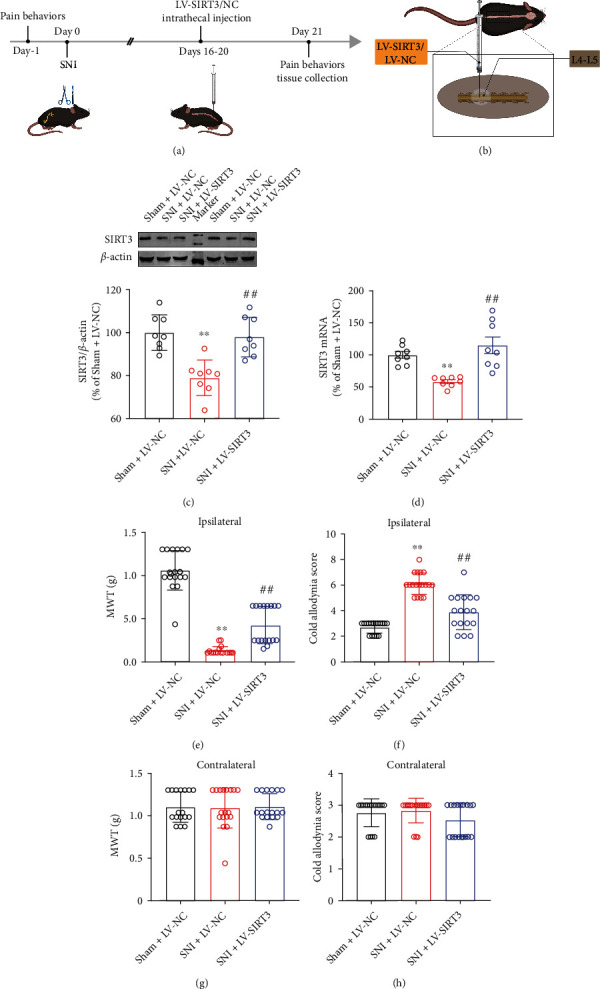
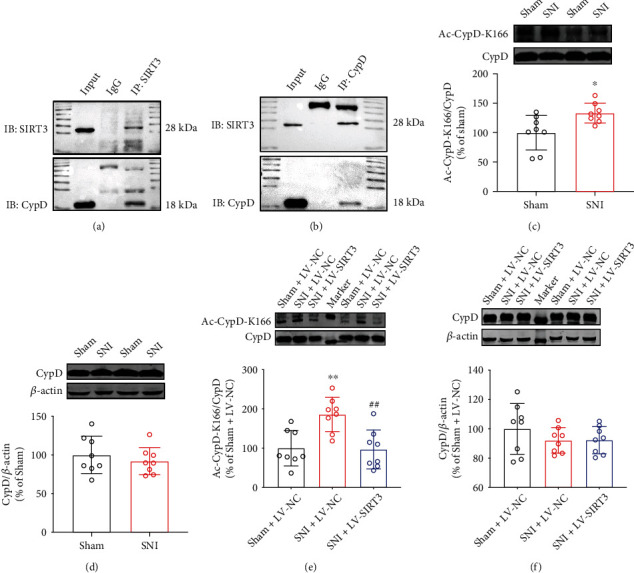
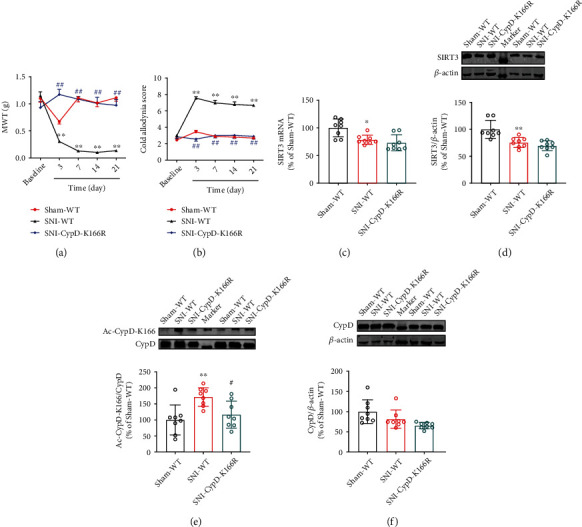
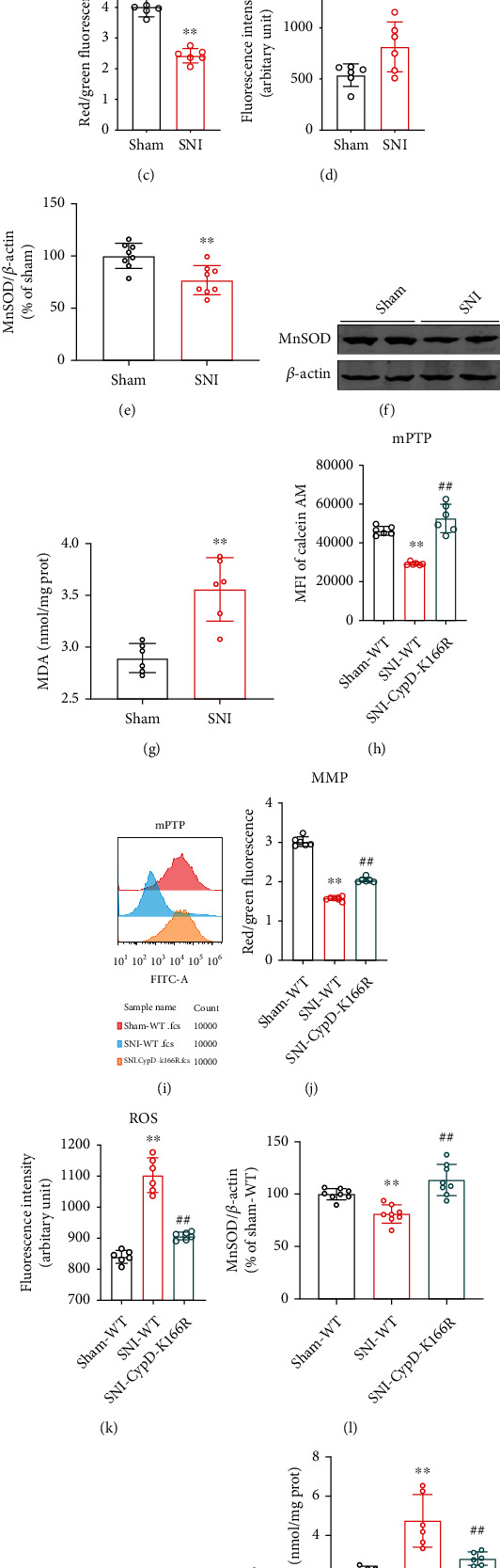
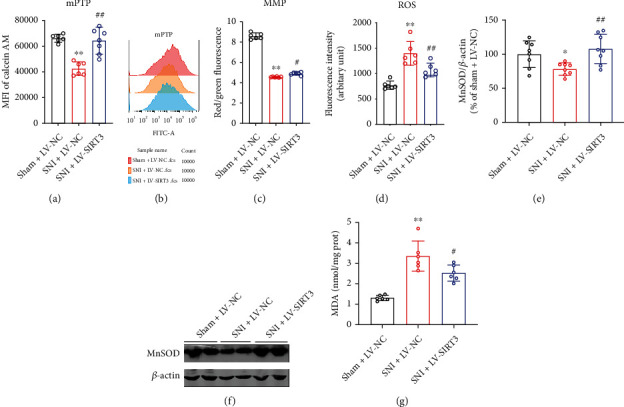
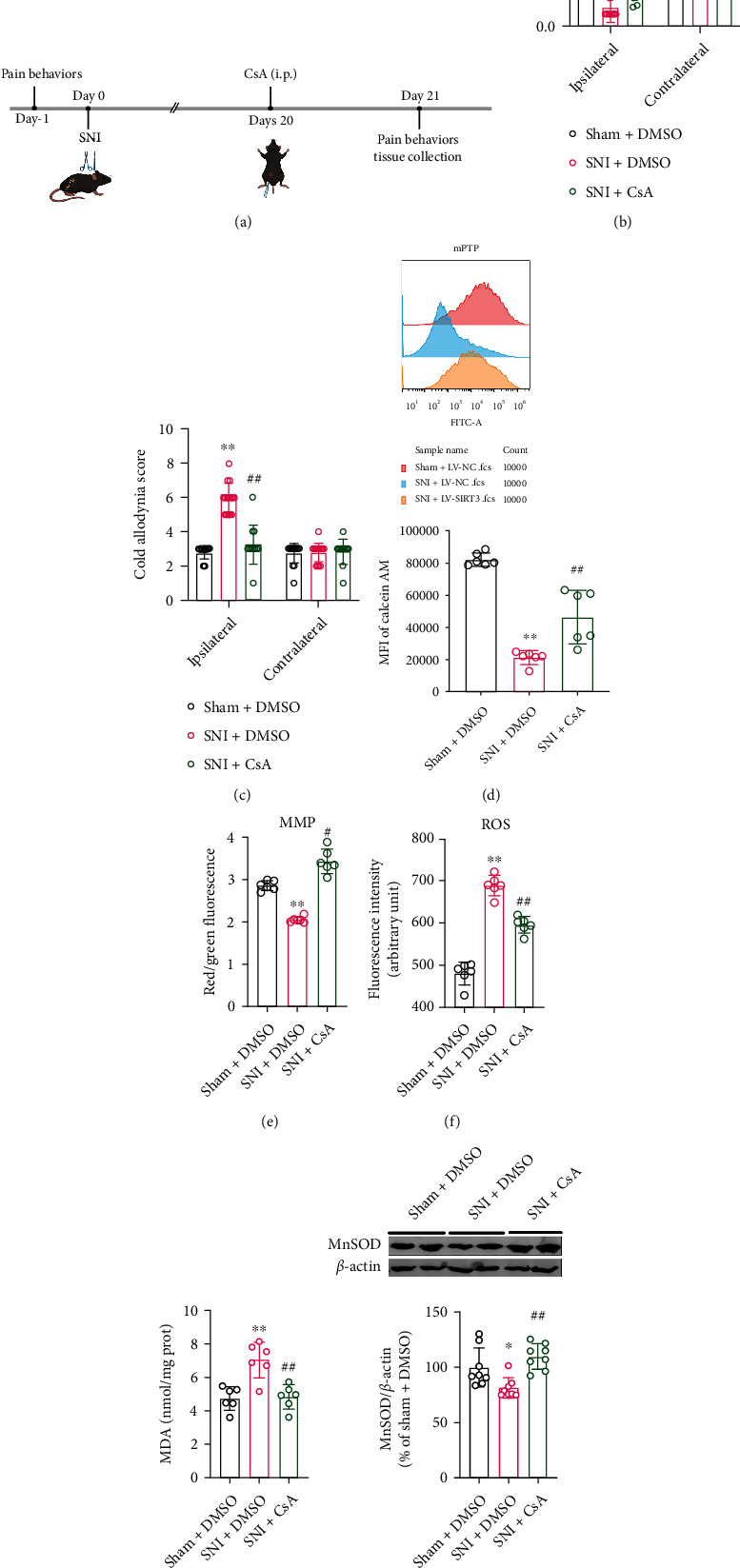
Numerous studies have shown that mitochondrial dysfunction manifested by increased mitochondrial permeability transition pore (mPTP) opening and reactive oxygen species (ROS) level, and decreased mitochondrial membrane potential (MMP) plays an important role in the development of neuropathic pain. Sirtuin3 (SIRT3), a nicotinamide adenine dinucleotide (NAD)-dependent histone deacetylase, has been shown to inhibit mitochondrial oxidative stress. However, the role of SIRT3 in neuropathic pain is unclear. In this study, we found that the protein and mRNA levels of SIRT3 were significantly downregulated in the spinal cords of spared nerve injury- (SNI-) induced neuropathic pain mice, while overexpression of spinal SIRT3 reversed SNI-induced pain hypersensitivity. Further study showed that SIRT3 overexpression reduced the acetylation level of lysine 166 (K166) on cyclophilin D (CypD), the regulatory component of the mPTP, inhibited the mPTP opening, decreased ROS and malondialdehyde (MDA) levels, and increased MMP and manganese superoxide dismutase (MnSOD) in SNI mice. Point mutation of K166 to arginine on CypD (CypD-K166R) abrogated SNI-induced mitochondrial dysfunction and neuropathic pain in mice. Moreover, inhibiting mPTP opening by cyclosporin A (CsA) improved mitochondrial function and neuropathic pain in SNI mice. Together, these data show that SIRT3 is necessary to prevent neuropathic pain by deacetylating CypD-K166 and further improving mitochondrial dysfunction. This study may shed light on a potential drug target for the treatment of neuropathic pain.
大量研究表明,线粒体功能障碍表现为线粒体通透性转换孔(mPTP)开放和活性氧(ROS)水平增加,以及线粒体膜电位(MMP)降低,在神经病理性疼痛的发展中发挥重要作用。Sirtuin3(SIRT3)是一种烟酰胺腺嘌呤二核苷酸(NAD)依赖性组蛋白去乙酰化酶,已被证明能抑制线粒体氧化应激。然而,SIRT3 在神经病理性疼痛中的作用尚不清楚。在本研究中,我们发现,在 spared nerve injury-(SNI-)诱导的神经病理性疼痛小鼠的脊髓中,SIRT3 的蛋白和 mRNA 水平显著下调,而脊髓 SIRT3 的过表达逆转了 SNI 诱导的痛觉过敏。进一步的研究表明,SIRT3 的过表达降低了线粒体通透性转换孔(mPTP)调节亚基环孢素 D(CypD)赖氨酸 166(K166)上的乙酰化水平,抑制了 mPTP 的开放,降低了 ROS 和丙二醛(MDA)水平,并增加了 SNI 小鼠的 MMP 和锰超氧化物歧化酶(MnSOD)。CypD 上 K166 突变为精氨酸(CypD-K166R)可消除 SNI 诱导的小鼠线粒体功能障碍和神经病理性疼痛。此外,环孢素 A(CsA)抑制 mPTP 开放可改善 SNI 小鼠的线粒体功能和神经病理性疼痛。总之,这些数据表明,SIRT3 通过去乙酰化 CypD-K166 来预防神经病理性疼痛是必要的,并且进一步改善了线粒体功能障碍。本研究可能为治疗神经病理性疼痛提供一个潜在的药物靶点。