Tachias Frixos, Samara Evangelia, Petrou Anastasios, Karakosta Agathi, Siminelakis Stavros, Apostolakis Efstratios, Tzimas Petros
Department of Anesthesiology and Postoperative Intensive Care, University Hospital of Ioannina, Ioannina, Greece.
Department of Anesthesiology and Postoperative Intensive Care, Faculty of Medicine University of Ioannina, Ioannina, Greece.
Anesthesiol Res Pract. 2022 Sep 1;2022:3993452. doi: 10.1155/2022/3993452. eCollection 2022.
Cell salvaging is well established in the blood management of cardiac patients, but there remain some concerns about its effects on perioperative bleeding and transfusion variables. This randomized controlled study investigated the potential effects of the centrifuged end-product on bleeding, transfusion rates, and other transfusion-related variables in adult cardiac surgery patients submitted to extracorporeal circulation.
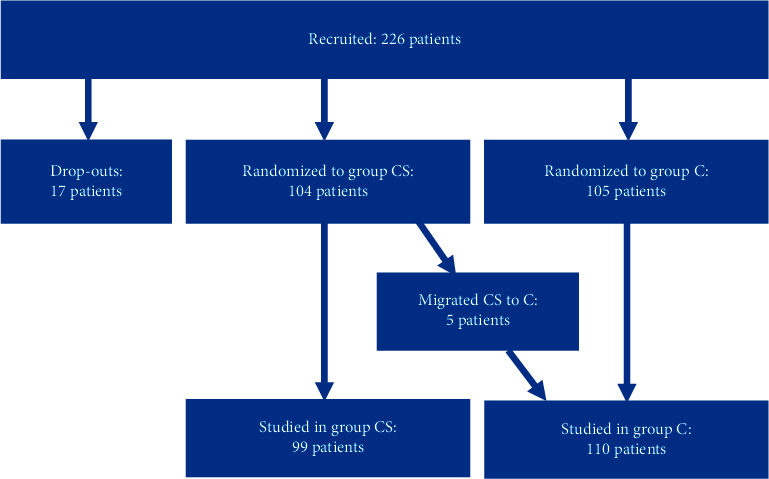
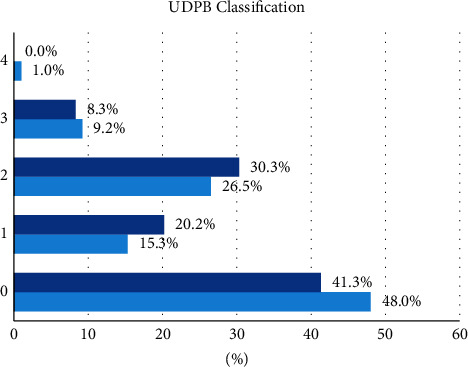
Patients were randomly chosen to receive (cell-salvage group, 99 patients) or not to receive (control group, 110 patients) the centrifuged product of a cell salvage apparatus. Bleeding and transfusion rates according to the universal definition of perioperative bleeding (UDPB) classification, postoperative hemoglobin, coagulation, and oxygenation indices were recorded and compared between the groups.
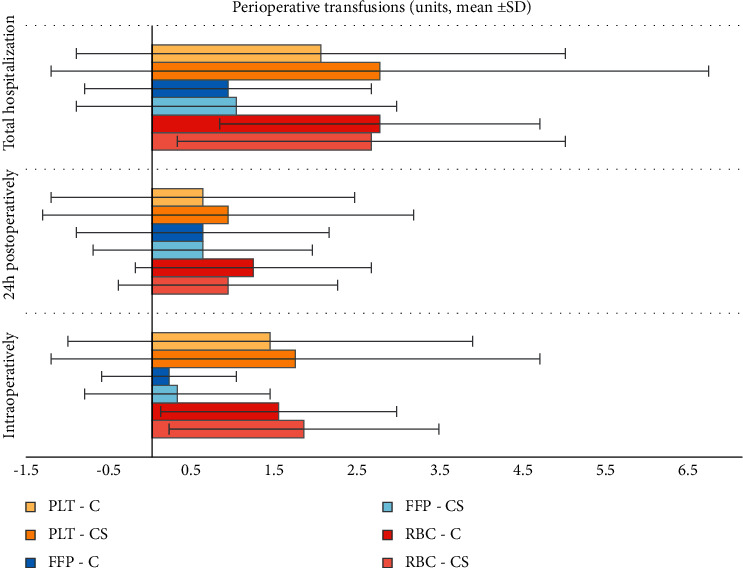
Both groups had almost identical bleeding and transfusion rates (median value: 2 units of red blood cells (RBC) and no units of fresh frozen plasma (FFP) and platelets (PLT) for both groups, > 0.05). Patients in the cell-salvage group presented slightly higher hemoglobin concentrations (10.6 ± 1.1 vs. 10.1 ± 1.7 g/dL, < 0.05, respectively) and a tendency towards better oxygenation indices (PO/FO: 241 ± 94 vs. 207 ± 84, =0.013) in the postoperative period albeit with a tendency for prolongation of prothrombin time (INR: 1.31 ± 0.18 vs. 1.26 ± 0.12, =0.008).
Within the study's constraints, the perioperative use of the cell salvage concentrate does not seem to affect bleeding or transfusion variables, although it could probably ameliorate postoperative oxygenation in adult cardiac surgery patients. A tendency to promote coagulation disturbances was detected.
细胞回收技术在心脏手术患者的血液管理中已得到广泛应用,但人们对其对围手术期出血和输血变量的影响仍存在一些担忧。这项随机对照研究调查了离心终产物对接受体外循环的成年心脏手术患者出血、输血率及其他输血相关变量的潜在影响。
随机选择患者接受(细胞回收组,99例患者)或不接受(对照组,110例患者)细胞回收装置的离心产物。根据围手术期出血通用定义(UDPB)分类记录出血和输血率,比较两组术后血红蛋白、凝血和氧合指标。
两组的出血和输血率几乎相同(中位数:两组均为2单位红细胞(RBC),无新鲜冰冻血浆(FFP)和血小板(PLT)单位,>0.05)。细胞回收组患者术后血红蛋白浓度略高(分别为10.6±1.1 vs. 10.1±1.7 g/dL,<0.05),氧合指标有改善趋势(PO/FO:241±94 vs. 207±84,=0.013),尽管凝血酶原时间有延长趋势(INR:1.31±0.18 vs. 1.26±0.12,=0.008)。
在本研究的限制范围内,围手术期使用细胞回收浓缩物似乎不会影响出血或输血变量,尽管它可能改善成年心脏手术患者的术后氧合。检测到有促进凝血障碍的趋势。