Cáceres-Matos Rocío, Luque-Oliveros Manuel, Pabón-Carrasco Manuel
Research Group PAIDI-CTS-1050, "Complex Care, Chronicity and Health Outcomes", Faculty of Nursing, Physiotherapy and Podiatry, University of Seville, 41009 Seville, Spain.
Cardiovascular and Thoracic Surgery Operating Theatre Unit, Faculty of Nursing, Physiotherapy and Podiatry, Virgen Macarena University Hospital, University of Seville, 41009 Seville, Spain.
J Clin Med. 2024 Oct 11;13(20):6073. doi: 10.3390/jcm13206073.
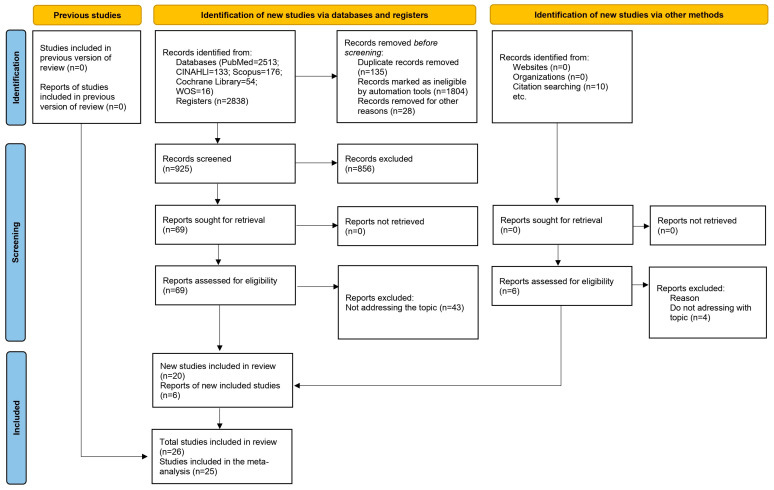
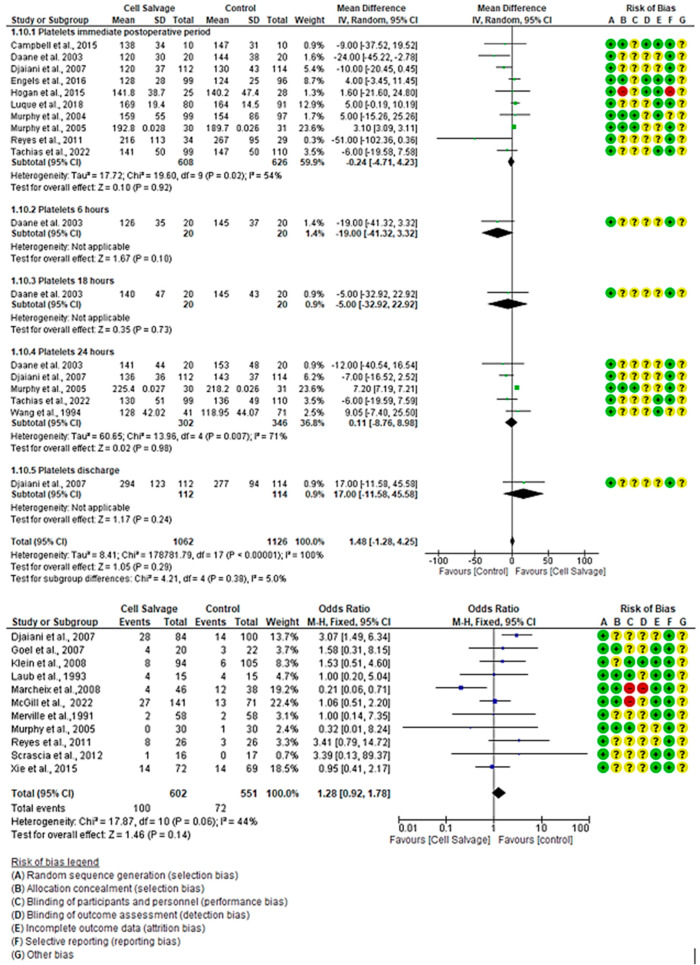
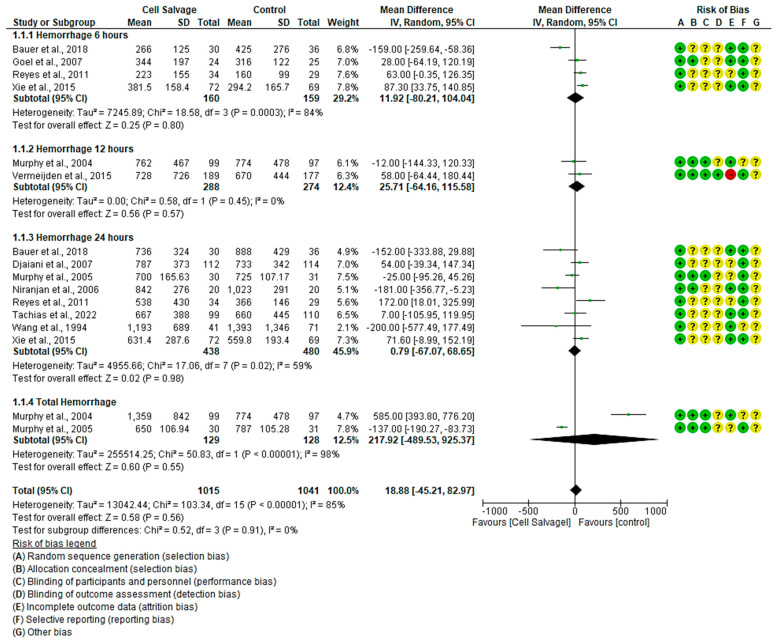
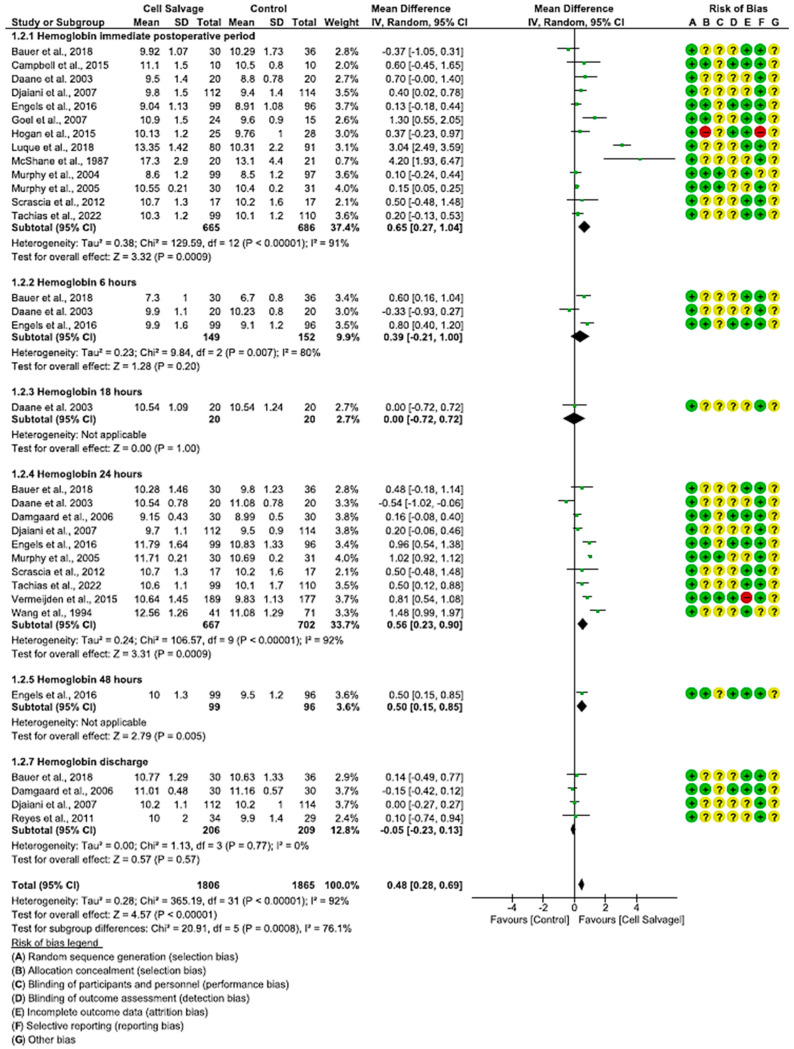
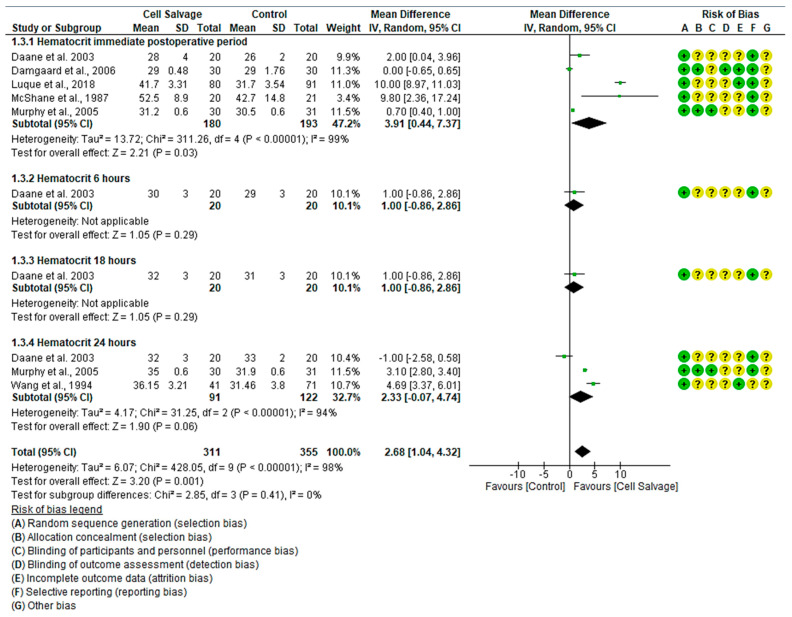
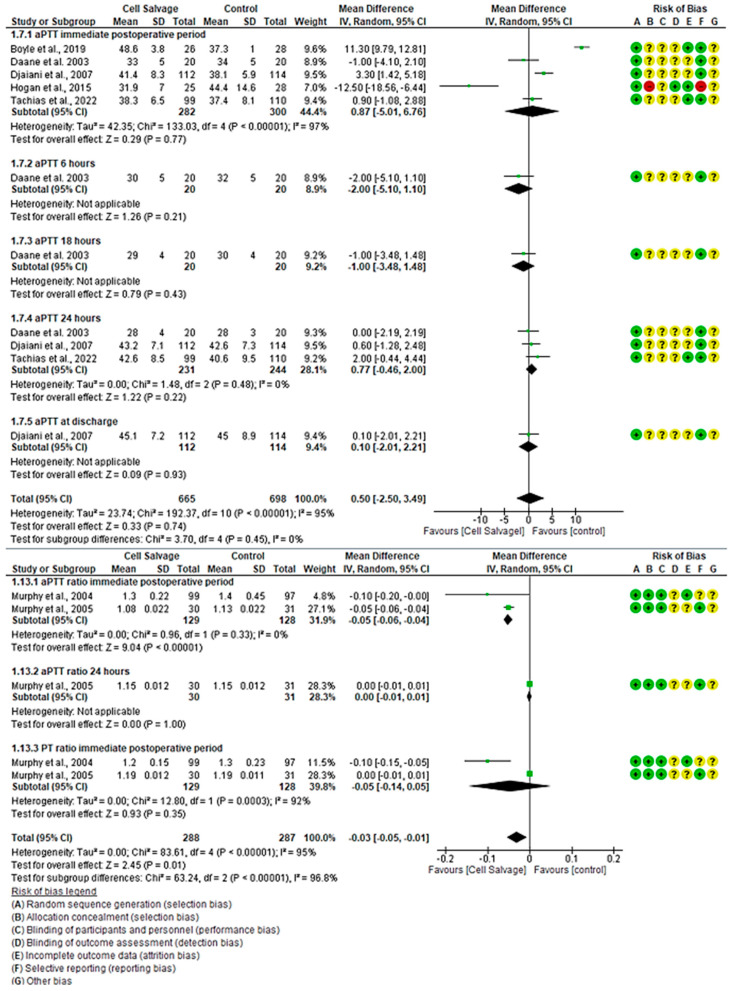
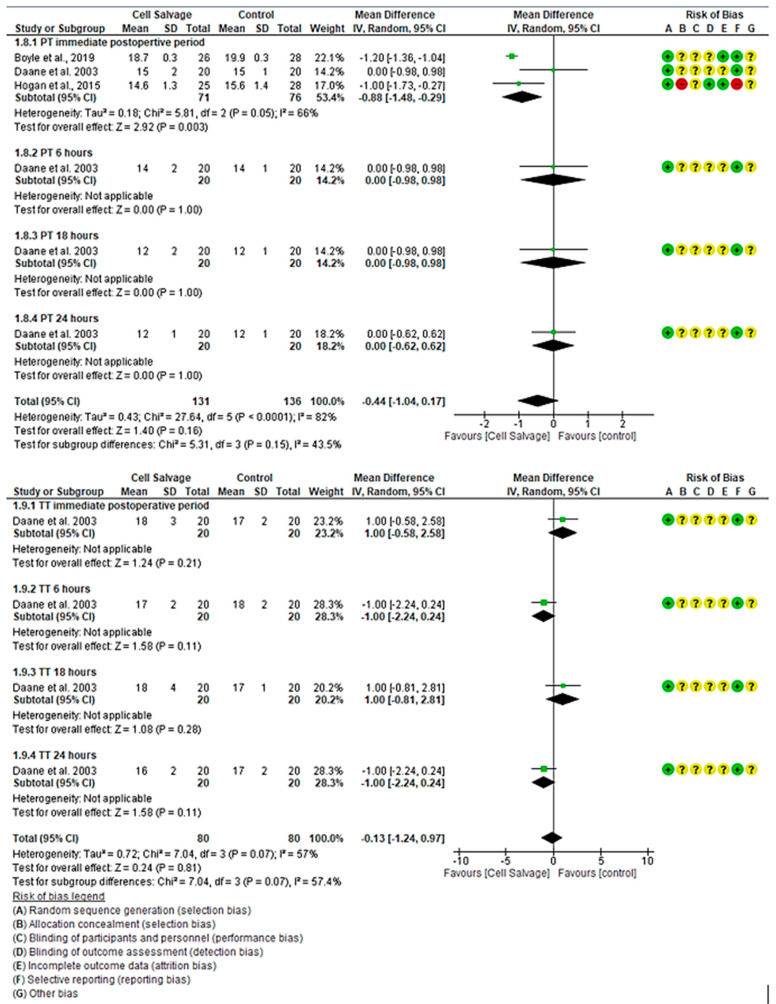
: Individuals undergoing cardiac surgery face an increased risk of bleeding, as well as alterations in biochemical and coagulation patterns. Therefore, assessing the effectiveness of systems such as Cell Salvage is necessary to prevent potential surgical complications. : To evaluate the efficacy of Cell Salvage in relation to the biochemical parameters of the red blood series and coagulation, as well as the risk of hemorrhage. : A systematic review, accompanied by a meta-analysis, was executed via an extensive literature exploration encompassing Medline, CINAHL, Scopus, Web of Science, and the Cochrane Library. The inclusion criteria comprised studies in English or Spanish, without year restrictions, conducted in adults and with a randomized controlled trial design. : Twenty-six studies were included in the systematic review, involving a total of 2850 patients (experimental group = 1415; control group = 1435). Cell Salvage did not demonstrate superior outcomes compared to allogeneic transfusions in the management of post-surgical hemorrhage, as well as in total blood loss, platelet count, fresh frozen plasma, and fibrinogen. However, Cell Salvage showed a greater effectiveness for hemoglobin (moderate evidence), hematocrit (low evidence), post intervention D-dimer (low evidence), and some coagulation-related parameters (low evidence) compared to allogeneic transfusions. Finally, better results were found in the control group for INR parameters. : The use of the Cell Salvage system holds high potential to improve the postoperative levels of biochemical and coagulation parameters. However, the results do not provide definitive evidence regarding its effectiveness for hemorrhage control, platelet count, fresh frozen plasma, and fibrinogen. Therefore, it is recommended to increase the number of studies to assess the impact of the Cell Salvage system on improvements in the red blood cell count and patient coagulation patterns. In addition, protocols should be homogenized, and variables such as the sex of the participants should be taken into account.
接受心脏手术的个体面临出血风险增加,以及生化和凝血模式的改变。因此,评估诸如细胞回收系统等的有效性对于预防潜在的手术并发症是必要的。
评估细胞回收在红细胞系列生化参数和凝血方面的疗效,以及出血风险。
通过广泛检索包括Medline、CINAHL、Scopus、Web of Science和Cochrane图书馆在内的文献进行系统评价并进行荟萃分析。纳入标准包括以英文或西班牙文发表、无年份限制、针对成人且采用随机对照试验设计的研究。
系统评价纳入了26项研究,共涉及2850例患者(实验组=1415例;对照组=1435例)。在术后出血管理、总失血量、血小板计数、新鲜冰冻血浆和纤维蛋白原方面,细胞回收与异体输血相比未显示出更好的结果。然而,与异体输血相比,细胞回收在血红蛋白(中等证据)、血细胞比容(低证据)、干预后D-二聚体(低证据)和一些凝血相关参数(低证据)方面显示出更大的有效性。最后,在对照组中发现国际标准化比值(INR)参数的结果更好。
细胞回收系统的使用具有提高术后生化和凝血参数水平的巨大潜力。然而,结果并未提供关于其在控制出血、血小板计数、新鲜冰冻血浆和纤维蛋白原方面有效性的确切证据。因此,建议增加研究数量以评估细胞回收系统对改善红细胞计数和患者凝血模式的影响。此外,方案应统一,并应考虑参与者的性别等变量。