Department of Orthopaedic Surgery, Stanford Hospitals and Clinics, Stanford, CA, United States.
Institute for Stem Cell Biology and Regenerative Medicine, Stanford University School of Medicine, Stanford, CA, United States.
Front Endocrinol (Lausanne). 2022 Aug 25;13:924927. doi: 10.3389/fendo.2022.924927. eCollection 2022.
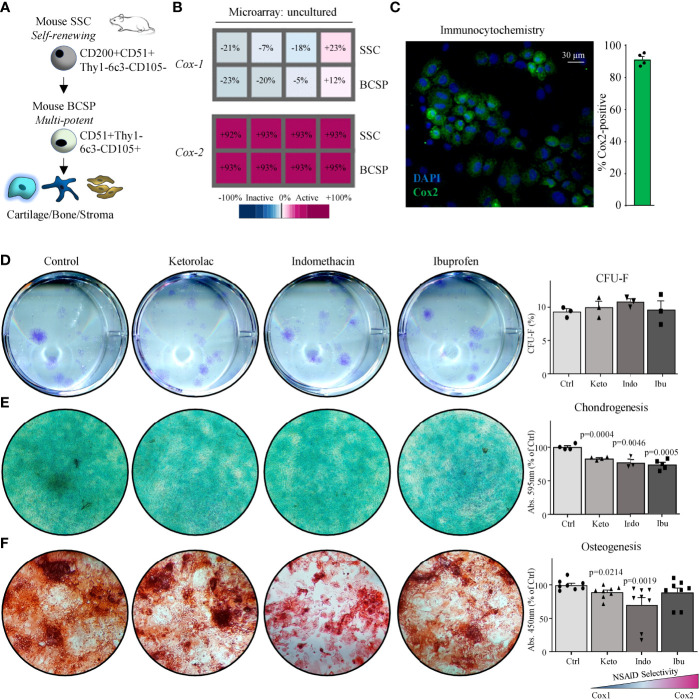
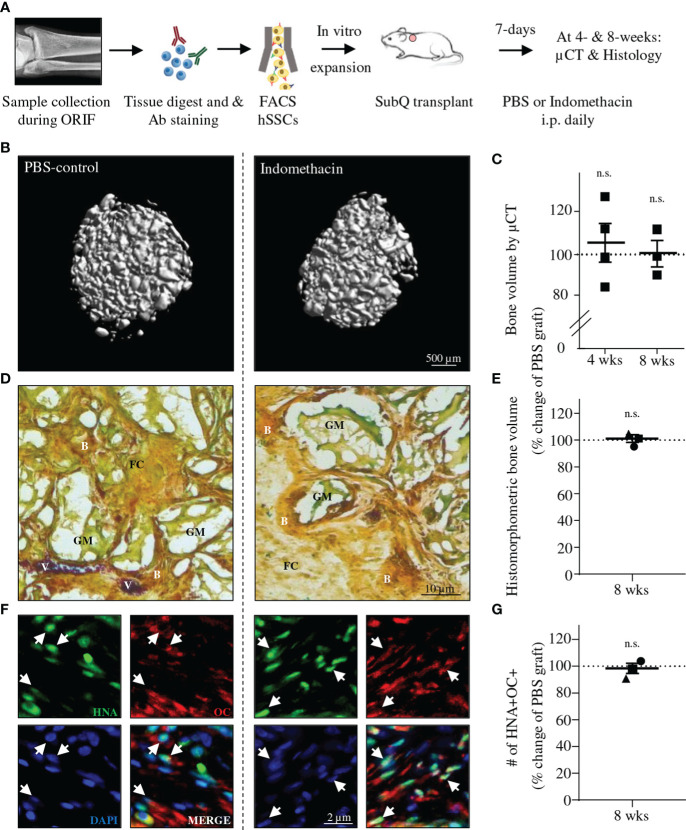
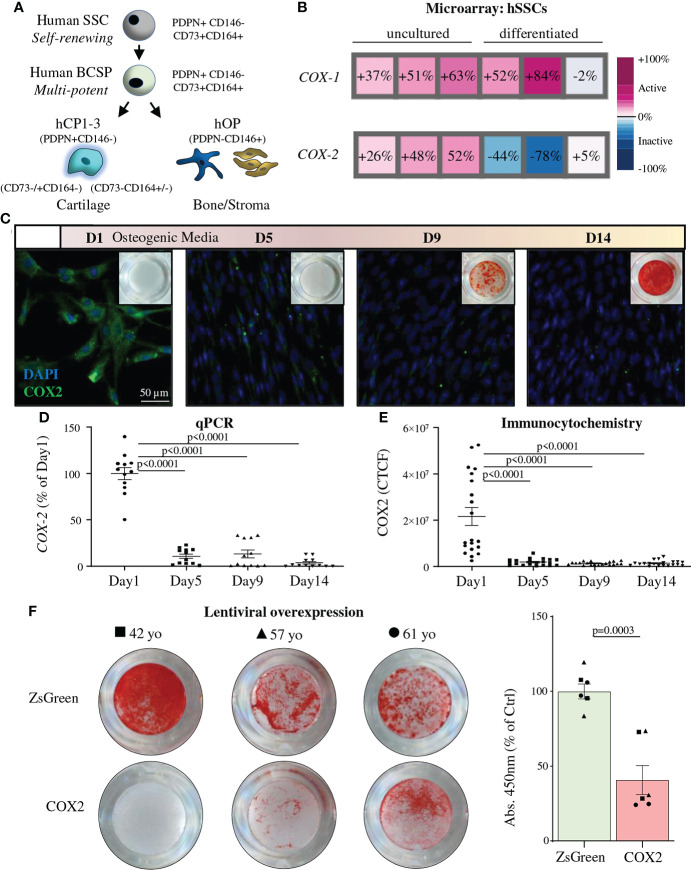
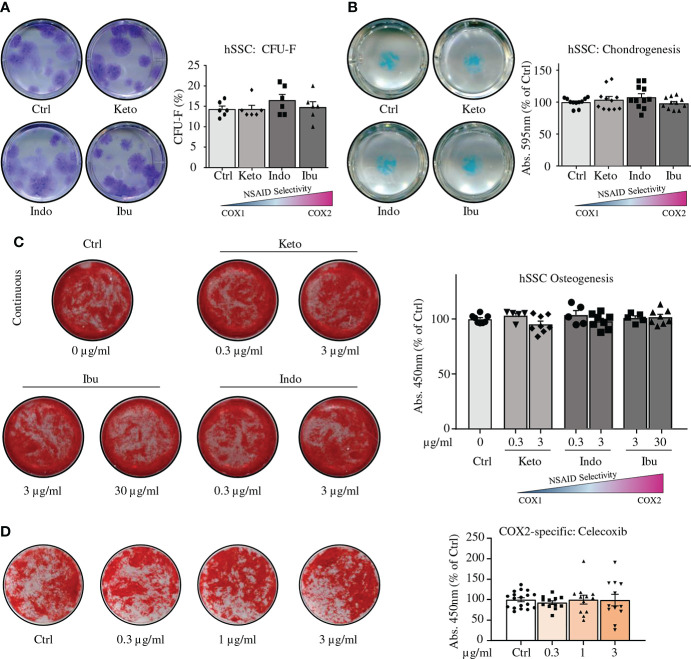
Fracture healing is highly dependent on an early inflammatory response in which prostaglandin production by cyclo-oxygenases (COX) plays a crucial role. Current patient analgesia regimens favor opioids over Non-Steroidal Anti-Inflammatory Drugs (NSAIDs) since the latter have been implicated in delayed fracture healing. While animal studies broadly support a deleterious role of NSAID treatment to bone-regenerative processes, data for human fracture healing remains contradictory. In this study, we prospectively isolated mouse and human skeletal stem cells (SSCs) from fractures and compared the effect of various NSAIDs on their function. We found that osteochondrogenic differentiation of COX2-expressing mouse SSCs was impaired by NSAID treatment. In contrast, human SSCs (hSSC) downregulated COX2 expression during differentiation and showed impaired osteogenic capacity if COX2 was lentivirally overexpressed. Accordingly, short- and long-term treatment of hSSCs with non-selective and selective COX2 inhibitors did not affect colony forming ability, chondrogenic, and osteogenic differentiation potential . When hSSCs were transplanted ectopically into NSG mice treated with Indomethacin, graft mineralization was unaltered compared to vehicle injected mice. Thus, our results might contribute to understanding species-specific differences in NSAID sensitivity during fracture healing and support emerging clinical data which conflicts with other earlier observations that NSAID administration for post-operative analgesia for treatment of bone fractures are unsafe for patients.
骨折愈合高度依赖于早期炎症反应,其中环氧化酶(COX)产生的前列腺素在其中起着至关重要的作用。目前的患者镇痛方案倾向于使用阿片类药物而不是非甾体抗炎药(NSAIDs),因为后者与骨折愈合延迟有关。虽然动物研究广泛支持 NSAID 治疗对骨再生过程的有害作用,但关于人类骨折愈合的数据仍然存在矛盾。在这项研究中,我们前瞻性地从骨折中分离出小鼠和人骨骼干细胞(SSCs),并比较了各种 NSAIDs 对其功能的影响。我们发现 COX2 表达的小鼠 SSCs 的成骨软骨分化受到 NSAID 治疗的损害。相比之下,人 SSCs(hSSC)在分化过程中下调 COX2 表达,如果 COX2 被慢病毒过表达,则表现出成骨能力受损。因此,短时间和长时间用非选择性和选择性 COX2 抑制剂处理 hSSC 不会影响集落形成能力、软骨形成和成骨分化潜能。当 hSSC 被异位移植到接受吲哚美辛治疗的 NSG 小鼠中时,与接受载体注射的小鼠相比,移植物矿化没有改变。因此,我们的研究结果可能有助于理解在骨折愈合过程中 NSAID 敏感性的种间差异,并支持新兴的临床数据,该数据与其他早期观察结果相矛盾,即 NSAID 给药用于术后镇痛治疗骨折对患者不安全。