Pfaff Emily R, Madlock-Brown Charisse, Baratta John M, Bhatia Abhishek, Davis Hannah, Girvin Andrew, Hill Elaine, Kelly Liz, Kostka Kristin, Loomba Johanna, McMurry Julie A, Wong Rachel, Bennett Tellen D, Moffitt Richard, Chute Christopher G, Haendel Melissa
University of North Carolina at Chapel Hill.
University of Tennessee Health Science Center.
medRxiv. 2022 Sep 2:2022.04.18.22273968. doi: 10.1101/2022.04.18.22273968.
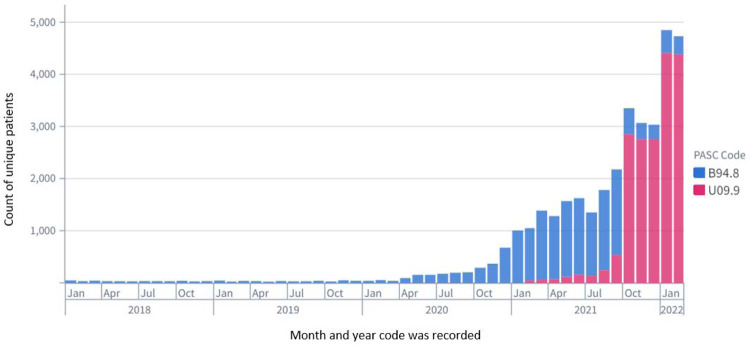
Naming a newly discovered disease is a difficult process; in the context of the COVID-19 pandemic and the existence of post-acute sequelae of SARS-CoV-2 infection (PASC), which includes Long COVID, it has proven especially challenging. Disease definitions and assignment of a diagnosis code are often asynchronous and iterative. The clinical definition and our understanding of the underlying mechanisms of Long COVID are still in flux, and the deployment of an ICD-10-CM code for Long COVID in the US took nearly two years after patients had begun to describe their condition. Here we leverage the largest publicly available HIPAA-limited dataset about patients with COVID-19 in the US to examine the heterogeneity of adoption and use of U09.9, the ICD-10-CM code for "Post COVID-19 condition, unspecified."
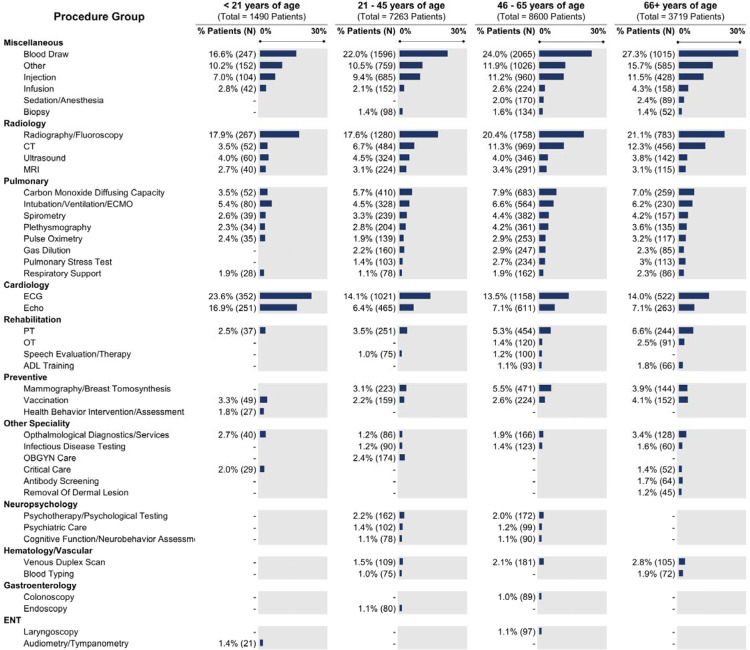
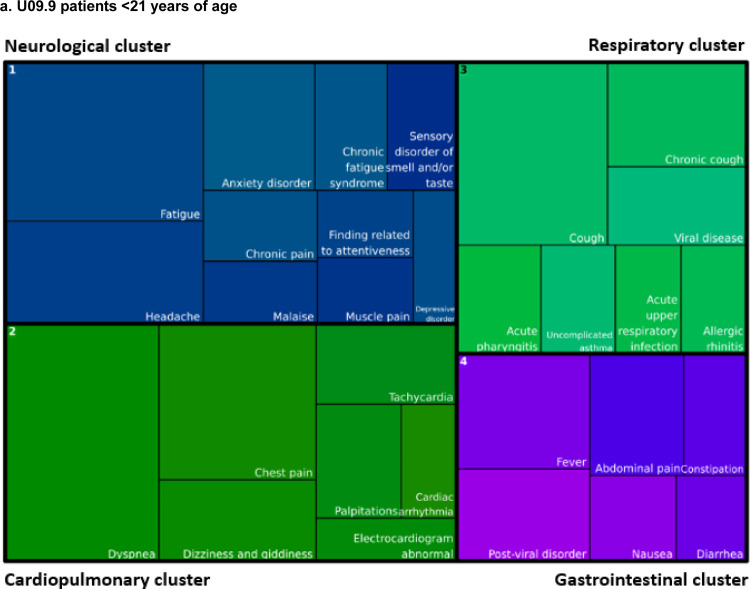
We undertook a number of analyses to characterize the N3C population with a U09.9 diagnosis code ( = 21,072), including assessing person-level demographics and a number of area-level social determinants of health; diagnoses commonly co-occurring with U09.9, clustered using the Louvain algorithm; and quantifying medications and procedures recorded within 60 days of U09.9 diagnosis. We stratified all analyses by age group in order to discern differing patterns of care across the lifespan.
We established the diagnoses most commonly co-occurring with U09.9, and algorithmically clustered them into four major categories: cardiopulmonary, neurological, gastrointestinal, and comorbid conditions. Importantly, we discovered that the population of patients diagnosed with U09.9 is demographically skewed toward female, White, non-Hispanic individuals, as well as individuals living in areas with low poverty, high education, and high access to medical care. Our results also include a characterization of common procedures and medications associated with U09.9-coded patients.
This work offers insight into potential subtypes and current practice patterns around Long COVID, and speaks to the existence of disparities in the diagnosis of patients with Long COVID. This latter finding in particular requires further research and urgent remediation.
为新发现的疾病命名是一个困难的过程;在新冠疫情以及存在新冠病毒感染后急性后遗症(PASC,包括长新冠)的背景下,这一过程已被证明极具挑战性。疾病定义和诊断代码的分配往往是不同步且反复的。长新冠的临床定义以及我们对其潜在机制的理解仍在不断变化,在美国,患者开始描述自身病情近两年后,长新冠才被纳入国际疾病分类第十版临床修订本(ICD - 10 - CM)代码。在此,我们利用美国最大的受《健康保险流通与责任法案》(HIPAA)限制的公开可用新冠患者数据集,来研究“未明确的新冠后状况”的ICD - 10 - CM代码U09.9的采用和使用的异质性。
我们进行了多项分析,以描述有U09.9诊断代码的国家COVID队列协作网(N3C)人群(n = 21,072)的特征,包括评估个人层面的人口统计学特征和一些地区层面的健康社会决定因素;使用Louvain算法对与U09.9共同出现的常见诊断进行聚类;以及量化U09.9诊断后60天内记录的药物和治疗程序。我们按年龄组对所有分析进行分层,以辨别不同年龄段的不同护理模式。
我们确定了与U09.9最常共同出现的诊断,并通过算法将它们聚类为四大类:心肺疾病、神经系统疾病、胃肠道疾病和合并症。重要的是,我们发现被诊断为U09.9的患者群体在人口统计学上偏向女性、白人、非西班牙裔个体,以及生活在贫困率低、教育程度高且医疗可及性高地区的个体。我们的结果还包括对与U09.9编码患者相关的常见治疗程序和药物的描述。
这项工作为长新冠的潜在亚型和当前实践模式提供了见解,并表明长新冠患者的诊断存在差异。后一项发现尤其需要进一步研究和紧急补救。