Van Andel Institute, Grand Rapids, MI, USA.
Max Planck Institute of Immunobiology and Epigenetics, Freiburg, Germany.
Nat Metab. 2022 Sep;4(9):1150-1165. doi: 10.1038/s42255-022-00629-2. Epub 2022 Sep 12.
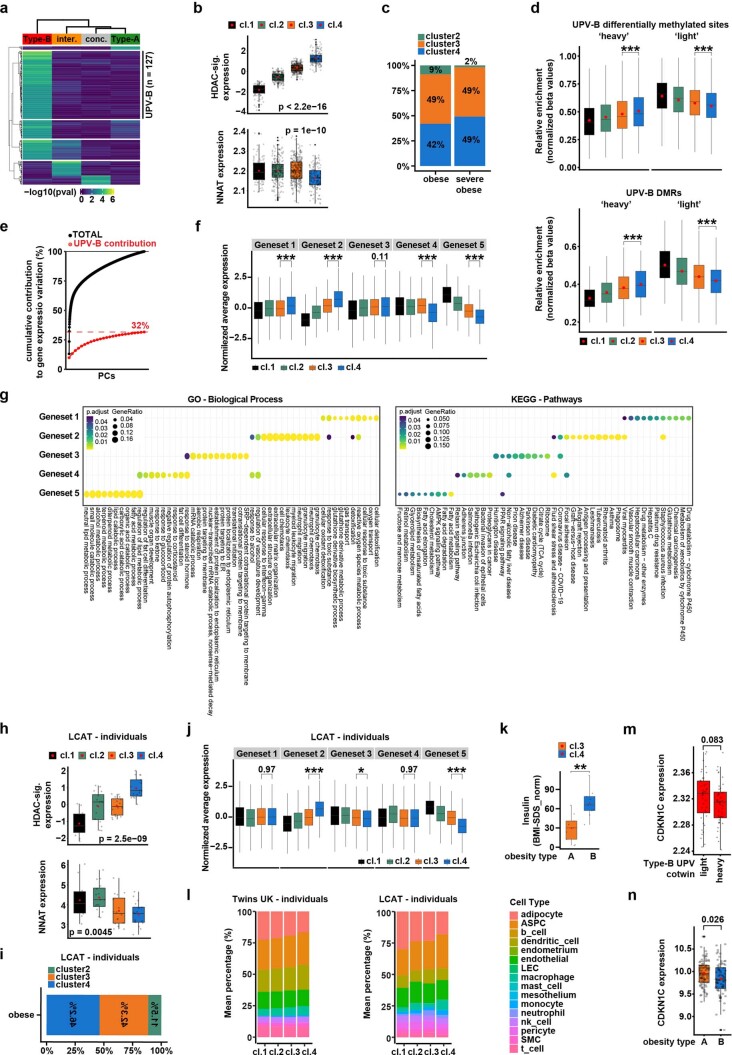
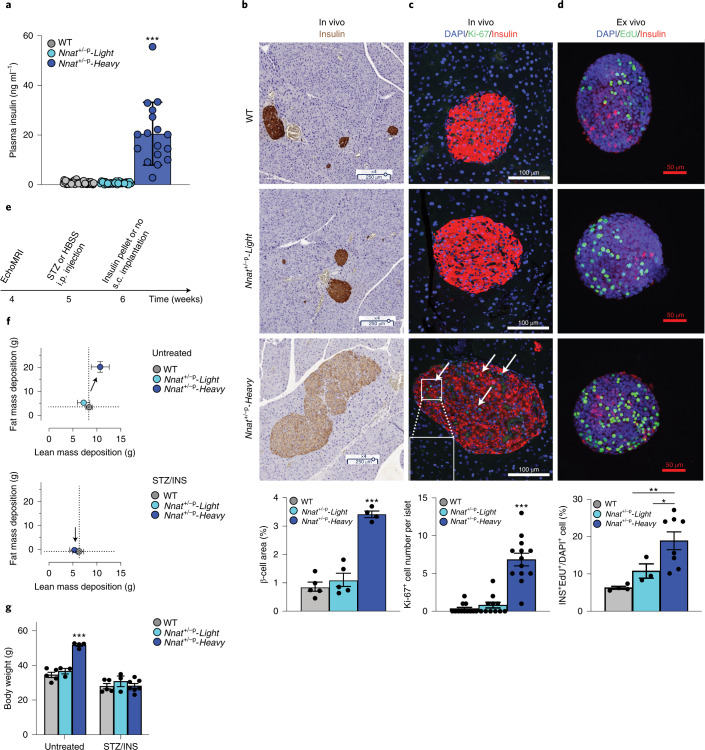
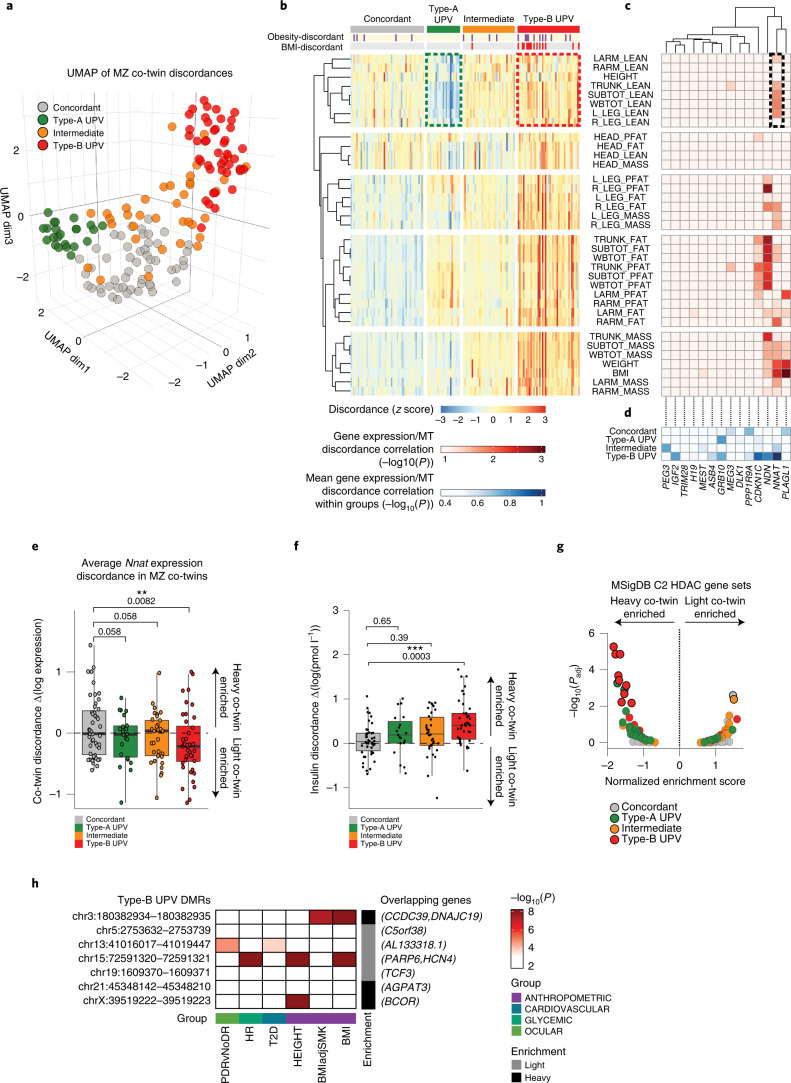
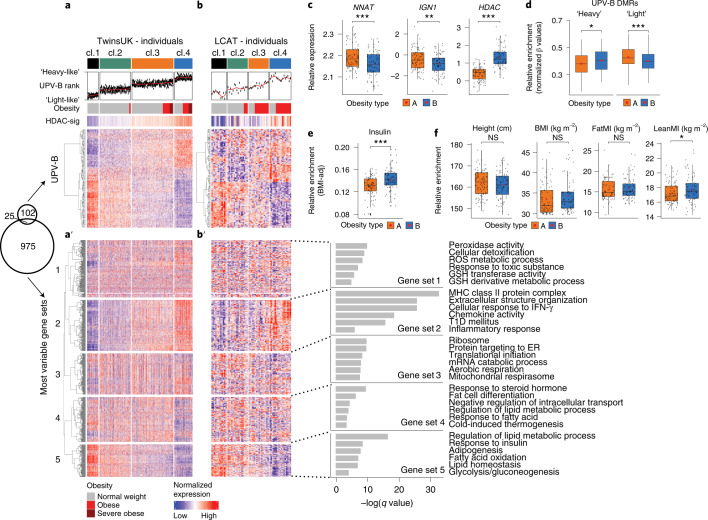
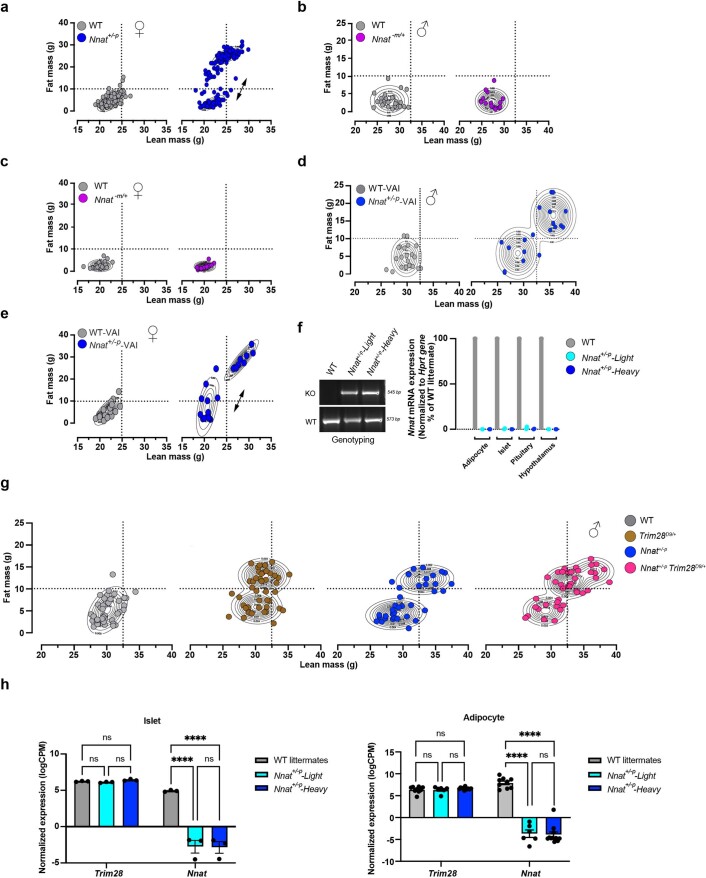
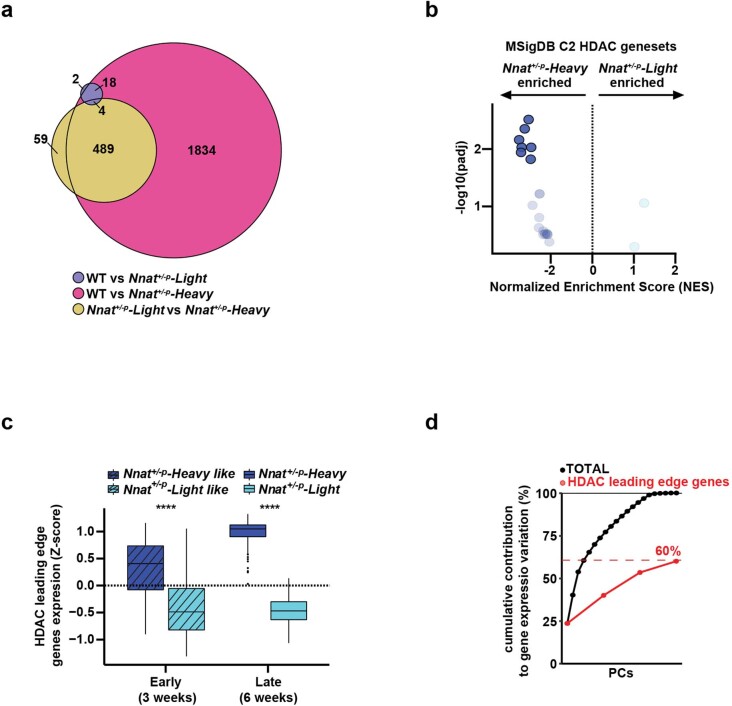
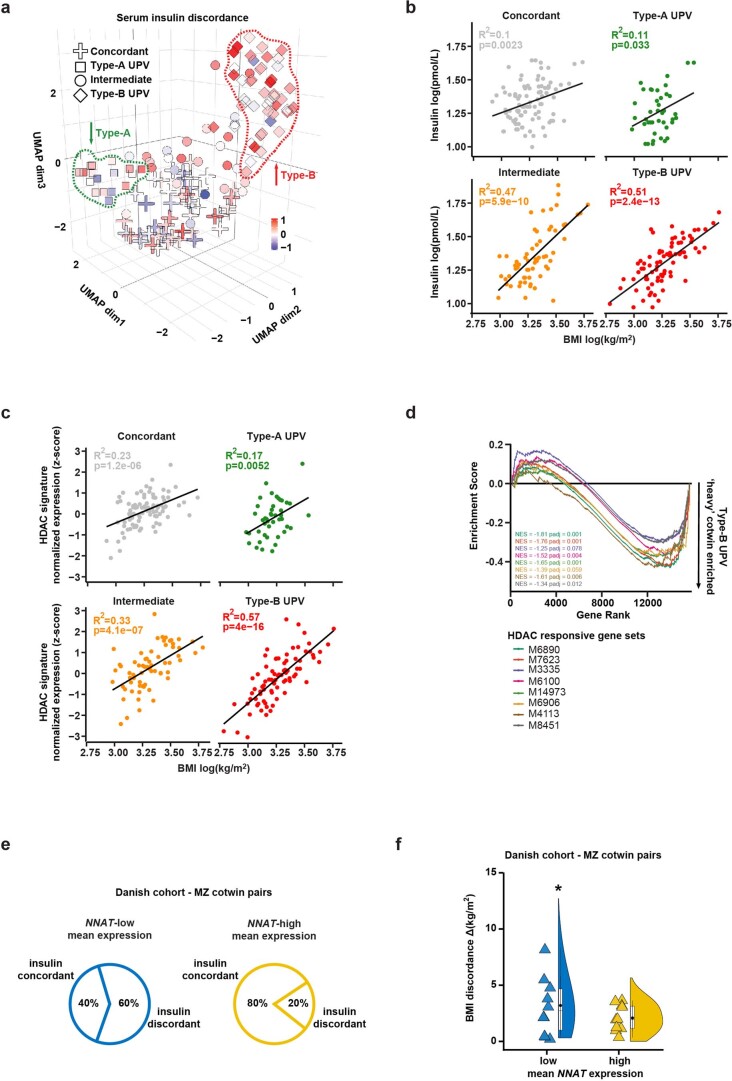
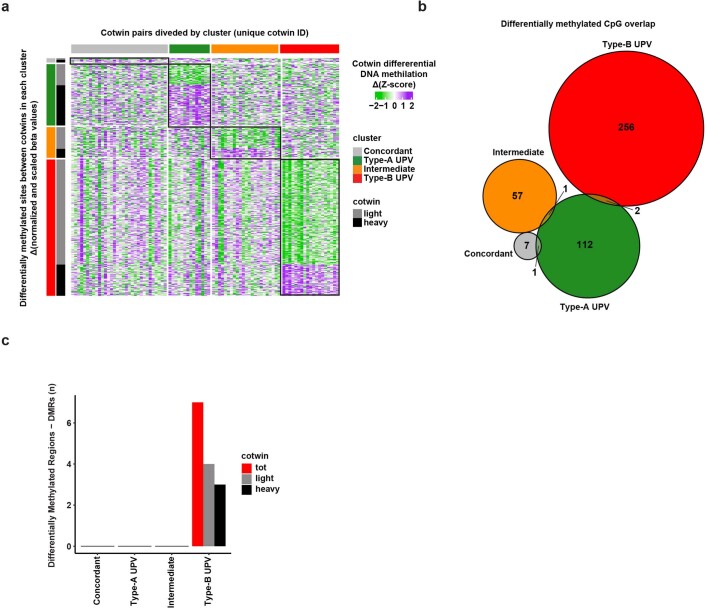
Studies in genetically 'identical' individuals indicate that as much as 50% of complex trait variation cannot be traced to genetics or to the environment. The mechanisms that generate this 'unexplained' phenotypic variation (UPV) remain largely unknown. Here, we identify neuronatin (NNAT) as a conserved factor that buffers against UPV. We find that Nnat deficiency in isogenic mice triggers the emergence of a bi-stable polyphenism, where littermates emerge into adulthood either 'normal' or 'overgrown'. Mechanistically, this is mediated by an insulin-dependent overgrowth that arises from histone deacetylase (HDAC)-dependent β-cell hyperproliferation. A multi-dimensional analysis of monozygotic twin discordance reveals the existence of two patterns of human UPV, one of which (Type B) phenocopies the NNAT-buffered polyphenism identified in mice. Specifically, Type-B monozygotic co-twins exhibit coordinated increases in fat and lean mass across the body; decreased NNAT expression; increased HDAC-responsive gene signatures; and clinical outcomes linked to insulinemia. Critically, the Type-B UPV signature stratifies both childhood and adult cohorts into four metabolic states, including two phenotypically and molecularly distinct types of obesity.
在基因“相同”的个体中进行的研究表明,多达 50%的复杂特征变化无法追溯到遗传或环境。产生这种“无法解释”的表型变异(UPV)的机制在很大程度上仍然未知。在这里,我们将神经元素(NNAT)鉴定为一种保守的因素,可以缓冲 UPV。我们发现,同基因小鼠中的 Nnat 缺乏会引发双稳态多态性的出现,同窝幼仔成年后要么“正常”,要么“过度生长”。从机制上讲,这是由依赖于胰岛素的过度生长介导的,这种过度生长源于组蛋白去乙酰化酶(HDAC)依赖性β细胞过度增殖。对同卵双胞胎不一致性的多维分析揭示了人类 UPV 的两种存在模式,其中一种(B 型)模拟了在小鼠中发现的 NNAT 缓冲的多态性。具体来说,B 型同卵双胞胎在整个身体中表现出脂肪和瘦体重的协调增加;NNAT 表达降低;HDAC 反应基因特征增加;以及与胰岛素血症相关的临床结果。至关重要的是,B 型 UPV 特征将儿童和成年队列分为四种代谢状态,包括两种表型和分子上明显不同的肥胖类型。