Institute for Evolution and Biodiversity, University of Münster, Münster, Germany.
Department of Biochemistry, University of Cambridge, Cambridge, UK.
Microb Biotechnol. 2022 Nov;15(11):2845-2853. doi: 10.1111/1751-7915.14144. Epub 2022 Sep 13.
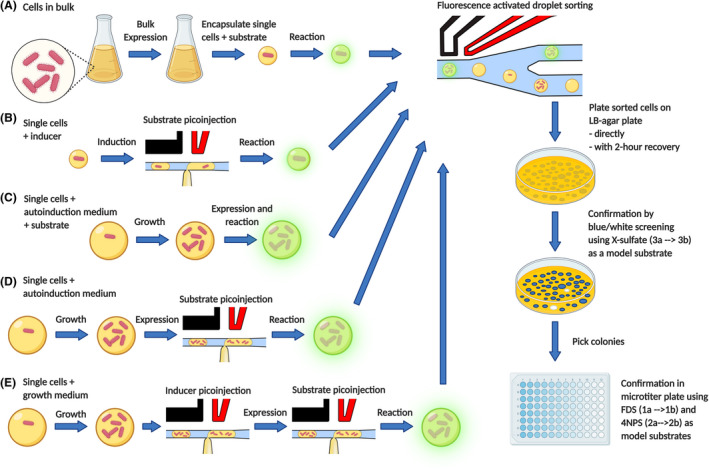
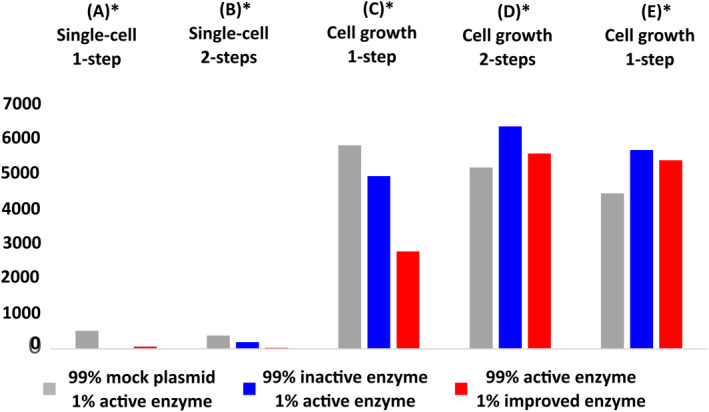
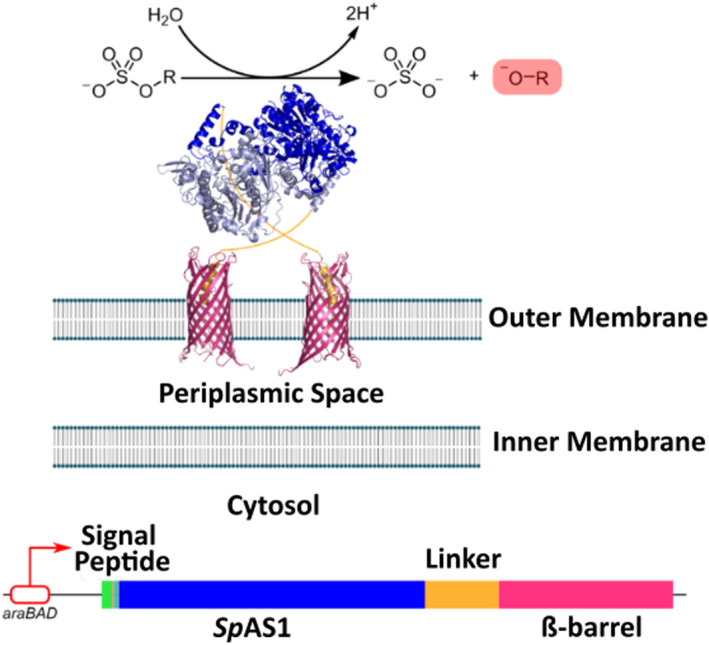
Directed evolution (DE) is a widely used method for improving the function of biomolecules via multiple rounds of mutation and selection. Microfluidic droplets have emerged as an important means to screen the large libraries needed for DE, but this approach was so far partially limited by the need to lyse cells, recover DNA, and retransform into cells for the next round, necessitating the use of a high-copy number plasmid or oversampling. The recently developed live cell recovery avoids some of these limitations by directly regrowing selected cells after sorting. However, repeated sorting cycles used to further enrich the most active variants ultimately resulted in unfavourable recovery of empty plasmid vector-containing cells over those expressing the protein of interest. In this study, we found that engineering of the original expression vector solved the problem of false positives (i.e. plasmids lacking an insert) cells containing empty vectors. Five approaches to measure activity of cell-displayed enzymes in microdroplets were compared. By comparing various cell treatment methods prior to droplet sorting two things were found. Substrate encapsulation from the start, that is prior to expression of enzyme, showed no disadvantage to post-induction substrate addition by pico-injection with respect to recovery of true positive variants. Furthermore in-droplet cell growth prior to induction of enzyme production improves the total amount of cells retrieved (recovery) and proportion of true positive variants (enrichment) after droplet sorting.
定向进化(DE)是一种通过多轮突变和选择来提高生物分子功能的广泛应用的方法。微流控液滴已成为筛选 DE 所需的大型文库的重要手段,但到目前为止,这种方法部分受到需要裂解细胞、回收 DNA 以及为下一轮转化回细胞的限制,需要使用高拷贝数质粒或过采样。最近开发的活细胞回收通过在分选后直接重新培养选定的细胞来避免其中的一些限制。然而,为了进一步富集最活跃的变体,重复的分选循环最终导致表达感兴趣蛋白的细胞中含空质粒载体的细胞的回收情况不如不含空质粒载体的细胞。在这项研究中,我们发现对原始表达载体的工程改造解决了假阳性(即缺少插入片段的质粒)细胞中含有空载体的问题。比较了五种在微滴中测量细胞展示酶活性的方法。通过比较在液滴分选之前的各种细胞处理方法,发现了两件事。与通过皮升注射进行诱导后添加底物相比,在表达酶之前从一开始就封装底物对于回收真正的阳性变体没有任何不利影响。此外,在诱导酶产生之前在液滴内进行细胞生长可以提高分选后回收的细胞总量(回收率)和真正阳性变体的比例(富集度)。