The First Department of Breast Cancer, Tianjin Medical University Cancer Institute and Hospital, National Clinical Research Center for Cancer, Huan-Hu-Xi Road, He-Xi District, Tianjin, 300060, China.
Key Laboratory of Breast Cancer Prevention and Therapy, Tianjin Medical University, Ministry of Education, Tianjin, 300060, China.
Mol Med. 2022 Sep 13;28(1):111. doi: 10.1186/s10020-022-00541-1.
Breast cancer has become the most frequently diagnosed cancer worldwide. Increasing evidence indicated that zinc finger proteins (ZNFs), the largest family of transcription factors, contribute to cancer development and progression. Although ZNF384 is overexpressed in several types of human cancer, the role of ZNF384 in breast cancer remains unknown. Therefore, our research focused on ZNF384 regulation of the malignant phenotype of breast cancer and the underlying molecular mechanisms.
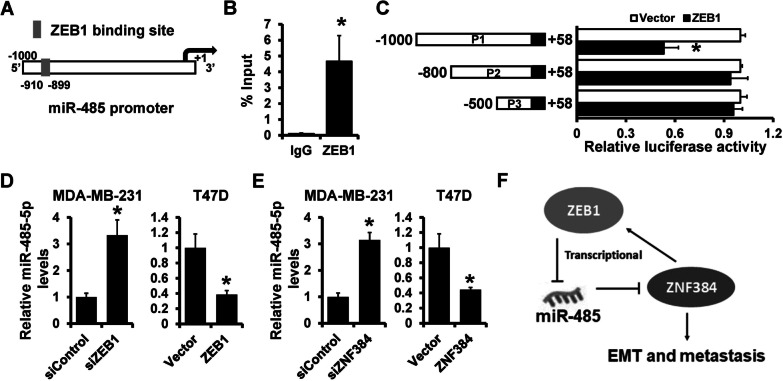
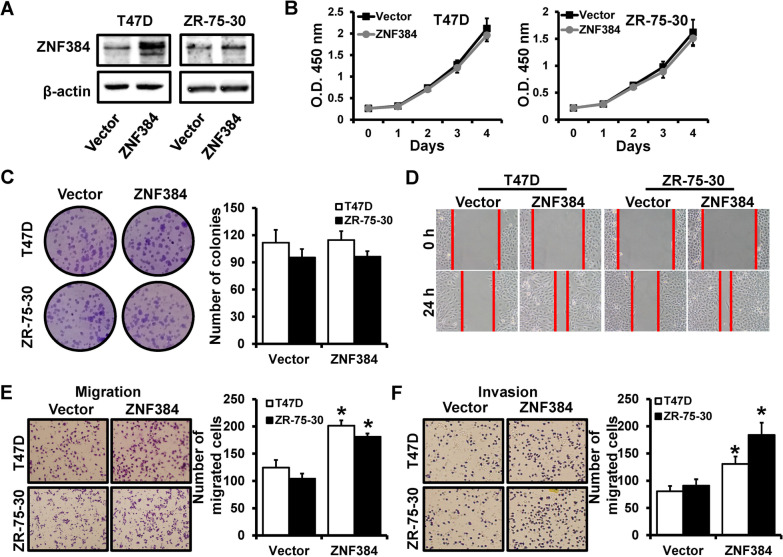
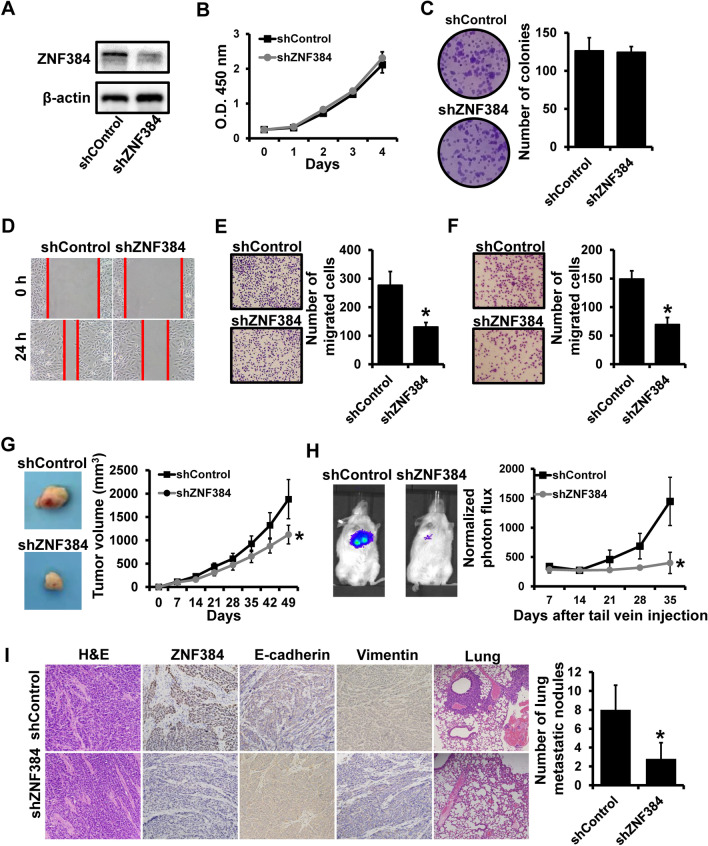
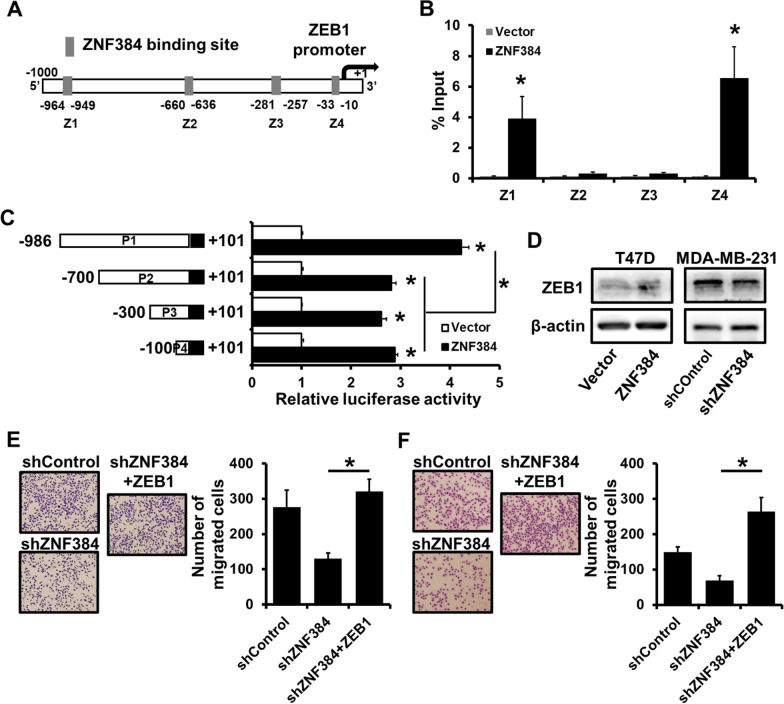
CCK-8 and colony formation assays were used to evaluate cell proliferation. Transwell and scratch assays were used to evaluate the cell migration and invasion. Chromatin immunoprecipitation (ChIP)-qPCR and luciferase reporter assays were used to confirm the target relationship between ZNF384 and zinc finger E-box binding homeobox 1 (ZEB1). Xenografts were used to monitor the targets in vivo effects.
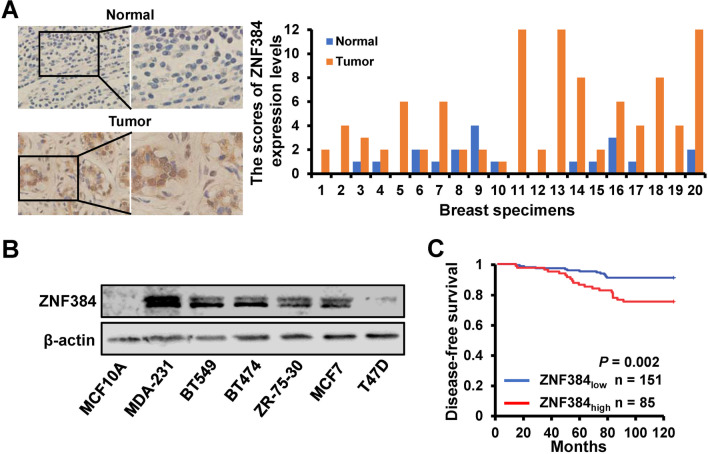
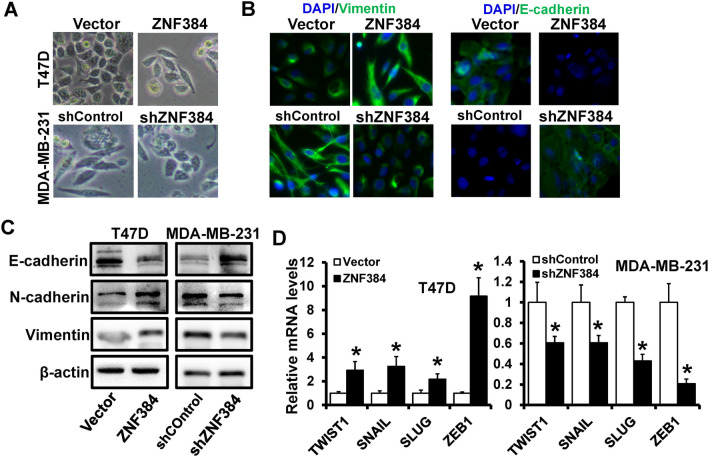
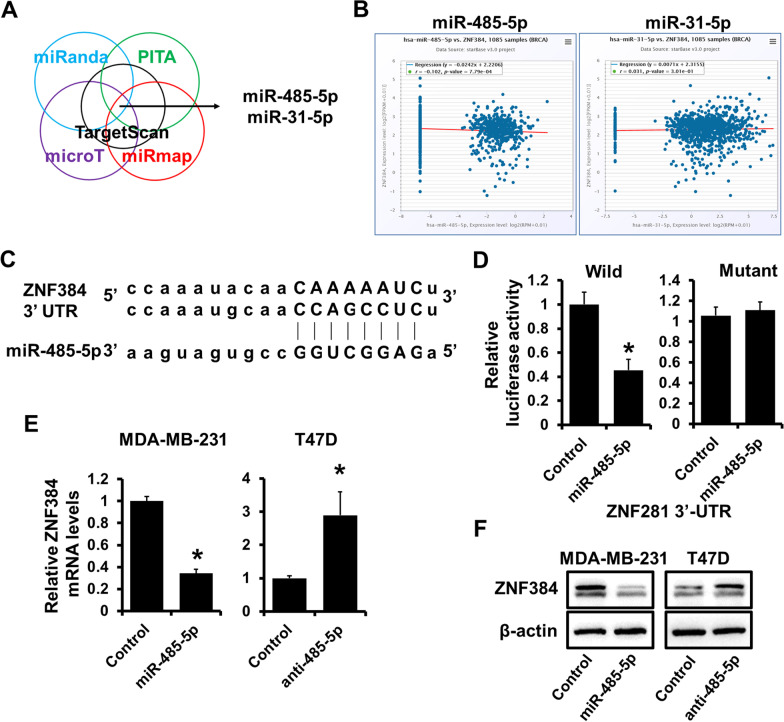
We noted that ZNF384 was significantly overexpressed in breast cancer and highlighted the oncogenic mechanism of ZNF384. ZNF384 transactivated ZEB1 expression and induced an epithelial and mesenchymal-like phenotype, resulting in breast cancer metastasis. Furthermore, ZNF384 may be a target of miR-485-5p, and ZEB1 can up-regulate ZNF384 expression by repressing miR-485-5p expression. Together, we unveiled a feedback loop of ZNF384-ZEB1 in breast cancer metastasis.
The findings suggest that ZNF384 can serve as a prognostic factor and a therapeutic target for breast cancer patients.
乳腺癌已成为全球最常见的癌症诊断类型。越来越多的证据表明,锌指蛋白(ZNFs)是最大的转录因子家族,有助于癌症的发生和发展。尽管 ZNF384 在多种人类癌症中过表达,但 ZNF384 在乳腺癌中的作用尚不清楚。因此,我们的研究集中在 ZNF384 对乳腺癌恶性表型的调控及其潜在的分子机制上。
CCK-8 和集落形成实验用于评估细胞增殖。Transwell 和划痕实验用于评估细胞迁移和侵袭。染色质免疫沉淀(ChIP)-qPCR 和荧光素酶报告基因实验用于验证 ZNF384 与锌指 E-框结合同源盒 1(ZEB1)之间的靶关系。异种移植用于监测体内靶标效应。
我们注意到 ZNF384 在乳腺癌中显著过表达,并强调了 ZNF384 的致癌机制。ZNF384 反式激活 ZEB1 表达,并诱导上皮和间充质样表型,导致乳腺癌转移。此外,ZNF384 可能是 miR-485-5p 的靶标,ZEB1 可以通过抑制 miR-485-5p 的表达而上调 ZNF384 的表达。总之,我们揭示了 ZNF384-ZEB1 在乳腺癌转移中的反馈回路。
这些发现表明,ZNF384 可以作为乳腺癌患者的预后因素和治疗靶点。