Schwartz Carolyn E, Biletch Elijah, Stuart Richard B B, Rapkin Bruce D
DeltaQuest Foundation, Inc., 31 Mitchell Road, Concord, MA, 01742, USA.
Departments of Medicine and Orthopaedic Surgery, Tufts University Medical School, Boston, MA, USA.
J Patient Rep Outcomes. 2022 Sep 14;6(1):97. doi: 10.1186/s41687-022-00500-8.
Aspirations refer to wishes, ways of defining quality of life (QOL), and life goals. Living with chronic illness likely impacts a person's life aspirations. Duchenne Muscular Dystrophy (DMD) is an inherited disorder characterized by the inevitable and progressive loss of ambulation and independence. The present cross-sectional case-control study investigated how aspirations differed between people with DMD and a stratified comparison group of nationally representative children/adults.
A web-based survey was administered October through December 2020. Recruitment was stratified by age group: 8-12, 13-17, and > = 18, reflecting the DMD disability trajectory. Aspirations were measured using qualitative (open-ended) and quantitative (closed-ended) questions. Qualitative prompts asked participants about wishes, how they would define "QOL"; and goals; answers to the prompts were then coded by six trained raters. Quantitative questions included 29 closed-ended goal-delineation items from the QOL Appraisal Profile. These data were analyzed using multivariate models adjusting for propensity scores (demographic differences), and testing for the effects of role (patient or comparison), age, and role-by-age interactions.
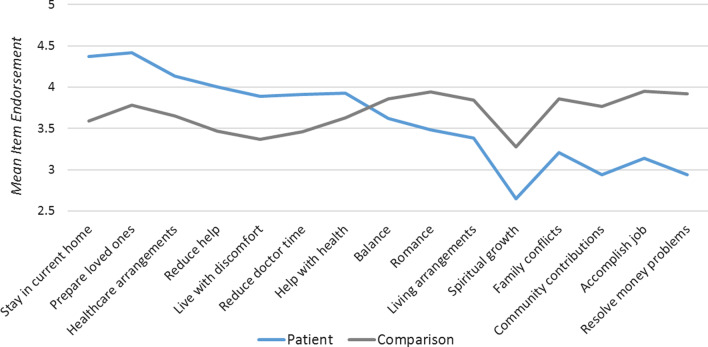
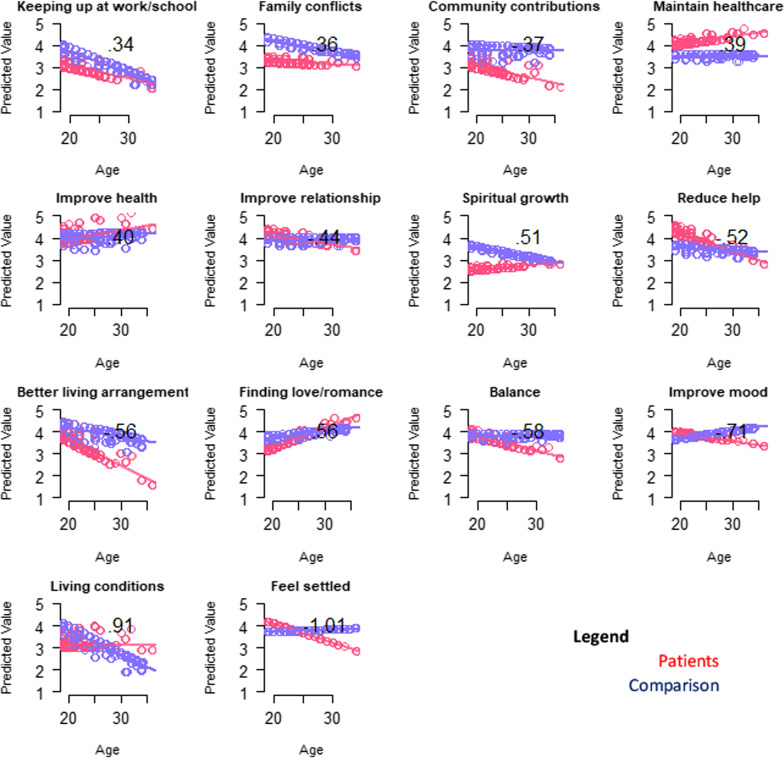
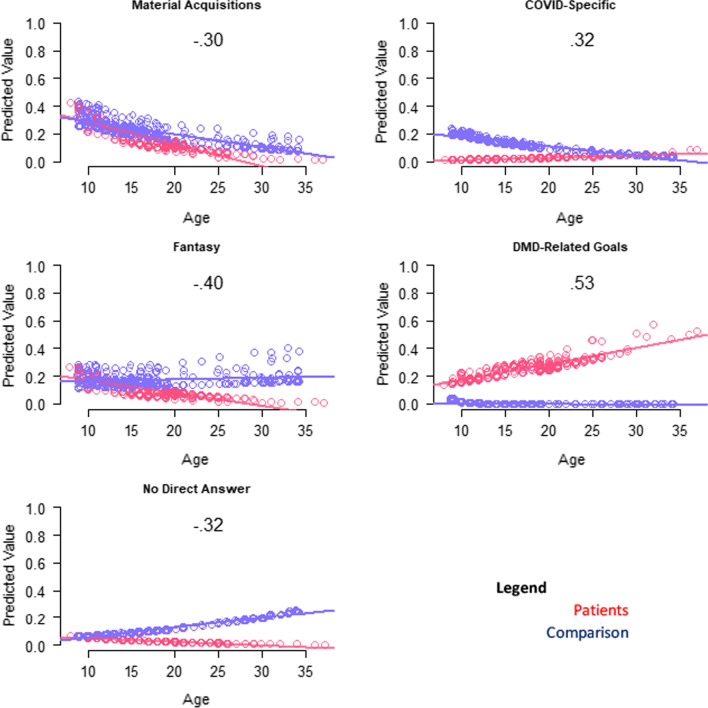
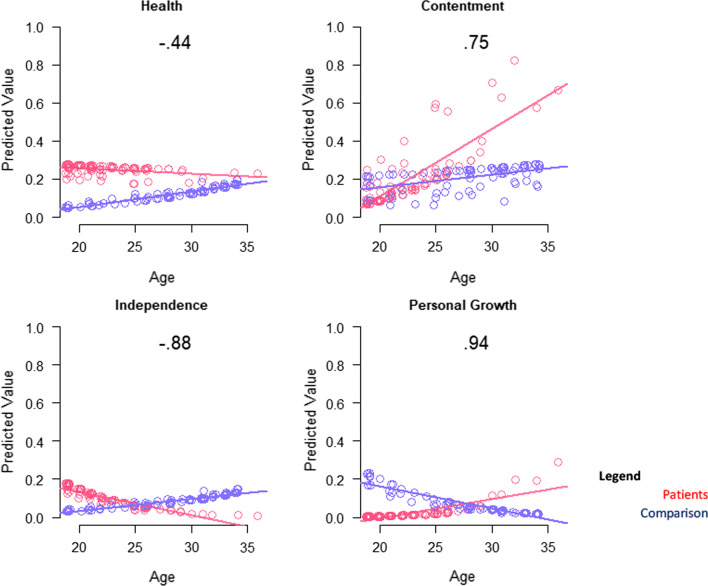
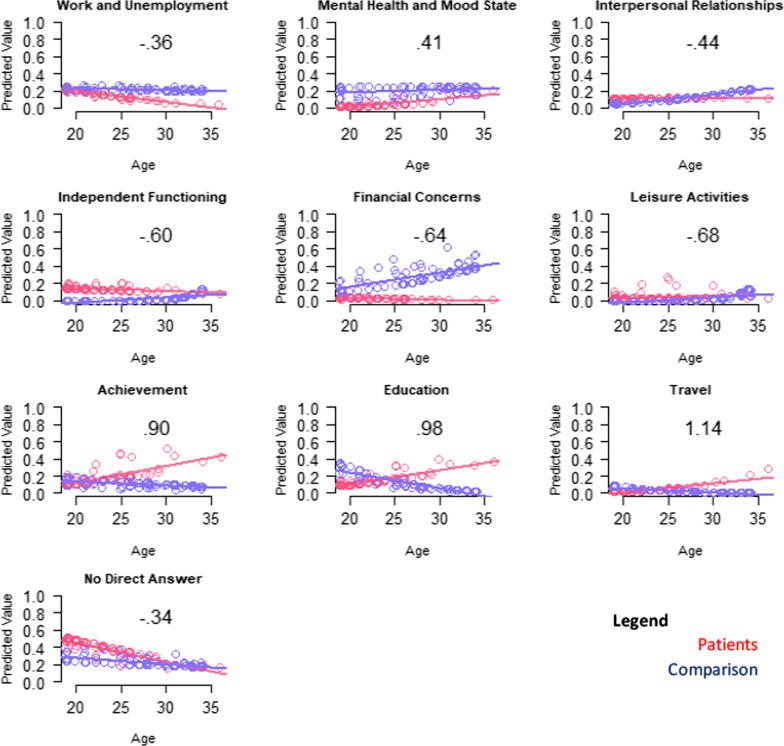
The study sample of DMD (n = 285) and comparison (n = 292) participants provided open-text data: 577 wishes statements, 283 QOL-definition statements, and 149 goals statements. Inter-rater reliability (kappa = 0.77) reflected good agreement between different raters' codes. Results suggested that people with DMD have aspirations that differ from their peers in several important ways. Both open-text and closed-ended data in both unadjusted and adjusted analyses generally showed that people with DMD were more focused on intrinsic aspirations such as health, healthcare, and independence than their peers. Compared to non-DMD persons, DMD individuals were much less focused on financial or housing concerns, community contributions, or spiritual growth. With age, patients' aspirations focused less on extrinsic aspirations such as careers and work and increasingly emphasized emotion-oriented goals. Patients were markedly less likely to give a direct answer to the open-ended goals question.
There were important differences in aspirations between people with DMD and their peers. These findings may be helpful for developing psychosocial interventions.
愿望指的是期望、定义生活质量(QOL)的方式以及生活目标。患有慢性病可能会影响一个人的生活愿望。杜氏肌营养不良症(DMD)是一种遗传性疾病,其特征是不可避免地逐渐丧失行走能力和独立性。本横断面病例对照研究调查了DMD患者与具有全国代表性的儿童/成人分层比较组在愿望方面的差异。
2020年10月至12月进行了一项基于网络的调查。按年龄组进行分层招募:8 - 12岁、13 - 17岁和≥18岁,这反映了DMD的残疾发展轨迹。使用定性(开放式)和定量(封闭式)问题来测量愿望。定性提示询问参与者的愿望、他们如何定义“生活质量”以及目标;然后由六名经过培训的评分者对提示的答案进行编码。定量问题包括来自生活质量评估概况的29个封闭式目标描述项目。使用调整倾向得分(人口统计学差异)的多变量模型对这些数据进行分析,并测试角色(患者或对照组)、年龄以及角色与年龄交互作用的影响。
DMD患者(n = 285)和对照组(n = 292)的研究样本提供了开放式文本数据:577条愿望陈述、283条生活质量定义陈述和149条目标陈述。评分者间信度(kappa = 0.77)反映了不同评分者编码之间的良好一致性。结果表明,DMD患者在几个重要方面的愿望与同龄人不同。在未调整和调整分析中的开放式文本和封闭式数据总体上都表明,DMD患者比同龄人更关注内在愿望,如健康、医疗保健和独立性。与非DMD患者相比,DMD患者对财务或住房问题、社区贡献或精神成长的关注要少得多。随着年龄的增长,患者的愿望对诸如职业和工作等外在愿望的关注减少,越来越强调以情感为导向的目标。患者对开放式目标问题给出直接答案的可能性明显较低。
DMD患者与其同龄人在愿望方面存在重要差异。这些发现可能有助于制定心理社会干预措施。