Division of Gastroenterology (Gastrocentro) - Department of Internal Medicine, University of Campinas (Unicamp), Campinas, Brazil.
Department of Surgery; University of Campinas (Unicamp), Campinas, Brazil.
Medicine (Baltimore). 2022 Sep 2;101(35):e30315. doi: 10.1097/MD.0000000000030315.
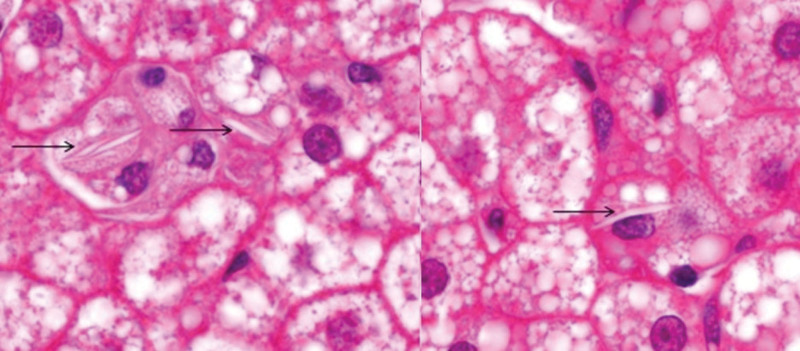
Lysosomal acid lipase deficiency (LAL-D) is a poorly diagnosed genetic disorder characterized by the accumulation of cholesteryl esters and triglycerides in many tissues, leading to dyslipidemia and cardiovascular complications. In the liver, deposits are found within hepatocytes and Kupffer cells, generating microvesicular steatosis, progressive fibrosis, and cirrhosis. Sebelipase alfa is the target therapy which can improve laboratory changes and reduce the progression of liver damage, but this is not yet widely available.
We are reporting a 15-year follow-up of a Brazilian man who was diagnosed with cirrhosis at age 43 and with LAL-D at age 53, but he has never been treated with sebelipase alfa for economic reasons. During the coronavirus disease 2019 (COVID-19) pandemic, he lost follow-up and missed three 6-month ultrasound exams for liver cancer screening.
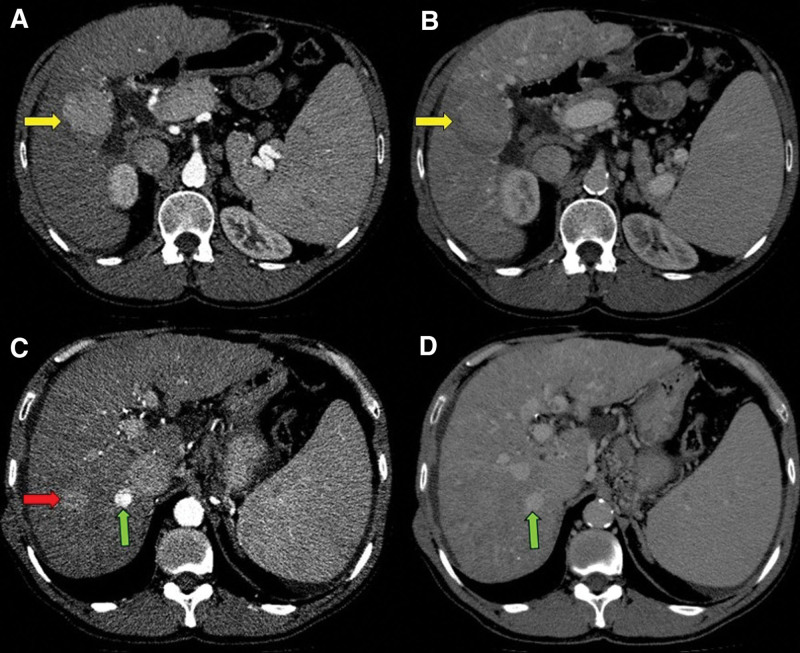
At age 58, a remarkable deterioration in liver function was observed and he was diagnosed with hepatocellular carcinoma (HCC) outside the Milan Criteria (two nodules measuring 48mm and 25mm). Three other individuals with LAL-D and progression to liver cancer have been reported so far and none of them underwent enzyme replacement therapy: an 11-year-old girl with HCC, a 51-year-old male with cholangiocarcinoma, and a 21-year-old male with hepatocellular-cholangiocarcinoma. The latter had the same mutation in the gene LIPA as our patient, but a relationship between this variant and malignancies has not yet been established.
We emphasize how important is to treat LAL-D patients after diagnosis in order to avoid worsening liver function and progression to neoplasms. Untreated individuals should be considered at a higher risk but the most appropriate liver cancer screening program for this subgroup is still unknown.
溶酶体酸性脂肪酶缺乏症(LAL-D)是一种诊断不足的遗传性疾病,其特征是许多组织中胆固醇酯和甘油三酯的积累,导致血脂异常和心血管并发症。在肝脏中,沉积物存在于肝细胞和枯否细胞内,导致微泡性脂肪变性、进行性纤维化和肝硬化。西贝前列素阿尔法是一种靶向治疗药物,可以改善实验室检查结果并降低肝损伤的进展,但尚未广泛应用。
我们报告了一名巴西男性的 15 年随访结果,他在 43 岁时被诊断为肝硬化,在 53 岁时被诊断为 LAL-D,但由于经济原因从未接受过西贝前列素阿尔法治疗。在 2019 年冠状病毒病(COVID-19)大流行期间,他失去了随访,错过了三次用于肝癌筛查的 6 个月超声检查。
在 58 岁时,观察到肝功能显著恶化,被诊断为米兰标准外的肝细胞癌(HCC)(两个结节分别为 48mm 和 25mm)。迄今为止,已有另外 3 例 LAL-D 患者进展为肝癌,但他们均未接受酶替代治疗:一名 11 岁女孩患有 HCC,一名 51 岁男性患有胆管癌,一名 21 岁男性患有肝细胞胆管癌。后者与我们的患者一样在 LIPA 基因中存在相同的突变,但该变体与恶性肿瘤之间的关系尚未确定。
我们强调,在诊断后对 LAL-D 患者进行治疗以避免肝功能恶化和进展为肿瘤非常重要。未治疗的患者应被视为更高风险,但对于这一亚组最适当的肝癌筛查方案仍不清楚。