Centre for Genomic Regulation, The Barcelona Institute of Science and Technology, Barcelona, Spain.
Centro de Investigación Biomédica en red Diabetes y enfermedades metabólicas asociadas (CIBERDEM), Barcelona, Spain.
Genome Biol. 2022 Sep 15;23(1):196. doi: 10.1186/s13059-022-02757-0.
Non-coding genetic variants that influence gene transcription in pancreatic islets play a major role in the susceptibility to type 2 diabetes (T2D), and likely also contribute to type 1 diabetes (T1D) risk. For many loci, however, the mechanisms through which non-coding variants influence diabetes susceptibility are unknown.
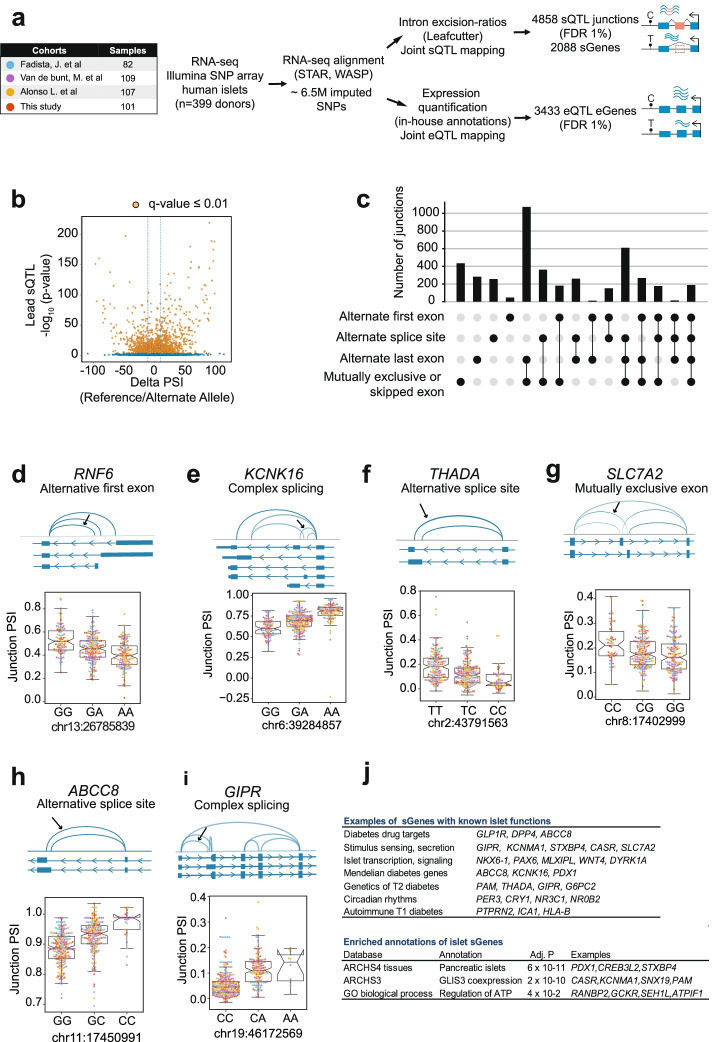
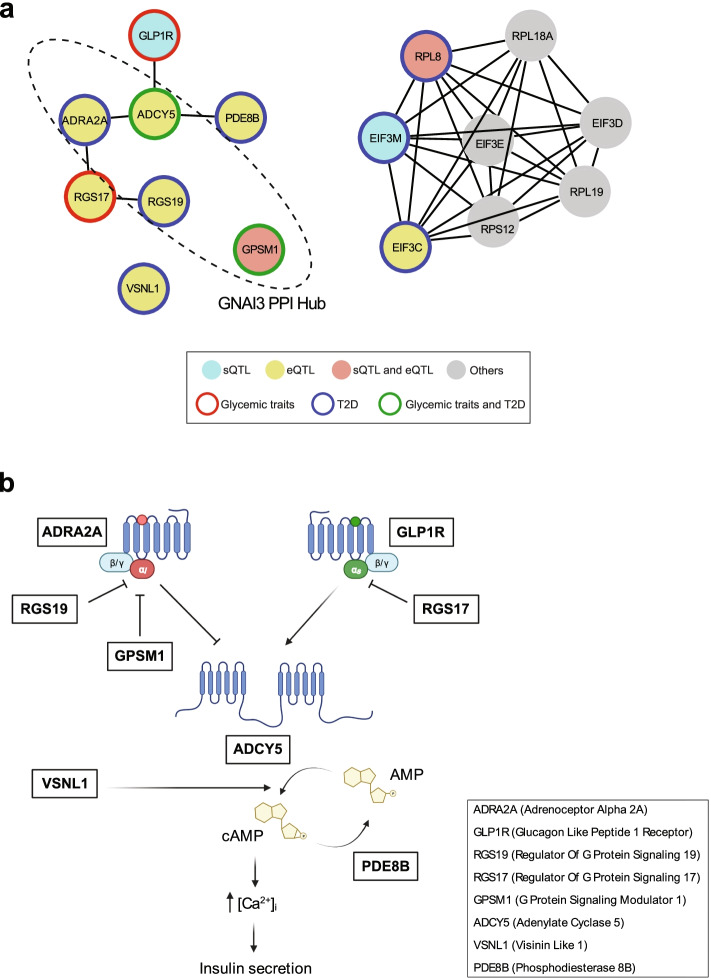
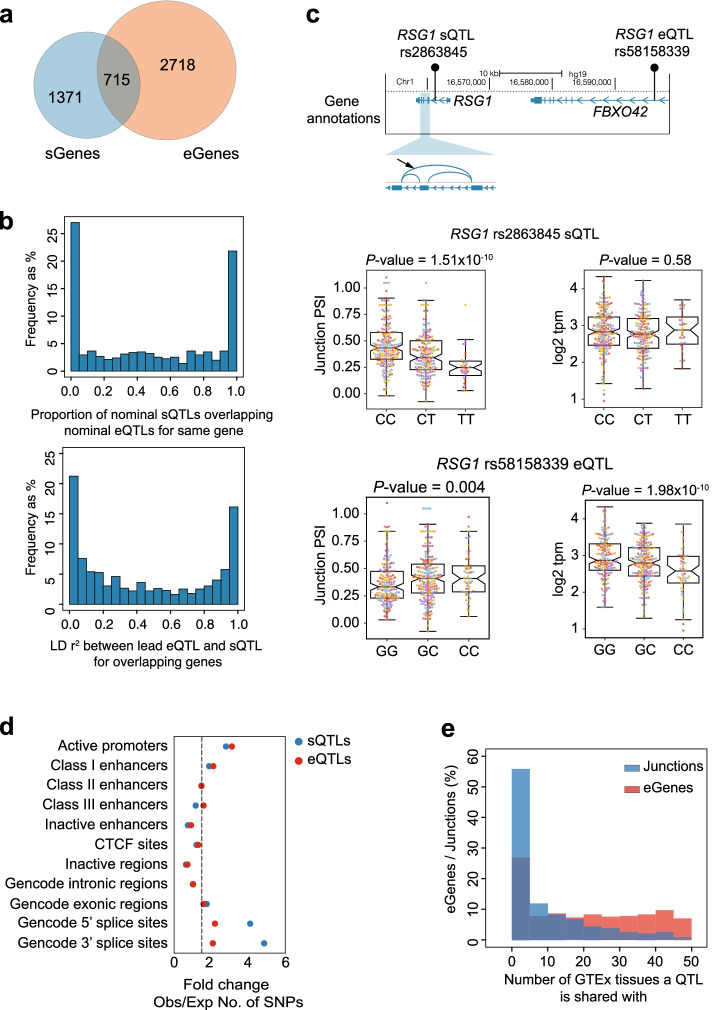
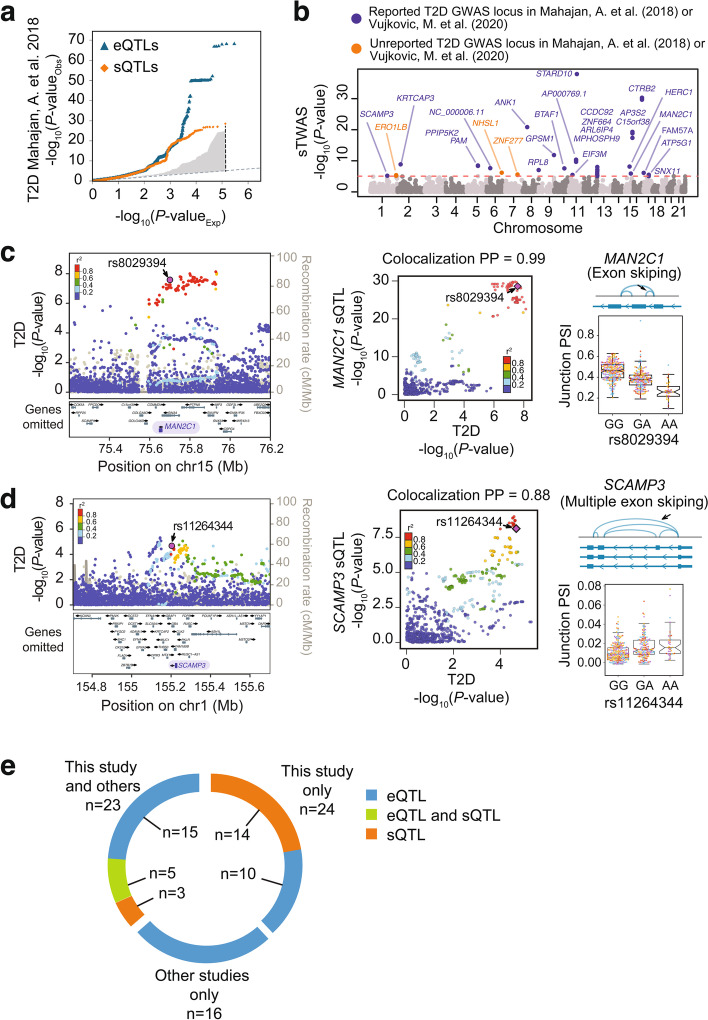
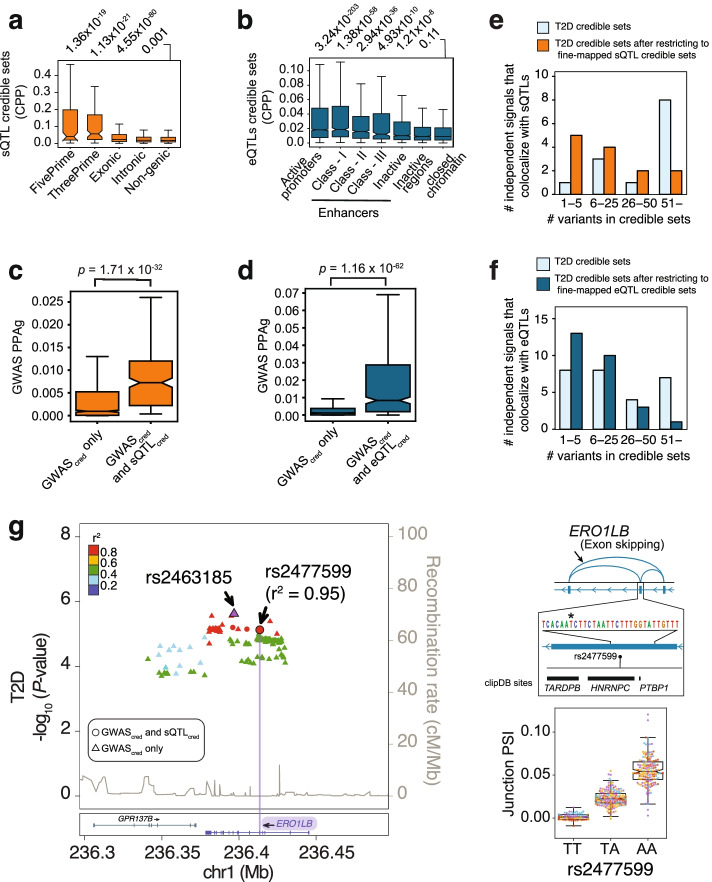
We examine splicing QTLs (sQTLs) in pancreatic islets from 399 human donors and observe that common genetic variation has a widespread influence on the splicing of genes with established roles in islet biology and diabetes. In parallel, we profile expression QTLs (eQTLs) and use transcriptome-wide association as well as genetic co-localization studies to assign islet sQTLs or eQTLs to T2D and T1D susceptibility signals, many of which lack candidate effector genes. This analysis reveals biologically plausible mechanisms, including the association of T2D with an sQTL that creates a nonsense isoform in ERO1B, a regulator of ER-stress and proinsulin biosynthesis. The expanded list of T2D risk effector genes reveals overrepresented pathways, including regulators of G-protein-mediated cAMP production. The analysis of sQTLs also reveals candidate effector genes for T1D susceptibility such as DCLRE1B, a senescence regulator, and lncRNA MEG3.
These data expose widespread effects of common genetic variants on RNA splicing in pancreatic islets. The results support a role for splicing variation in diabetes susceptibility, and offer a new set of genetic targets with potential therapeutic benefit.
影响胰岛基因转录的非编码遗传变异在 2 型糖尿病(T2D)易感性中起主要作用,并且可能也对 1 型糖尿病(T1D)的风险有影响。然而,对于许多基因座,非编码变异影响糖尿病易感性的机制尚不清楚。
我们检查了 399 位人类供体胰岛中的剪接 QTL(sQTL),并观察到常见的遗传变异对具有胰岛生物学和糖尿病作用的基因的剪接有广泛的影响。同时,我们对表达 QTL(eQTL)进行了分析,并使用全转录组关联以及遗传共定位研究,将胰岛 sQTL 或 eQTL 分配给 T2D 和 T1D 易感性信号,其中许多信号缺乏候选效应基因。这项分析揭示了生物学上合理的机制,包括 T2D 与 ERO1B 中的一个剪接 QTL 相关联,该 QTL 会产生一个无意义的 ERO1B 异构体,ERO1B 是内质网应激和前胰岛素生物合成的调节剂。T2D 风险效应基因的扩展列表揭示了过度代表的途径,包括 G 蛋白介导的 cAMP 产生的调节剂。sQTL 的分析还揭示了 T1D 易感性的候选效应基因,如衰老调节剂 DCLRE1B 和 lncRNA MEG3。
这些数据揭示了常见遗传变异对胰岛 RNA 剪接的广泛影响。结果支持剪接变异在糖尿病易感性中的作用,并提供了具有潜在治疗益处的新的遗传靶标。