Center for Alcohol and Addiction Studies, Department of Behavioral and Social Sciences, Brown University, Providence, RI, USA; Center for Alcohol and Addiction Studies, Department of Psychiatry and Human Behavior, Brown University, Providence, RI, USA.
Center for Alcohol and Addiction Studies, Department of Behavioral and Social Sciences, Brown University, Providence, RI, USA.
J Subst Abuse Treat. 2022 Dec;143:108872. doi: 10.1016/j.jsat.2022.108872. Epub 2022 Sep 8.
Stigmatization of an opioid addiction acts as a barrier to those seeking substance use treatment. As opioid use and overdoses continue to rise and affect minority populations, understanding the impact that race and other identities have on stigma is pertinent.
This study aimed to examine the degree to which race and other identity markers (i.e., gender and type of opioid used) interact and drive the stigmatization of an opioid addiction. To assess public perceptions of stigma, this research team conducted a randomized, between-subjects case vignette study (N = 1833) with a nation-wide survey. Participants rated a hypothetical individual who became addicted to opioids on four stigma indices (responsibility, dangerousness, positive affect, and negative affect) based on race (White or Black), gender (male or female), and end point (an individual who transitioned to using heroin or who continued using prescription painkillers).
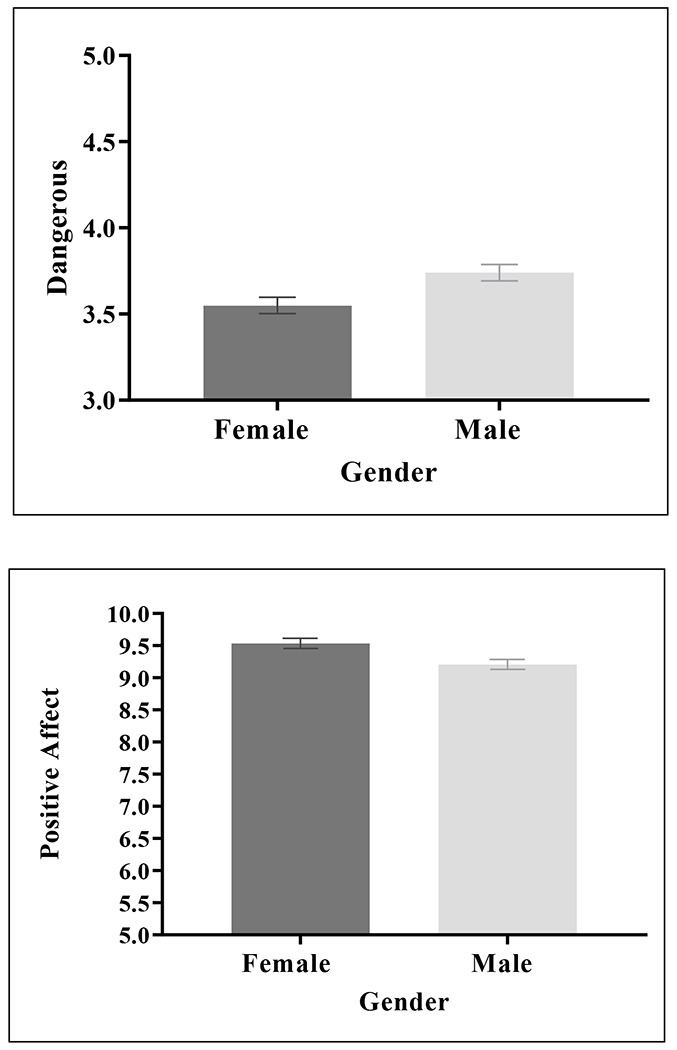
Our results first showed that the White individual had higher stigma ratings compared to the Black individual (range of partial η = 0.002-0.004). An interaction effect demonstrated that a White female was rated with higher responsibility for opioid use than a Black female (Cohen's d = 0.21) and a Black male was rated with higher responsibility for opioid use than a Black female (Cohen's d = 0.26). Last, we showed that a male and an individual who transitioned to heroin had higher stigma than a female and an individual who continued to use prescription opioids (range of partial η = 0.004-0.007).
This study provides evidence that information about multiple identities can impact stigmatizing attitudes, which can provide deeper knowledge on the development of health inequities for individuals with an opioid addiction.
阿片类药物成瘾的污名化是寻求药物使用治疗的人的障碍。随着阿片类药物的使用和过量使用继续上升并影响到少数族裔群体,了解种族和其他身份对污名化的影响是相关的。
本研究旨在研究种族和其他身份标记(即性别和阿片类药物类型)相互作用并导致阿片类药物成瘾污名化的程度。为了评估公众对污名的看法,该研究小组进行了一项随机、组间病例情节研究(N=1833),采用全国性调查。参与者根据种族(白人或黑人)、性别(男性或女性)和终点(过渡到使用海洛因或继续使用处方止痛药的个体),对一个因使用阿片类药物而成瘾的假设个体在四个污名指标(责任、危险性、积极影响和消极影响)上进行评分。
我们的结果首先表明,白人个体的污名评分高于黑人个体(部分η范围为 0.002-0.004)。交互作用表明,白人女性比黑人女性被认为对阿片类药物的使用负有更高的责任(Cohen's d=0.21),黑人男性比黑人女性被认为对阿片类药物的使用负有更高的责任(Cohen's d=0.26)。最后,我们发现男性和过渡到使用海洛因的个体比女性和继续使用处方阿片类药物的个体受到更高的污名化(部分η范围为 0.004-0.007)。
这项研究提供了证据,表明关于多种身份的信息可以影响污名化态度,这可以为了解阿片类药物成瘾者的健康不平等问题提供更深入的知识。