Taylor Alexander J, Cardenas-Torres Eduardo, Miller Michael J, Zhao Sihai Dave, Engeseth Nicki J
Department of Food Science and Human Nutrition, University of Illinois at Urbana-Champaign, USA.
Department of Statistics, University of Illinois at Urbana-Champaign, USA.
Curr Res Food Sci. 2022 Sep 6;5:1452-1464. doi: 10.1016/j.crfs.2022.08.008. eCollection 2022.
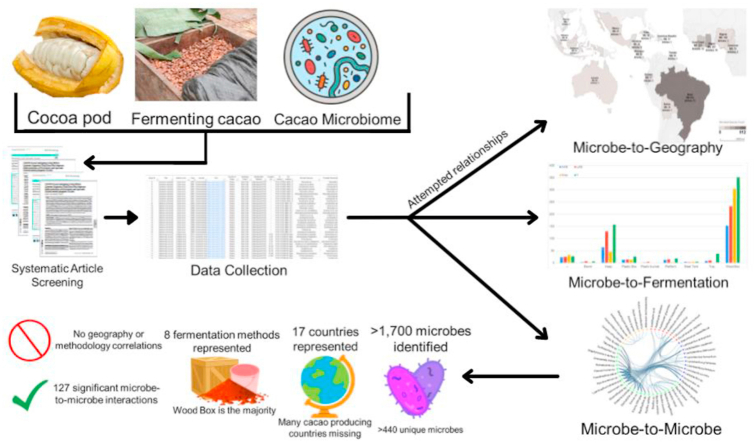
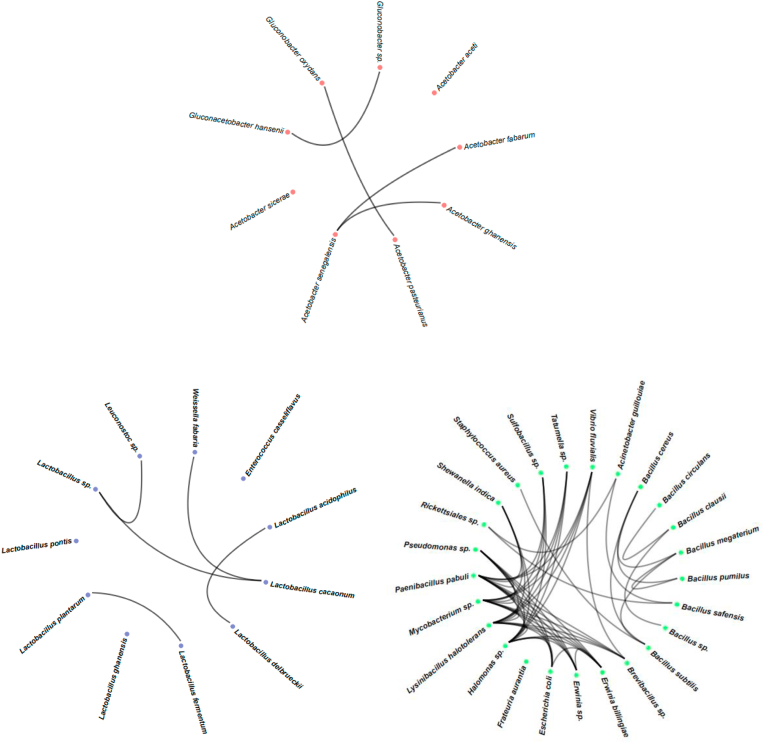
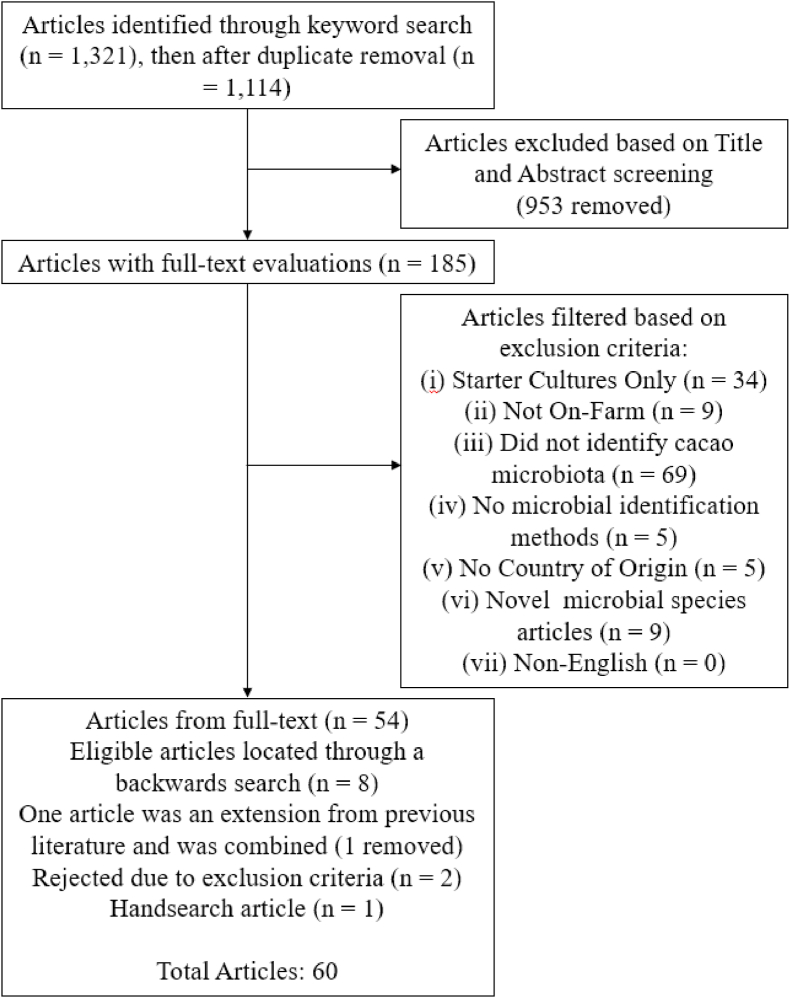
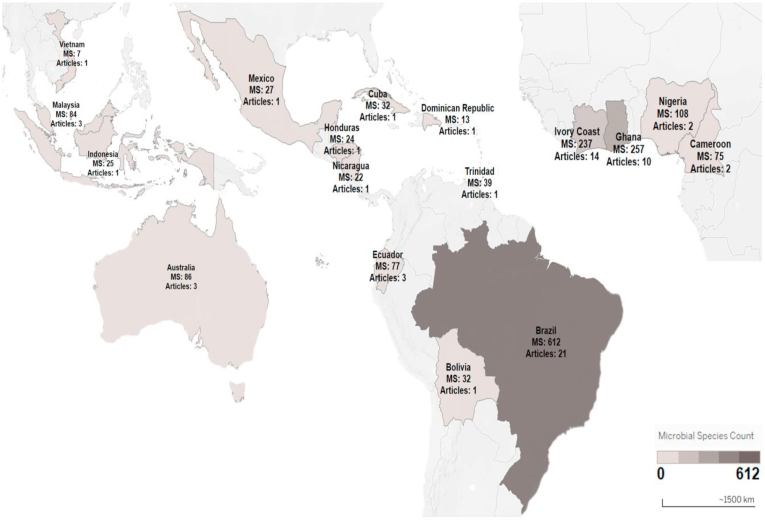
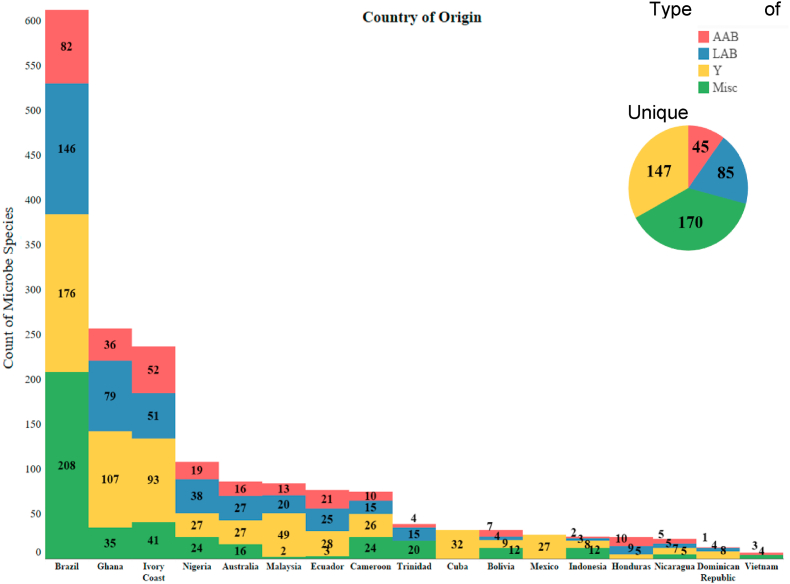
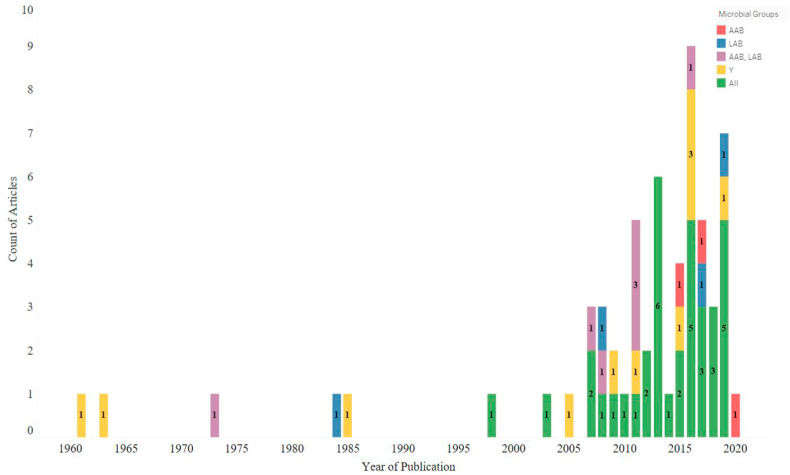
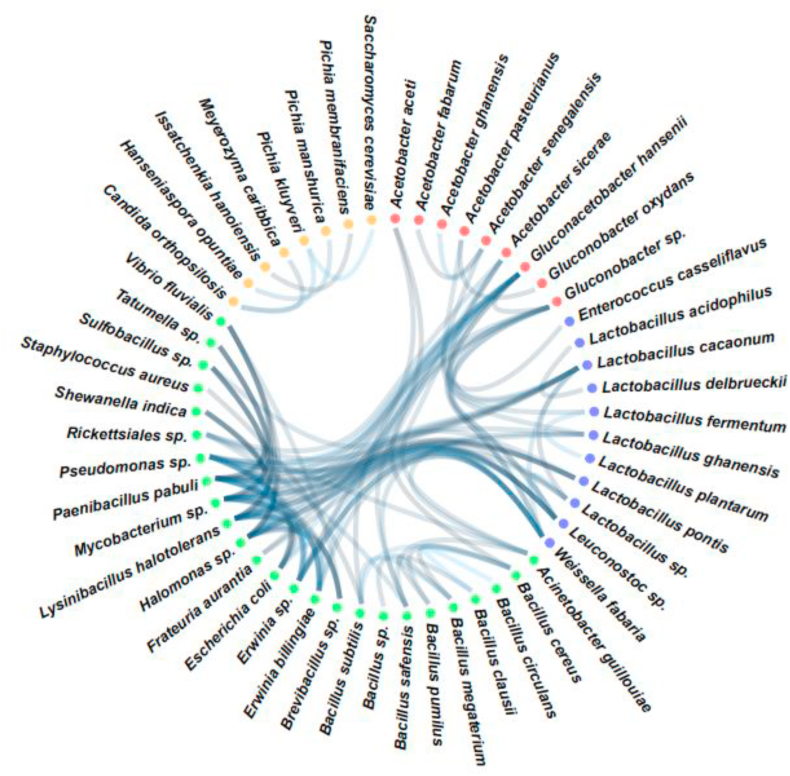
Chocolate is a product of the fermentation of cacao beans. Performed on-farm or at local cooperatives, these are spontaneous cacao fermentations (SCFs). To better understand SCFs, this study sought to identify SCF microbes, their interrelationships, and other key parameters that influence fermentation. This is important because differences in fermentation can have an impact on final product quality. In this study, a systematic data extraction was performed, searching for literature that identified microbes from SCFs. Each unique microbe, whether by location or by fermentation material, was extracted from the articles, along with parameters associated with fermentation. Data were collected and analyzed for three interactions: microbe-to-geography, microbe-to-fermentation method, and microbe-to-microbe. The goal was to attribute microbes to geographical locations, fermentation materials, or to other microbes. Statistically significant relationships will reveal target areas for future research. Over 1700 microbes (440 unique species) were identified across 60 articles. The top three countries represented are Brazil (22 articles, n = 612 microbes), the Ivory Coast (14 articles, n = 237), and Ghana (10 articles, n = 257). Several countries were far less, or never represented, and should be considered for future research. No specific relationship was identified with microbes to either geographical location or fermentation method. Using a Presence-Absence chart, 127 microbe-to-microbe interactions were identified as statistically significant. Data extraction into SCF research has revealed major gaps of knowledge for the cacao microbiome. By better understanding the cacao microbiome, researchers will be able to identify key microbes and fermentation parameters to better influence the fermentation.
巧克力是可可豆发酵的产物。这些是在农场或当地合作社进行的自发可可发酵(SCF)。为了更好地理解自发可可发酵,本研究试图识别其中的微生物、它们之间的相互关系以及其他影响发酵的关键参数。这很重要,因为发酵过程的差异会对最终产品质量产生影响。在本研究中,进行了系统的数据提取,搜索识别自发可可发酵中微生物的文献。从文章中提取了每一种独特的微生物,无论是按地点还是按发酵材料,并提取了与发酵相关的参数。收集并分析了三种相互作用的数据:微生物与地理位置、微生物与发酵方法以及微生物与微生物之间的相互作用。目的是将微生物与地理位置、发酵材料或其他微生物进行关联。具有统计学意义的关系将揭示未来研究的目标领域。在60篇文章中识别出了1700多种微生物(440个独特物种)。所涉及的前三个国家是巴西(22篇文章,n = 612种微生物)、科特迪瓦(14篇文章,n = 237种)和加纳(10篇文章,n = 257种)。有几个国家的相关研究很少或根本没有,应考虑在未来进行研究。未发现微生物与地理位置或发酵方法之间存在特定关系。使用存在 - 缺失图表,确定了127种微生物与微生物之间的相互作用具有统计学意义。对自发可可发酵研究的数据提取揭示了可可微生物组在知识方面的重大空白。通过更好地了解可可微生物组,研究人员将能够识别关键微生物和发酵参数,以更好地影响发酵过程。