Division of Philosophy, Royal Institute of Technology (KTH), Teknikringen 76, 114 28, Stockholm, Sweden.
Philos Ethics Humanit Med. 2022 Sep 21;17(1):11. doi: 10.1186/s13010-022-00123-3.
Healthcare is predicated on the use of biotechnology and medical technology, both of which are indispensable in diagnosis, treatment, and most aspects of patient care. It is therefore imperative that justifications for use of new technologies are appropriate, with the technologies working as advertised. In this paper, I consider philosophical accounts of how such justifications are made.
Critical philosophical reflection and analysis.
I propose that justification in many prominent accounts is based on the designer's professional experience and on expert testimony. I argue, however, that professional designers are not in a position to justify a new biotechnology or medical device if the justification is based on testimony or past experience of presumably similar technologies. I argue (1) that similarity judgments offered by instantaneous experts cannot be viewed as contributing (epistemically) to evidential justification of new and unproven technologies; and (2) that designers and manufacturers cannot endorse a technology's effective function in a patient-care context until it has been successfully used in that context.
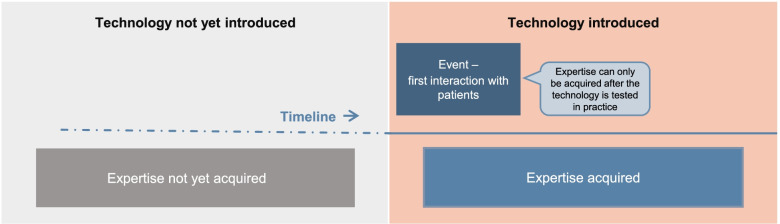
I show that an expert's past professional experiences can never predict or justify the impact of a novel technology on human health. This is because any new technology leads to the introduction of new mechanisms with unprecedented functions. The new technology therefore needs to be studied in situ and justified as a newly created mechanism within the relevant healthcare setting. Ultimately, justifications of this type rely on the scientific community and society engaging in repeated experimentation and observation of the technology, and confirming its successful use.
医疗保健依赖于生物技术和医疗技术的应用,这两者在诊断、治疗和患者护理的大多数方面都是不可或缺的。因此,新技术的使用理由必须合理,并且技术要按预期发挥作用。在本文中,我考虑了关于如何做出此类证明的哲学观点。
批判性哲学反思和分析。
我提出,在许多著名的解释中,证明是基于设计者的专业经验和专家证词。然而,我认为,如果证明是基于对假定类似技术的证词或过去经验,那么专业设计者就无法为新的生物技术或医疗设备提供证明。我提出(1)即时专家提供的相似性判断不能被视为对新的未经证实的技术的证据证明具有贡献(认识论上的);(2)在该技术已在该背景下成功使用之前,设计者和制造商不能在患者护理背景下认可该技术的有效功能。
我表明,专家过去的专业经验永远无法预测或证明一项新技术对人类健康的影响。这是因为任何新技术都会引入具有前所未有的功能的新机制。因此,需要在现场研究新技术,并将其作为相关医疗保健环境中的新机制进行证明。最终,这种类型的证明依赖于科学界和社会对技术进行反复实验和观察,并确认其成功使用。