Rajput Kajal, Ansari Mohammad Nafees, Jha Somesh K, Pani Trishna, Medatwal Nihal, Chattopadhyay Somdeb, Bajaj Avinash, Dasgupta Ujjaini
Amity Institute of Integrative Sciences and Health, Amity University Haryana, Panchgaon, Manesar, Gurgaon 122413, Haryana, India.
Regional Centre for Biotechnology, NCR Biotech Science Cluster, 3rd Milestone Faridabad-Gurgaon Expressway, Faridabad 121001, Haryana, India.
Cancers (Basel). 2022 Sep 16;14(18):4496. doi: 10.3390/cancers14184496.
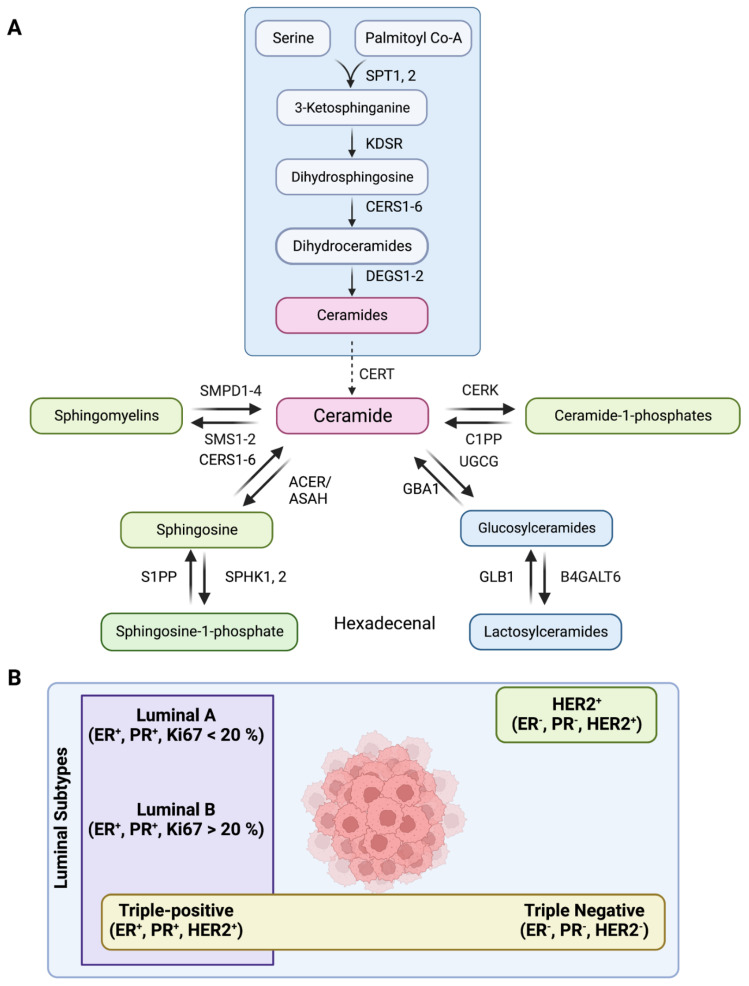
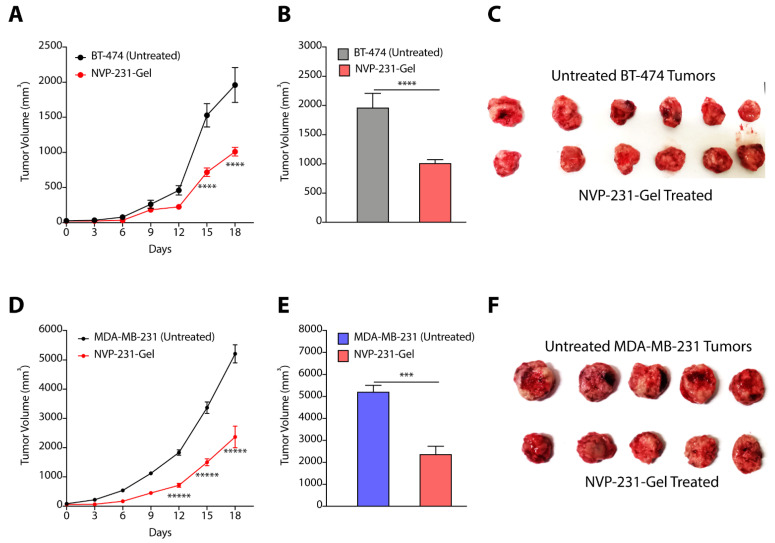
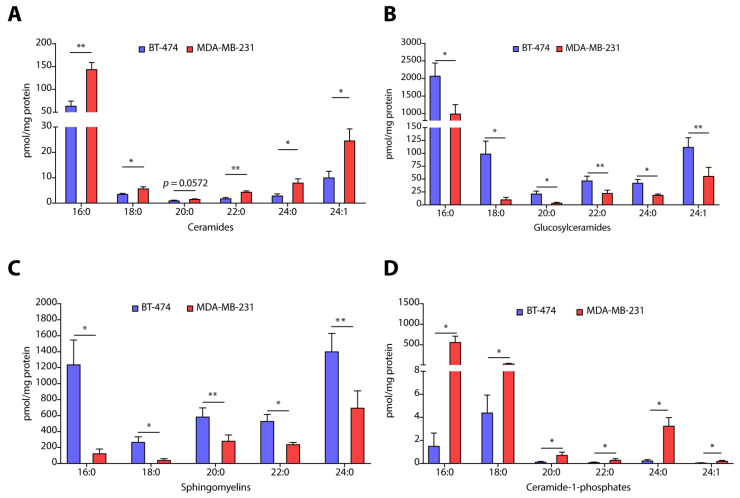
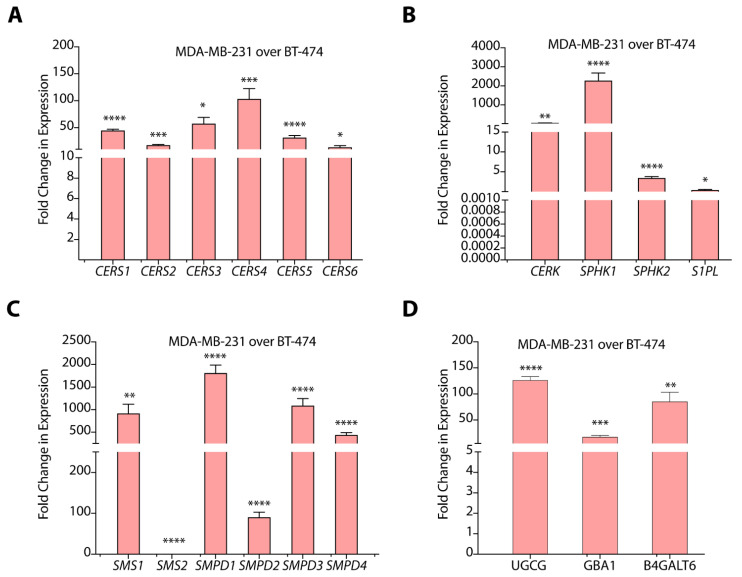
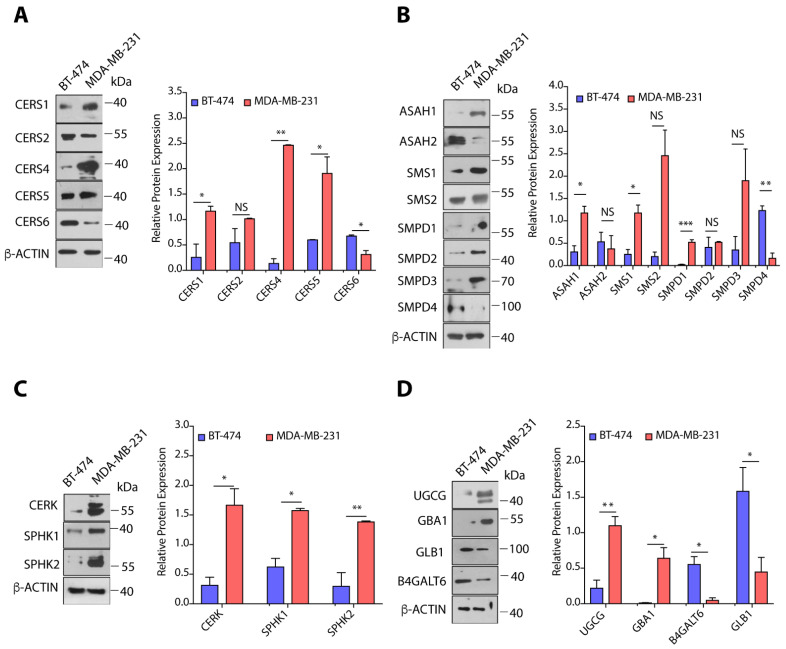
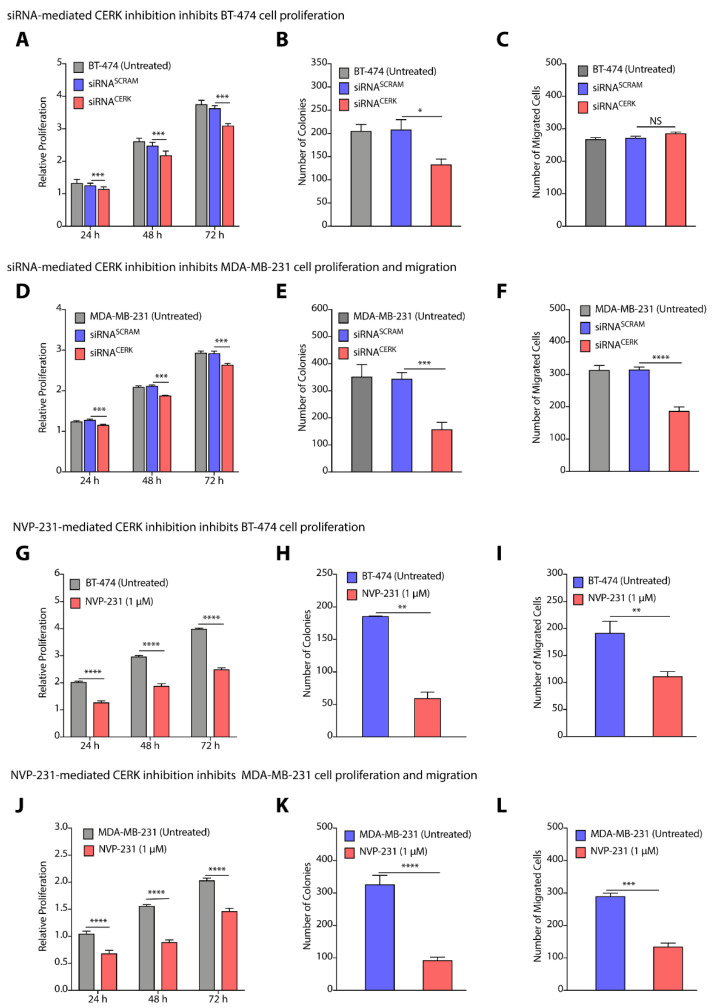
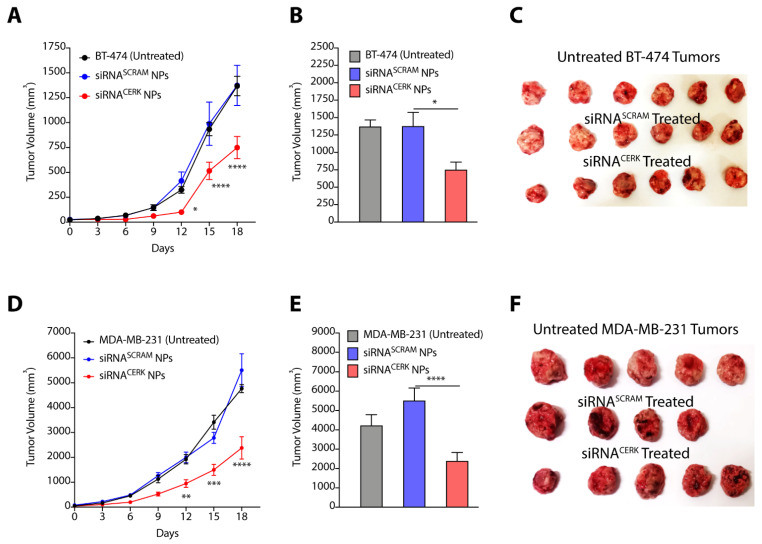
Sphingolipids are key signaling biomolecules that play a distinct role in cell proliferation, migration, invasion, drug resistance, metastasis, and apoptosis. Triple-negative (ER-PR-HER2-) and triple-positive (ER+PR+HER2+) breast cancer (called TNBC and TPBC, respectively) subtypes reveal distinct phenotypic characteristics and responses to therapy. Here, we present the sphingolipid profiles of BT-474 and MDA-MB-231 breast cancer cell lines representing the TPBC and TNBC subtypes. We correlated the level of different classes of sphingolipids and the expression of their corresponding metabolizing enzymes with the cell proliferation and cell migration properties of BT-474 and MDA-MB-231 cells. Our results showed that each cell type exhibits a unique sphingolipid profile, and common enzymes such as ceramide kinase (CERK, responsible for the synthesis of ceramide-1-phosphates) are deregulated in these cell types. We showed that siRNA/small molecule-mediated inhibition of CERK can alleviate cell proliferation in BT-474 and MDA-MB-231 cells, and cell migration in MDA-MB-231 cells. We further demonstrated that nanoparticle-mediated delivery of CERK siRNA and hydrogel-mediated sustained delivery of CERK inhibitor to the tumor site can inhibit tumor progression in BT-474 and MDA-MB-231 tumor models. In summary, distinct sphingolipid profiles of TPBC and TNBC representing cell lines provide potential therapeutic targets such as CERK, and nanoparticle/hydrogel mediated pharmacological manipulations of such targets can be explored for future cancer therapeutics.
鞘脂是关键的信号生物分子,在细胞增殖、迁移、侵袭、耐药性、转移和凋亡中发挥着独特作用。三阴(ER-PR-HER2-)和三阳(ER+PR+HER2+)乳腺癌亚型(分别称为TNBC和TPBC)表现出不同的表型特征和对治疗的反应。在此,我们展示了代表TPBC和TNBC亚型的BT-474和MDA-MB-231乳腺癌细胞系的鞘脂谱。我们将不同类别的鞘脂水平及其相应代谢酶的表达与BT-474和MDA-MB-231细胞的细胞增殖和细胞迁移特性进行了关联。我们的结果表明,每种细胞类型都呈现出独特的鞘脂谱,并且在这些细胞类型中,诸如神经酰胺激酶(CERK,负责合成1-磷酸神经酰胺)等常见酶的表达失调。我们表明,siRNA/小分子介导的CERK抑制可减轻BT-474和MDA-MB-231细胞的增殖以及MDA-MB-231细胞的迁移。我们进一步证明,纳米颗粒介导的CERK siRNA递送和水凝胶介导的CERK抑制剂向肿瘤部位的持续递送可抑制BT-474和MDA-MB-231肿瘤模型中的肿瘤进展。总之,代表细胞系的TPBC和TNBC独特的鞘脂谱提供了诸如CERK等潜在治疗靶点,并且可以探索纳米颗粒/水凝胶介导的此类靶点的药理学操作以用于未来的癌症治疗。