Institute of Genetics and Biophysics Adriano Buzzati-Traverso, CNR, 80131 Naples, Italy.
Maria Rosaria Maglione Foundation Onlus, 80122 Naples, Italy.
Int J Mol Sci. 2022 Sep 6;23(18):10250. doi: 10.3390/ijms231810250.
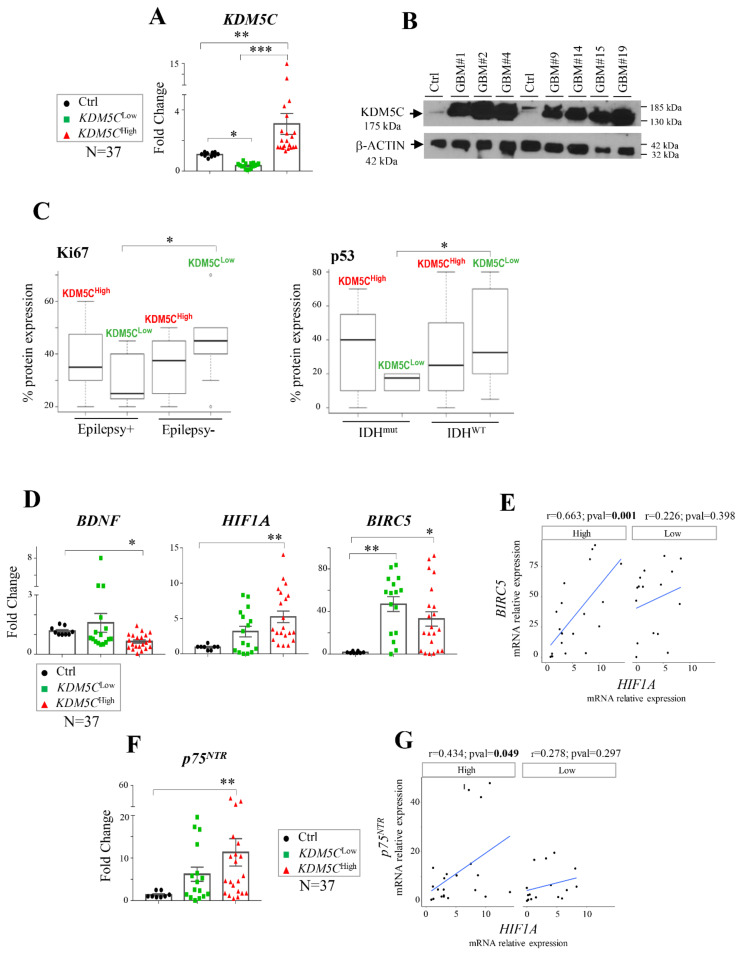
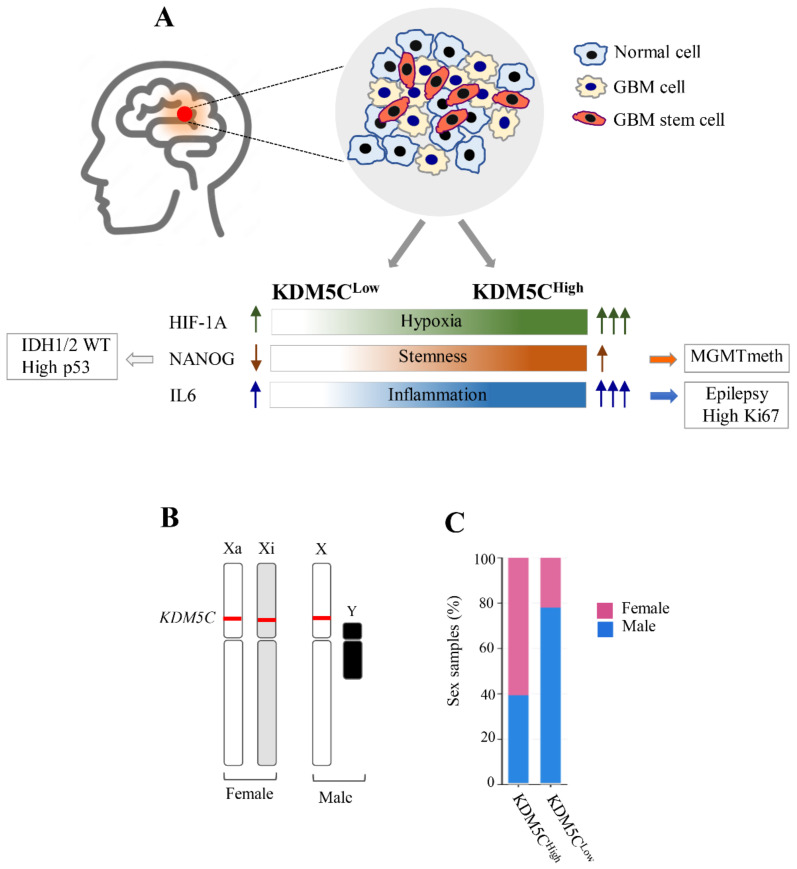
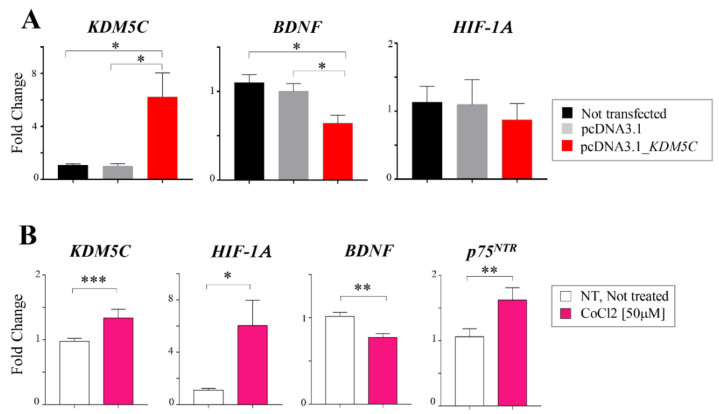
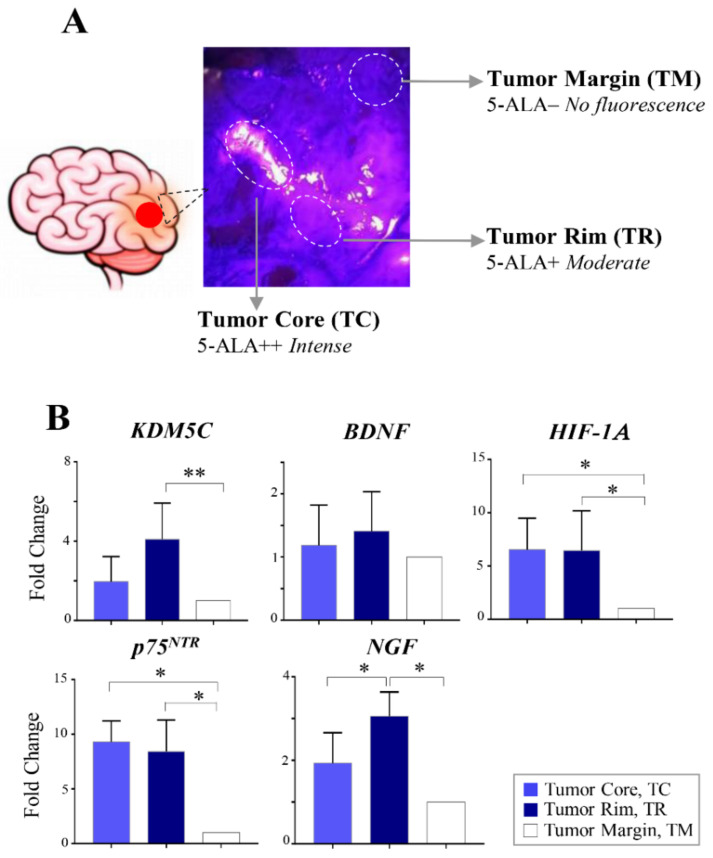
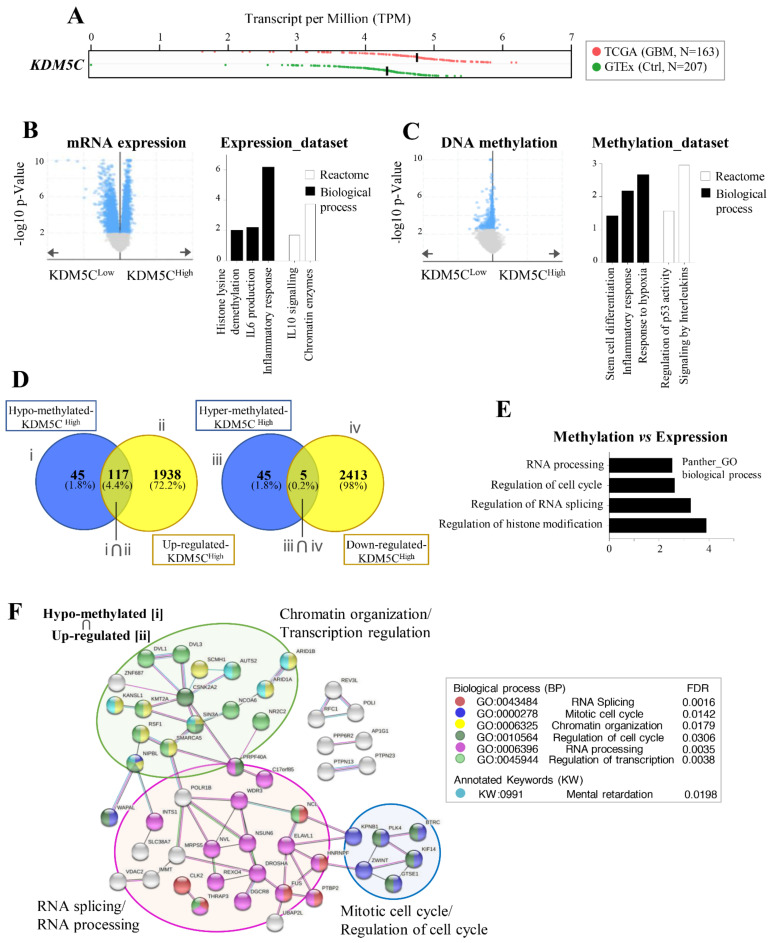
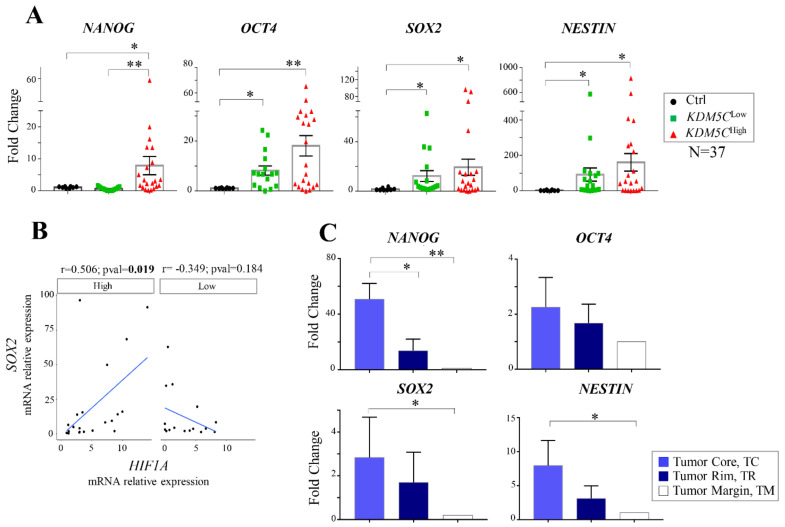
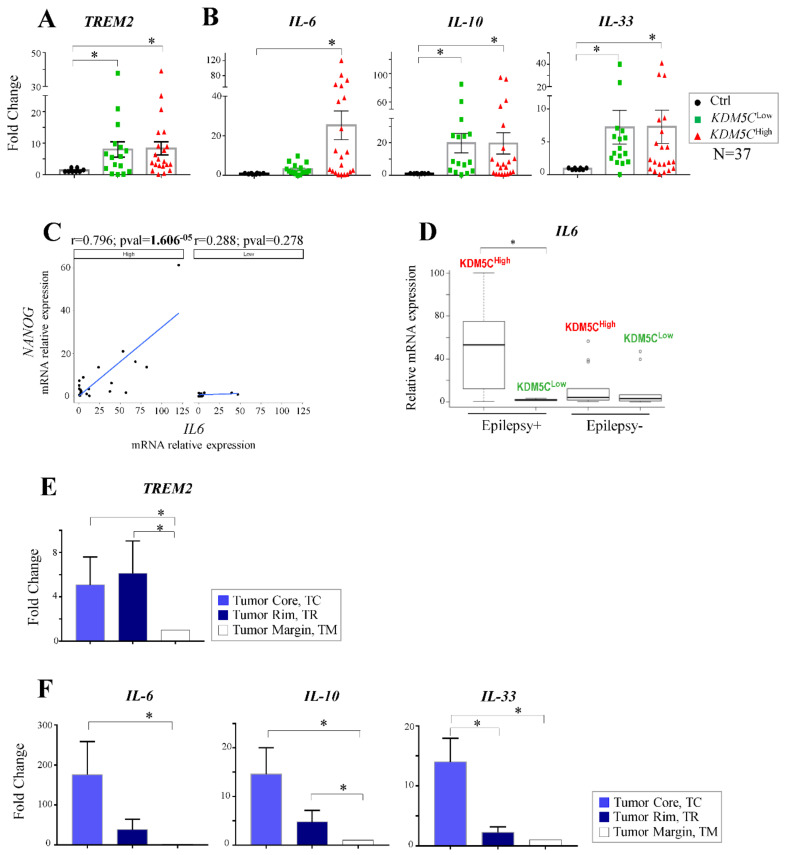
Glioblastoma multiforme (GBM) is a fatal brain tumor without effective drug treatment. In this study, we highlight, for the first time, the contribution of chromatin remodeling gene Lysine (K)-specific demethylase 5C () in GBM via an extensive analysis of clinical, expression, and functional data, integrated with publicly available omic datasets. The expression analysis on GBM samples (N = 37) revealed two informative subtypes, namely KDM5C and KDM5C, displaying higher/lower KDM5C levels compared to the controls. The former subtype displays a strong downregulation of brain-derived neurotrophic factor ()-a negative KDM5C target-and a robust overexpression of hypoxia-inducible transcription factor-1A () gene, a modulator. Additionally, a significant co-expression among the prognostic markers , , and was observed. These results, corroborated by overexpression and hypoxia-related functional assays in T98G cells, suggest a role for the HIF1A-KDM5C axis in the hypoxic response in this tumor. Interestingly, fluorescence-guided surgery on GBM sections further revealed higher and levels in the tumor rim niche compared to the adjacent tumor margin, indicating a regionally restricted hyperactivity of this regulatory axis. Analyzing the TCGA expression and methylation data, we found methylation changes between the subtypes in the genes, accounting for the hypoxia response, stem cell differentiation, and inflammation. High and levels highlight a distinctive stem cell-like and proinflammatory signature in the KDM5C subgroup and GBM niches. Taken together, our results indicate HIF1A-KDM5C as a new, relevant cancer axis in GBM, opening a new, interesting field of investigation based on as a potential therapeutic target of the hypoxic microenvironment in GBM.
多形性胶质母细胞瘤(GBM)是一种致命的脑肿瘤,目前尚无有效的药物治疗方法。在这项研究中,我们首次通过对临床、表达和功能数据的广泛分析,强调了染色质重塑基因赖氨酸(K)特异性去甲基酶 5C()在 GBM 中的作用,这些数据与公开的组学数据集相结合。对 GBM 样本(N = 37)的表达分析显示了两个信息丰富的亚型,即 KDM5C 和 KDM5C,与对照组相比,前者表现出更高/更低的 KDM5C 水平。前者亚型显示出脑源性神经营养因子()的强烈下调-负 KDM5C 靶标-和缺氧诱导转录因子 1A()基因的强大过表达,是一种调节剂。此外,还观察到预后标志物、和之间存在显著的共表达。这些结果在 T98G 细胞中通过过表达和与缺氧相关的功能测定得到了证实,表明 HIF1A-KDM5C 轴在该肿瘤的低氧反应中发挥作用。有趣的是,GBM 切片的荧光引导手术进一步显示,肿瘤边缘龛位中的和水平高于相邻肿瘤边缘,表明该调节轴在区域上具有较高的活性。分析 TCGA 的表达和甲基化数据,我们发现亚组之间基因的甲基化变化与缺氧反应、干细胞分化和炎症有关。高和水平突出了 KDM5C 亚组和 GBM 龛位中独特的干细胞样和促炎特征。综上所述,我们的结果表明 HIF1A-KDM5C 是 GBM 中的一个新的、相关的癌症轴,为基于作为 GBM 低氧微环境的潜在治疗靶点的新的、有趣的研究领域开辟了道路。