Department of Medical Genetics, School of Basic Medical Sciences, Wuhan University, Wuhan 430071, China.
Department of Gynecology and Obstetrics, Zhongnan Hospital of Wuhan University, Wuhan 430072, China.
Theranostics. 2021 Aug 4;11(18):8674-8691. doi: 10.7150/thno.60233. eCollection 2021.
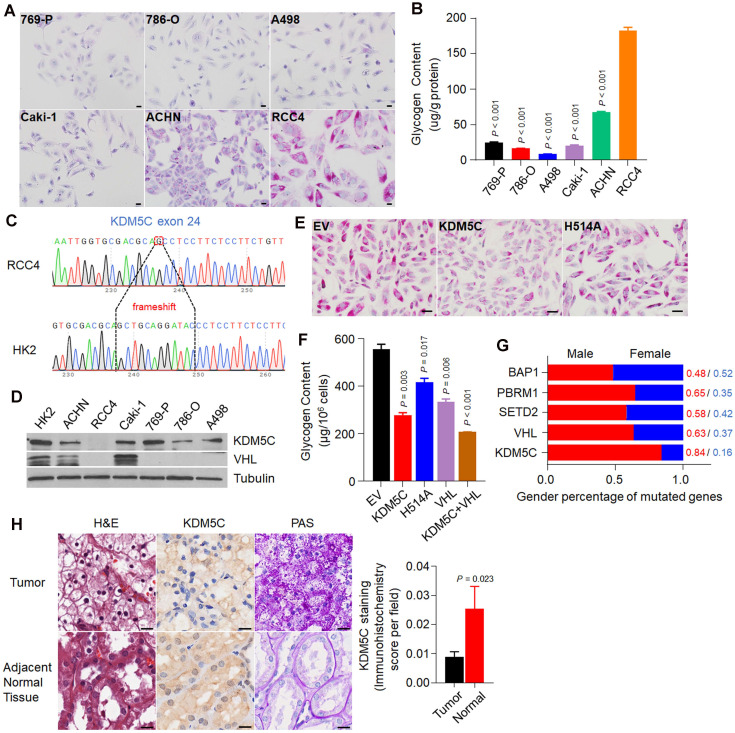
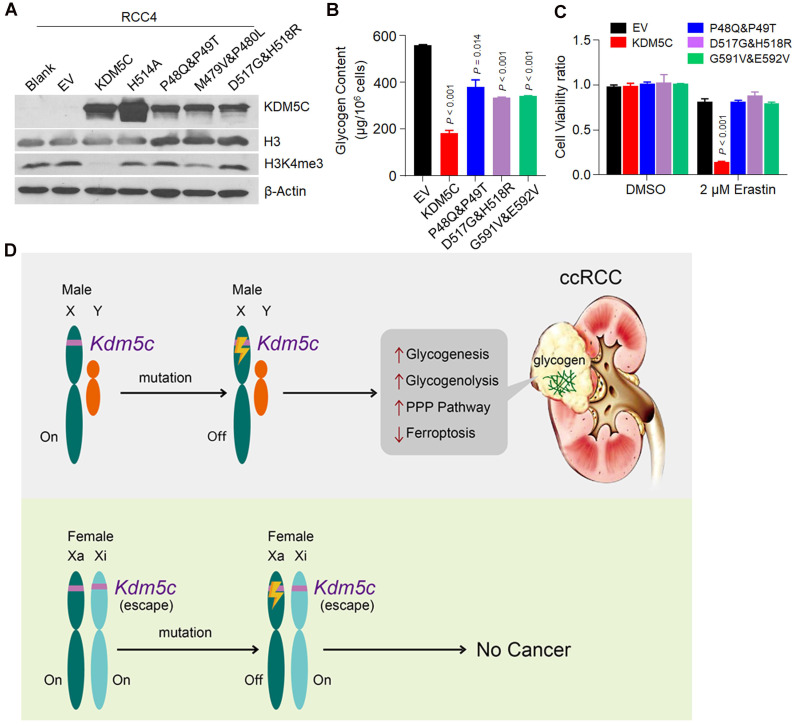
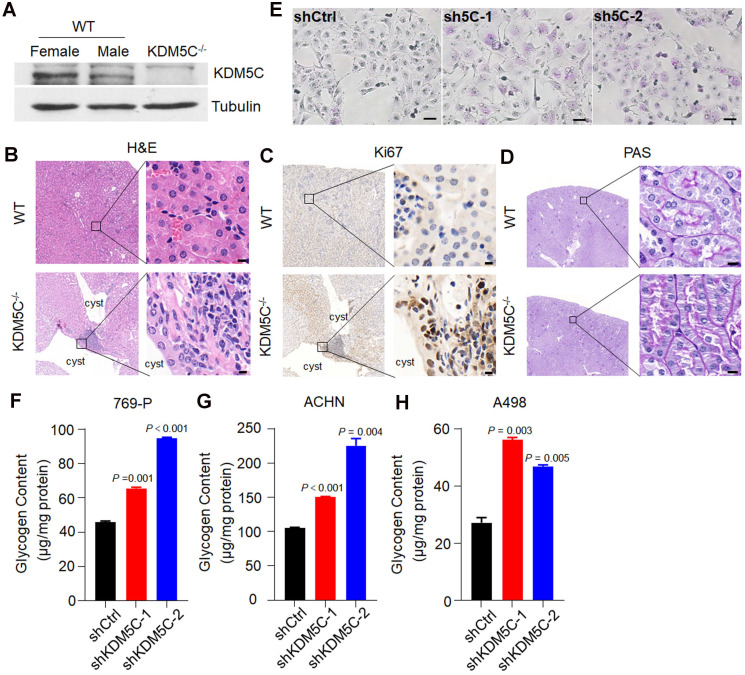
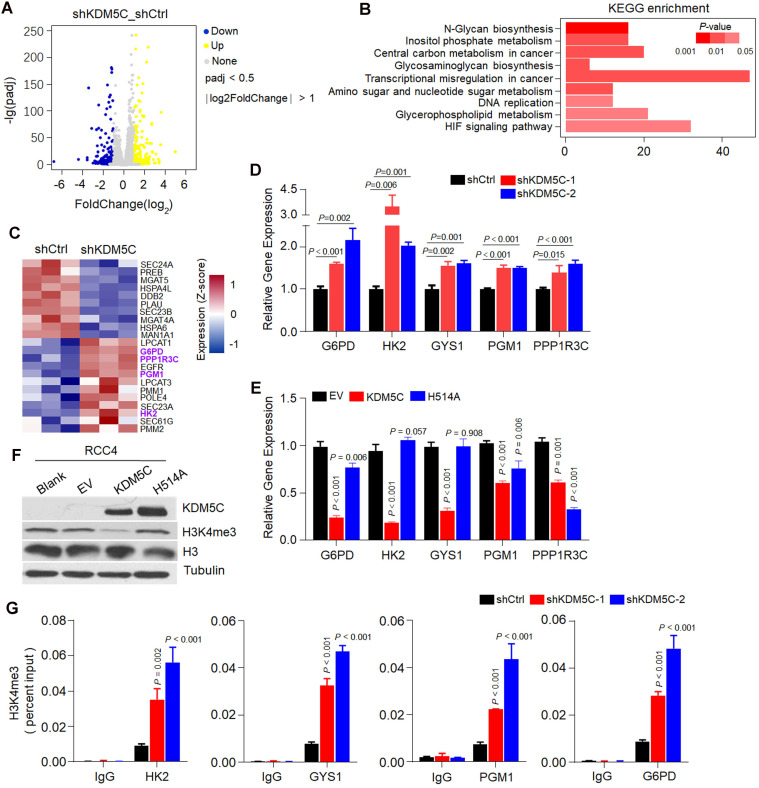
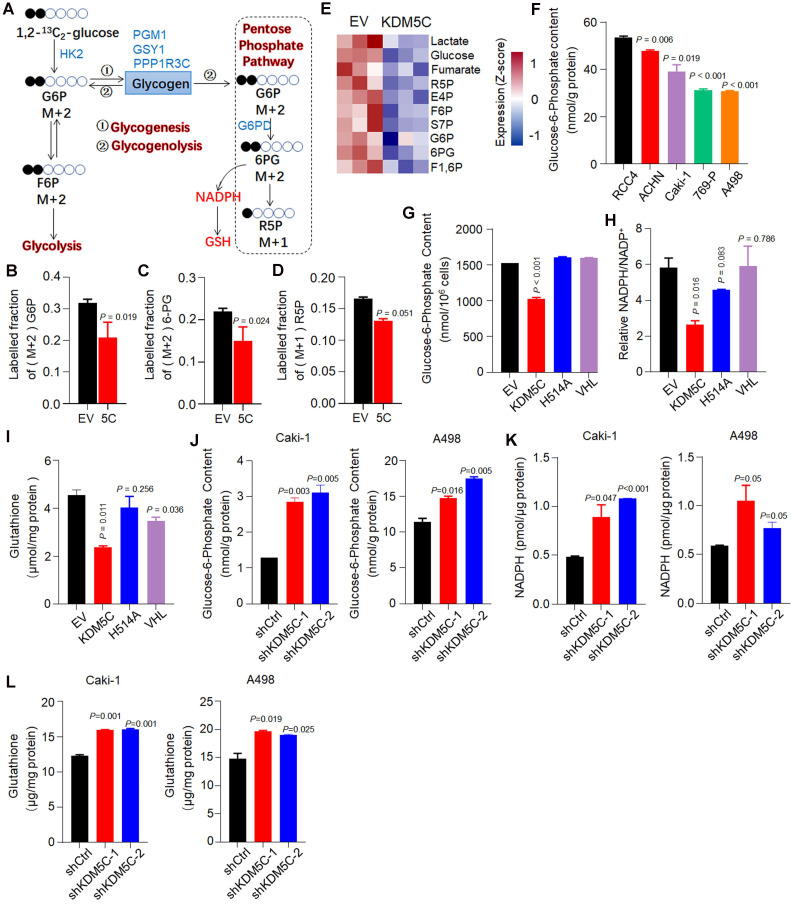
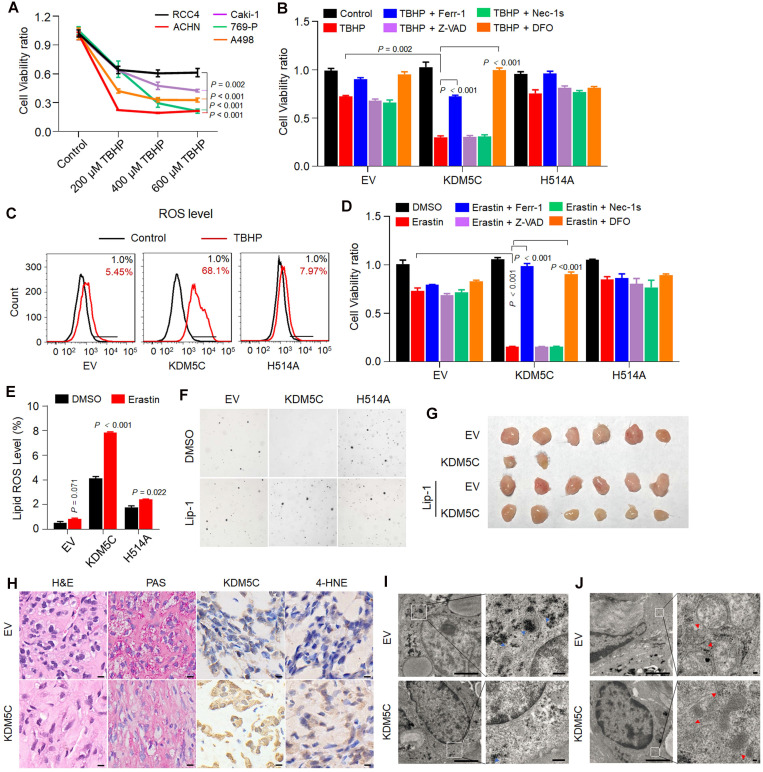
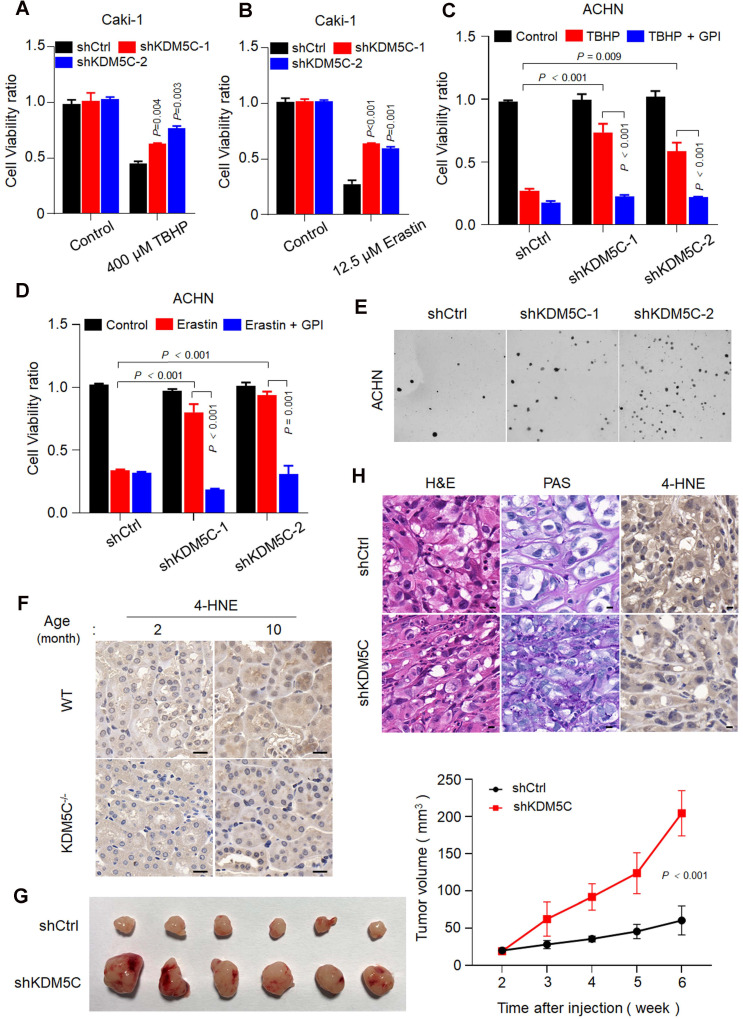
Clear cell renal cell carcinoma (ccRCC) is characterized by glycogen-laden, unexplained male predominance, and frequent mutations in the Von Hippel-Lindau () gene and histone modifier genes. Besides, poor survival rates of ccRCC patients seem to be associated with up-regulation of the pentose phosphate pathway (PPP). However, the mechanism underlying these features remains unclear. : Whole exome sequencing was used to identify the gene mutation that implicated in the rewired glucose metabolism. RNA-seq analyses were performed to evaluate the function of KDM5C in ccRCC. Furthermore, heavy isotope tracer analysis and metabolites quantification assays were used to study how KDM5C affects intracellular metabolic flux. To provide more evidence, we generated the mice by CRISPR-Cas9 mediated gene knockout and performed the xenografts with KDM5C overexpressing or depleted cell lines. A histone demethylase gene , which can escape from X-inactivation and is predominantly mutated in male ccRCC patients, was identified to harbor the frameshift mutation in the ccRCC cell line with the highest glycogen level, while the restoration of KDM5C significantly reduced the glycogen level. Transcriptome and metabolomic analysis linked KDM5C to metabolism-related biological processes. KDM5C specifically regulated the expression of several hypoxia-inducible factor (HIF)-related genes and Glucose-6-phosphate dehydrogenase (G6PD) that were involved in glycogenesis/glycogenolysis and PPP, respectively, mainly through the histone demethylase activity of KDM5C. Depletion of KDM5C increased the production of glycogen, which was then directed to glycogenolysis to generate glucose-6-phosphate (G6P) and subsequently PPP to produce nicotinamide adenine dinucleotide phosphate hydride (NADPH) and glutathione (GSH), thus conferring cells resistance to reactive oxygen species (ROS) and ferroptosis. KDM5C re-expression suppressed the glucose flux through PPP and re-sensitized cancer cells to ferroptosis. Notably, -knockout mice kidney tissues exhibited elevated glycogen level, reduced lipid peroxidation and displayed a transformation of renal cysts into hyperplastic lesions, implying a cancer-protective benefit of ferroptosis. Furthermore, KDM5C deficiency predicted the poor prognosis, and clinically relevant mutants failed to suppress glycogen accumulation and promoted ferroptosis as wild type. This work revealed that a histone modifier gene inactive mutation reprogramed glycogen metabolism and helped to explain the long-standing puzzle of male predominance in human cancer. In addition, our findings may suggest the therapeutic value of targeting glycogen metabolism in ccRCC.
透明细胞肾细胞癌(ccRCC)的特征是富含糖原、原因不明的男性优势、VHL 基因和组蛋白修饰基因的频繁突变。此外,ccRCC 患者的生存率似乎较低,这与戊糖磷酸途径(PPP)的上调有关。然而,这些特征的机制尚不清楚。
采用全外显子组测序鉴定涉及重排葡萄糖代谢的基因突变。进行 RNA-seq 分析以评估 KDM5C 在 ccRCC 中的功能。此外,还使用重同位素示踪分析和代谢物定量测定来研究 KDM5C 如何影响细胞内代谢通量。为了提供更多证据,我们通过 CRISPR-Cas9 介导的基因敲除生成了 小鼠,并进行了 KDM5C 过表达或耗尽细胞系的异种移植。
鉴定出一种组蛋白去甲基化酶基因 ,该基因可以逃避 X 失活,并且主要在男性 ccRCC 患者中发生突变,在糖原水平最高的 ccRCC 细胞系中发现该基因存在移码突变,而 KDM5C 的恢复显著降低了糖原水平。转录组和代谢组分析将 KDM5C 与代谢相关的生物学过程联系起来。KDM5C 特异性调节几个缺氧诱导因子(HIF)相关基因和葡萄糖-6-磷酸脱氢酶(G6PD)的表达,分别涉及糖异生/糖原分解和 PPP,主要通过 KDM5C 的组蛋白去甲基化酶活性。KDM5C 缺失增加了糖原的产生,然后引导糖原分解生成葡萄糖-6-磷酸(G6P),随后 PPP 生成烟酰胺腺嘌呤二核苷酸磷酸氢化物(NADPH)和谷胱甘肽(GSH),从而赋予细胞对活性氧(ROS)和铁死亡的抗性。KDM5C 的重新表达抑制了 PPP 中的葡萄糖通量,并使癌细胞重新对铁死亡敏感。值得注意的是, 基因敲除小鼠的肾脏组织表现出糖原水平升高、脂质过氧化减少,并表现出肾囊肿向增生性病变的转化,这表明铁死亡具有抗癌益处。此外,KDM5C 缺失预示着预后不良,临床上相关的 突变体不能抑制糖原积累并促进铁死亡,而野生型则可以。
这项工作揭示了一个组蛋白修饰基因失活突变可重新编程糖原代谢,并有助于解释人类癌症中男性优势的长期谜团。此外,我们的发现可能表明靶向 ccRCC 中糖原代谢的治疗价值。