Biotechnology Department, Tula State University, Pr. Lenina 92, 300012 Tula, Russia.
Laboratory of Methylotrophy, Skryabin Institute of Biochemistry and Physiology of Microorganisms of Russian Academy of Sciences-A Separate Subdivision of Federal State Budget Institution of Science, Federal Research Center (IBPM RAS), Pushchino Scientific Center of Biological Research of Russian Academy of Sciences, Prospekt Nauki 5, 142290 Pushchino, Russia.
Int J Mol Sci. 2022 Sep 7;23(18):10337. doi: 10.3390/ijms231810337.
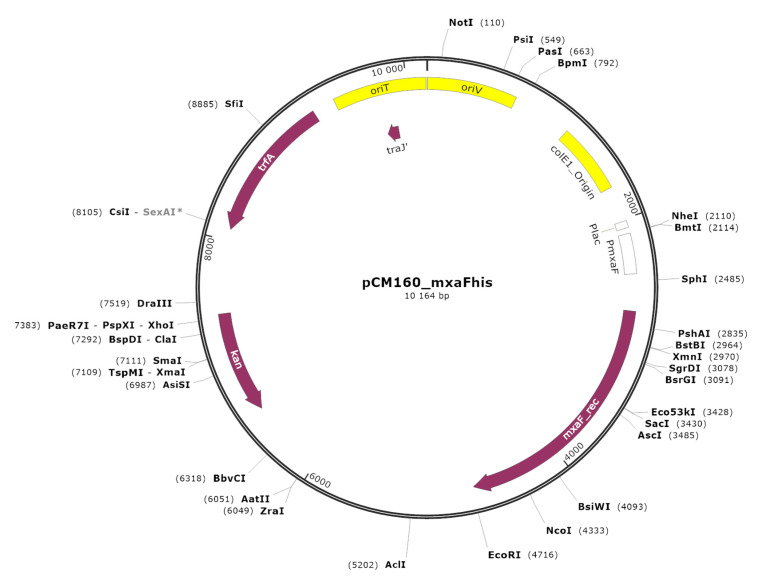
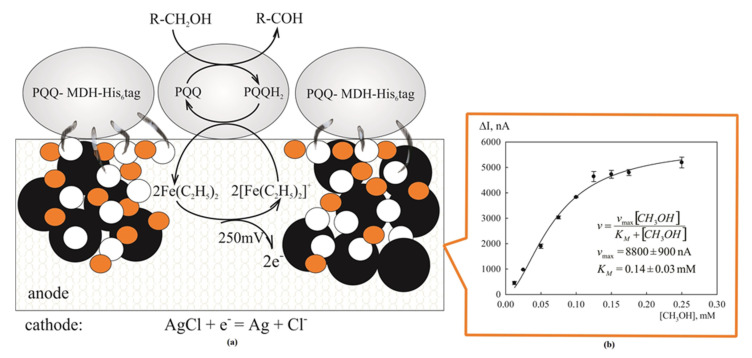
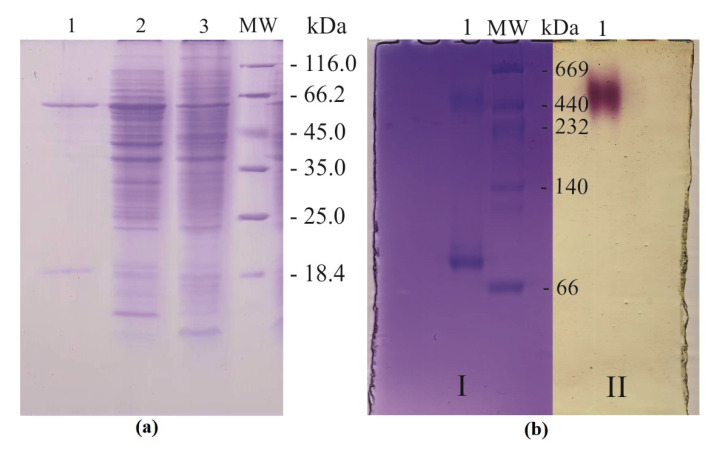
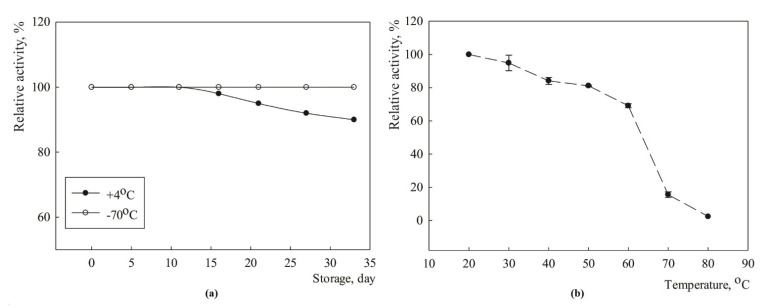
(Ca)-dependent pyrroloquinolinequinone (PQQ)-dependent methanol dehydrogenase (MDH) (EC: 1.1.2.7) is one of the key enzymes of primary C1-compound metabolism in methylotrophy. PQQ-MDH is a promising catalyst for electrochemical biosensors and biofuel cells. However, the large-scale use of PQQ-MDH in bioelectrocatalysis is not possible due to the low yield of the native enzyme. Homologously overexpressed MDH was obtained from methylotrophic bacterium AM1 by cloning the gene of only one subunit, . The His-tagged enzyme was easily purified by immobilized metal ion affinity chromatography (36% yield). A multimeric form (α6β6) of recombinant PQQ-MDH possessing enzymatic activity (0.54 U/mg) and high stability was demonstrated for the first time. pH-optimum of the purified protein was about 9-10; the enzyme was activated by ammonium ions. It had the highest affinity toward methanol (K = 0.36 mM). The recombinant MDH was used for the fabrication of an amperometric biosensor. Its linear range for methanol concentrations was 0.002-0.1 mM, the detection limit was 0.7 µM. The properties of the invented biosensor are competitive to the analogs, meaning that this enzyme is a promising catalyst for industrial methanol biosensors. The developed simplified technology for PQQ-MDH production opens up new opportunities for the development of bioelectrocatalytic systems.
依赖钙离子的吡咯并喹啉醌(PQQ)依赖甲醇脱氢酶(MDH)(EC:1.1.2.7)是甲醇营养型微生物中初级 C1 化合物代谢的关键酶之一。PQQ-MDH 是电化学生物传感器和生物燃料电池的有前途的催化剂。然而,由于天然酶的产量低,PQQ-MDH 无法大规模用于生物电化学。通过克隆仅一个亚基的基因,从甲醇营养型细菌 AM1 中获得了同源过表达的 MDH。His 标记的酶很容易通过固定化金属离子亲和层析(36%的产率)进行纯化。首次证明了具有酶活性(0.54 U/mg)和高稳定性的重组 PQQ-MDH 多聚体形式(α6β6)。纯化蛋白的最适 pH 值约为 9-10;酶被铵离子激活。它对甲醇的亲和力最高(K = 0.36 mM)。重组 MDH 用于制造安培生物传感器。其对甲醇浓度的线性范围为 0.002-0.1 mM,检测限为 0.7 µM。发明的生物传感器的性能与类似物具有竞争力,这意味着该酶是工业甲醇生物传感器的有前途的催化剂。开发的简化 PQQ-MDH 生产技术为生物电化学系统的发展开辟了新的机会。