Department of Medicine and Therapeutics, Li Ka Shing Institute of Health Sciences, The Chinese University of Hong Kong.
Department of Anatomical and Cellular Pathology, State Key Laboratory of Translational Oncology, The Chinese University of Hong Kong.
Int J Biol Sci. 2022 Aug 29;18(14):5489-5502. doi: 10.7150/ijbs.72977. eCollection 2022.
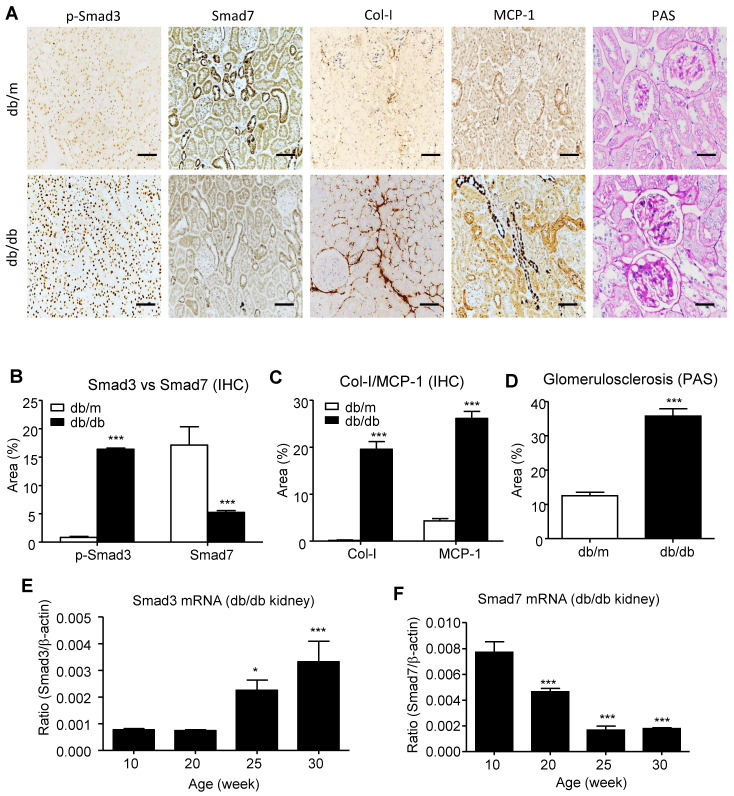
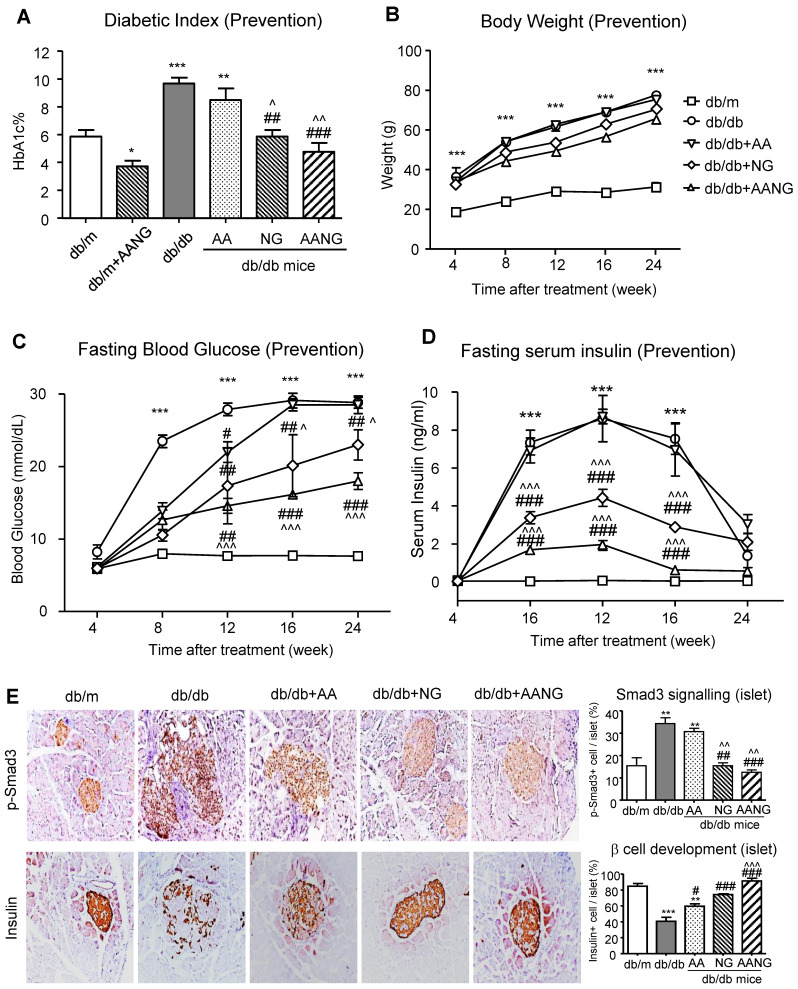
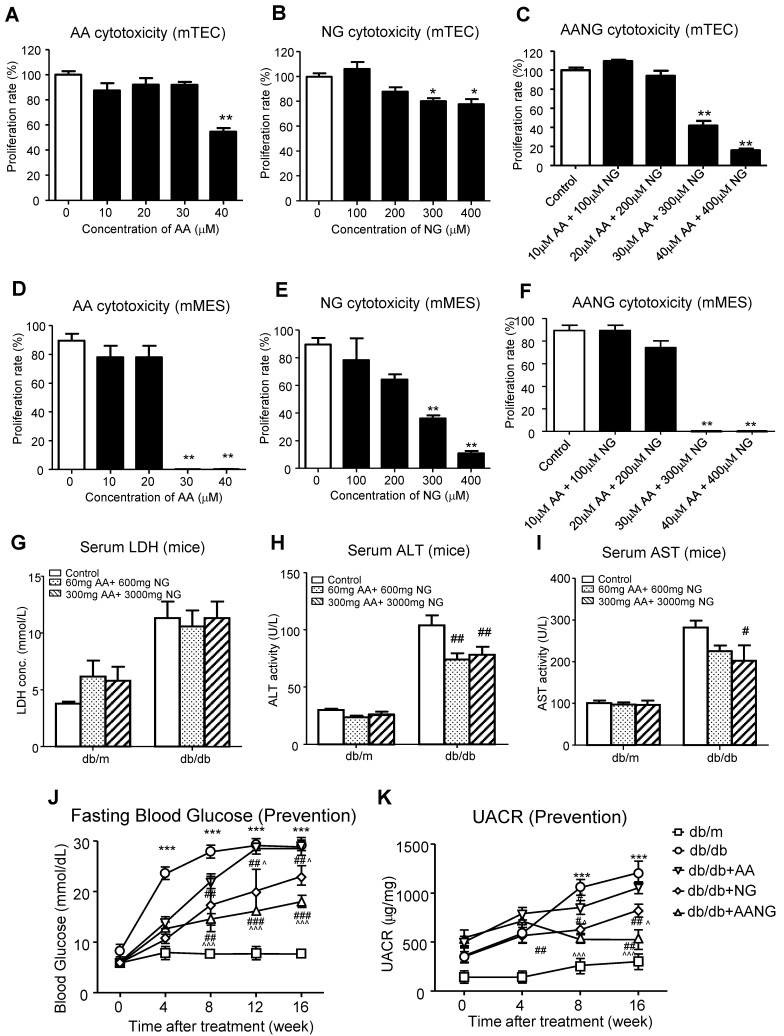
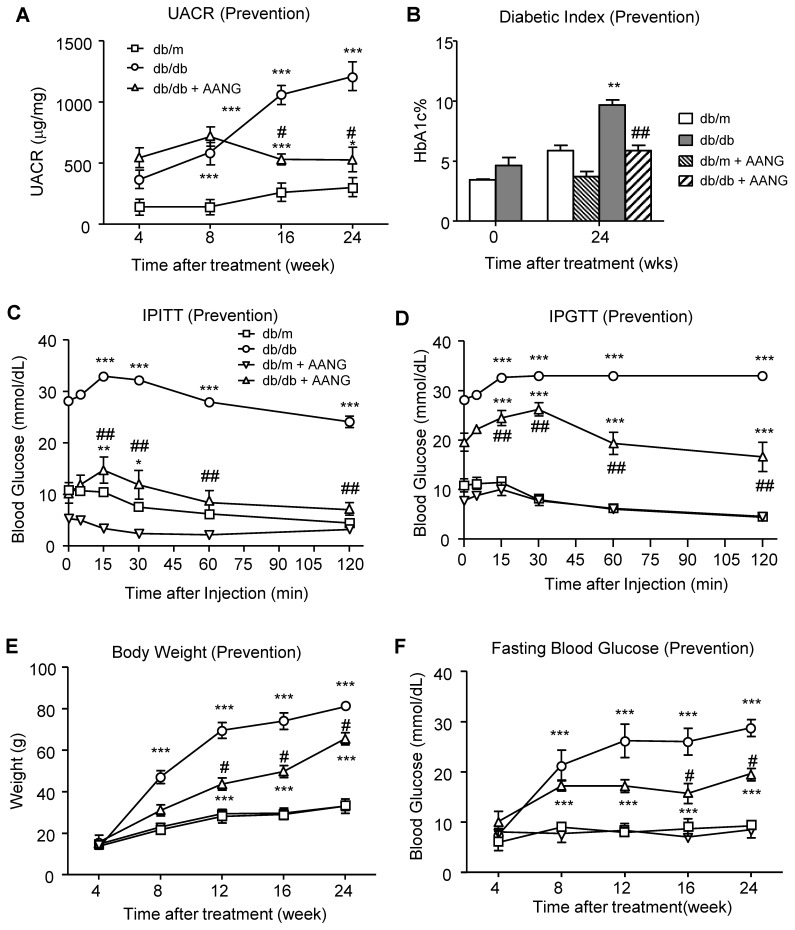
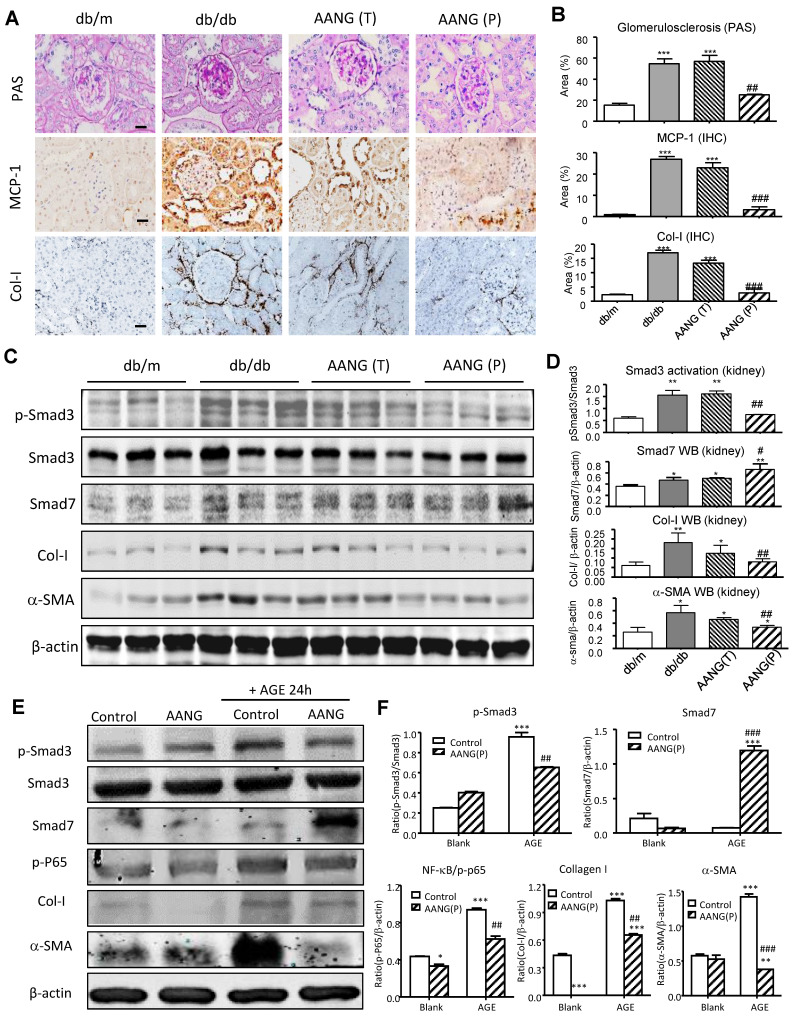
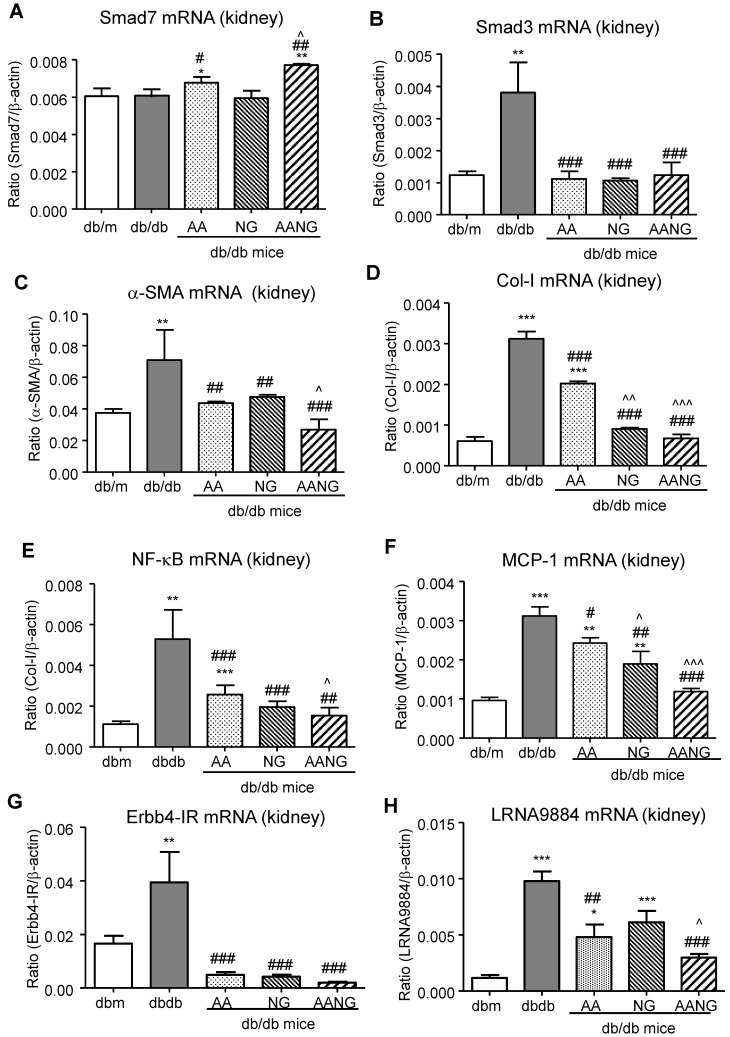
Diabetic nephropathy (DN) is a major cause of end-stage kidney disease, where TGF-β1/Smad signaling plays an important role in the disease progression. Our previous studies demonstrated a combination of Traditional Chinese Medicine derived Smad7 agonist Asiatic Acid (AA) and Smad3 inhibitor Naringenin (NG), AANG, effectively suppressed the progression of renal fibrosis . However, its implication in type-2 diabetic nephropathy (T2DN) is still unexplored. Here, we detected progressive activation of Smad3 but reduction of Smad7 in db/db mice during T2DN development. Therefore, we optimized the dosage and the combination ratio of AANG to achieve a better rebalancing Smad3/Smad7 signaling for treatment of T2DN. Unexpectedly, preventive treatment with combined AANG from week 4 before the development of diabetes and T2DN effectively protected against the onset of T2DN. In contract, these inhibitory effects were lost when db/db mice received the late AANG treatment from 12-24 weeks. Surprisingly, preventive treatment with AANG ameliorated not only T2DN but also the primary disease type-2 diabetes (T2D) with relative normal levels of fasting blood glucose and HbA1c, and largely improving metabolic abnormalities especially on insulin insensitivity and glucose tolerance in db/db mice. Mechanistically, AANG effectively prevented both Smad3-mediated renal fibrosis and NF-κB-driven renal inflammation in the diabetic kidney and advanced glycation end-products (AGE) stimulated tubular epithelial mTEC cells . More importantly, we uncovered that preventive treatment with AANG effectively protected against diabetic-associated islet injury via restoring the β cell development in db/db mice. Taken together, we discovered that the early treatment with combined AANG can effectively protect against the development of T2D and T2DN via mechanism associated with protection against Smad3-depenedent islet injury.
糖尿病肾病(DN)是终末期肾病的主要原因,其中 TGF-β1/Smad 信号通路在疾病进展中起着重要作用。我们之前的研究表明,中药来源的 Smad7 激动剂积雪草酸(AA)和 Smad3 抑制剂柚皮苷(NG)的组合,AANG,可有效抑制肾纤维化的进展。然而,其在 2 型糖尿病肾病(T2DN)中的作用仍未被探索。在这里,我们在 T2DN 发展过程中检测到 db/db 小鼠中 Smad3 的渐进性激活,但 Smad7 的减少。因此,我们优化了 AANG 的剂量和组合比例,以更好地实现 Smad3/Smad7 信号的再平衡,用于治疗 T2DN。出乎意料的是,从糖尿病和 T2DN 发病前 4 周开始联合使用 AANG 进行预防性治疗可有效预防 T2DN 的发生。相反,当 db/db 小鼠在 12-24 周接受晚期 AANG 治疗时,这些抑制作用就会丧失。令人惊讶的是,预防性治疗 AANG 不仅改善了 T2DN,还改善了原发性 2 型糖尿病(T2D),空腹血糖和 HbA1c 相对正常,并大大改善了代谢异常,尤其是 db/db 小鼠的胰岛素敏感性和葡萄糖耐量异常。机制上,AANG 可有效预防糖尿病肾脏中的 Smad3 介导的肾纤维化和 NF-κB 驱动的肾炎症,以及晚期糖基化终产物(AGE)刺激的肾小管上皮 mTEC 细胞。更重要的是,我们发现,预防性治疗 AANG 通过恢复 db/db 小鼠中的β细胞发育,可有效防止糖尿病相关胰岛损伤。综上所述,我们发现早期联合使用 AANG 治疗可通过防止 Smad3 依赖性胰岛损伤来有效预防 T2D 和 T2DN 的发展。