Thomas E. Starzl Transplantation Institute, University of Pittsburgh, Pittsburgh, PA 15261.
Center for Evolutionary Biology and Medicine, University of Pittsburgh, Pittsburgh, PA 15261.
Proc Natl Acad Sci U S A. 2022 Oct 4;119(40):e2207374119. doi: 10.1073/pnas.2207374119. Epub 2022 Sep 26.
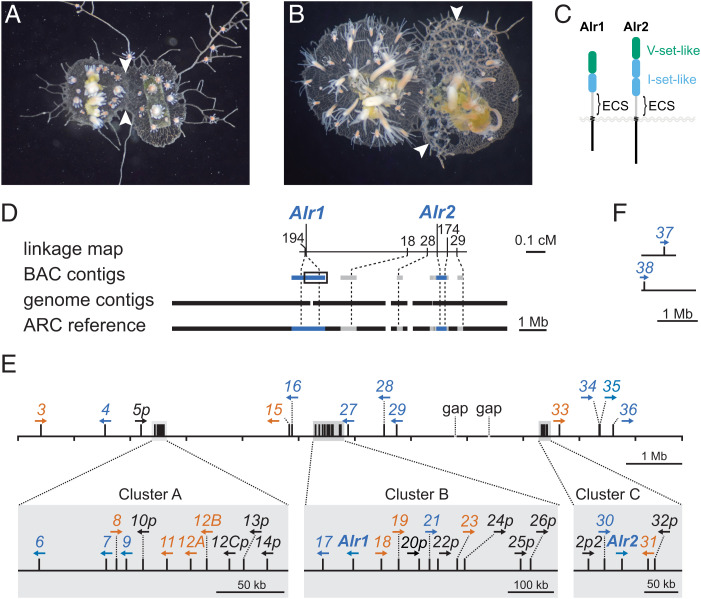
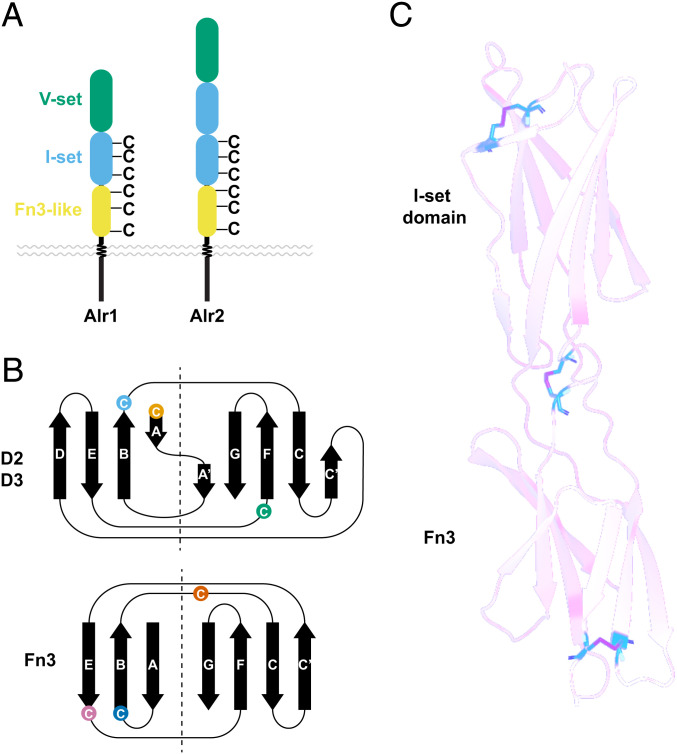
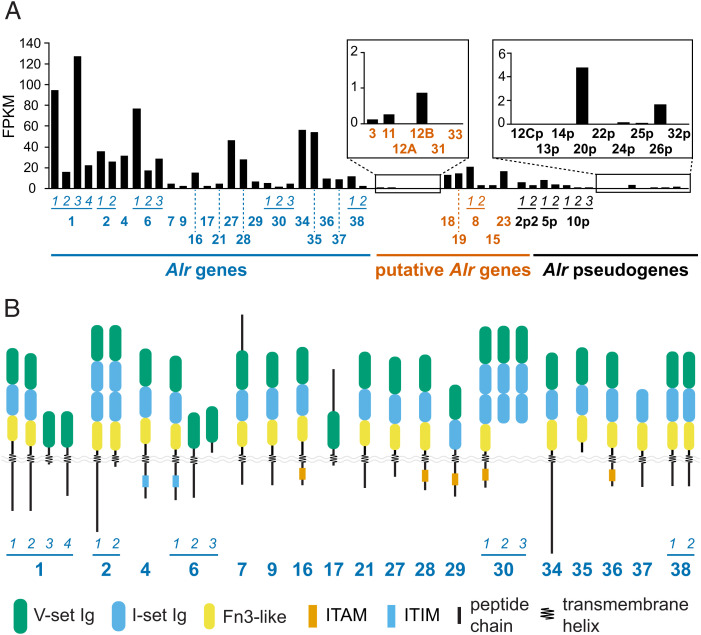
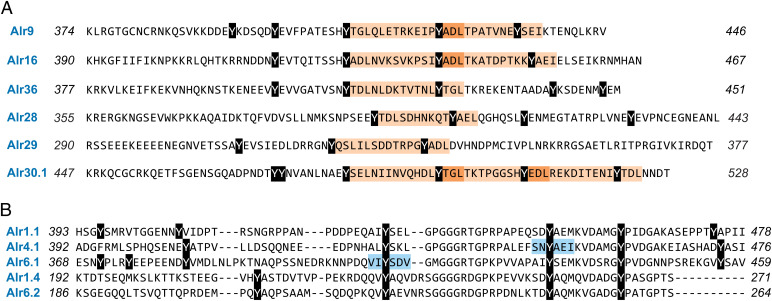
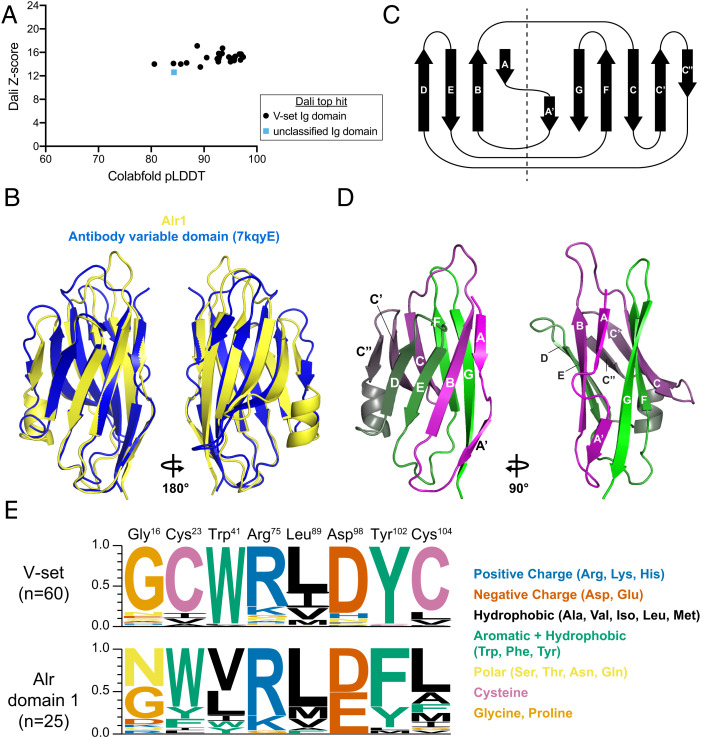
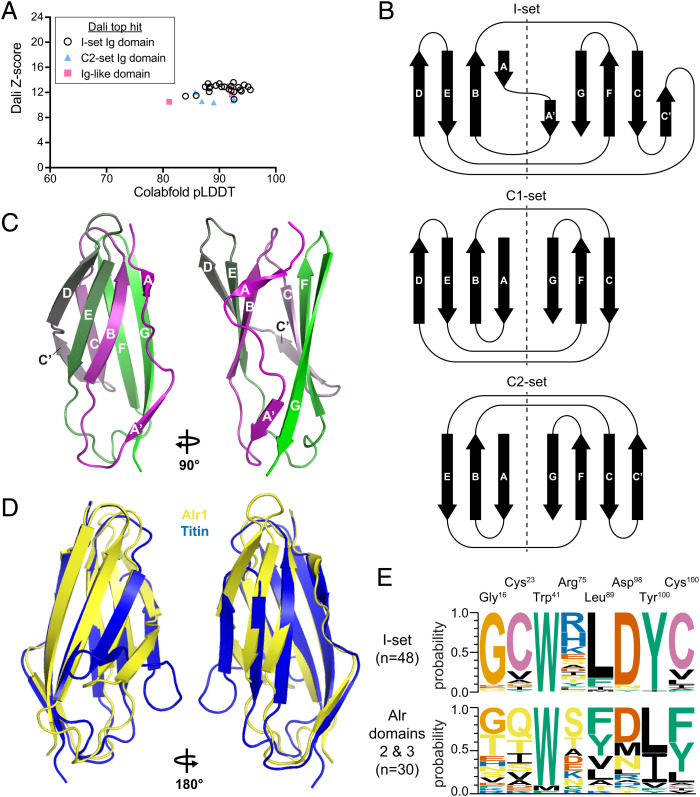
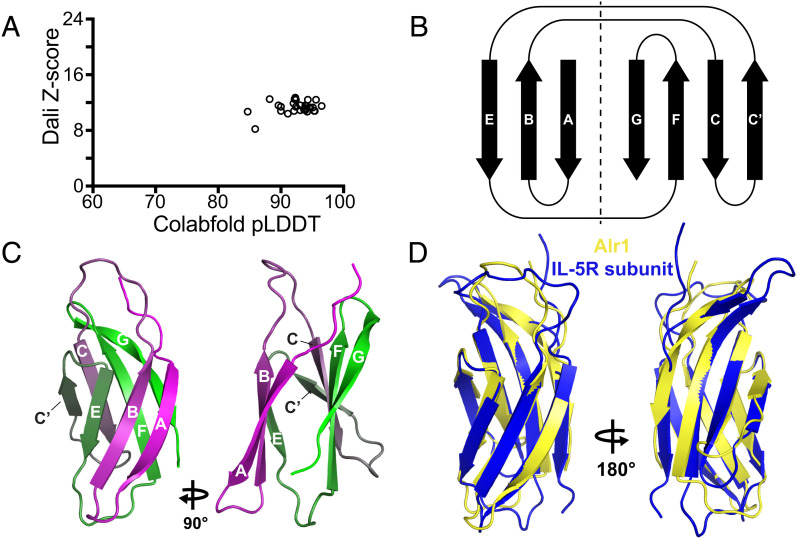
Most colonial marine invertebrates are capable of allorecognition, the ability to distinguish between themselves and conspecifics. One long-standing question is whether invertebrate allorecognition genes are homologous to vertebrate histocompatibility genes. In the cnidarian allorecognition is controlled by at least two genes, () and (), which encode highly polymorphic cell-surface proteins that serve as markers of self. Here, we show that and are part of a family of 41 genes, all of which reside in a single genomic interval called the Allorecognition Complex (ARC). Using sensitive homology searches and highly accurate structural predictions, we demonstrate that the Alr proteins are members of the immunoglobulin superfamily (IgSF) with V-set and I-set Ig domains unlike any previously identified in animals. Specifically, their primary amino acid sequences lack many of the motifs considered diagnostic for V-set and I-set domains, yet they adopt secondary and tertiary structures nearly identical to canonical Ig domains. Thus, the V-set domain, which played a central role in the evolution of vertebrate adaptive immunity, was present in the last common ancestor of cnidarians and bilaterians. Unexpectedly, several Alr proteins also have immunoreceptor tyrosine-based activation motifs and immunoreceptor tyrosine-based inhibitory motifs in their cytoplasmic tails, suggesting they could participate in pathways homologous to those that regulate immunity in humans and flies. This work expands our definition of the IgSF with the addition of a family of unusual members, several of which play a role in invertebrate histocompatibility.
大多数海洋无脊椎动物都具有异体识别能力,即能够区分自身和同种异体。一个长期存在的问题是,无脊椎动物的异体识别基因是否与脊椎动物的组织相容性基因同源。在刺胞动物中,异体识别至少由两个基因()和()控制,这两个基因编码高度多态性的细胞表面蛋白,作为自我的标记。在这里,我们表明和是一个包含 41 个基因的家族的一部分,所有这些基因都位于一个称为异体识别复合物(ARC)的单一基因组间隔区中。使用敏感的同源搜索和高度准确的结构预测,我们证明 Alr 蛋白是免疫球蛋白超家族(IgSF)的成员,具有 V 集和 I 集 Ig 结构域,与以前在动物中鉴定的任何结构域都不同。具体来说,它们的一级氨基酸序列缺乏许多被认为是 V 集和 I 集结构域的特征的基序,但它们采用的二级和三级结构与典型的 Ig 结构域几乎相同。因此,在刺胞动物和两侧对称动物的最后共同祖先中就存在 V 集结构域,它在脊椎动物适应性免疫的进化中发挥了核心作用。出乎意料的是,几个 Alr 蛋白在其细胞质尾部也具有免疫受体酪氨酸基激活基序和免疫受体酪氨酸基抑制基序,这表明它们可能参与与调节人类和果蝇免疫的途径同源的途径。这项工作通过添加一组不寻常的成员扩展了我们对 IgSF 的定义,其中几个成员在无脊椎动物的组织相容性中发挥作用。