Department of Pharmaceutical Biotechnology, School of Pharmacy and Pharmaceutical Sciences, Isfahan University of Medical Sciences, Isfahan, Iran.
Department of Microbiology, School of Medicine, Isfahan University of Medical Sciences, Isfahan, Iran.
Sci Rep. 2022 Sep 27;12(1):16130. doi: 10.1038/s41598-022-20278-5.
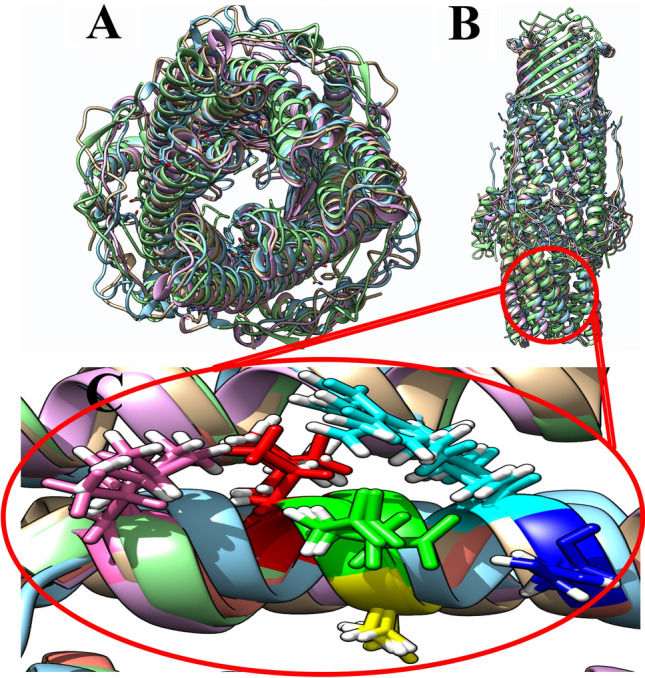
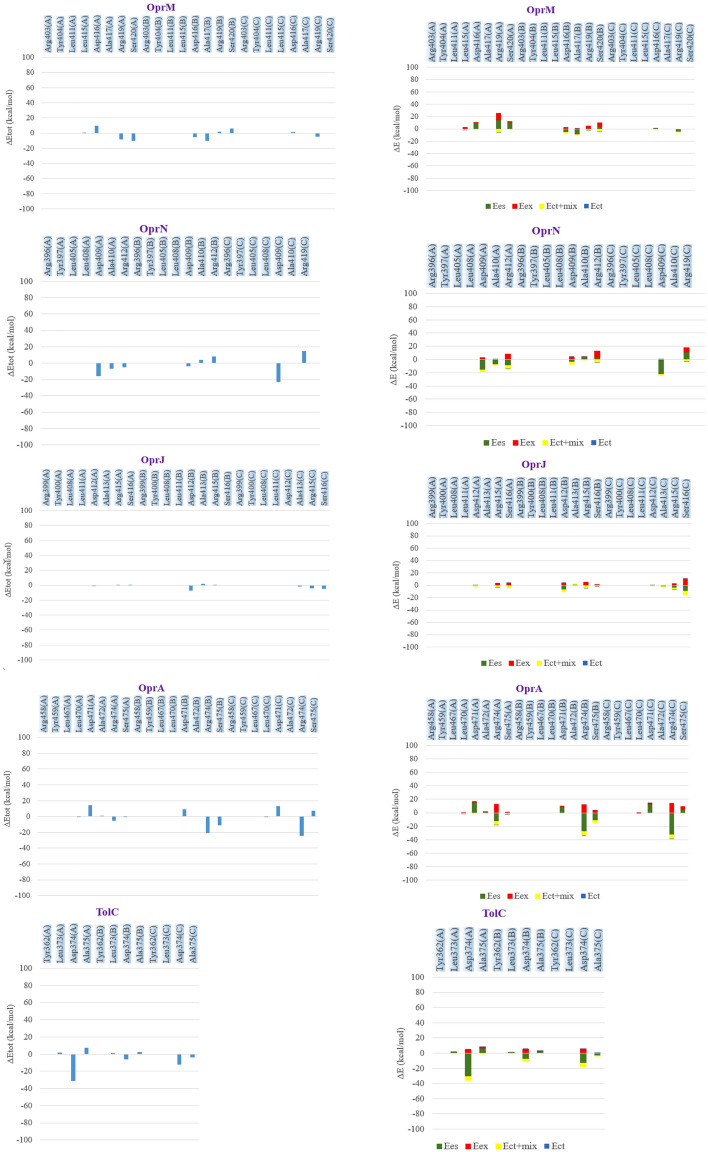
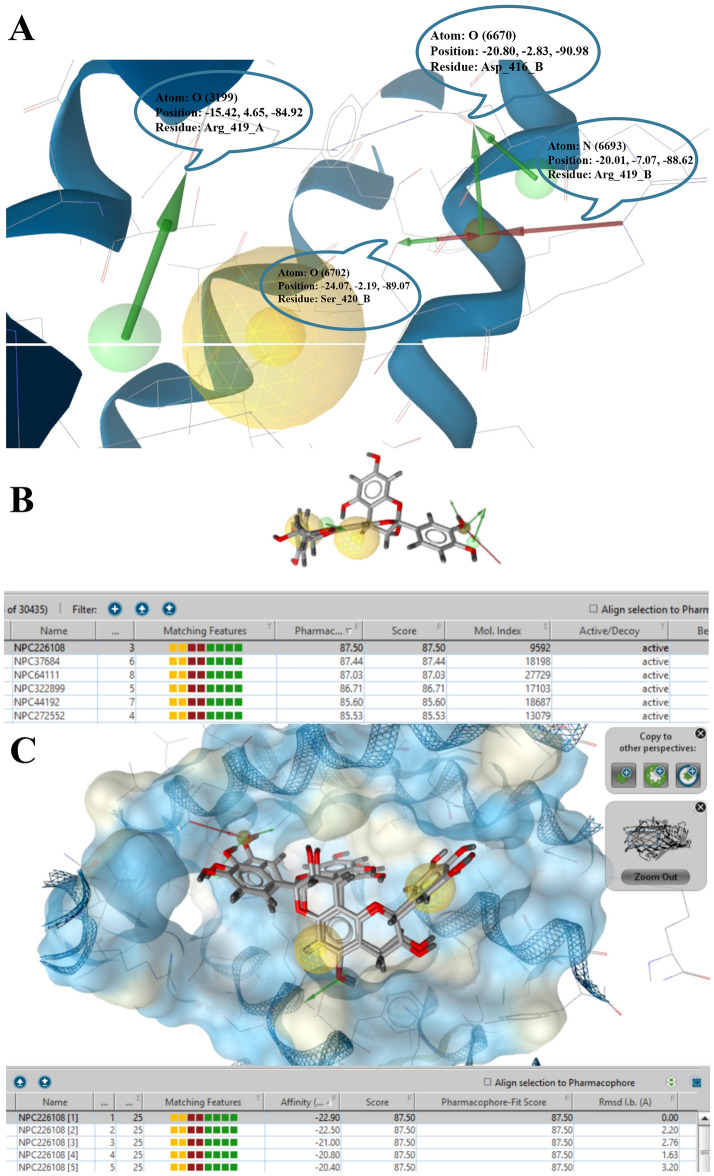
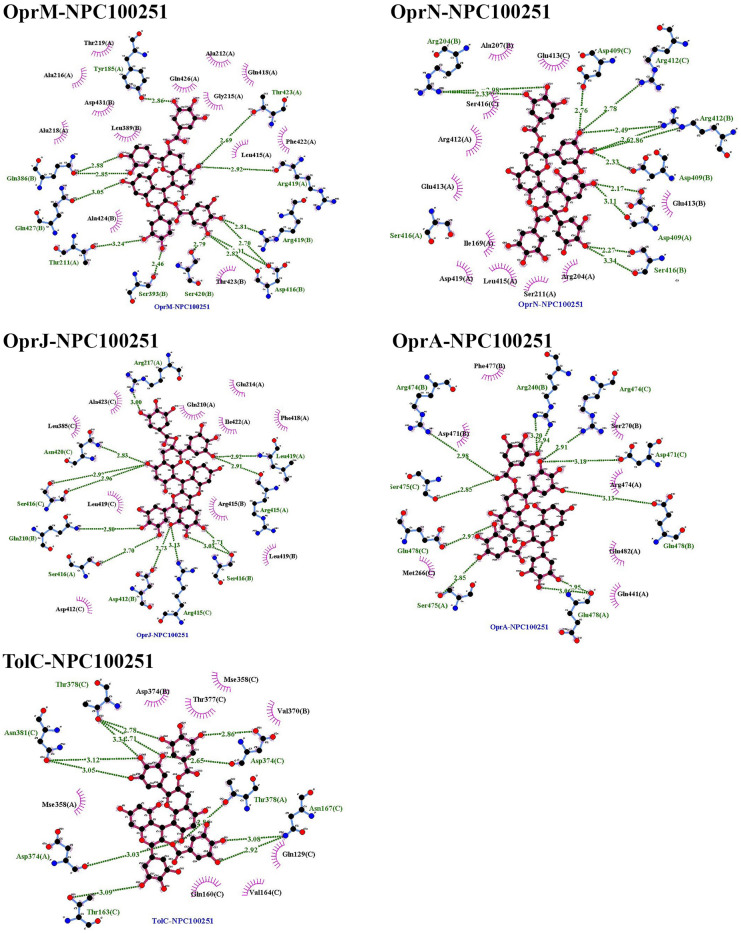
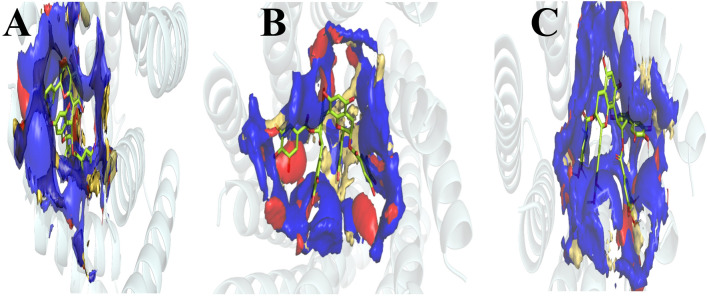
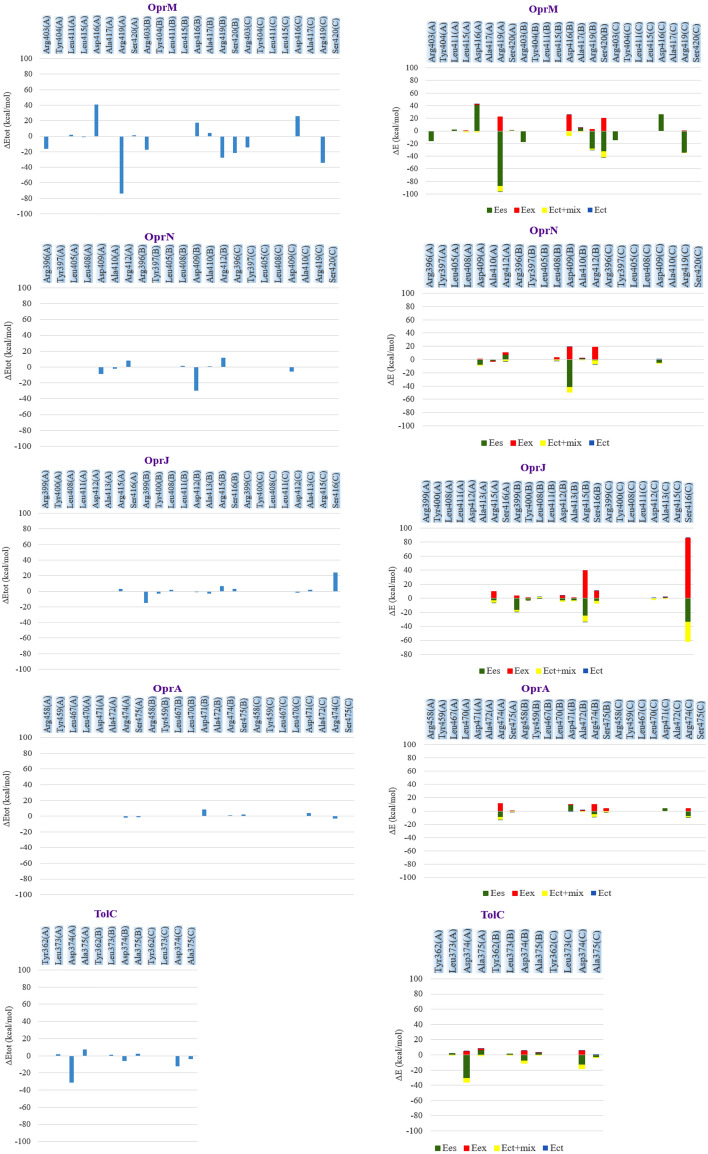
Resistance-nodulation-cell devision (RND) efflux pump variants have attracted a great deal of attention for efflux of many antibiotic classes, which leads to multidrug-resistant bacteria. The present study aimed to discover the interaction between the RND efflux pumps and antibiotics, find the conserved and hot spot residues, and use this information to target the most frequent RND efflux pumps. Protein sequence and 3D conformational alignments, pharmacophore modeling, molecular docking, and molecular dynamics simulation were used in the first level for discovering the function of the residues in interaction with antibiotics. In the second level, pharmacophore-based screening, structural-based screening, multistep docking, GRID MIF, pharmacokinetic modeling, fragment molecular orbital, and MD simulation were utilized alongside the former level information to find the most proper inhibitors. Five conserved residues, containing Ala209, Tyr404, Leu415, Asp416, and Ala417, as well as their counterparts in other OMPs were evaluated as the crucial conserved residues. MD simulation confirmed that a number of these residues had a key role in the performance of the efflux antibiotics; therefore, some of them were hot spot residues. Fourteen ligands were selected, four of which interacted with all the crucial conserved residues. NPC100251 was the fittest OMP inhibitor after pharmacokinetic computations. The second-level MD simulation and FMO supported the efficacy of the NPC100251. It was exhibited that perhaps OMPs worked as the intelligent and programable protein. NPC100251 was the strongest OMPs inhibitor, and may be a potential therapeutic candidate for MDR infections.
耐药-结节分裂(RND)外排泵变体因其能外排多种抗生素类药物而引起了人们的极大关注,导致了多药耐药菌的产生。本研究旨在发现 RND 外排泵与抗生素之间的相互作用,找到保守和热点残基,并利用这些信息来针对最常见的 RND 外排泵。在一级水平上,我们使用蛋白质序列和 3D 构象比对、药效团建模、分子对接和分子动力学模拟来发现与抗生素相互作用的残基的功能。在二级水平上,我们利用药效团筛选、基于结构的筛选、多步对接、GRID MIF、药代动力学建模、片段分子轨道和 MD 模拟,结合一级水平的信息,寻找最合适的抑制剂。五个保守残基,包括 Ala209、Tyr404、Leu415、Asp416 和 Ala417,以及它们在其他 OMPs 中的对应残基被评估为关键保守残基。MD 模拟证实,这些残基中的许多在抗生素外排的性能中起着关键作用,因此它们中的一些是热点残基。选择了 14 种配体,其中 4 种与所有关键保守残基相互作用。经过药代动力学计算,NPC100251 是最适合的 OMP 抑制剂。二级 MD 模拟和 FMO 支持 NPC100251 的功效。这表明 OMP 可能作为智能和可编程蛋白发挥作用。NPC100251 是最强的 OMP 抑制剂,可能是治疗 MDR 感染的潜在候选药物。