Translational Neuroradiology Section, National Institute of Neurological Disorders and Stroke (NINDS), National Institutes of Health (NIH), Bethesda, MD, USA; Department of Neurology, Tel Aviv Sourasky Medical Center, Tel Aviv-Yaffo, Israel.
Translational Neuroradiology Section, National Institute of Neurological Disorders and Stroke (NINDS), National Institutes of Health (NIH), Bethesda, MD, USA; Cedars-Sinai Medical Center, Los Angeles, CA, USA.
Neuroimage Clin. 2022;36:103194. doi: 10.1016/j.nicl.2022.103194. Epub 2022 Sep 14.
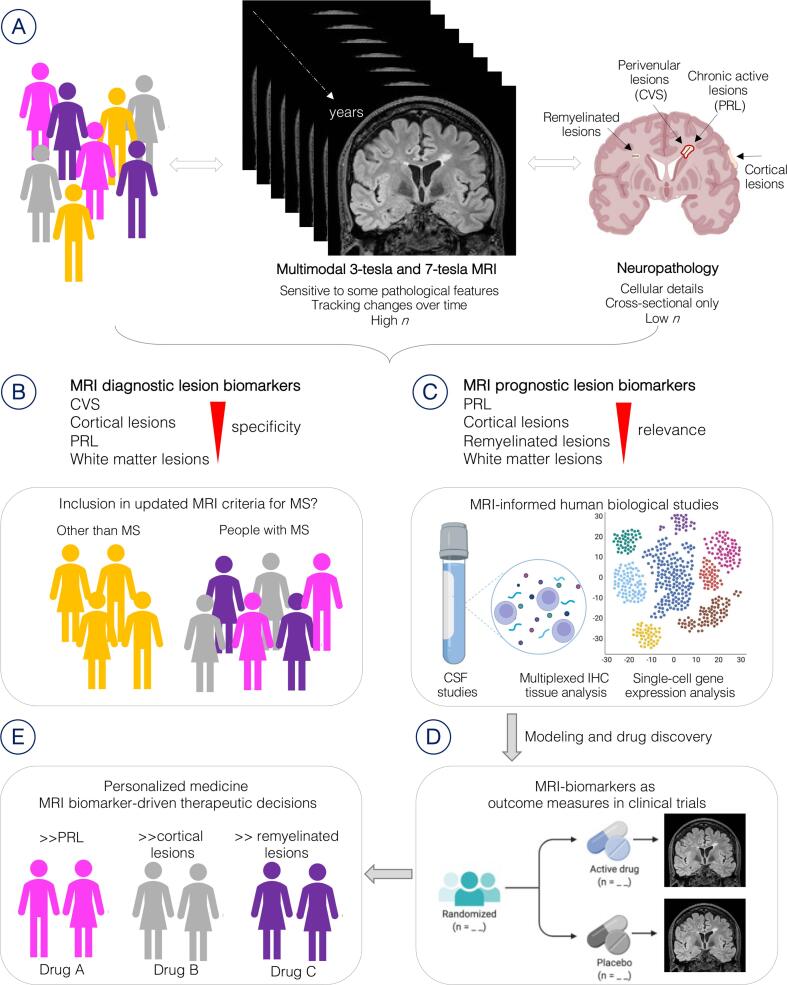
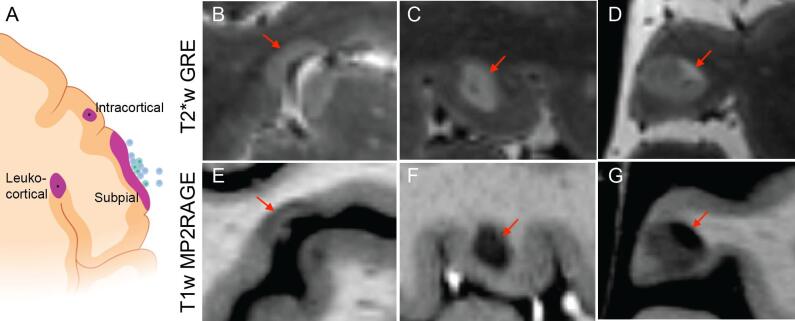
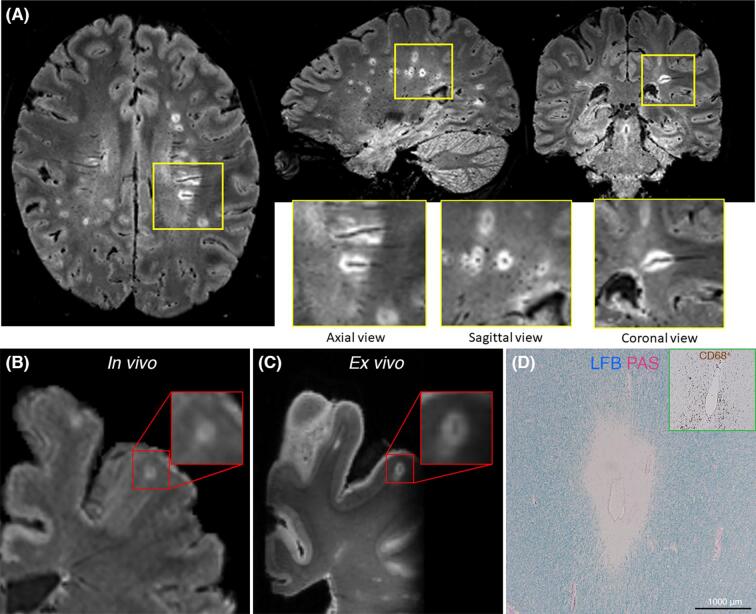
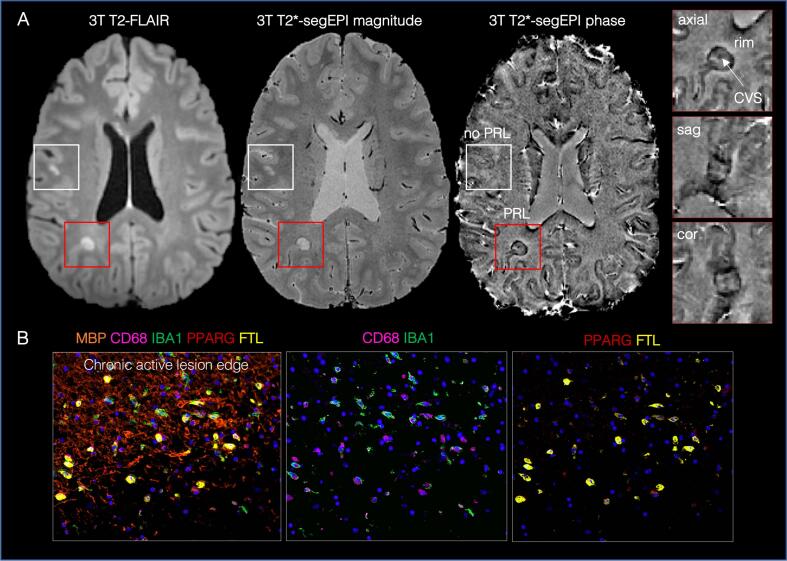
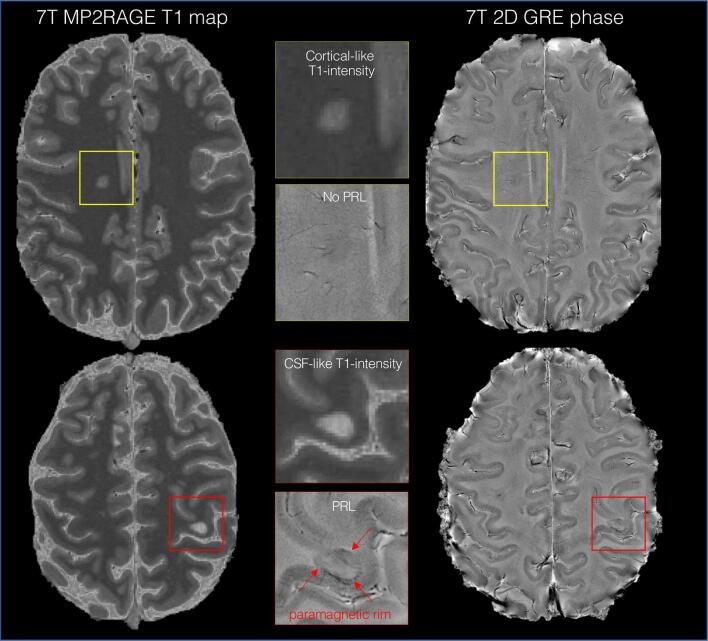
Focal lesions in both white and gray matter are characteristic of multiple sclerosis (MS). Histopathological studies have helped define the main underlying pathological processes involved in lesion formation and evolution, serving as a gold standard for many years. However, histopathology suffers from an intrinsic bias resulting from over-reliance on tissue samples from late stages of the disease or atypical cases and is inadequate for routine patient assessment. Pathological-radiological correlative studies have established advanced MRI's sensitivity to several relevant MS-pathological substrates and its practicality for assessing dynamic changes and following lesions over time. This review focuses on novel imaging techniques that serve as biomarkers of critical pathological substrates of MS lesions: the central vein, chronic inflammation, remyelination and repair, and cortical lesions. For each pathological process, we address the correlative value of MRI to MS pathology, its contribution in elucidating MS pathology in vivo, and the clinical utility of the imaging biomarker.
大脑白质和灰质中的局灶性病变是多发性硬化症(MS)的特征。组织病理学研究有助于确定病变形成和演变所涉及的主要潜在病理过程,多年来一直是金标准。然而,组织病理学存在内在偏差,过度依赖疾病晚期或非典型病例的组织样本,因此不足以进行常规患者评估。病理-放射学相关性研究已经确定了高级 MRI 对几种相关的 MS 病理基质的敏感性及其用于评估动态变化和随时间推移跟踪病变的实用性。这篇综述重点介绍了作为 MS 病变关键病理基质的生物标志物的新型成像技术:中央静脉、慢性炎症、髓鞘再生和修复以及皮质病变。对于每个病理过程,我们将探讨 MRI 对 MS 病理的相关性、其在体内阐明 MS 病理方面的贡献以及成像生物标志物的临床实用性。