Department of Rheumatology and Dermatology, Xinqiao Hospital, Third Military Medical University of Chinese PLA, Chongqing, 430037, People's Republic of China.
Int J Nanomedicine. 2022 Sep 21;17:4419-4432. doi: 10.2147/IJN.S380786. eCollection 2022.
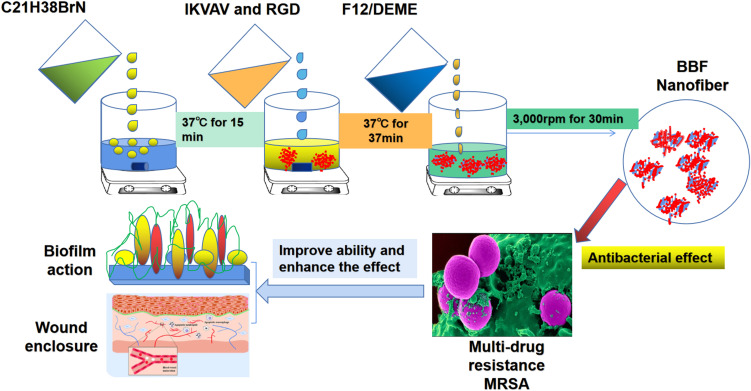
Developing the ideal drug or dressing is a serious challenge to controlling the occurrence of antibacterial infection during wound healing. Thus, it is important to prepare novel nanofibers for a wound dressing that can control bacterial infections. In our study, the novel self-assembled nanofibers of benzalkonium bromide with bioactive peptide materials of IKVAV and RGD were designed and fabricated.
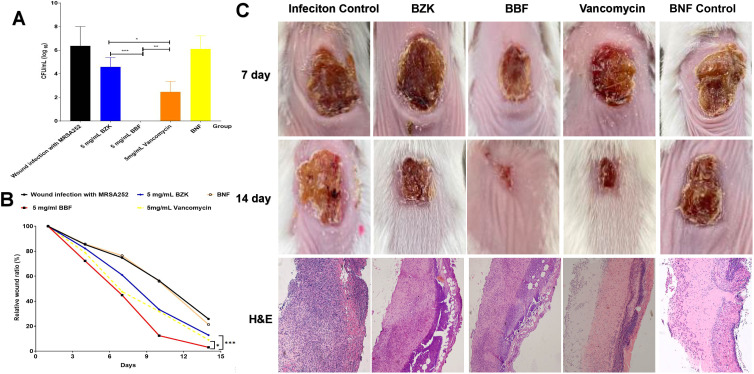
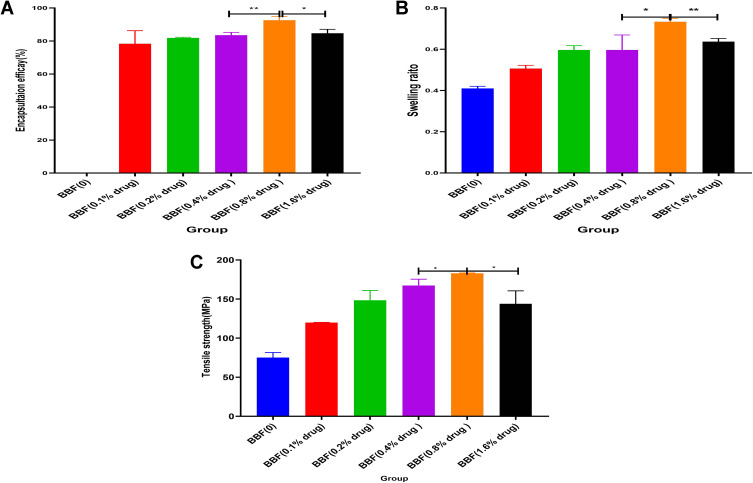
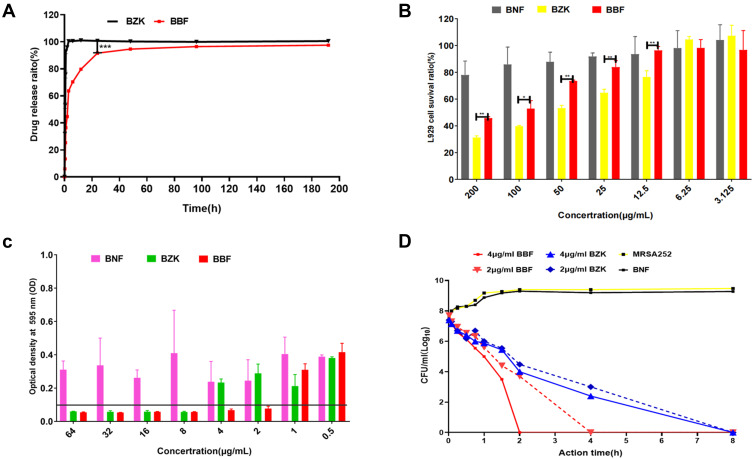
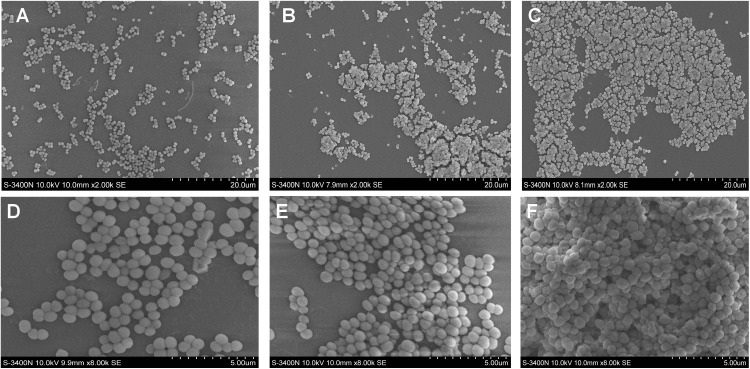
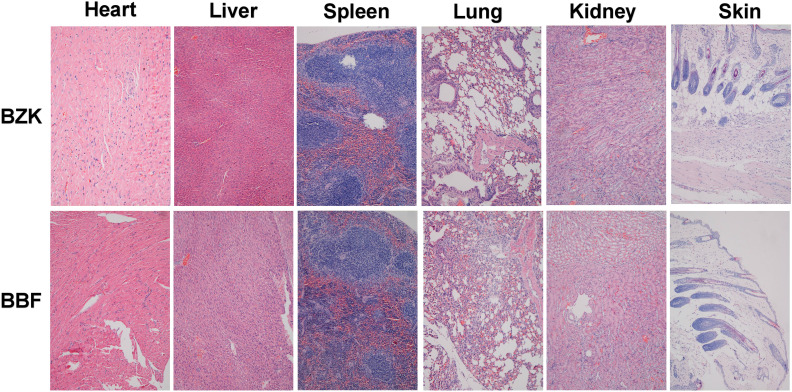
Different drug concentration effects of encapsulation efficacy, swelling ratio and strength were determined. Its release profile in simulated wound fluid and its cytotoxicity were studied in vitro. Importantly, the antibacterial efficacy, inhibition of biofilm formation effect and wound healing against MRSA infections in vitro and in vivo were performed after observing the tissue toxicity in vivo.
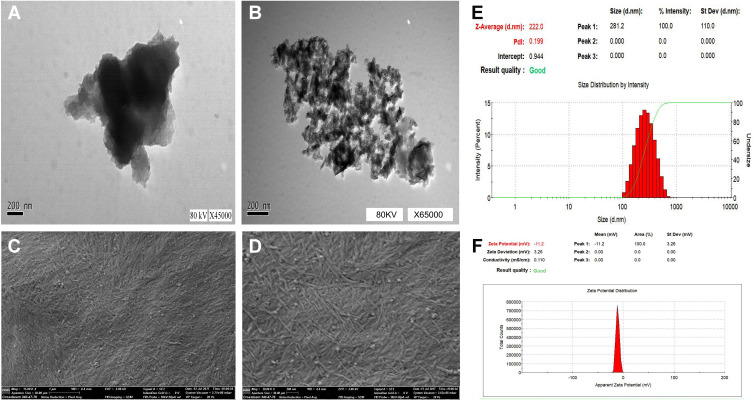
It was found that the optimized drug load (0.8%) was affected by the encapsulation efficacy, swelling ratio, and strength. In addition, the novel nanofibers with average diameter (222.0 nm) and stabile zeta potential (-11.2 mV) have good morphology and characteristics. It has a delayed released profile in the simulated wound fluid and good biocompatibility with L929 cells and most tissues. Importantly, the nanofibers were shown to improve antibacterial efficacy, inhibit biofilm formation, and lead to accelerated wound healing following infection with methicillin-resistant .
These data suggest that novel nanofibers could effectively shorten the wound-healing time by inhibiting biofilm formation, which make it promising candidates for treatment of MRSA-induced wound infections.
开发理想的药物或敷料是控制创伤愈合过程中抗菌感染发生的一项严峻挑战。因此,为了制备可控制细菌感染的新型创伤敷料,有必要制备新型纳米纤维。在本研究中,设计并制备了具有生物活性肽材料 IKVAV 和 RGD 的新型季铵盐溴化苄自组装纳米纤维。
确定不同药物浓度对包封效率、溶胀比和强度的影响。研究了其在模拟伤口液中的释放曲线及其体外细胞毒性。重要的是,在观察体内组织毒性后,研究了其体外和体内对耐甲氧西林金黄色葡萄球菌(MRSA)感染的抗菌功效、抑制生物膜形成作用和伤口愈合作用。
发现优化的药物载量(0.8%)受包封效率、溶胀比和强度的影响。此外,平均直径(222.0nm)和稳定的 ζ 电位(-11.2mV)的新型纳米纤维具有良好的形态和特性。在模拟伤口液中具有延迟释放曲线,并且与 L929 细胞和大多数组织具有良好的生物相容性。重要的是,纳米纤维显示出提高的抗菌功效、抑制生物膜形成的作用,以及在感染耐甲氧西林金黄色葡萄球菌后导致加速伤口愈合。
这些数据表明,新型纳米纤维通过抑制生物膜形成可有效缩短伤口愈合时间,使其成为治疗耐甲氧西林金黄色葡萄球菌诱导的伤口感染的有前途的候选物。