Gou Yannian, Weng Yaguang, Chen Qian, Wu Jinghong, Wang Hao, Zhong Jiamin, Bi Yang, Cao Daigui, Zhao Piao, Dong Xiangyu, Guo Meichun, Wagstaff William, Hendren-Santiago Bryce, Chen Connie, Youssef Andrew, Haydon Rex C, Luu Hue H, Reid Russell R, Shen Le, He Tong-Chuan, Fan Jiaming
Ministry of Education Key Laboratory of Diagnostic Medicine, and Department of Clinical Biochemistry, School of Laboratory Medicine Chongqing Medical University Chongqing China.
Molecular Oncology Laboratory, Department of Orthopaedic Surgery and Rehabilitation Medicine The University of Chicago Medical Center Chicago Illinois USA.
Bioeng Transl Med. 2022 Mar 10;7(3):e10306. doi: 10.1002/btm2.10306. eCollection 2022 Sep.
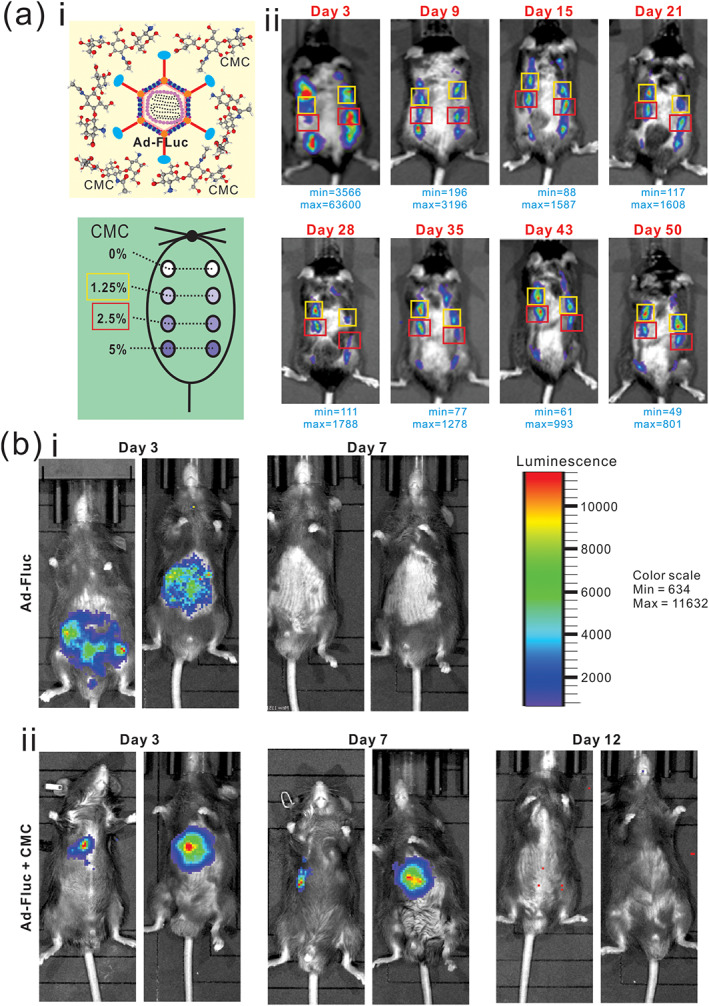
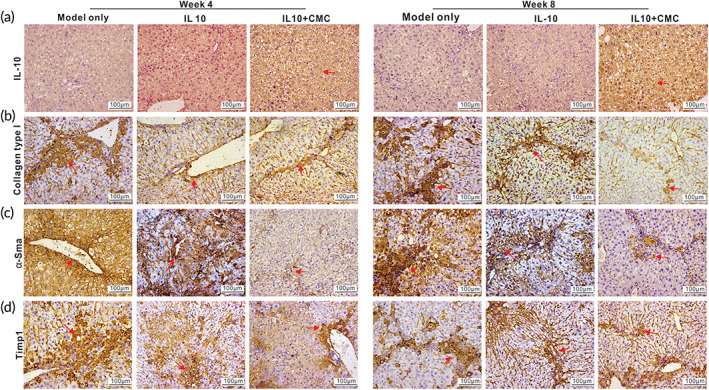
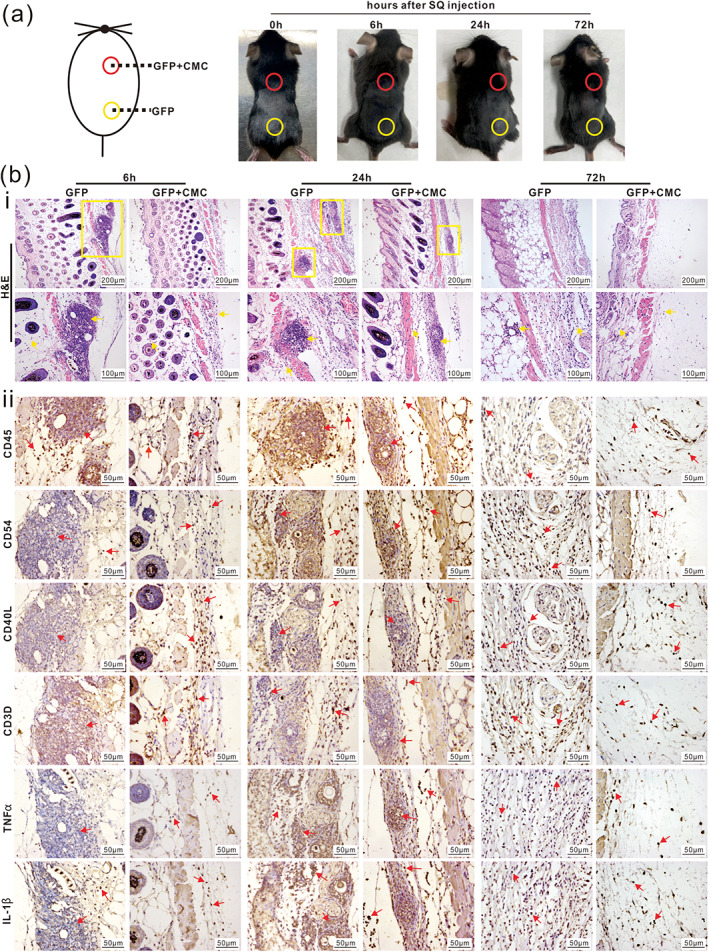
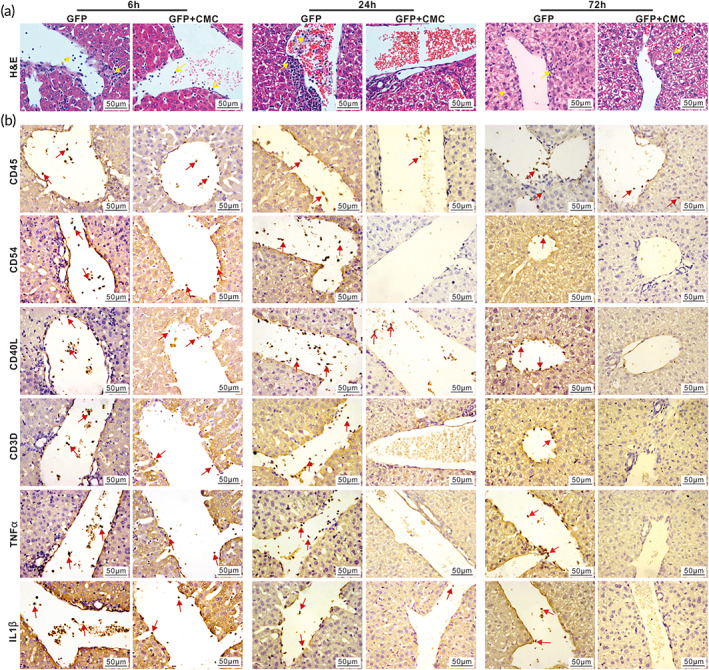
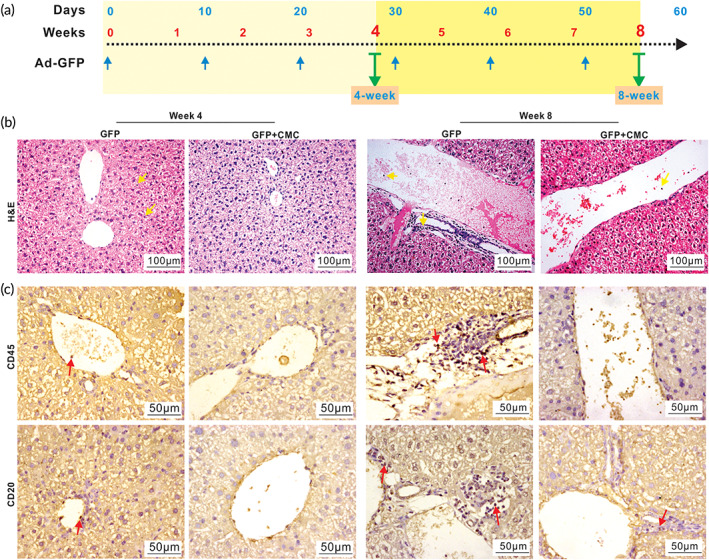
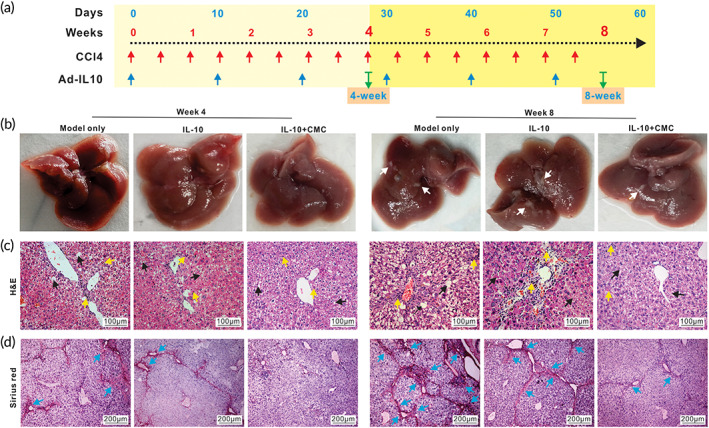
Effective and safe liver-directed gene therapy has great promise in treating a broad range of liver diseases. While adenoviral (Ad) vectors have been widely used for efficacious in vivo gene delivery, their translational utilities are severely limited due to the short duration of transgene expression and solicitation of host immune response. Used as a promising polymeric vehicle for drug release and nucleic acid delivery, carboxymethyl chitosan (CMC) is biocompatible, biodegradable, anti-microbial, inexpensive, and easy accessible. Here, by exploiting its biocompatibility, controlled release capability and anti-inflammatory activity, we investigated whether CMC can overcome the shortcomings of Ad-mediated gene delivery, hence improving the prospect of Ad applications in gene therapy. We demonstrated that in the presence of optimal concentrations of CMC, Ad-mediated transgene expression lasted up to 50 days after subcutaneous injection, and at least 7 days after intrahepatic injection. Histologic evaluation and immunohistochemical analysis revealed that CMC effectively alleviated Ad-induced host immune response. In our proof-of-principle experiment using the CCl-induced experimental mouse model of chronic liver damage, we demonstrated that repeated intrahepatic administrations of Ad-IL10 mixed with CMC effectively mitigated the development of hepatic fibrosis. Collectively, these results indicate that CMC can improve the prospect of Ad-mediated gene therapy by diminishing the host immune response while allowing readministration and sustained transgene expression.
有效且安全的肝脏靶向基因治疗在治疗多种肝脏疾病方面具有巨大潜力。虽然腺病毒(Ad)载体已被广泛用于体内有效的基因递送,但其转化应用受到严重限制,原因是转基因表达持续时间短以及引发宿主免疫反应。作为一种有前景的用于药物释放和核酸递送的聚合物载体,羧甲基壳聚糖(CMC)具有生物相容性、可生物降解性、抗菌性、价格低廉且易于获取的特点。在此,通过利用其生物相容性、控释能力和抗炎活性,我们研究了CMC是否能够克服Ad介导的基因递送的缺点,从而改善Ad在基因治疗中的应用前景。我们证明,在存在最佳浓度的CMC时,皮下注射后Ad介导的转基因表达持续长达50天,肝内注射后至少持续7天。组织学评估和免疫组化分析表明,CMC有效减轻了Ad诱导的宿主免疫反应。在我们使用CCl诱导的慢性肝损伤实验小鼠模型的原理验证实验中,我们证明,将Ad-IL10与CMC混合进行反复肝内给药可有效减轻肝纤维化的发展。总体而言,这些结果表明,CMC可以通过减少宿主免疫反应同时允许再次给药和持续的转基因表达来改善Ad介导的基因治疗的前景。