
经颅直流电刺激枕叶联合锂盐治疗可减轻首发精神分裂症患者认知障碍的进展。
Transcranial direct current stimulation of the occipital lobes with adjunct lithium attenuates the progression of cognitive impairment in patients with first episode schizophrenia.
作者信息
Zhuo Chuanjun, Tian Hongjun, Zhou Chunhua, Sun Yun, Chen Xinying, Li Ranli, Chen Jiayue, Yang Lei, Li Qianchen, Zhang Qiuyu, Xu Yong, Song Xueqin
机构信息
Key Laboratory of Real Time Brain Circuit Tracing in Neurology and Psychiatry (RTBNP_Lab), Tianjin Fourth Center Hospital, Tianjin Fourth Central Hospital of Tianjin Medical University, Tianjin, China.
Key Laboratory of Multiple Organ Damages of Major Psychoses (MODMP_Lab), Tianjin Fourth Center Hospital, Tianjin Medical Affiliated Tianjin Fourth Central Hospital, Nankai University Affiliated Tianjin Fourth Center Hospital, Tianjin, China.
出版信息
Front Psychiatry. 2022 Sep 13;13:962918. doi: 10.3389/fpsyt.2022.962918. eCollection 2022.
BACKGROUND
There is no standard effective treatment for schizophrenia-associated cognitive impairment. Efforts to use non-invasive brain stimulation for this purpose have been focused mostly on the frontal cortex, with little attention being given to the occipital lobe.
MATERIALS AND METHODS
We compared the effects of nine intervention strategies on cognitive performance in psychometric measures and brain connectivity measured obtained from functional magnetic resonance imaging analyses. The strategies consisted of transcranial direct current stimulation (t-DCS) or repetitive transcranial magnetic stimulation (r-TMS) of the frontal lobe or of the occipital alone or with adjunct lithium, or lithium monotherapy. We measured global functional connectivity density (gFCD) voxel-wise.
RESULTS
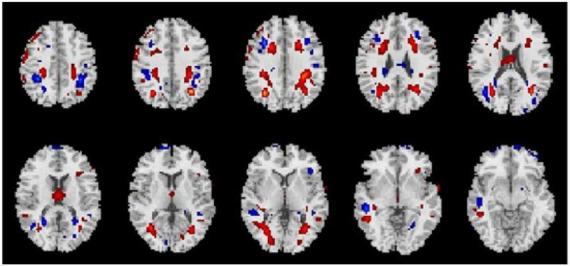
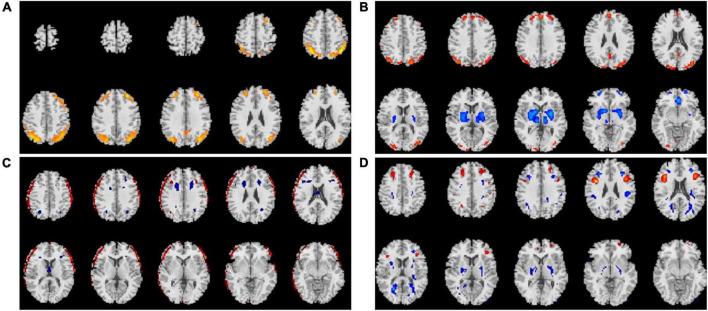
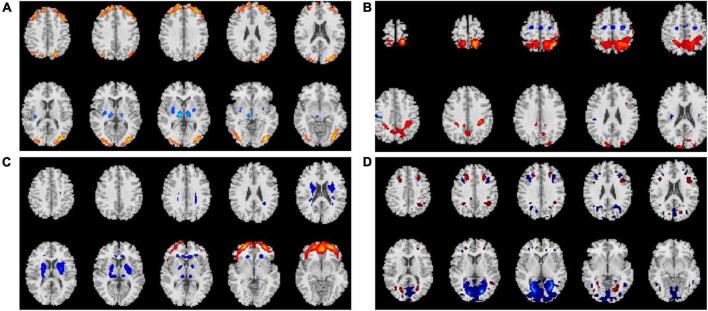
Although all nine patient groups showed significant improvements in global disability scores (GDSs) following the intervention period (vs. before), the greatest improvement in GDS was observed for the group that received occipital lobe-targeted t-DCS with adjunct lithium therapy. tDCS of the occipital lobe improved gFCD throughout the brain, including in the frontal lobes, whereas stimulation of the frontal lobes had less far-reaching benefits on gFCD in the brain. Adverse secondary effects (ASEs) such as heading, dizziness, and nausea, were commonly experienced by patients treated with t-DCS and r-TMS, with or without lithium, whereas ASEs were rare with lithium alone.
CONCLUSION
The most effective treatment strategy for impacting cognitive impairment and brain communication was t-DCS stimulation of the occipital lobe with adjunct lithium therapy, though patients often experienced headache with dizziness and nausea after treatment sessions.
背景
精神分裂症相关认知障碍尚无标准有效的治疗方法。为此使用非侵入性脑刺激的研究主要集中在额叶,而对枕叶关注较少。
材料与方法
我们比较了九种干预策略对心理测量指标中的认知表现以及功能磁共振成像分析获得的脑连接性的影响。这些策略包括单独对额叶或枕叶进行经颅直流电刺激(t-DCS)或重复经颅磁刺激(r-TMS),或联合锂盐,或单纯锂盐治疗。我们逐体素测量全局功能连接密度(gFCD)。
结果
尽管所有九个患者组在干预期后(与干预前相比)的全球残疾评分(GDS)均有显著改善,但接受枕叶靶向t-DCS联合锂盐治疗的组GDS改善最大。枕叶的tDCS改善了全脑的gFCD,包括额叶,而额叶刺激对脑内gFCD的影响范围较小且效果不明显。无论是否联合锂盐,接受t-DCS和r-TMS治疗的患者普遍会出现如头痛、头晕和恶心等不良副作用,而单独使用锂盐时副作用较少见。
结论
影响认知障碍和脑交流的最有效治疗策略是枕叶t-DCS联合锂盐治疗,不过患者在治疗后常出现头痛、头晕和恶心症状。
 Zotero 插件