Department of Orthopaedic Surgery, Perelman School of Medicine, University of Pennsylvania, Philadelphia, PA, USA.
Center for Joint Surgery and Sports Medicine, the First Affiliated Hospital, Jinan University, Guangzhou, China.
J Bone Miner Res. 2022 Dec;37(12):2498-2511. doi: 10.1002/jbmr.4717. Epub 2022 Oct 17.
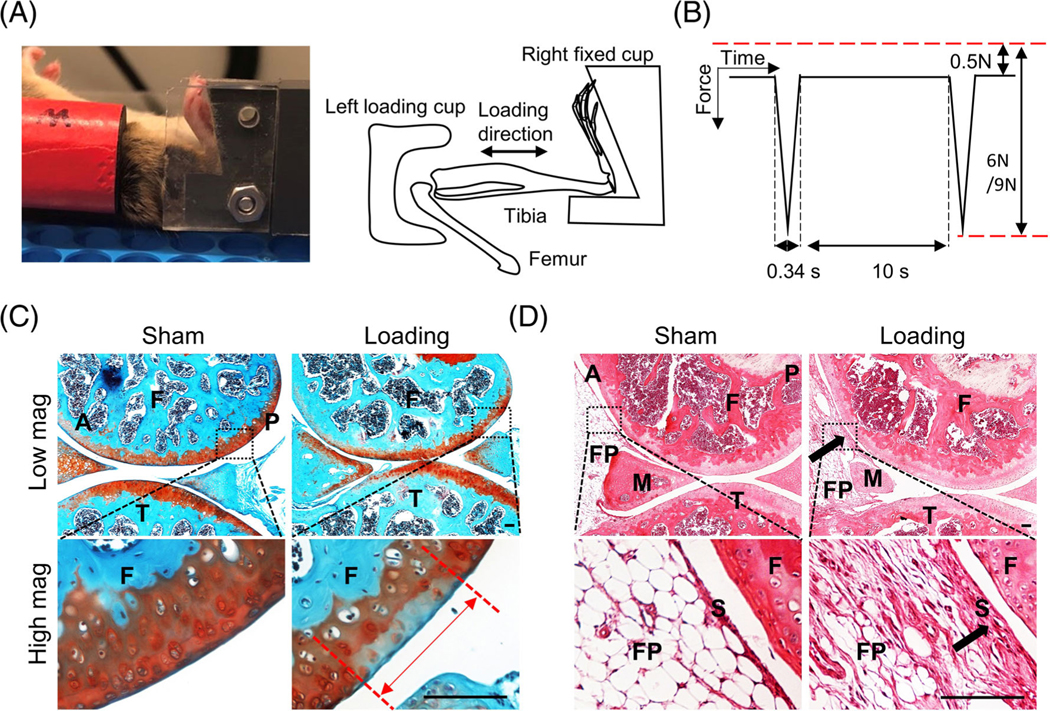
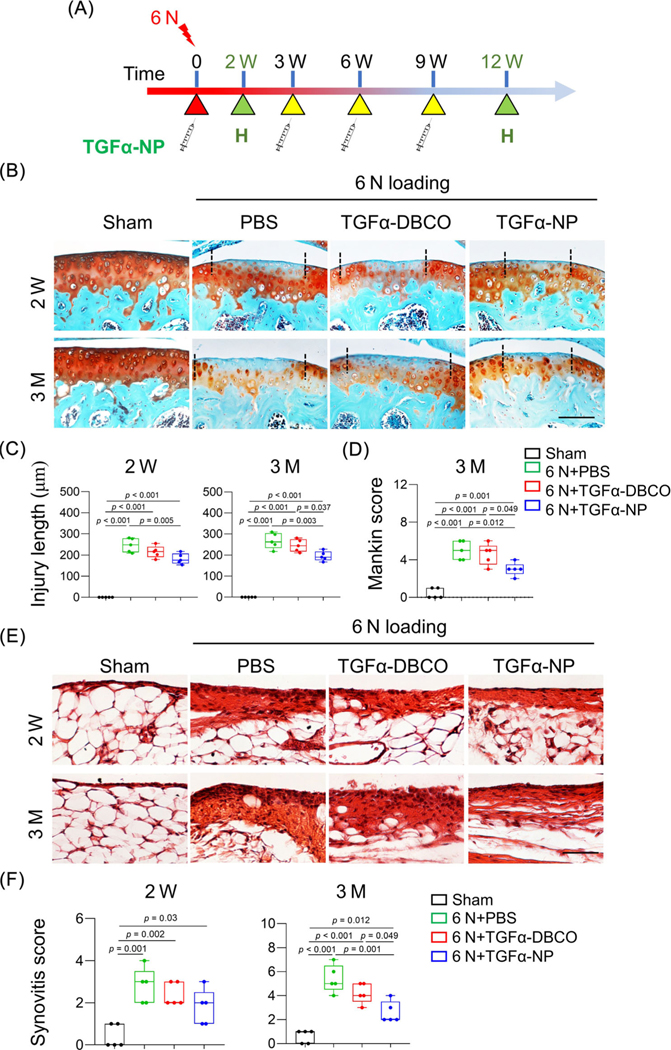
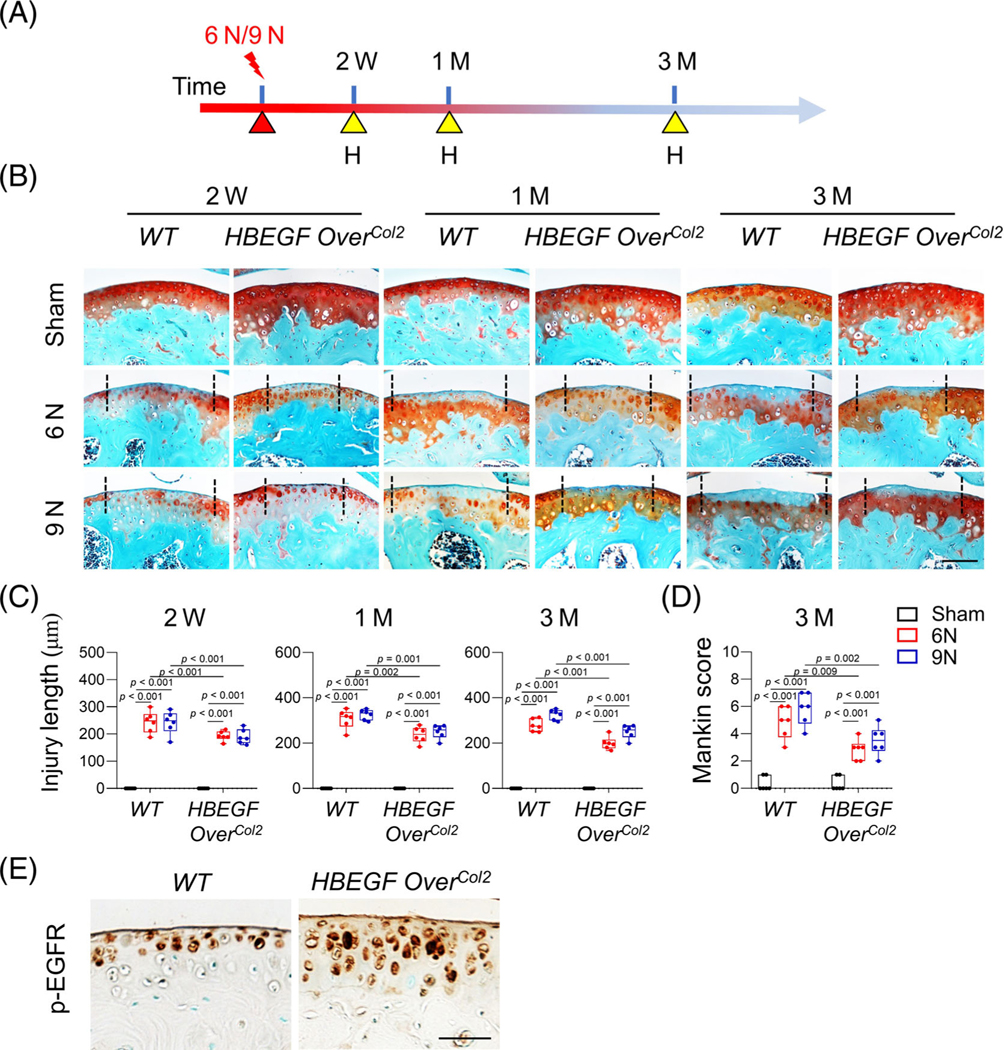
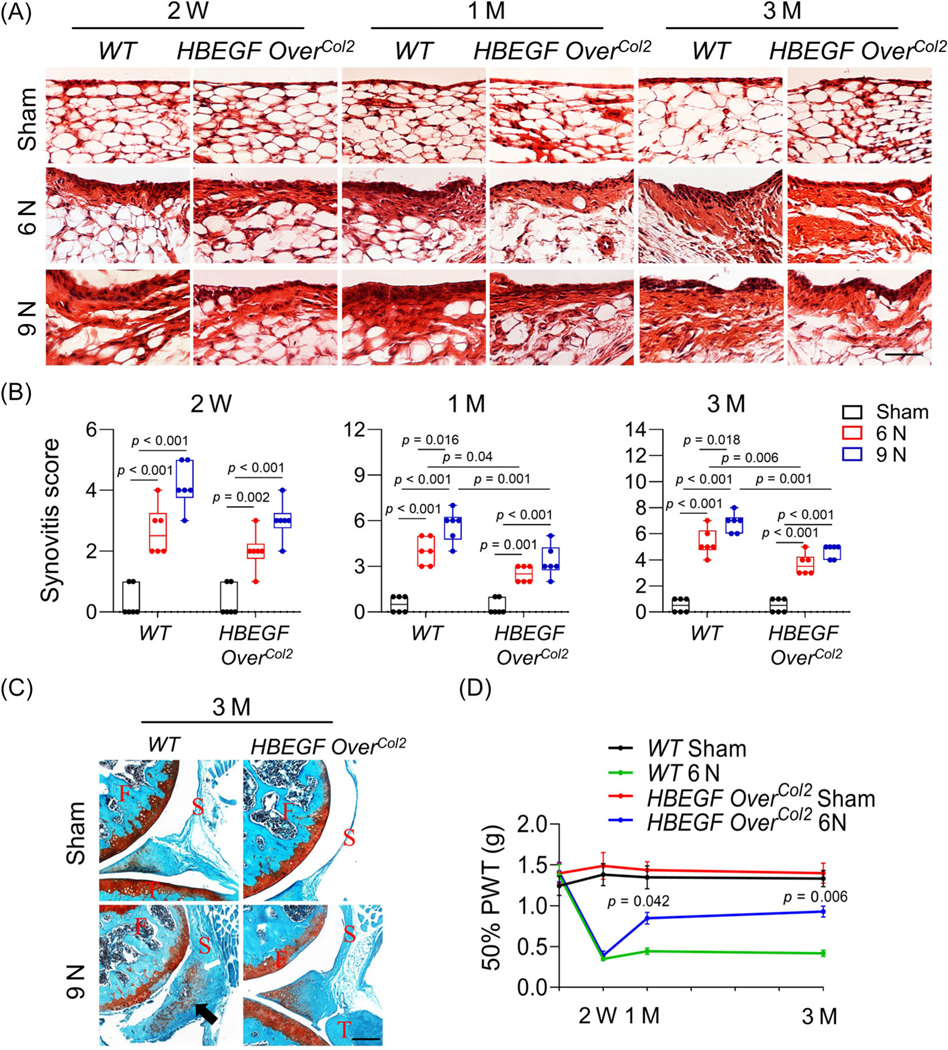
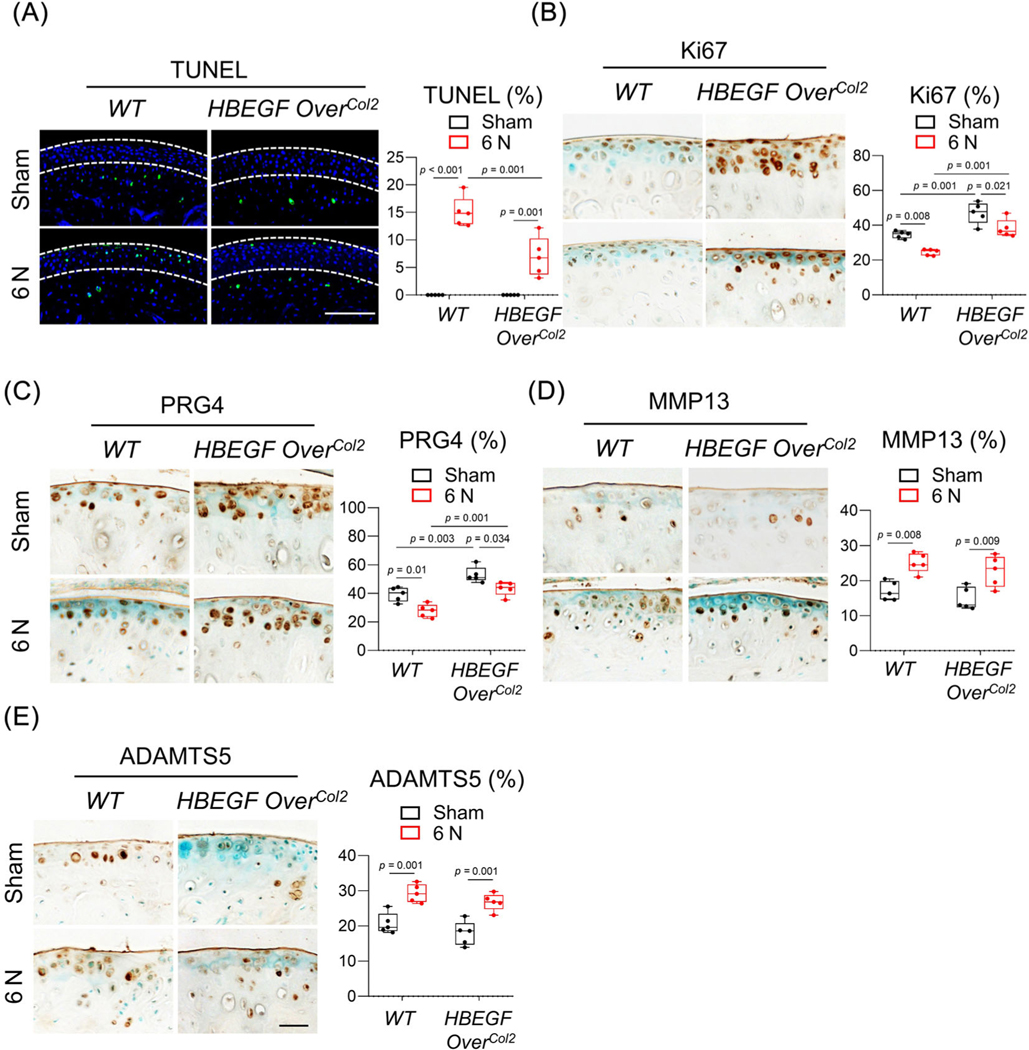
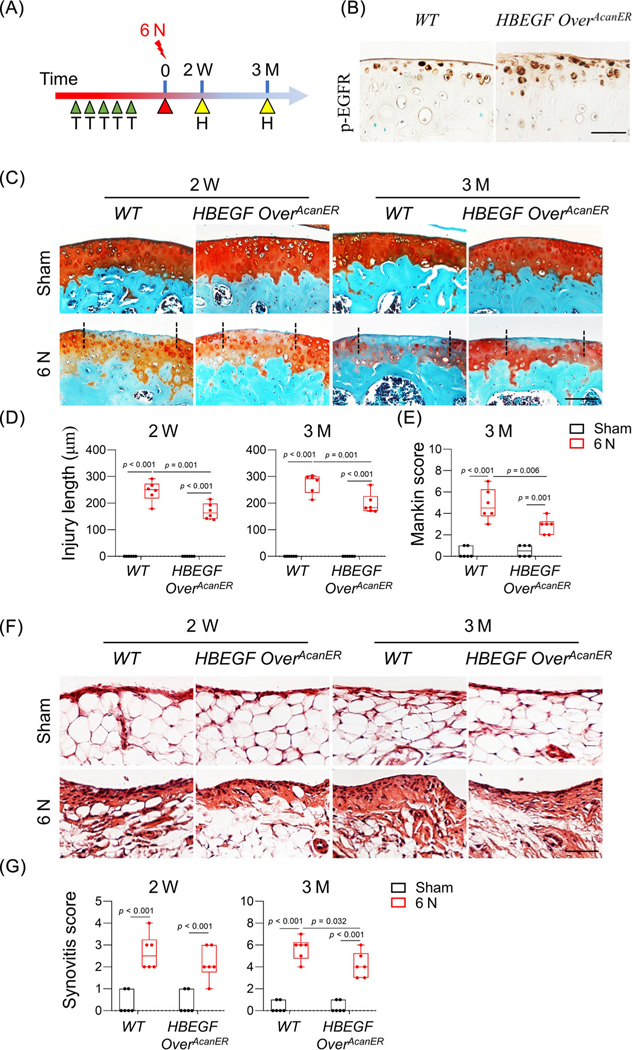
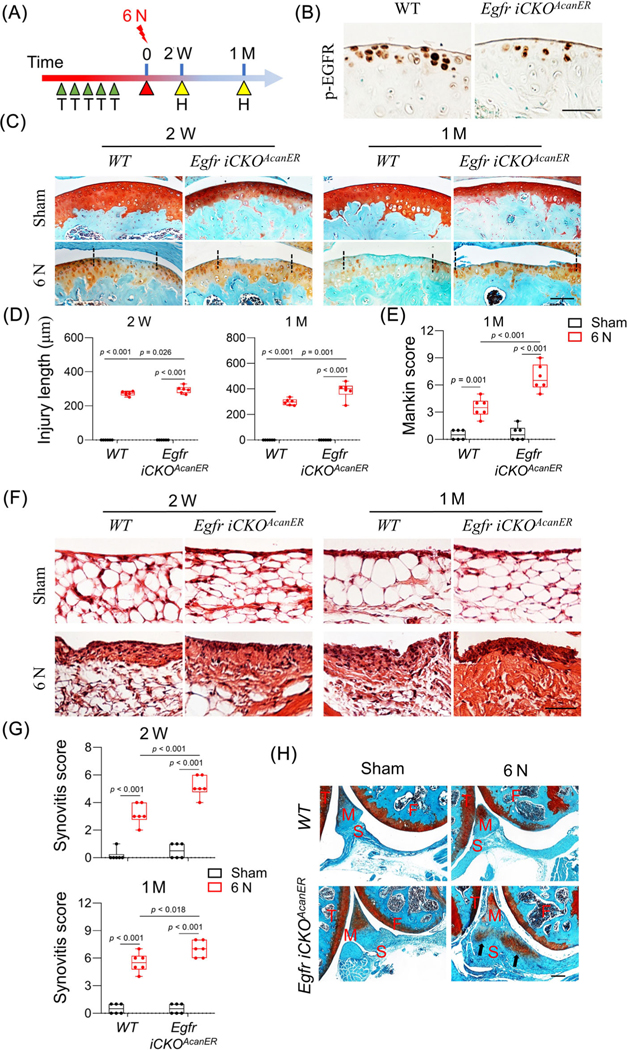
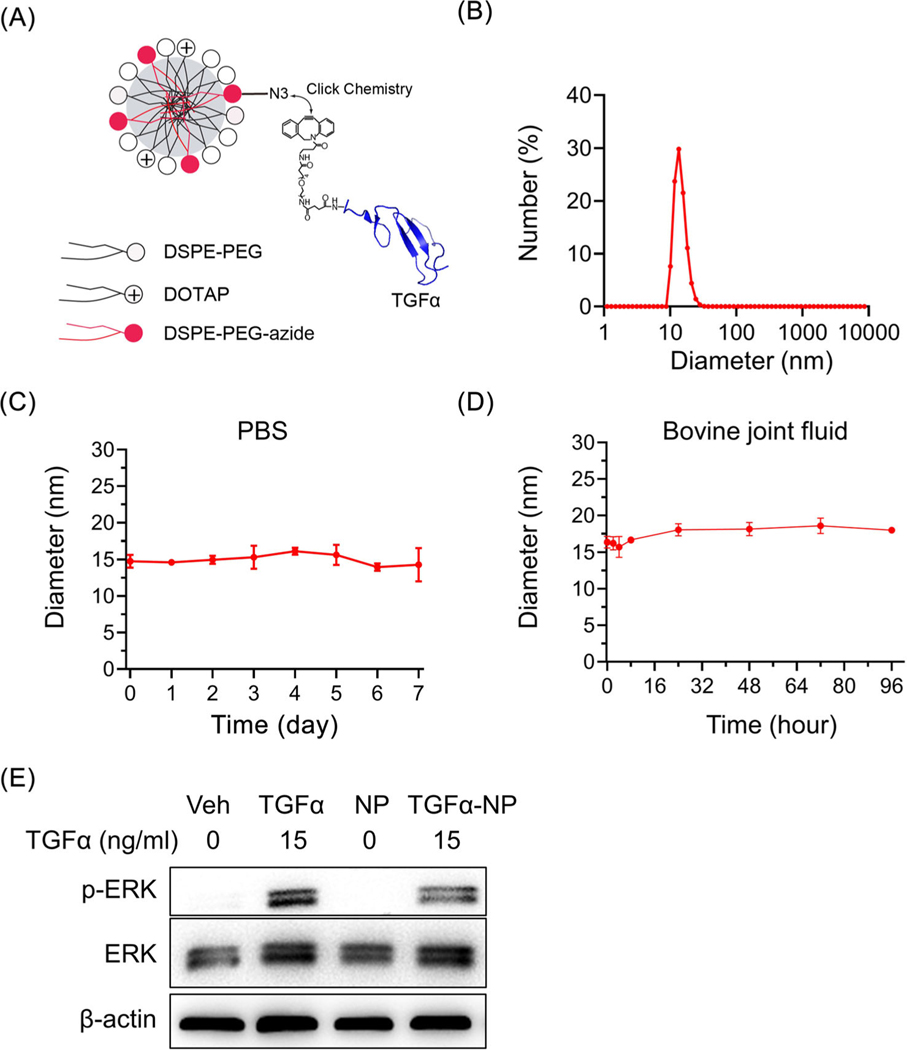
Posttraumatic osteoarthritis (PTOA) results in joint pain, loss of joint function, and impaired quality of daily life in patients with limited treatment options. We previously demonstrated that epidermal growth factor receptor (EGFR) signaling is essential for maintaining chondroprogenitors during articular cartilage development and homeostasis. Here, we used a nonsurgical, loading-induced PTOA mouse model to investigate the protective action of EGFR signaling. A single bout of cyclic tibial loading at a peak force of 6 N injured cartilage at the posterior aspect of lateral femoral condyle. Similar loading at a peak force of 9 N ruptured the anterior cruciate ligament, causing additional cartilage damage at the medial compartment and ectopic cartilage formation in meniscus and synovium. Constitutively overexpression of an EGFR ligand, heparin binding EGF-like growth factor (HBEGF), in chondrocytes significantly reduced cartilage injury length, synovitis, and pain after 6 N loading and mitigated medial side cartilage damage and ectopic cartilage formation after 9 N loading. Mechanistically, overactivation of EGFR signaling protected chondrocytes from loading-induced apoptosis and loss of proliferative ability and lubricant synthesis. Overexpressing HBEGF in adult cartilage starting right before 6 N loading had similar beneficial effects. In contrast, inactivating EGFR in adult cartilage led to accelerated PTOA progression with elevated cartilage Mankin score and synovitis score and increased ectopic cartilage formation. As a therapeutic approach, we constructed a nanoparticle conjugated with the EGFR ligand TGFα. Intra-articular injections of this nanoconstruct once every 3 weeks for 12 weeks partially mitigated PTOA symptoms in cartilage and synovium after 6 N loading. Our findings demonstrate the anabolic actions of EGFR signaling in maintaining articular cartilage during PTOA development and shed light on developing a novel nanomedicine for PTOA. © 2022 American Society for Bone and Mineral Research (ASBMR).
创伤后骨关节炎 (PTOA) 导致患者关节疼痛、丧失关节功能和生活质量下降,而治疗选择有限。我们之前的研究表明,表皮生长因子受体 (EGFR) 信号在关节软骨发育和稳态中对维持软骨祖细胞至关重要。在这里,我们使用非手术、负荷诱导的 PTOA 小鼠模型来研究 EGFR 信号的保护作用。单次 6N 峰值力的周期性胫骨加载会损伤外侧股骨髁后关节软骨。类似地,在 9N 峰值力下加载会导致前交叉韧带断裂,从而在内侧间室造成额外的软骨损伤,并在半月板和滑膜中形成异位软骨。软骨细胞中 EGFR 配体肝素结合表皮生长因子样生长因子 (HBEGF) 的组成型过表达可显著减少 6N 加载后的软骨损伤长度、滑膜炎和疼痛,并减轻 9N 加载后的内侧侧软骨损伤和异位软骨形成。从机制上讲,EGFR 信号的过度激活可保护软骨细胞免受负荷诱导的凋亡以及增殖能力和润滑剂合成的丧失。在 6N 加载前立即开始在成年软骨中过表达 HBEGF 具有类似的有益效果。相比之下,在成年软骨中抑制 EGFR 会导致 PTOA 进展加速,软骨 Mankin 评分和滑膜炎评分升高,异位软骨形成增加。作为一种治疗方法,我们构建了一种与 EGFR 配体 TGFα 偶联的纳米颗粒。该纳米结构每隔 3 周关节内注射一次,共 12 周,可部分减轻 6N 加载后软骨和滑膜的 PTOA 症状。我们的研究结果表明,EGFR 信号在 PTOA 发展过程中维持关节软骨的合成代谢作用,并为开发治疗 PTOA 的新型纳米医学提供了启示。