Xu Wenjie, Zheng Yuxiang, Suo Zizheng, Fei Kailun, Wang Yalong, Liu Chao, Li Shuai, Zhang Mingzhu, Zhang Yefan, Zheng Zhaoxu, Ni Cheng, Zheng Hui
Department of Anesthesiology, National Cancer Center/National Clinical Research Center for Cancer/Cancer Hospital, Chinese Academy of Medical Sciences and Peking Union Medical College, Beijing, China.
Department of Medical Oncology, National Cancer Center/National Clinical Research Center for Cancer/Cancer Hospital, Chinese Academy of Medical Sciences and Peking Union Medical College, Beijing, China.
Front Oncol. 2022 Sep 14;12:970557. doi: 10.3389/fonc.2022.970557. eCollection 2022.
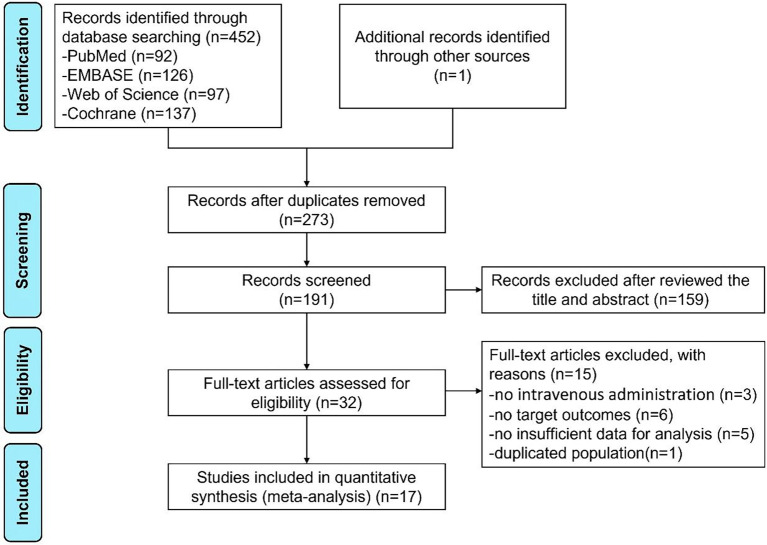
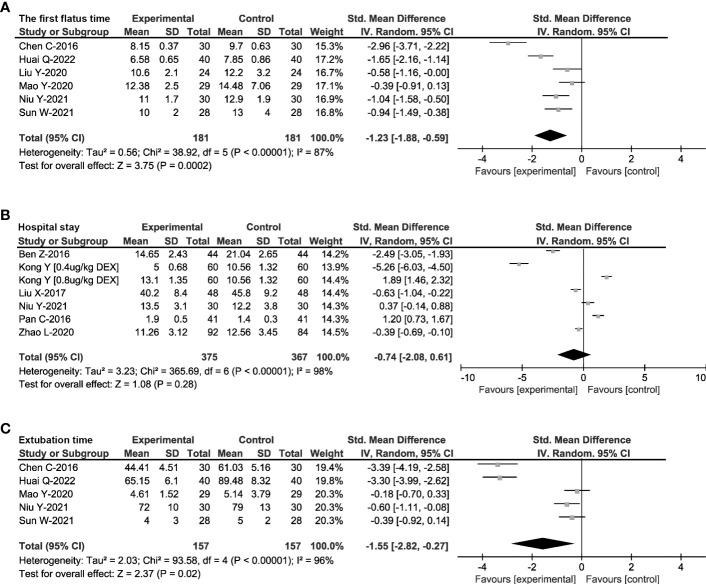
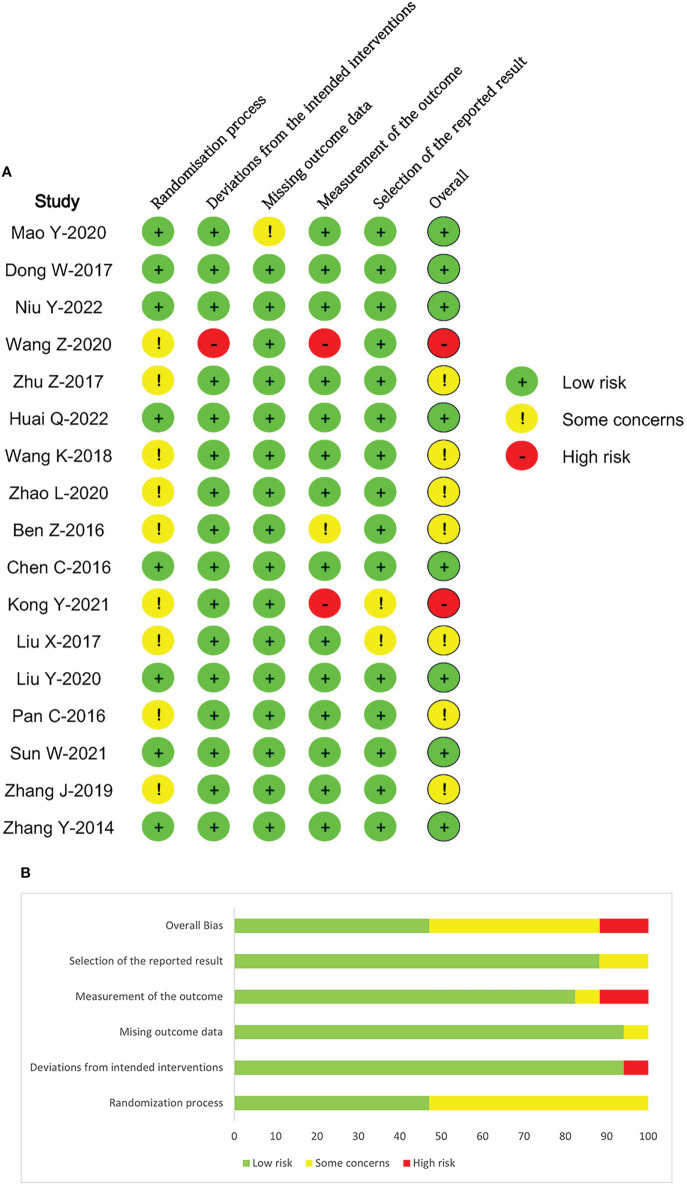
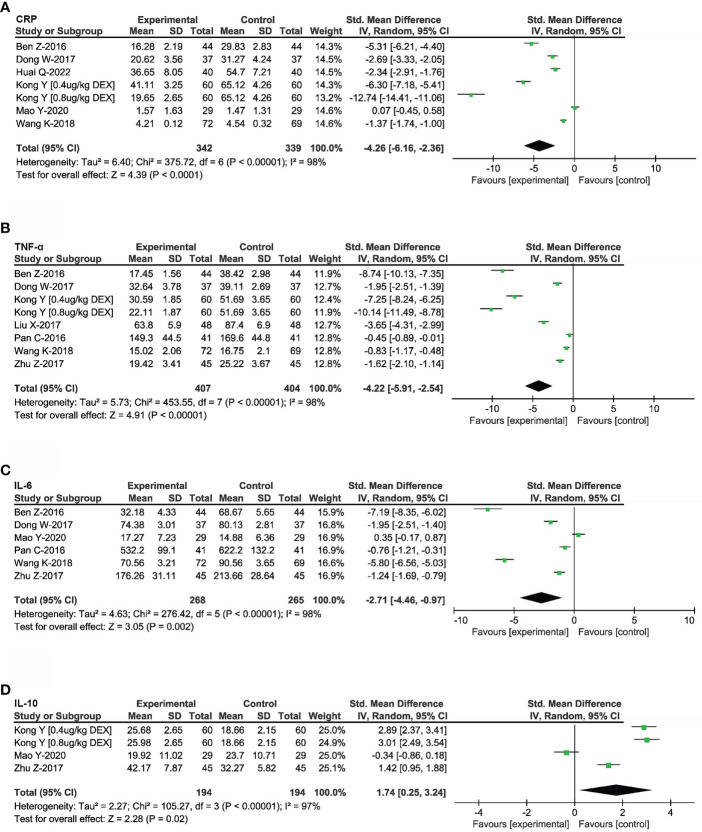
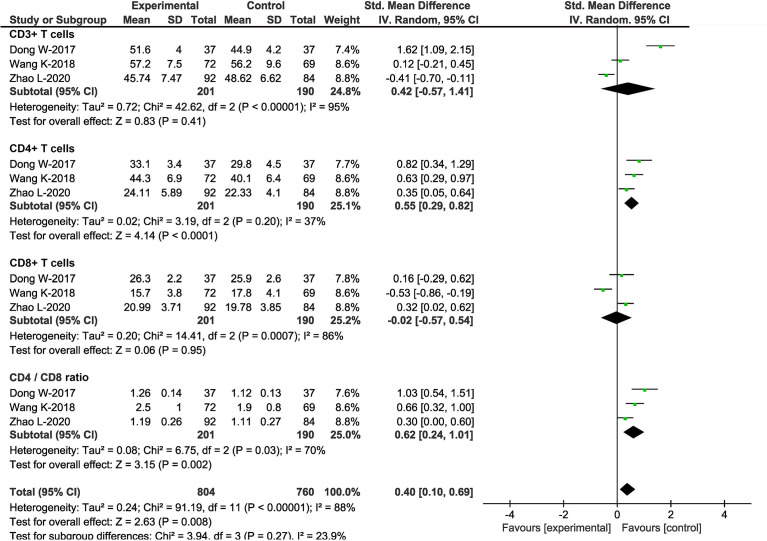
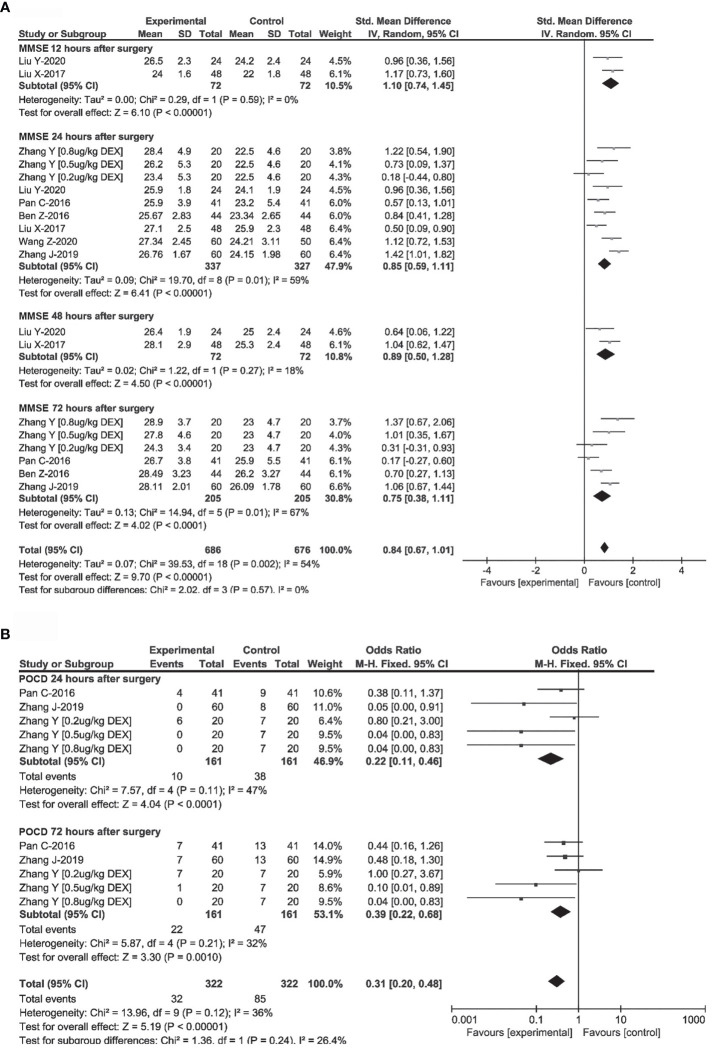
Perioperative immune function, postoperative cognitive function and prognosis are momentous issues for patients undergoing digestive tract cancer surgery. Studies have investigated the efficacy of dexmedetomidine (DEX) administration on these issues, but the results are inconsistent. Therefore, this meta-analysis aimed to summarize all the existing evidence and draw a conclusion more accurately on these associations. Trials were located through electronic searches of the PubMed, Embase, the Cochrane Library and Web of Science databases sources (from the establishment date of databases to April 2022). Bibliographies of the retrieved articles were checked. A total of 17 RCTs involving 1619 patients were included. The results showed that DEX decreased the level of C-reactive protein (SMD = -4.26, 95%CI: -6.16, -2.36), TNF-α (SMD = -4.22, 95%CI: -5.91, -2.54) and IL-6 (SMD = -2.71, 95%CI: -4.46, -0.97), and increased the level of IL-10 (SMD = 1.74, 95%CI: 0.25, 3.24). DEX also increased CD4+ T cells (SMD = 0.55, 95%CI: 0.29, 0.82) and CD4+/CD8+ ratio (SMD = 0.62, 95%CI: 0.24, 1.01). Thus, DEX was associated with alleviation of postoperative systemic inflammatory response and immune dysfunction. Furthermore, DEX increased mini-mental state examination scores at 12h (SMD = 1.10, 95%CI: 0.74,1.45), 24h (SMD = 0.85, 95%CI: 0.59, 1.11), 48h (SMD = 0.89, 95%CI: 0.50, 1.28) and 72h (SMD = 0.75, 95%CI: 0.38, 1.11) after surgery. DEX decreased the occurrence of postoperative cognitive dysfunction (POCD) at 24h (OR = 0.22, 95%CI: 0.11, 0.46) and 72h (OR = 0.39, 95%CI: 0.22, 0.68) after surgery. DEX decreased first flatus time (SMD = -1.55, 95%CI: -2.82, -0.27) and hospital stay (SMD = -1.23, 95%CI: -1.88, -0.59). Therefore, based on perioperative immune dysfunction alleviation, DEX attenuated POCD and potential neuroinflammation, improved postoperative recovery and clinical prognosis of patients undergoing digest tract cancer surgery. Further studies are necessary to elucidate the clinical application of DEX from an immunological perspective.
围手术期免疫功能、术后认知功能和预后是消化道癌症手术患者面临的重大问题。研究已调查了右美托咪定(DEX)给药对这些问题的疗效,但结果并不一致。因此,本荟萃分析旨在总结所有现有证据,并更准确地就这些关联得出结论。通过对PubMed、Embase、Cochrane图书馆和Web of Science数据库来源(从数据库建立日期至2022年4月)进行电子检索来查找试验。检查检索文章的参考文献。共纳入17项随机对照试验,涉及1619例患者。结果显示,DEX降低了C反应蛋白水平(标准化均数差[SMD]=-4.26,95%置信区间[CI]:-6.16,-2.36)、肿瘤坏死因子-α(SMD=-4.22,95%CI:-5.91,-2.54)和白细胞介素-6(SMD=-2.71,95%CI:-4.46,-0.97),并提高了白细胞介素-10水平(SMD=1.74,95%CI:0.25,3.24)。DEX还增加了CD4+T细胞(SMD=0.55,95%CI:0.29,0.82)和CD4+/CD8+比值(SMD=0.62,95%CI:0.24,1.01)。因此,DEX与减轻术后全身炎症反应和免疫功能障碍有关。此外,DEX提高了术后12小时(SMD=1.10,95%CI:0.74,1.45)、24小时(SMD=0.85,95%CI:0.59,1.11)、48小时(SMD=0.89,95%CI:0.50,1.28)和72小时(SMD=0.75,95%CI:0.38,1.11)的简易精神状态检查评分。DEX降低了术后24小时(比值比[OR]=0.22,95%CI:0.11,0.46)和72小时(OR=0.39,95%CI:0.22,0.68)术后认知功能障碍(POCD)的发生率。DEX缩短了首次排气时间(SMD=-1.55,95%CI:-2.82,-0.27)和住院时间(SMD=-1.23,95%CI:-1.88,-0.59)。因此,基于围手术期免疫功能障碍的减轻,DEX减轻了POCD和潜在的神经炎症,改善了消化道癌症手术患者的术后恢复和临床预后。有必要进一步开展研究,从免疫学角度阐明DEX的临床应用。