Chen Xiao, Li Shaoli, Lin Cuixia, Zhang Zhen, Liu Xiaoyan, Wang Chunhui, Chen Jun, Yang Binbin, Yuan Jing, Zhang Zheng
College of Health Sciences, Shandong University of Traditional Chinese Medicine, Jinan, China.
Capital Institute of Pediatrics, Beijing, China.
Front Nutr. 2022 Sep 15;9:995126. doi: 10.3389/fnut.2022.995126. eCollection 2022.
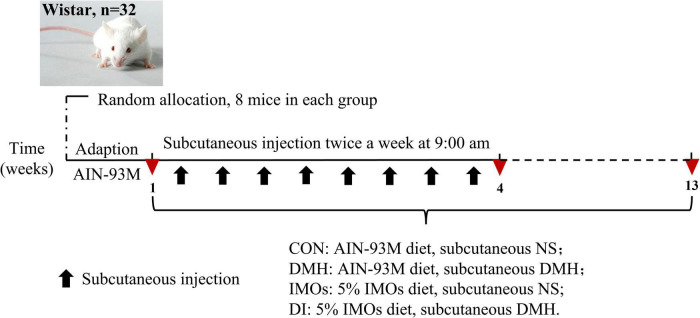
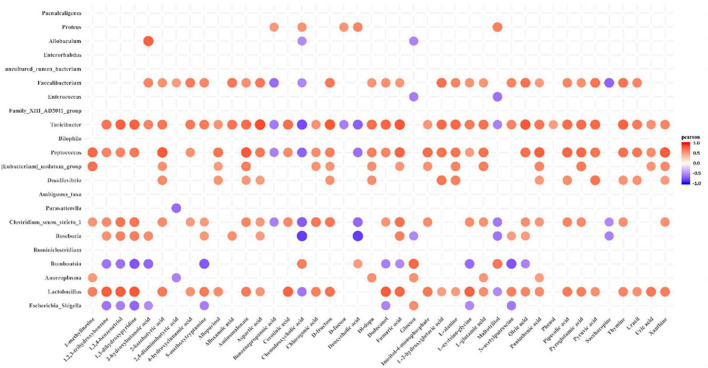
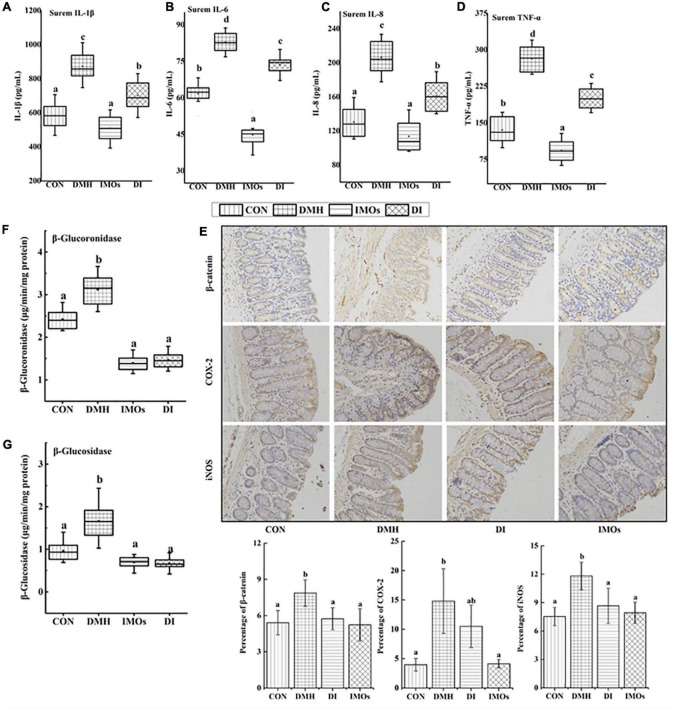
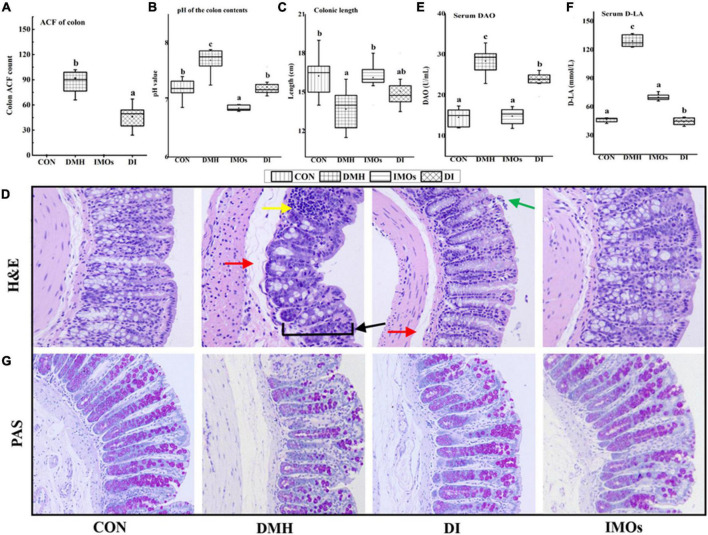
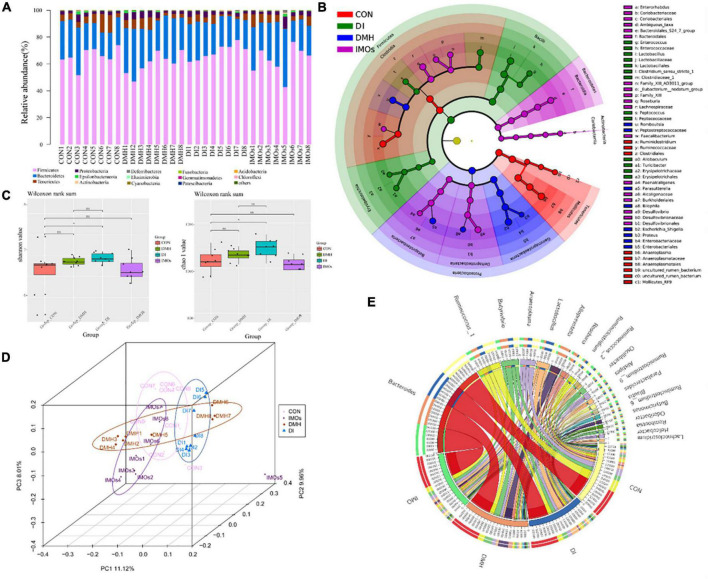
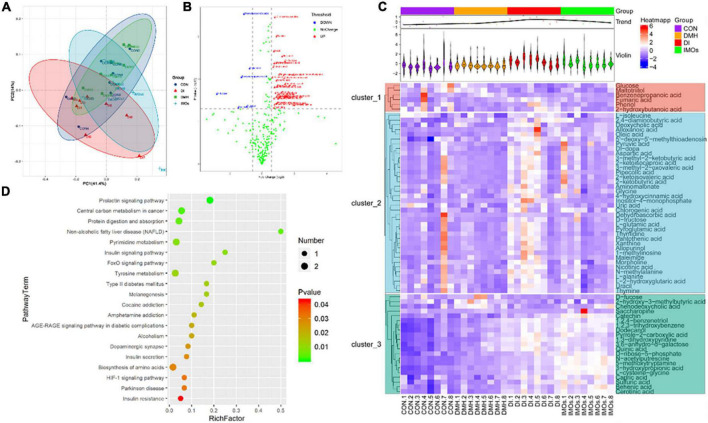
Colon cancer (CC) is a multistage disease and one of the most common cancers worldwide. Establishing an effective treatment strategies of early colon cancer is of great significance for preventing its development and reducing mortality. The occurrence of colon cancer is closely related to changes in the intestinal flora structure. Therefore, remodelling the intestinal flora structure through prebiotics is a powerful approach for preventing and treating the occurrence and development of colon cancer. Isomaltooligosaccharides (IMOs) are often found in fermented foods and can directly reach the gut for use by microorganisms. In this study, a rat model of early colon cancer (DMH) was established by subcutaneous injection of 1,2-dimethylhydrazine, and the model rats were fed IMOs as a dietary intervention (DI). The untargeted faecal metabolomics, gut metabolome and intestinal function of the model rats were investigated. The results showed that DMH, DI and IMOs alone (IMOs) groups exhibited gut microbial community changes. In the DI group, there was an increased abundance of probiotics () and decreased abundance of CC marker bacteria (). The key variations in the faecal metabolites of the DI group included decreased levels of glucose, bile acids (including deoxycholic acid and chenodeoxycholic acid) and amino acids (including L-glutamic acid and L-alanine). In addition, dietary intake of IMOs attenuated the intestinal inflammatory response, improved the intestinal microecological environment, and slowed the development of DMH-induced early CC in rats. This work provides a theoretical basis and technical support for the clinical prevention or treatment of CC with prebiotics.
结肠癌(CC)是一种多阶段疾病,也是全球最常见的癌症之一。建立早期结肠癌的有效治疗策略对于预防其发展和降低死亡率具有重要意义。结肠癌的发生与肠道菌群结构的变化密切相关。因此,通过益生元重塑肠道菌群结构是预防和治疗结肠癌发生发展的有效途径。低聚异麦芽糖(IMOs)常见于发酵食品中,可直接进入肠道供微生物利用。本研究通过皮下注射1,2-二甲基肼建立早期结肠癌大鼠模型(DMH),并将模型大鼠喂食IMOs作为饮食干预(DI)。对模型大鼠的非靶向粪便代谢组学、肠道代谢组和肠道功能进行了研究。结果表明,单独的DMH、DI和IMOs组均表现出肠道微生物群落变化。在DI组中,益生菌丰度增加,CC标志物细菌丰度降低。DI组粪便代谢物的关键变化包括葡萄糖、胆汁酸(包括脱氧胆酸和鹅脱氧胆酸)和氨基酸(包括L-谷氨酸和L-丙氨酸)水平降低。此外,饮食中摄入IMOs可减轻肠道炎症反应,改善肠道微生态环境,并减缓DMH诱导的大鼠早期CC的发展。这项工作为临床使用益生元预防或治疗CC提供了理论依据和技术支持。