Dai Jiahui, Ports Kayleen Deanna, Corrada Maria M, Odegaard Andrew O, O'Connell Joan, Jiang Luohua
Department of Epidemiology & Biostatistics, University of California Irvine, Irvine, CA, USA.
Department of Neurology, University of California Irvine, Irvine, CA, USA.
J Alzheimers Dis Rep. 2022 Aug 3;6(1):443-459. doi: 10.3233/ADR-220002. eCollection 2022.
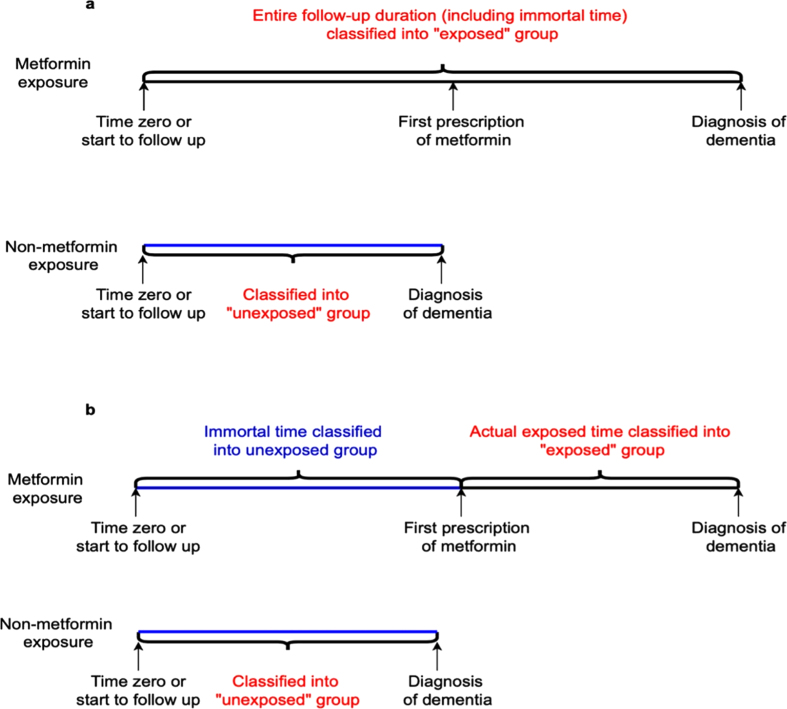
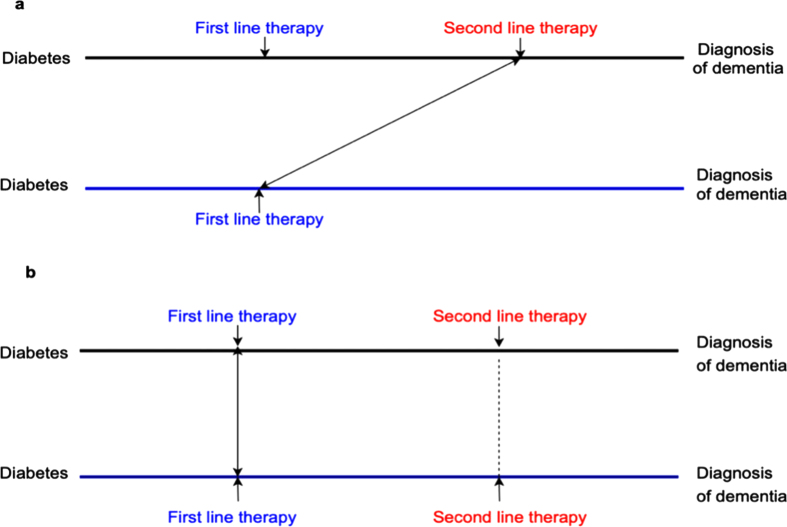
When studying drug effects using observational data, time-related biases may exist and result in spurious associations. Numerous observational studies have investigated metformin and dementia risk, but have reported inconsistent findings, some of which might be caused by unaddressed time-related biases. Immortal time bias biases the results toward a "protective" effect, whereas time-lag and time-window biases can lead to either a "detrimental" or "protective" effect.
To conduct a systematic review examining time-related biases in the literature on metformin and dementia.
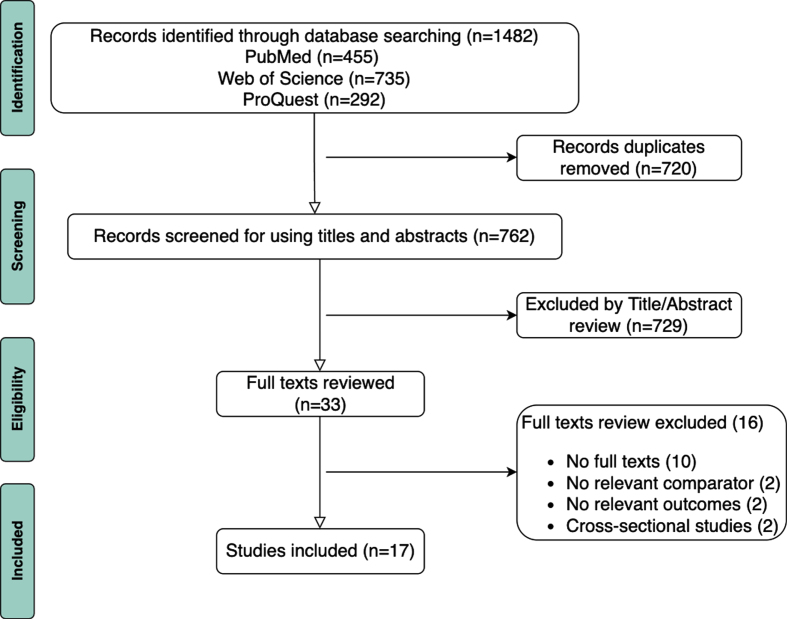
The electronic databases PubMed, Web of Science, and ProQuest were searched for the terms "Metformin" AND ("dementia" OR "Alzheimer's Disease" OR "cognitive impairment"). These databases were searched from inception through 09/24/2021. Only English language articles and human research were eligible.
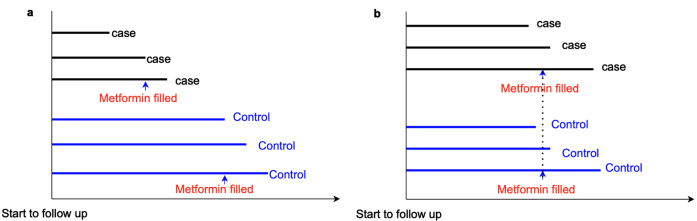
Seventeen studies were identified: thirteen cohort studies, two case-control studies, and two nested case-control studies. Eleven (64.7%) studies reported a reduced risk of dementia associated with metformin use; two (11.8%) suggested metformin increased dementia risk, while four (23.5%) concluded no significant associations. Eight (61.5%) of thirteen cohort studies had immortal time bias or did not clearly address it. Fifteen (88.2%) of seventeen reviewed studies had time-lag bias or did not clearly address it. Two (50.0%) of four case-control studies did not explicitly address time-window bias. The studies that addressed most biases concluded no associations between metformin and dementia risk.
None of the reviewed studies clearly addressed relevant time-related biases, illustrating time-related biases are common in observational studies investigating the impact of anti-diabetic medications on dementia risk.
在使用观察性数据研究药物效果时,可能存在与时间相关的偏倚并导致虚假关联。许多观察性研究调查了二甲双胍与痴呆风险,但报告的结果不一致,其中一些可能是由于未解决的与时间相关的偏倚所致。不朽时间偏倚会使结果偏向“保护”作用,而时间滞后和时间窗偏倚可能导致“有害”或“保护”作用。
进行一项系统评价,以检查二甲双胍与痴呆相关文献中与时间相关的偏倚。
在电子数据库PubMed、Web of Science和ProQuest中搜索“二甲双胍”以及(“痴呆”或“阿尔茨海默病”或“认知障碍”)。从数据库创建至2021年9月24日进行检索。仅纳入英文文章和人体研究。
共识别出17项研究:13项队列研究、2项病例对照研究和2项巢式病例对照研究。11项(64.7%)研究报告使用二甲双胍可降低痴呆风险;2项(11.8%)研究表明二甲双胍会增加痴呆风险,而4项(23.5%)研究得出无显著关联的结论。13项队列研究中有8项(61.5%)存在不朽时间偏倚或未明确解决该问题。17项纳入评价的研究中有15项(88.2%)存在时间滞后偏倚或未明确解决该问题。4项病例对照研究中有2项(五十分之一百)未明确解决时间窗偏倚问题。解决了大多数偏倚问题的研究得出二甲双胍与痴呆风险之间无关联的结论。
纳入评价的研究均未明确解决相关的与时间相关的偏倚,表明在调查抗糖尿病药物对痴呆风险影响的观察性研究中,与时间相关的偏倚很常见。