UNDP/UNFPA/UNICEF/World Bank Special Programme of Research, Development and Research Training in Human Reproduction (HRP), Department of Sexual and Reproductive Health and Research, World Health Organization, Avenue Appia 20, 1211 Geneva 27, Switzerland.
IRD Global, Singapore, Singapore.
Bull World Health Organ. 2022 Oct 1;100(10):590-600. doi: 10.2471/BLT.22.287816. Epub 2022 Aug 22.
To describe a systematic process of transforming paper registers into a digital system optimized to enhance service provision and fulfil reporting requirements.
We designed a formative study around primary health workers providing reproductive, maternal, newborn and child health services in three countries in Bangladesh, Indonesia and Pakistan. The study ran from November 2014 to June 2018. We developed a prototype digital application after conducting a needs assessment of health workers' responsibilities, workflows, routine data requirements and service delivery needs. Methods included desk reviews, focus group discussions, in-depth interviews; data mapping of paper registers; observations of health workers; co-design workshops with health workers; and usability testing. Finally, we conducted an observational feasibility assessment to monitor uptake of the application.
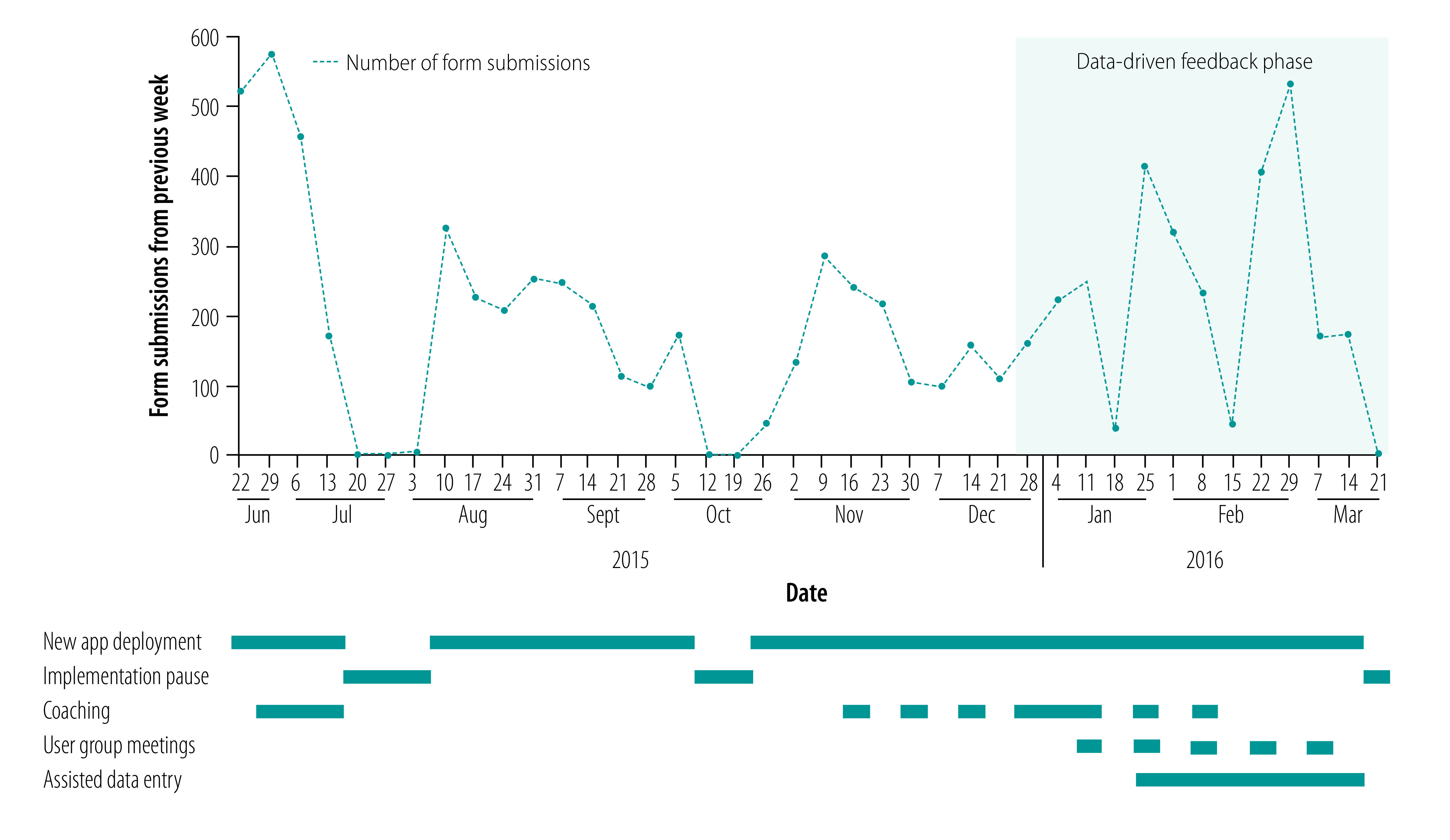
Researchers reviewed a total of 17 paper registers across the sites, which we transformed into seven modules within a digital application running on mobile devices. Modules corresponded to the services provided, including household enumeration, antenatal care, family planning, immunization, nutrition and child health. A total of 65 health workers used the modules during the feasibility assessment, and average weekly form submissions ranged from 8 to 234, depending on the health worker and their responsibilities. We also observed variability in the use of modules, requiring consistent monitoring support for health workers.
Lessons learnt from this study shaped key global initiatives and resulted in a software global good. The deployment of digital systems requires well-designed applications, change management and strengthening human resources to realize and sustain health system gains.
描述一个系统的流程,将纸质登记簿转化为数字系统,以优化服务提供并满足报告要求。
我们围绕在孟加拉国、印度尼西亚和巴基斯坦的三个国家提供生殖、孕产妇、新生儿和儿童健康服务的初级卫生工作者开展了一项基础研究。该研究于 2014 年 11 月至 2018 年 6 月进行。在对卫生工作者的职责、工作流程、常规数据需求和服务提供需求进行需求评估后,我们开发了一个原型数字应用程序。方法包括桌面审查、焦点小组讨论、深入访谈;纸质登记簿的数据映射;观察卫生工作者;与卫生工作者共同设计研讨会;以及可用性测试。最后,我们进行了观察性可行性评估,以监测应用程序的采用情况。
研究人员共审查了来自三个地点的总共 17 本纸质登记簿,我们将其转换为数字应用程序中的七个模块,这些模块对应于提供的服务,包括家庭普查、产前护理、计划生育、免疫、营养和儿童健康。在可行性评估期间,共有 65 名卫生工作者使用了这些模块,平均每周提交表单的数量从 8 到 234 不等,具体取决于卫生工作者及其职责。我们还观察到模块的使用存在差异,需要为卫生工作者提供持续的监测支持。
从这项研究中吸取的经验教训塑造了关键的全球倡议,并促成了一款软件全球公益产品。数字系统的部署需要精心设计的应用程序、变革管理和加强人力资源,以实现和维持卫生系统的收益。