Bartolini Desirée, Marinelli Rita, Stabile Anna Maria, Frammartino Tiziana, Guerrini Angela, Garetto Stefano, Lucci Jacopo, Migni Anna, Zatini Linda, Marcantonini Giada, Rende Mario, Galli Francesco
Department of Pharmaceutical Sciences, Lipidomics and Micronutrient Vitamins Lab. and Human Anatomy Lab., University of Perugia, 06126 Perugia, Italy.
Department of Medicine and Surgery, Section of Human, Clinical and Forensic Anatomy, University of Perugia, Perugia, Italy.
Heliyon. 2022 Sep 23;8(9):e10748. doi: 10.1016/j.heliyon.2022.e10748. eCollection 2022 Sep.
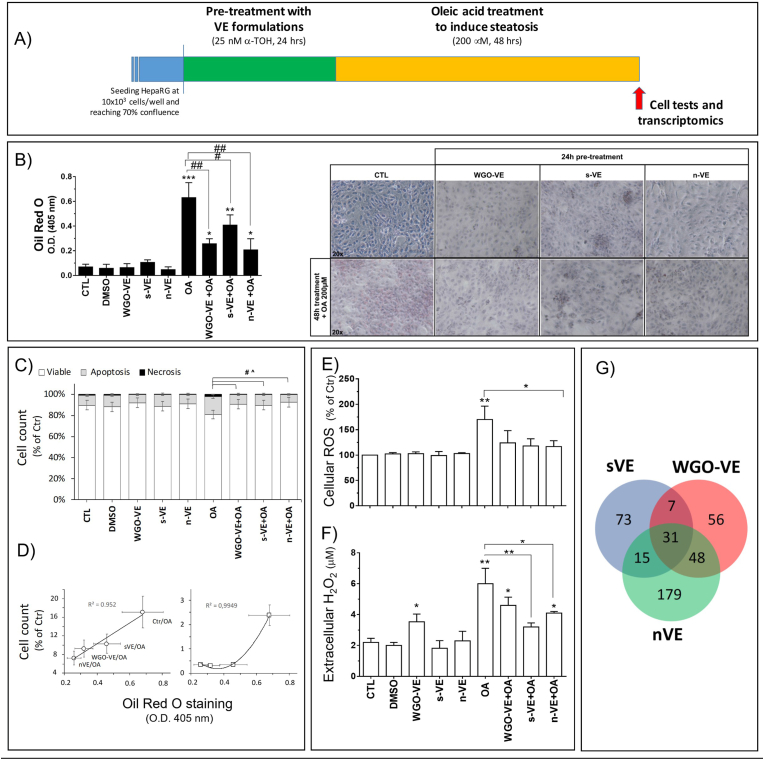
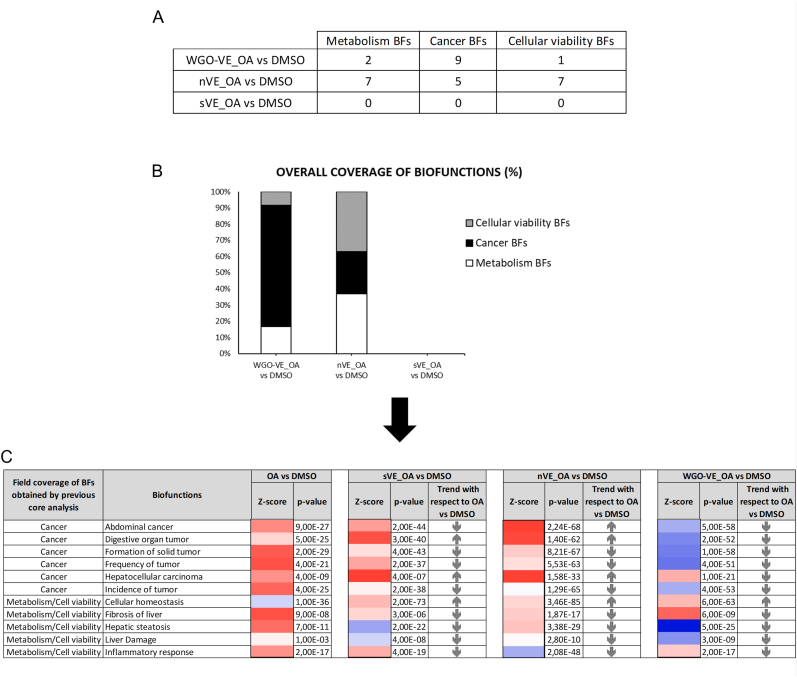
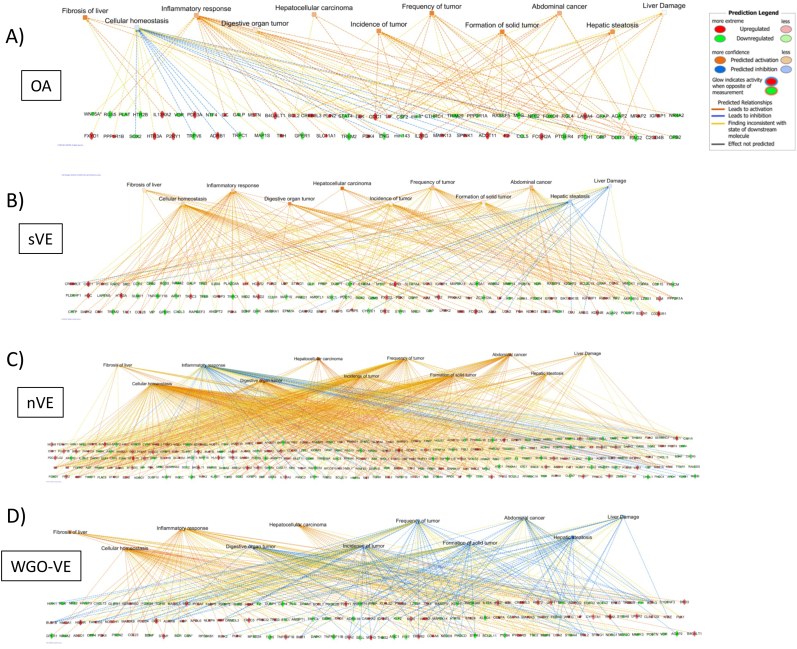
Wheat germ oil (WGO) is rich in α-tocopherol (vitamin E, VE), a vitamin that has long been suggested to exert hepatoprotective effects. In this study, this function of WGO-VE and its transcriptomics fingerprint were investigated in comparison with RRR-α-tocopherol and α-tocopherol (nVE and sVE, respectively), in human liver cells treated with oleic acid (OA) to develop steatosis and lipotoxicity. Used in chemoprevention mode, all the VE formulations afforded significant reduction of the OA-induced steatosis and its consequent impact on lipotoxicity indicators, including ROS production and efflux (as HO), and apoptotic and necrotic cell death. A trend toward a better control of lipotoxicity was observed for WGO-VE and nVE compared to sVE. Gene microarray data demonstrated that these effects of VE formulations were associated with significantly different responses of the cellular transcriptome to compensate for the modifications of OA treatment, including the downregulation of cellular homeostasis genes and the induction of genes associated with defects of liver cell metabolism, fibrosis and inflammation, liver disease and cancer. Ingenuity Pathway Analysis data showed that WGO-VE modulated genes associated with liver carcinogenesis and steatosis, whereas nVE modulated genes involved in liver cell metabolism and viability biofunctions; sVE did not significantly modulate any gene dataset relevant to such biofunctions. In conclusion, WGO-VE prevents lipotoxicity in human liver cells modulating genes that differ from those affected by the natural or synthetic forms of pure VE. These differences can be captured by precision nutrition tools, reflecting the molecular complexity of this VE-rich extract and its potential in preventing specific cues of hepatocellular lipotoxicity.
小麦胚芽油(WGO)富含α-生育酚(维生素E,VE),长期以来人们一直认为这种维生素具有肝脏保护作用。在本研究中,在用人油酸(OA)处理以诱导脂肪变性和脂毒性的人肝细胞中,将WGO-VE的这一功能及其转录组学指纹与RRR-α-生育酚和α-生育酚(分别为天然VE和合成VE)进行了比较研究。在化学预防模式下使用时,所有VE制剂均能显著减轻OA诱导的脂肪变性及其对脂毒性指标的影响,包括活性氧生成和外流(如HO)以及凋亡和坏死性细胞死亡。与合成VE相比,观察到WGO-VE和天然VE对脂毒性的控制有更好的趋势。基因微阵列数据表明,VE制剂的这些作用与细胞转录组对OA处理修饰的显著不同反应相关,包括细胞稳态基因的下调以及与肝细胞代谢缺陷、纤维化和炎症、肝病和癌症相关基因的诱导。通路分析数据表明,WGO-VE调节与肝癌发生和脂肪变性相关的基因,而天然VE调节参与肝细胞代谢和生存力生物功能的基因;合成VE未显著调节任何与这些生物功能相关的基因数据集。总之,WGO-VE通过调节与天然或合成形式的纯VE所影响的基因不同的基因来预防人肝细胞中的脂毒性。这些差异可以通过精准营养工具来捕捉,反映了这种富含VE的提取物的分子复杂性及其在预防肝细胞脂毒性特定线索方面的潜力。