Mehandzhiyski Aleksandar Y, Engel Emile, Larsson Per A, Re Giada Lo, Zozoulenko Igor V
Laboratory of Organic Electronics, Department of Science and Technology, Linköping University, SE-601 74 Norrköping, Sweden.
Department of Fiber and Polymer Technology, KTH Royal Institute of Technology, Teknikringen 56, SE-100 44 Stockholm, Sweden.
ACS Appl Bio Mater. 2022 Oct 4;5(10):4793-802. doi: 10.1021/acsabm.2c00505.
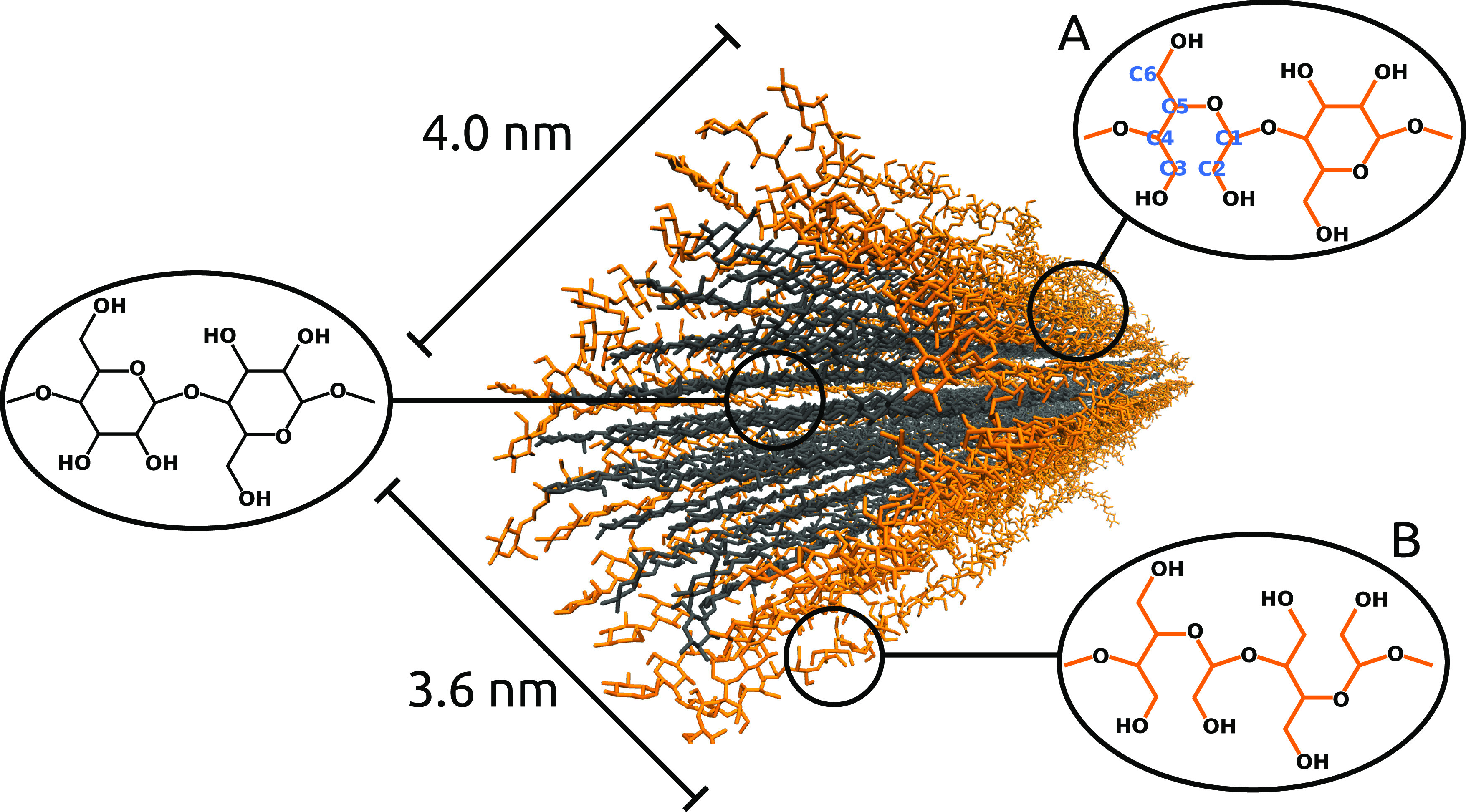
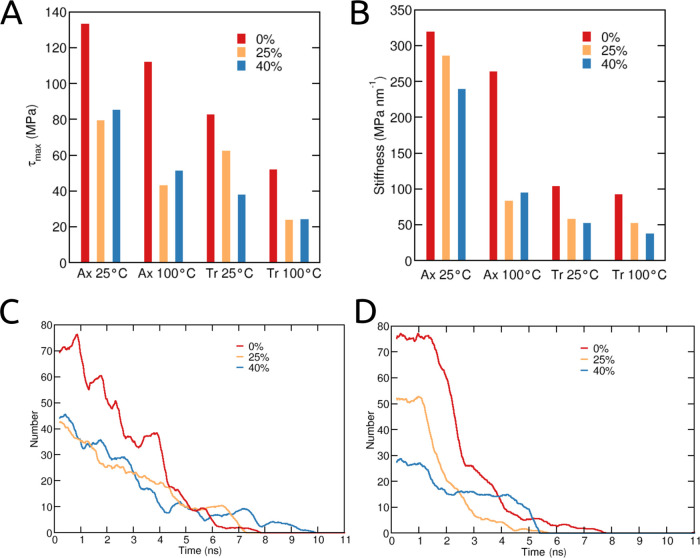
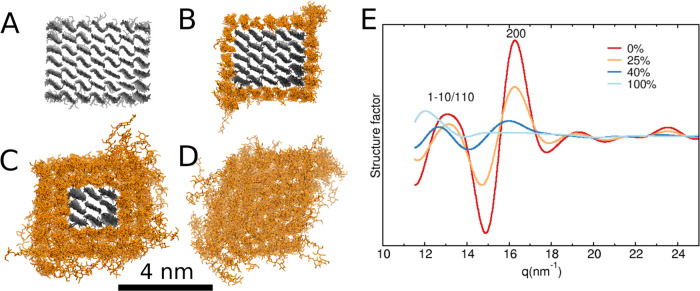
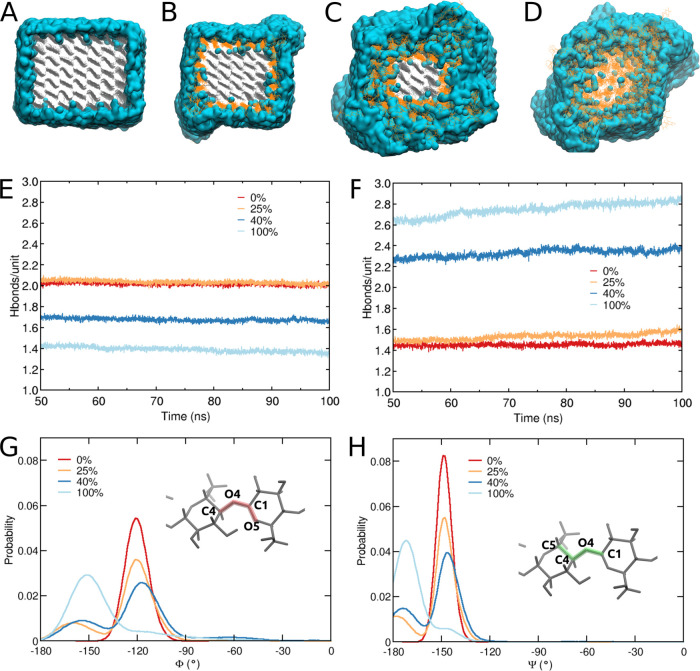
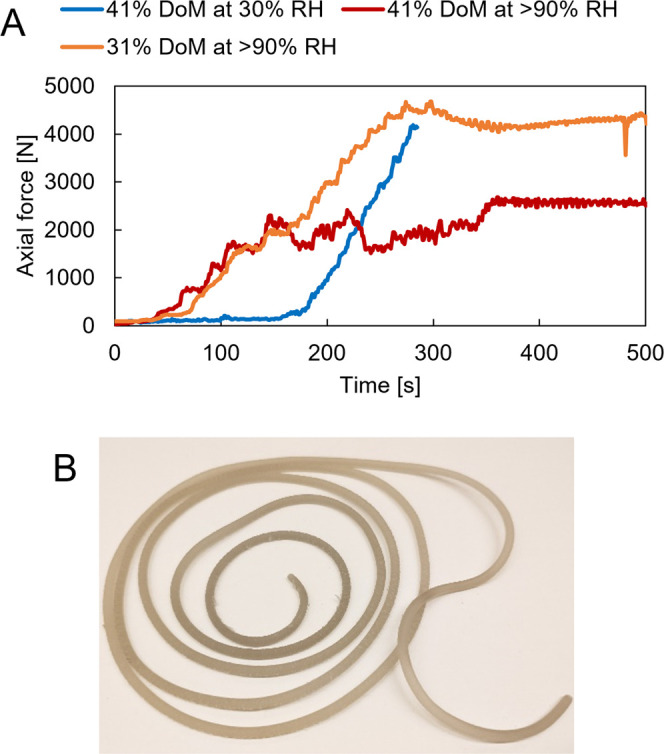
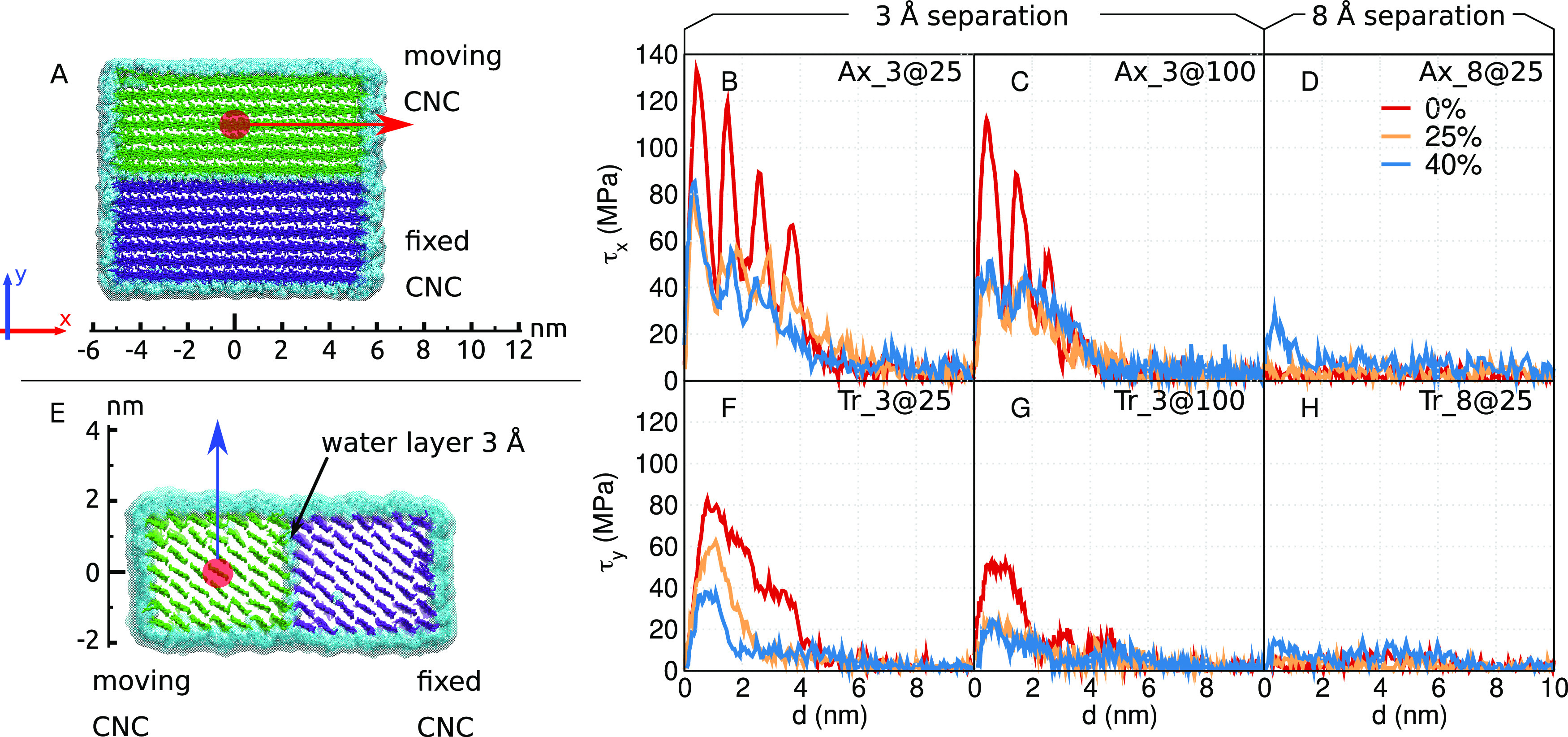
In the quest to develop sustainable and environmentally friendly materials, cellulose is a promising alternative to synthetic polymers. However, native cellulose, in contrast to many synthetic polymers, cannot be melt-processed with traditional techniques because, upon heating, it degrades before it melts. One way to improve the thermoplasticity of cellulose, in the form of cellulose fibers, is through chemical modification, for example, to dialcohol cellulose fibers. To better understand the importance of molecular interactions during melt processing of such modified fibers, we undertook a molecular dynamics study of dialcohol cellulose nanocrystals with different degrees of modification. We investigated the structure of the nanocrystals as well as their interactions with a neighboring nanocrystal during mechanical shearing, Our simulations showed that the stress, interfacial stiffness, hydrogen-bond network, and cellulose conformations during shearing are highly dependent on the degree of modification, water layers between the crystals, and temperature. The melt processing of dialcohol cellulose with different degrees of modification and/or water content in the samples was investigated experimentally by fiber extrusion with water used as a plasticizer. The melt processing was easier when increasing the degree of modification and/or water content in the samples, which was in agreement with the conclusions derived from the molecular modeling. The measured friction between the two crystals after the modification of native cellulose to dialcohol cellulose, in some cases, halved (compared to native cellulose) and is also reduced with increasing temperature. Our results demonstrate that molecular modeling of modified nanocellulose fibers can provide fundamental information on the structure-property relationships of these materials and thus is valuable for the development of new cellulose-based biomaterials.
在开发可持续且环保材料的过程中,纤维素是合成聚合物的一种有前景的替代品。然而,与许多合成聚合物不同,天然纤维素不能用传统技术进行熔融加工,因为加热时它会在熔化前降解。提高纤维素纤维形式的纤维素热塑性的一种方法是通过化学改性,例如制成二醇纤维素纤维。为了更好地理解这种改性纤维熔融加工过程中分子相互作用的重要性,我们对不同改性程度的二醇纤维素纳米晶体进行了分子动力学研究。我们研究了纳米晶体的结构以及它们在机械剪切过程中与相邻纳米晶体的相互作用。我们的模拟表明,剪切过程中的应力、界面刚度、氢键网络和纤维素构象高度依赖于改性程度、晶体间的水层以及温度。通过以水作为增塑剂的纤维挤出实验研究了不同改性程度和/或样品中含水量的二醇纤维素的熔融加工。当提高样品中的改性程度和/或含水量时,熔融加工更容易,这与分子建模得出的结论一致。天然纤维素改性为二醇纤维素后,两种晶体之间测得的摩擦力在某些情况下减半(与天然纤维素相比),并且也随温度升高而降低。我们的结果表明,改性纳米纤维素纤维的分子建模可以提供有关这些材料结构 - 性能关系的基本信息,因此对于开发新型纤维素基生物材料具有重要价值。