Jimenez Maria F, Becerra Andrés, Cervera Sergio, Sánchez Elio F, Ospina Jorge, Henao Francisco J, Paz Alexander, Paredes Gabriel, Gutiérrez María I, Puyana Juan C
Department of Surgery, Universidad del Rosario, Bogotá, Cundinamarca, Colombia.
Department of Surgery, Pontificia Universidad Javeriana, Bogotá, Cundinamarca, Colombia.
Panam J Trauma Crit Care Emerg Surg. 2019 Sep-Dec;8(3):143-147. doi: 10.5005/jp-journals-10030-1254. Epub 2019 Dec 1.
Assembling an effective medical response for an overwhelming number of casualties has become a priority worldwide. Terrorist attacks have been part of the Colombian contemporaneous history. On February 7, 2003, a terrorist car bomb explosion occurred inside a private club in Bogotá, causing the largest number of casualties of all terrorist attacks for over 15 years. The present study analyses the hospital and prehospital responses to this mass casualty event by characterizing the patterns of injury, resource allocation, and outcome in a tertiary-level hospital where most of the casualties were treated.
This is a retrospective chart review of the patients brought to a single hospital (La Clínica del Country), which was the nearest to the terrorist attack. Demographics, severity of injury, patterns of injury, prehospital care, and outcomes were determined from the hospital medical records and government registries.
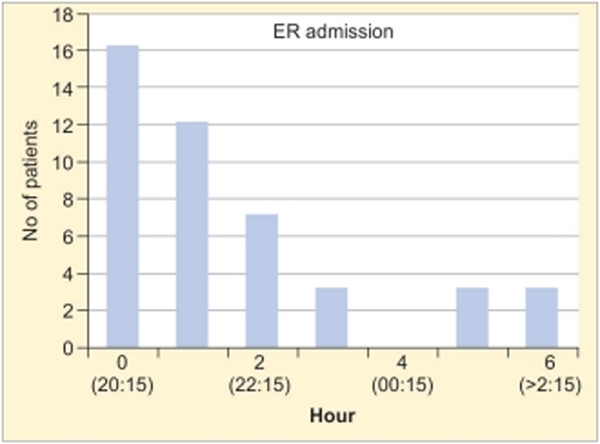
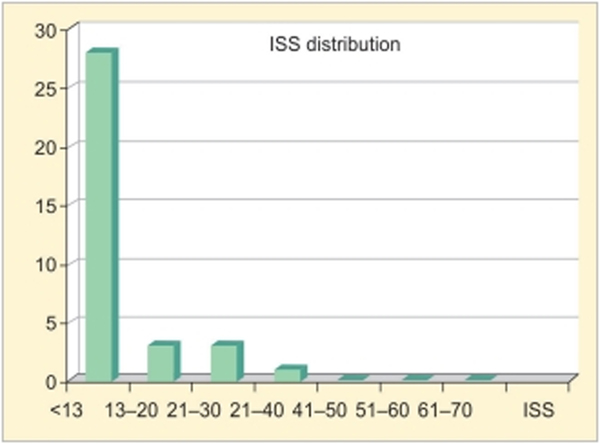
Of the 240 victims, 35 died at the explosion site (immediate mortality 17%). The 205 survivors were dispersed throughout the city, of whom 63 patients came to La Clínica del Country hospital. Most of these patients were evaluated only clinically and deemed not serious. The main mechanism of trauma was blunt (81.4%). The mean injury severity score (ISS) was 5.6 ± 8.3. Ten patients required emergent surgical intervention and 14 patients were admitted. The in-hospital mortality was 20%.
This mass casualty event was a true test for the Colombian emergency medical system and disaster preparedness. The medical response and resource optimization resulted in an overall mortality rate similar to those observed in the recent European and North American bombings. Despite the limited resources, the continuous challenge of terrorist's attacks in Colombia made the country feel the need for training and preparing the healthcare professionals, allowing effective delivery of medical care.
为应对大量伤亡人员组建有效的医疗救援力量已成为全球的当务之急。恐怖袭击一直是哥伦比亚当代历史的一部分。2003年2月7日,波哥大一家私人俱乐部内发生恐怖汽车炸弹爆炸,造成15年多来所有恐怖袭击中最多的人员伤亡。本研究通过描述一家接收了大部分伤亡人员的三级医院的损伤模式、资源分配和救治结果,分析了医院和院前对这起大规模伤亡事件的应对情况。
这是一项对被送往最近的一家医院(乡村诊所)的患者进行的回顾性病历审查。通过医院病历和政府登记信息确定人口统计学特征、损伤严重程度、损伤模式、院前护理和救治结果。
240名受害者中,35人在爆炸现场死亡(即时死亡率17%)。205名幸存者分散在全市各地,其中63名患者来到乡村诊所医院。这些患者大多仅接受了临床评估,被认为伤势不严重。主要创伤机制为钝器伤(81.4%)。平均损伤严重度评分(ISS)为5.6±8.3。10名患者需要紧急手术干预,14名患者入院治疗。院内死亡率为20%。
这起大规模伤亡事件是对哥伦比亚紧急医疗系统和灾难准备工作的一次真正考验。医疗救援和资源优化使总体死亡率与近期欧洲和北美爆炸事件中的死亡率相似。尽管资源有限,但哥伦比亚恐怖袭击的持续挑战使该国意识到需要对医疗专业人员进行培训和准备,以实现有效的医疗救治。