UNDP/UNFPA/UNICEF/WHO/World Bank Special Programme of Research, Development and Research, Training in Human Reproduction, Department of Sexual and Reproductive Health and Research, World Health Organization, Geneva, Switzerland.
Department of Biostatistics, Harvard T.H Chan School of Public Health, Boston, Massachusetts, United States of America.
PLoS One. 2022 Oct 5;17(10):e0274755. doi: 10.1371/journal.pone.0274755. eCollection 2022.
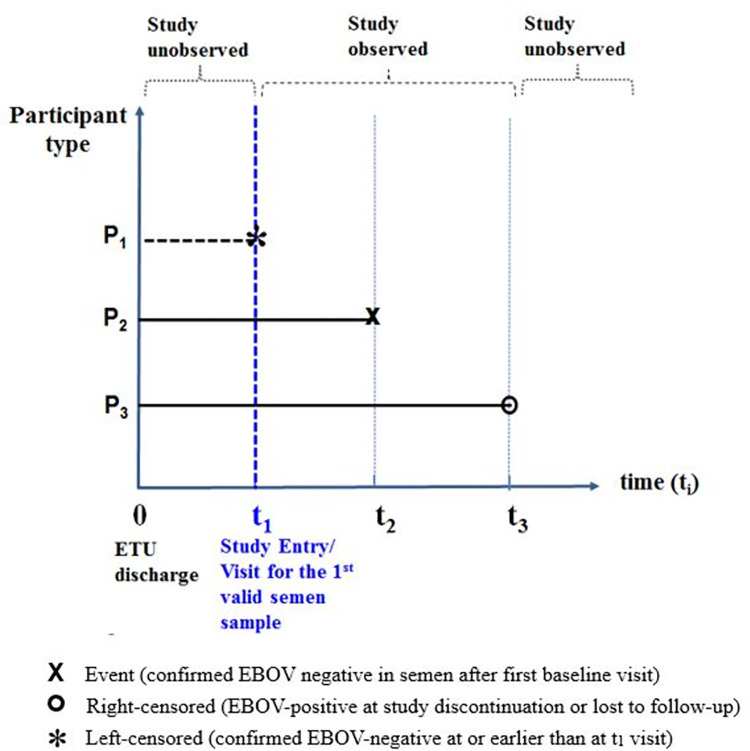
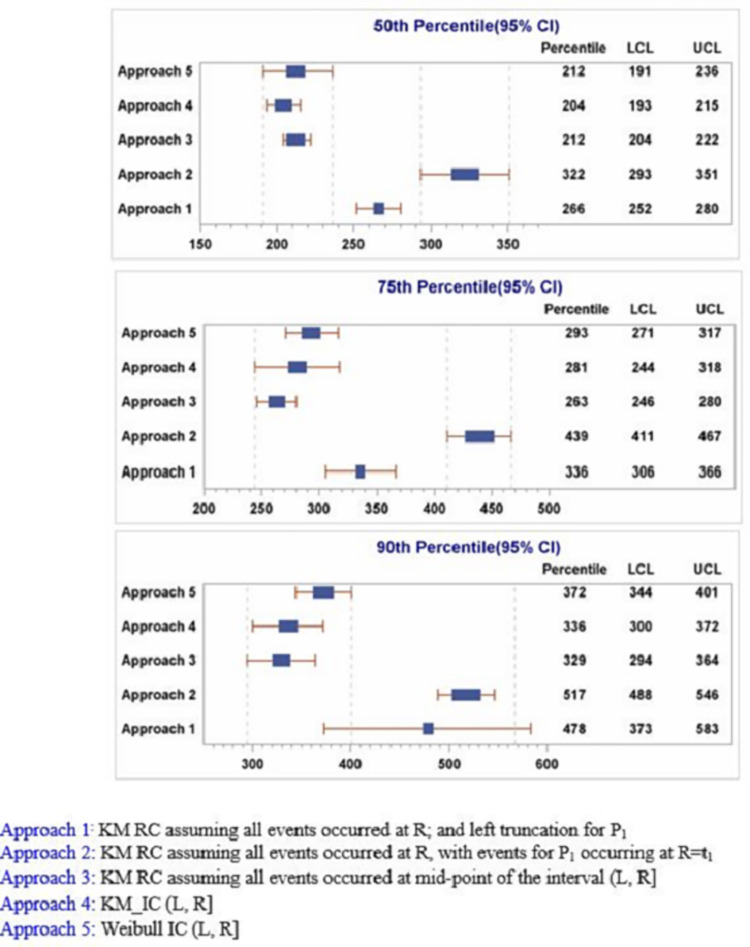
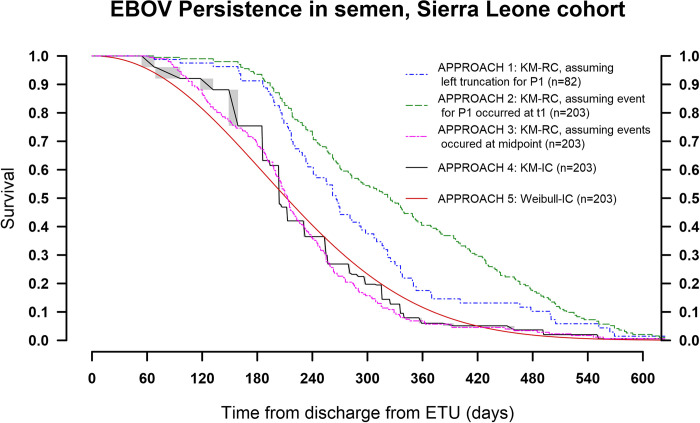
The 2013-2016 Ebola virus (EBOV) outbreak in West Africa was the largest and most complex outbreak ever, with a total number of cases and deaths higher than in all previous EBOV outbreaks combined. The outbreak was characterized by rapid spread of the infection in nations that were weakly prepared to handle it. EBOV ribonucleic acid (RNA) is known to persist in body fluids following disease recovery, and studying this persistence is crucial for controlling such epidemics. Observational cohort studies investigating EBOV persistence in semen require following up recently recovered survivors of Ebola virus disease (EVD), from recruitment to the time when their semen tests negative for EBOV, the endpoint being time-to-event. Because recruitment of EVD survivors takes place weeks or months following disease recovery, the event of interest may have already occurred. Survival analysis methods are the best suited for the estimation of the virus persistence in body fluids but must account for left- and interval-censoring present in the data, which is a more complex problem than that of presence of right censoring alone. Using the Sierra Leone Ebola Virus Persistence Study, we discuss study design issues, endpoint of interest and statistical methodologies for interval- and right-censored non-parametric and parametric survival modelling. Using the data from 203 EVD recruited survivors, we illustrate the performance of five different survival models for estimation of persistence of EBOV in semen. The interval censored survival analytic methods produced more precise estimates of EBOV persistence in semen and were more representative of the source population than the right censored ones. The potential to apply these methods is enhanced by increased availability of statistical software to handle interval censored survival data. These methods may be applicable to diseases of a similar nature where persistence estimation of pathogens is of interest.
2013-2016 年期间,西非爆发了有史以来规模最大、最为复杂的埃博拉病毒(EBOV)疫情,总病例数和死亡人数超过以往所有 EBOV 疫情的总和。该疫情的特点是,在那些应对能力薄弱的国家,感染迅速蔓延。众所周知,埃博拉病毒的核糖核酸(RNA)在疾病康复后会在体液中持续存在,研究这种持续存在对于控制此类疫情至关重要。需要对精液中埃博拉病毒持续存在情况进行研究的观察性队列研究,要求对最近从埃博拉病毒病(EVD)中康复的幸存者进行随访,从招募到他们的精液检测结果对埃博拉病毒呈阴性的时间,终点是时间事件。由于招募 EVD 幸存者是在疾病康复后数周或数月进行的,因此感兴趣的事件可能已经发生。生存分析方法最适合估计病毒在体液中的持续存在,但必须考虑到数据中存在的左删失和区间删失,这比仅存在右删失的问题更为复杂。我们利用塞拉利昂埃博拉病毒持续存在研究,讨论了研究设计问题、感兴趣的终点以及用于区间和右删失非参数和参数生存模型的统计方法。利用招募的 203 名 EVD 幸存者的数据,我们说明了五种不同生存模型在估计 EBOV 在精液中的持续存在情况的性能。区间删失生存分析方法产生了更精确的 EBOV 在精液中持续存在的估计值,并且比右删失方法更能代表源人群。随着用于处理区间删失生存数据的统计软件的可用性增加,这些方法的应用潜力得到了增强。这些方法可能适用于具有类似性质的疾病,其中病原体的持续存在估计具有重要意义。