Zhang Mingdi, Wu Kejin, Wang Maoli, Bai Fang, Chen Hongliang
Department of Breast Surgery, Obstetrics and Gynecology Hospital of Fudan University, Shanghai, China.
Int J Anal Chem. 2022 Sep 25;2022:1043445. doi: 10.1155/2022/1043445. eCollection 2022.
Inflammatory breast cancer (IBC) is one of the most rare and aggressive subtypes of primary breast cancer (BC). Our study aimed to explore hub genes related to the pathogenesis of IBC, which could be considered as novel molecular biomarkers for IBC diagnosis and prognosis. . Two datasets from gene expression omnibus database (GEO) were selected. Enrichment analysis and protein-protein interaction (PPI) network for the DEGs were performed. We analyzed the prognostic values of hub genes in the Kaplan-Meier Plotter. Connectivity Map (CMap) and Comparative Toxicogenomics Database (CTD) was used to find candidate small molecules capable to reverse the gene status of IBC.
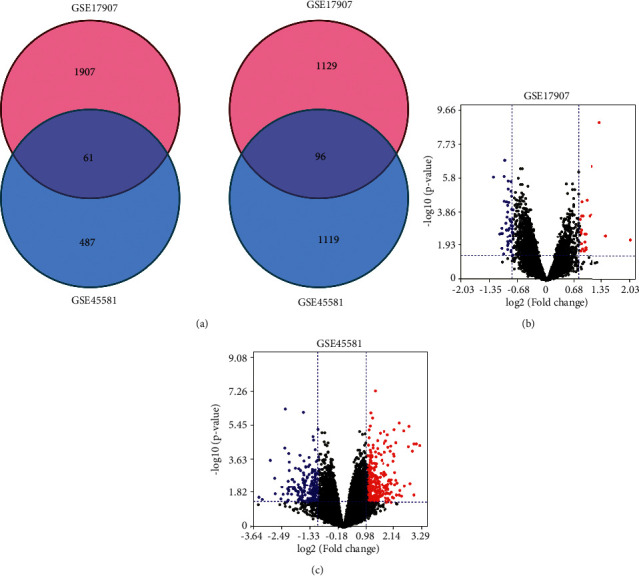
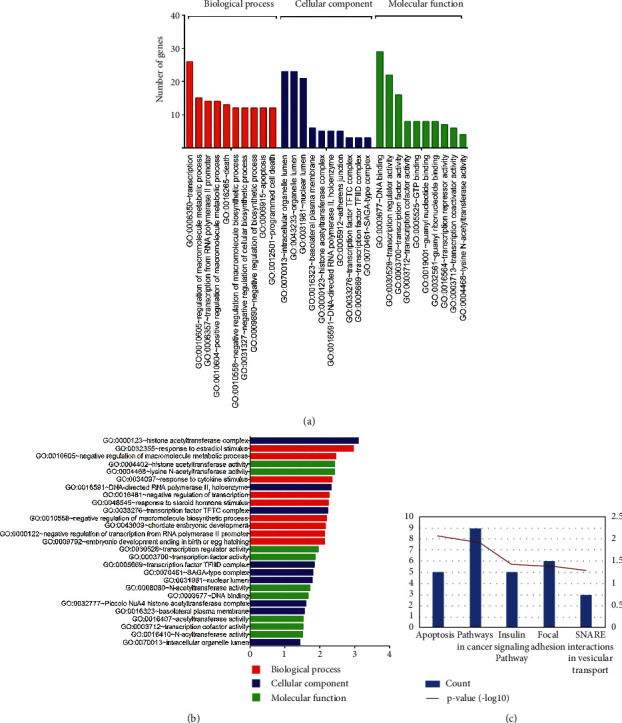
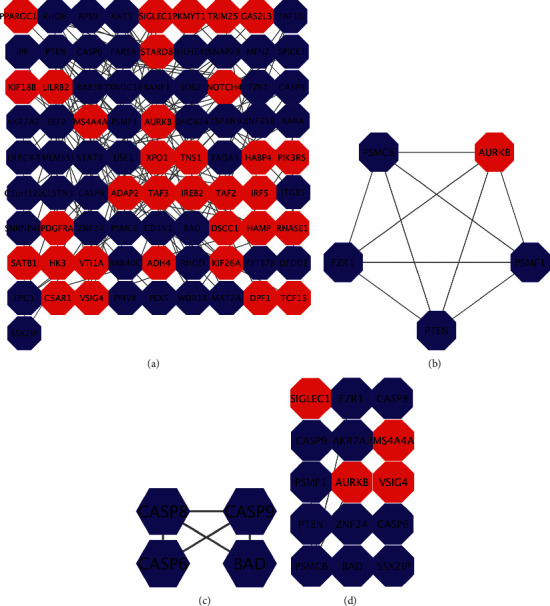
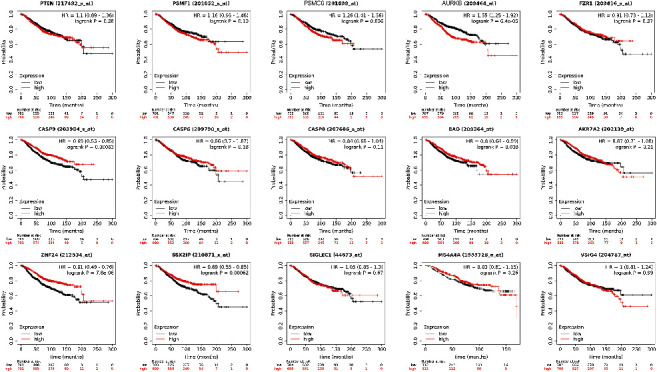
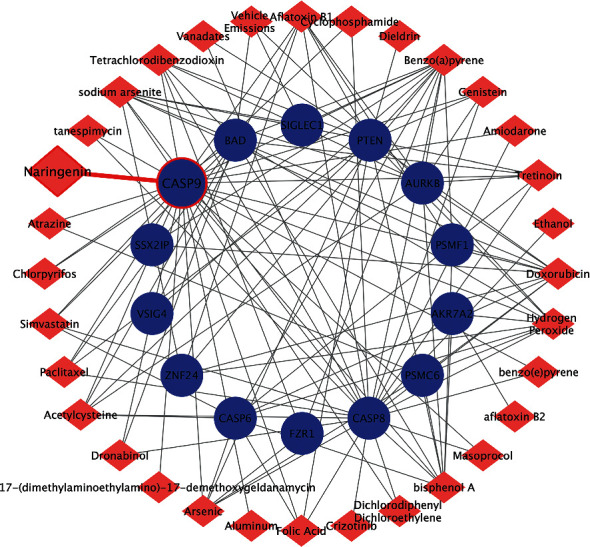
157 DEGs were selected in total. We constructed the PPI network with 154 nodes interconnected by 128 interactions. The KEGG pathway analysis indicated that the DEGs were enriched in apoptosis, pathways in cancer and insulin signaling pathway. PTEN, PSMF1, PSMC6, AURKB, FZR1, CASP9, CASP6, CASP8, BAD, AKR7A2, ZNF24, SSX2IP, SIGLEC1, MS4A4A, and VSIG4 were selected as hub genes based on the high degree of connectivity. Six hub genes (PSMC6, AURKB, CASP9, BAD, ZNF24, and SSX2IP) that were significantly associated with the prognosis of breast cancer. The expression of CASP9 protein was associated with prognosis and immune cells infiltration of breast cancer. CASP9- naringenin (NGE) is expected to be the most promising candidate gene-compound interaction for the treatment of IBC.
Taken together, CASP9 can be used as a prognostic biomarker and a novel therapeutic target in IBC.
炎性乳腺癌(IBC)是原发性乳腺癌(BC)中最罕见且侵袭性最强的亚型之一。我们的研究旨在探索与IBC发病机制相关的核心基因,这些基因可被视为IBC诊断和预后的新型分子生物标志物。从基因表达综合数据库(GEO)中选取了两个数据集。对差异表达基因(DEGs)进行了富集分析和蛋白质-蛋白质相互作用(PPI)网络分析。我们在Kaplan-Meier Plotter中分析了核心基因的预后价值。利用连接图谱(CMap)和比较毒理基因组学数据库(CTD)寻找能够逆转IBC基因状态的候选小分子。
共筛选出157个DEGs。我们构建了一个包含154个节点、由128个相互作用连接的PPI网络。KEGG通路分析表明,DEGs在细胞凋亡、癌症通路和胰岛素信号通路中富集。基于高连接度,选择PTEN、PSMF1、PSMC6、AURKB、FZR1、CASP9、CASP6、CASP8、BAD、AKR7A2、ZNF24、SSX2IP、SIGLEC1、MS4A4A和VSIG4作为核心基因。六个核心基因(PSMC6、AURKB、CASP9、BAD、ZNF24和SSX2IP)与乳腺癌预后显著相关。CASP9蛋白的表达与乳腺癌的预后和免疫细胞浸润有关。CASP9-柚皮素(NGE)有望成为治疗IBC最有前景的候选基因-化合物相互作用。
综上所述,CASP9可作为IBC的预后生物标志物和新型治疗靶点。