IODOCAT, Madrid, Spain.
Animal Endocrine Clinic, NYC, New York, New York, USA.
J Vet Intern Med. 2022 Nov;36(6):1931-1941. doi: 10.1111/jvim.16560. Epub 2022 Oct 6.
Approximately 75% of hyperthyroid cats lose muscle mass as accessed with a muscle condition scoring (MCS) system. After treatment, MCS improves as the cats regain muscle mass.
To quantify the degree of muscle loss in hyperthyroid cats using ultrasonography and evaluate changes in muscle mass after treatment.
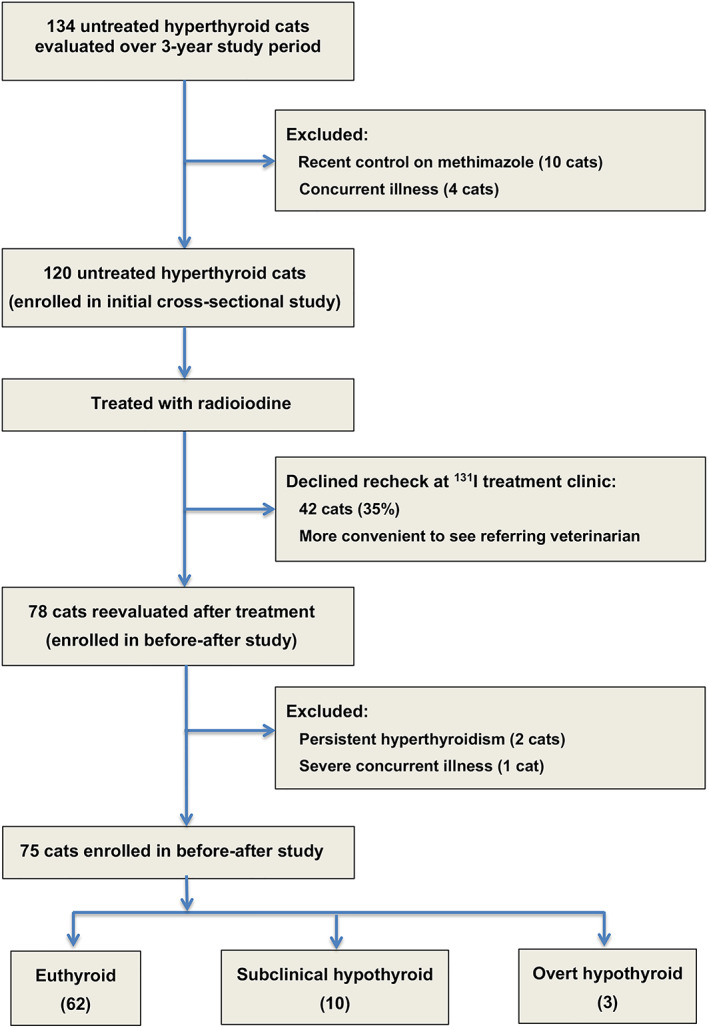
Forty-eight clinically normal cats and 120 cats with untreated hyperthyroidism, 75 of which were reevaluated after radioiodine-131 therapy.
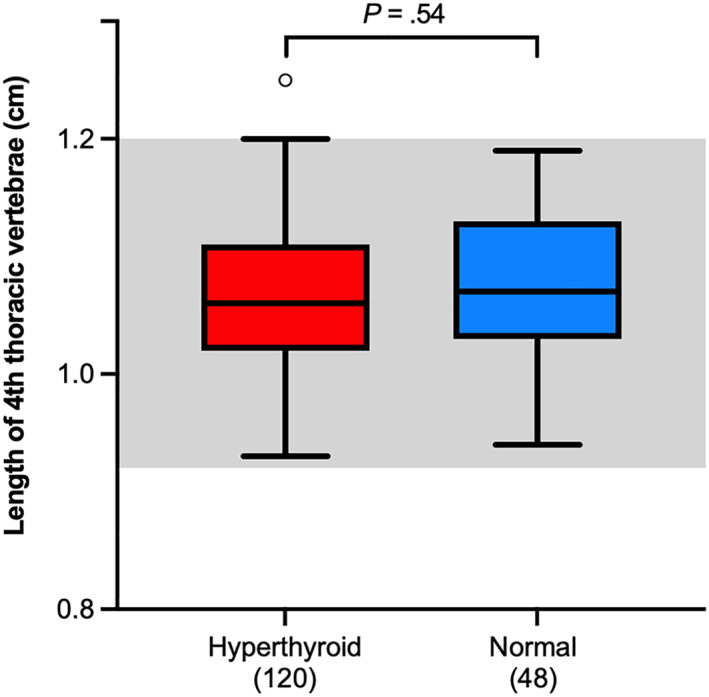
Prospective cross-sectional and before-after studies. All cats underwent ultrasonography and measurement of epaxial muscle height (EMH), with subsequent calculation of vertebral and forelimb epaxial muscle scores (VEMS and FLEMS). A subset of hyperthyroid cats underwent repeat muscle imaging 6 months after treatment.
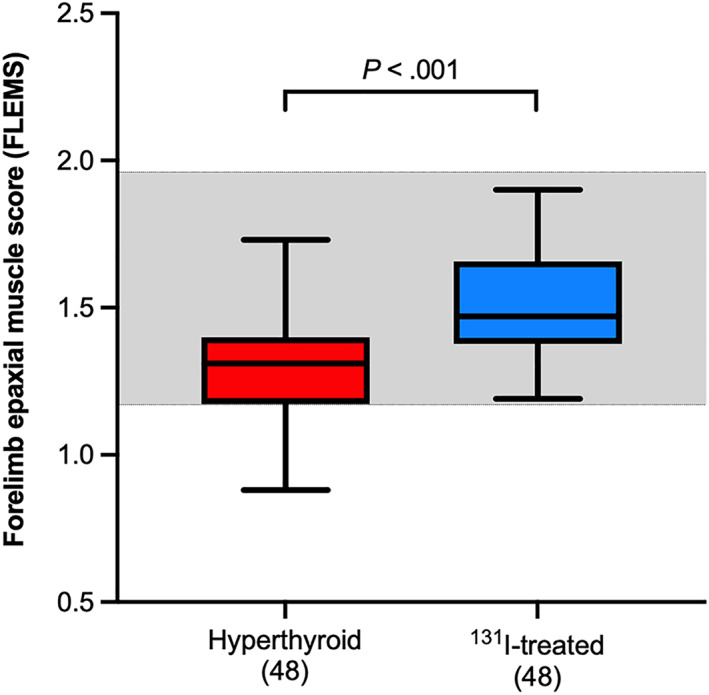
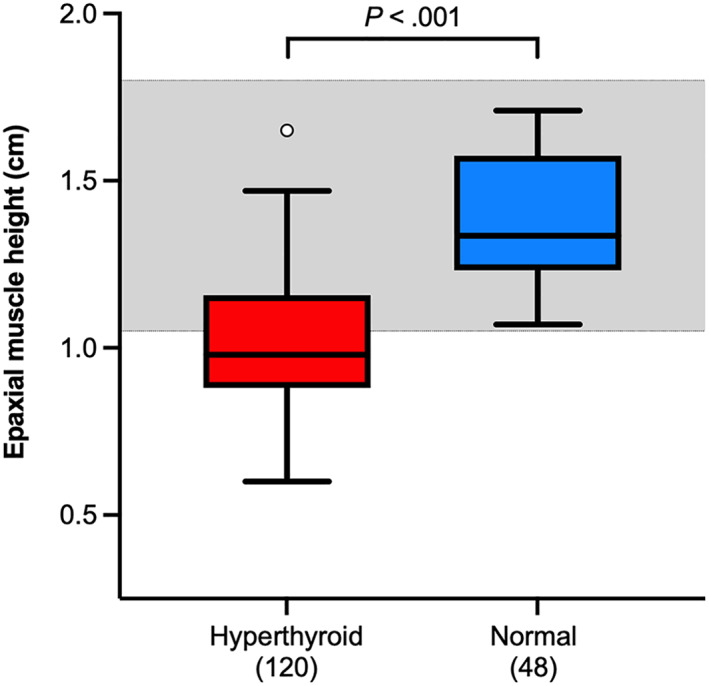
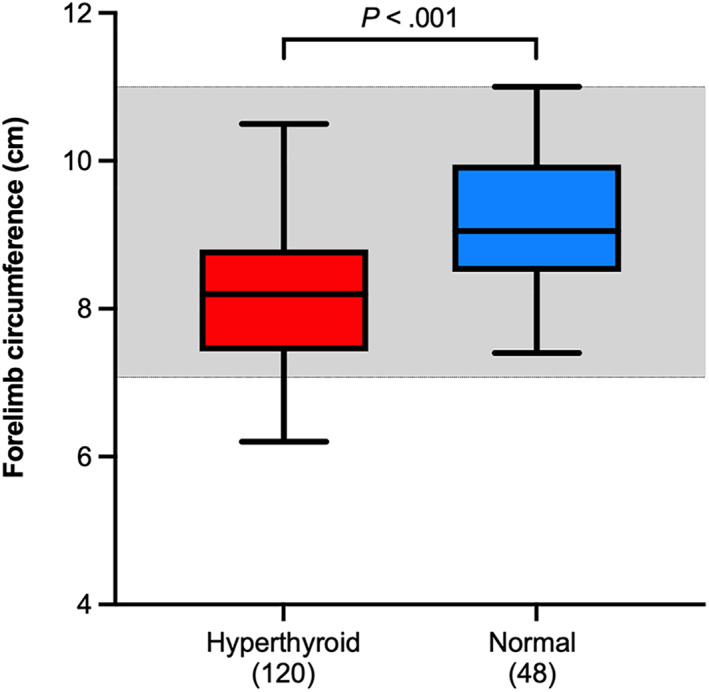
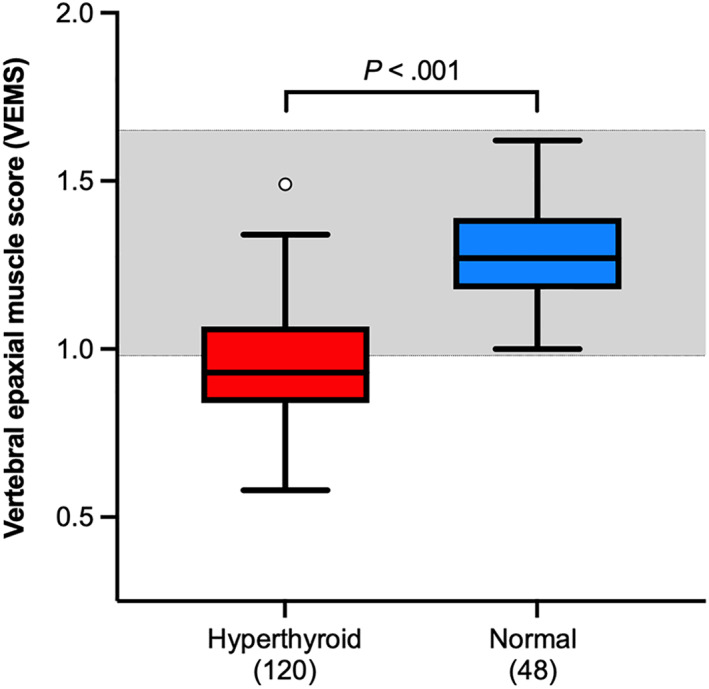
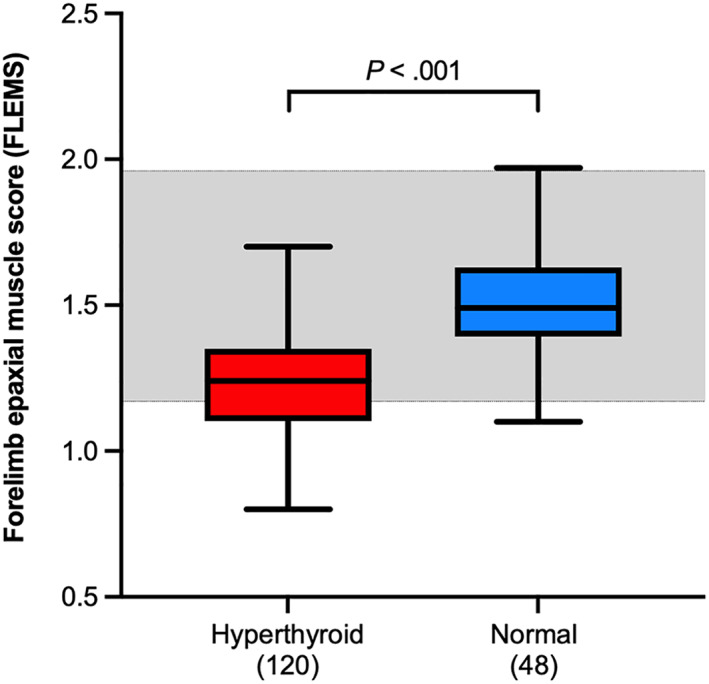
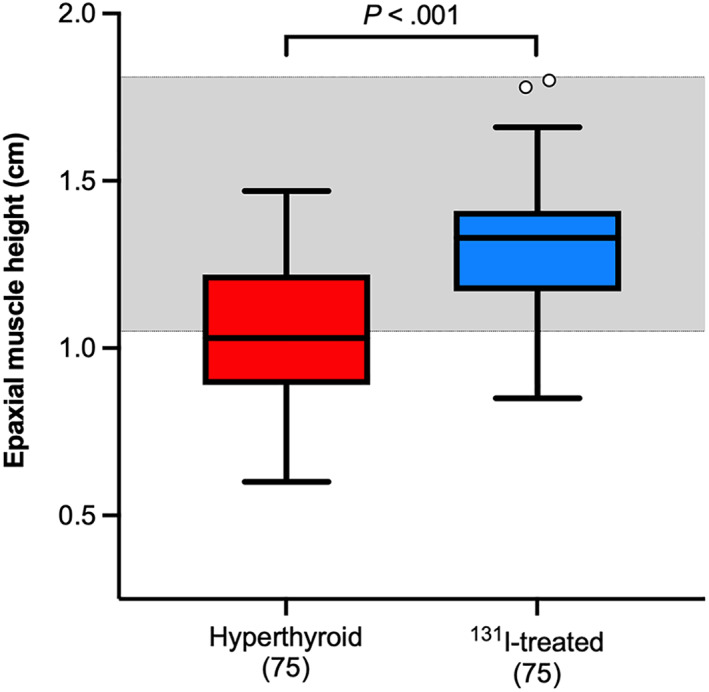
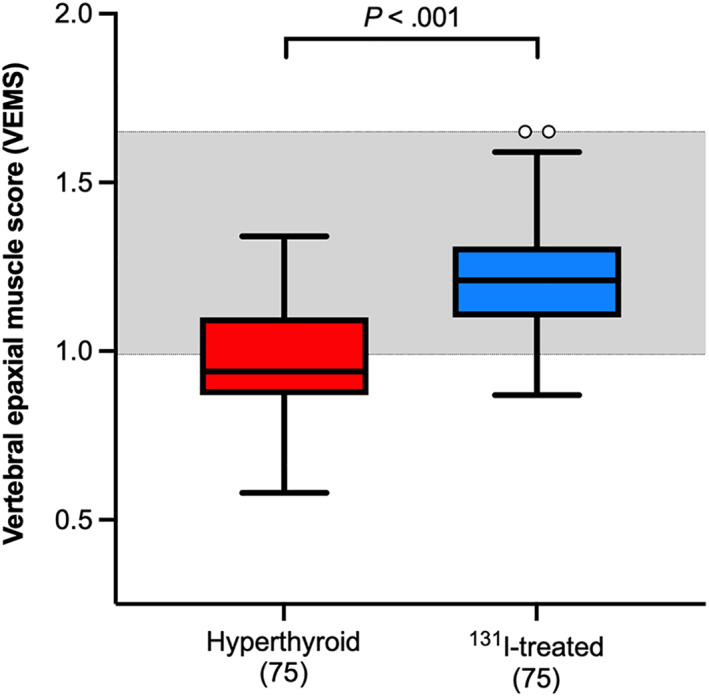
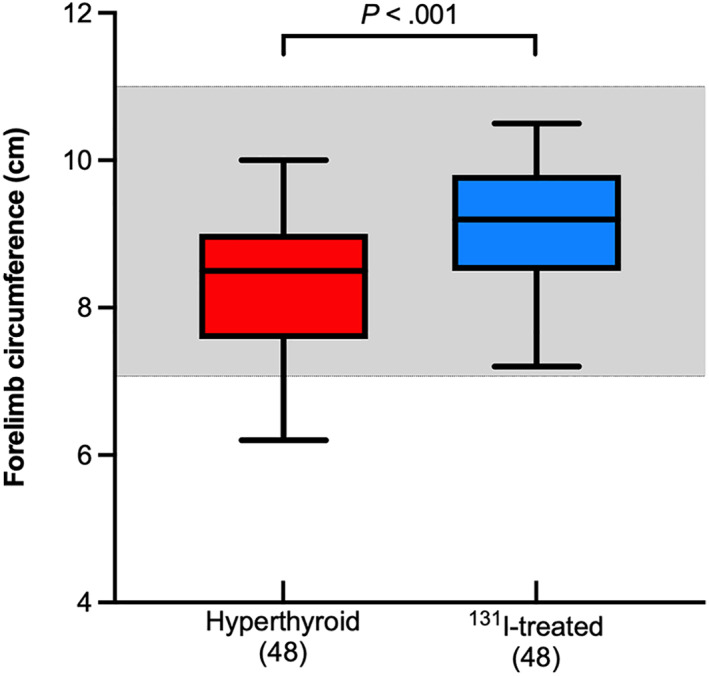
Untreated hyperthyroid cats had a lower EMH than did clinically normal cats (median [25th-75th percentile], 0.98 [0.88-1.16] cm vs 1.34 [1.23-1.58] cm, P < .001). Seventy-seven (64.2%) untreated cats had subnormal EMH. Similarly, compared to normal cats, hyperthyroid cats had lower VEMS (0.93 [0.84-1.07] vs 1.27 [1.18-1.39], P < .001) and FLEMS (1.24 [1.10-1.35] vs 1.49 [1.39-1.63], P < .001). After treatment, EMH increased (1.03 [0.89-1.03] cm to 1.33 [1.17-1.41] cm, P < .001), with abnormally low EMH normalizing in 36/41 (88%). Both VEMS (0.94 [0.87-1.10] to 1.21 [1.10-1.31], P < .001) and FLEMS (1.31 [1.17-1.40] to 1.47 [1.38-1.66], P < .001) also increased after treatment.
Almost two-thirds of hyperthyroid cats have abnormally low muscle mass when measured quantitatively by ultrasound. Successful treatment restores muscle mass in >85% of cats. EMH provided the best means of quantitating muscle mass in these cats.
约 75%的甲状腺功能亢进猫会出现肌肉质量下降,可通过肌肉状况评分 (MCS) 系统评估。治疗后,随着猫恢复肌肉质量,MCS 会改善。
使用超声检查定量评估甲状腺功能亢进猫的肌肉丢失程度,并评估治疗后的肌肉质量变化。
48 只临床正常猫和 120 只未经治疗的甲状腺功能亢进猫,其中 75 只在放射性碘-131 治疗后进行了重新评估。
前瞻性横断面和前后对照研究。所有猫均接受超声检查和背侧肌高(EMH)测量,随后计算椎骨和前肢背侧肌评分(VEMS 和 FLEMS)。一部分甲状腺功能亢进猫在治疗后 6 个月进行重复肌肉成像。
未经治疗的甲状腺功能亢进猫的 EMH 低于临床正常猫(中位数 [25 百分位数-75 百分位数],0.98 [0.88-1.16] cm 比 1.34 [1.23-1.58] cm,P < 0.001)。77 只(64.2%)未经治疗的猫的 EMH 异常低。同样,与正常猫相比,甲状腺功能亢进猫的 VEMS(0.93 [0.84-1.07] 比 1.27 [1.18-1.39],P < 0.001)和 FLEMS(1.24 [1.10-1.35] 比 1.49 [1.39-1.63],P < 0.001)较低。治疗后,EMH 增加(1.03 [0.89-1.03] cm 增加至 1.33 [1.17-1.41] cm,P < 0.001),异常低 EMH 在 36/41 只(88%)猫中恢复正常。VEMS(0.94 [0.87-1.10] 增加至 1.21 [1.10-1.31],P < 0.001)和 FLEMS(1.31 [1.17-1.40] 增加至 1.47 [1.38-1.66],P < 0.001)也在治疗后增加。
近三分之二的甲状腺功能亢进猫的肌肉质量在超声定量测量时异常低。成功治疗可使>85%的猫恢复肌肉质量。EMH 是定量评估这些猫肌肉质量的最佳方法。