Department of Biology, Biotechnical Faculty, University of Ljubljana, 1000 Ljubljana, Slovenia.
Lars Bolund Institute of Regenerative Medicine, BGI-Qingdao, Qingdao 266555, China.
Gigascience. 2022 Oct 6;11. doi: 10.1093/gigascience/giac095.
The great diversity of lifestyles and survival strategies observed in fungi is reflected in the many ways in which they reproduce and recombine. Although a complete absence of recombination is rare, it has been reported for some species, among them 2 extremotolerant black yeasts from Dothideomycetes: Hortaea werneckii and Aureobasidium melanogenum. Therefore, the presence of diploid strains in these species cannot be explained as the product of conventional sexual reproduction.
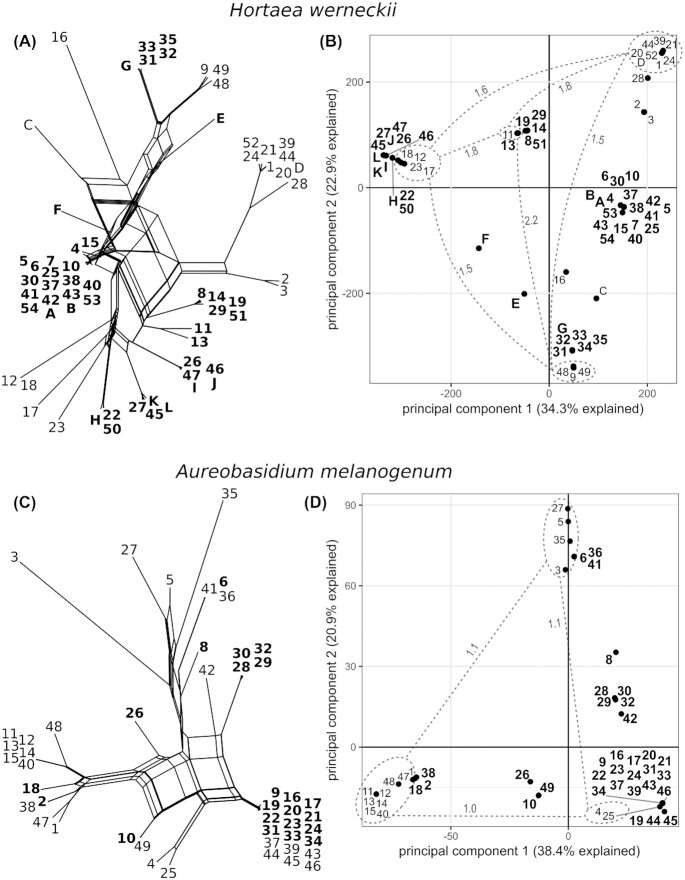
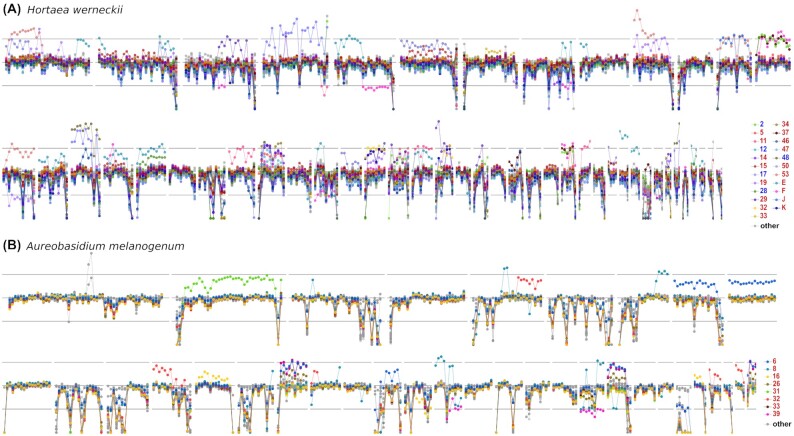
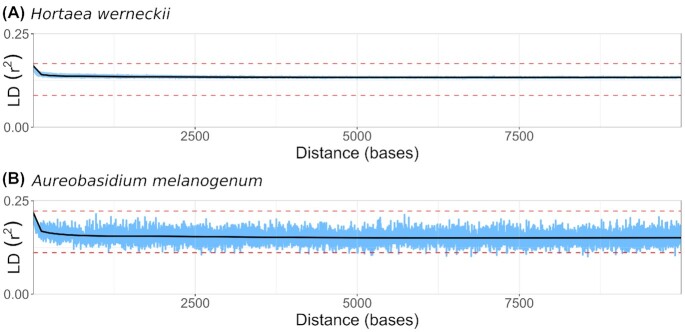
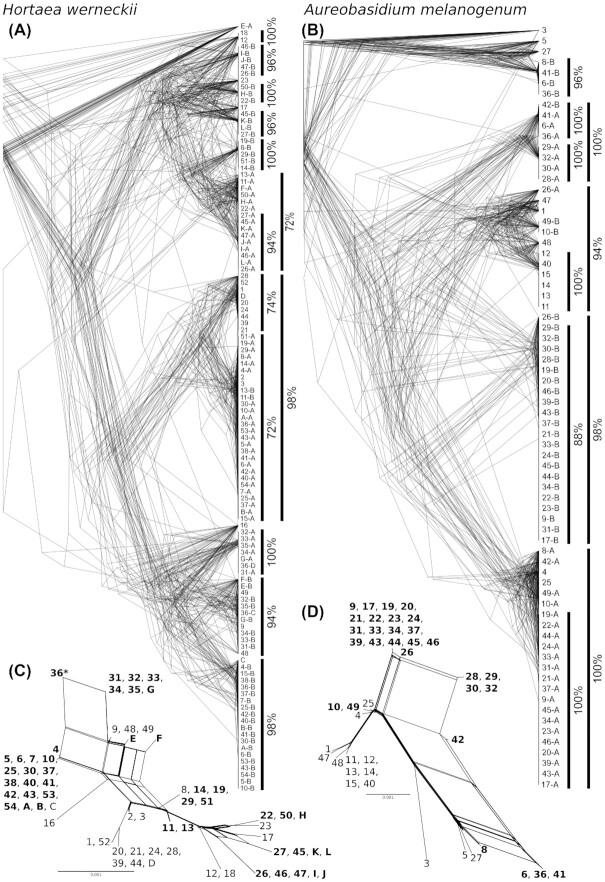
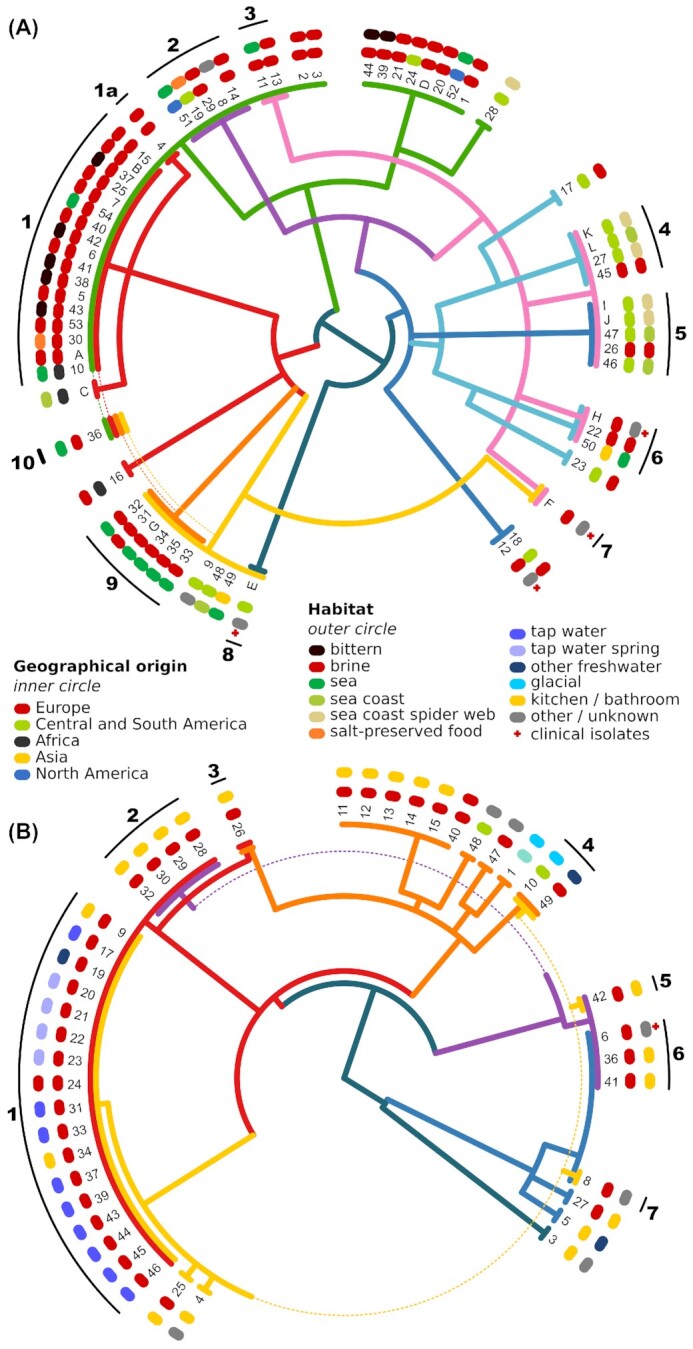
Genome sequencing revealed that the ratio of diploid to haploid strains in both H. werneckii and A. melanogenum is about 2:1. Linkage disequilibrium between pairs of polymorphic loci and a high degree of concordance between the phylogenies of different genomic regions confirmed that both species are clonal. Heterozygosity of diploid strains is high, with several hybridizing genome pairs reaching the intergenomic distances typically seen between different fungal species. The origin of diploid strains collected worldwide can be traced to a handful of hybridization events that produced diploids, which were stable over long periods of time and distributed over large geographic areas.
Our results, based on the genomes of over 100 strains of 2 black yeasts, show that although they are clonal, they occasionally form stable and highly heterozygous diploid intraspecific hybrids. The mechanism of these apparently rare hybridization events, which are not followed by meiosis or haploidization, remains unknown. Both extremotolerant yeasts, H. werneckii and even more so A. melanogenum, a close relative of the intensely recombining and biotechnologically relevant Aureobasidium pullulans, provide an attractive model for studying the role of clonality and ploidy in extremotolerant fungi.
真菌在生活方式和生存策略上存在巨大的多样性,这反映在它们繁殖和重组的多种方式上。虽然完全没有重组的情况很少见,但已经有报道称,在一些物种中存在这种情况,其中包括两个来自子囊菌门的极端耐受黑酵母:Hortaea werneckii 和 Aureobasidium melanogenum。因此,这些物种中存在二倍体菌株不能解释为传统有性生殖的产物。
基因组测序表明,H. werneckii 和 A. melanogenum 中二倍体菌株与单倍体菌株的比例约为 2:1。多态性位点对之间的连锁不平衡和不同基因组区域的系统发育之间的高度一致性证实,这两个物种都是克隆的。二倍体菌株的杂合度很高,有几对杂交基因组对达到了不同真菌物种之间通常看到的种间距离。在全球范围内收集的二倍体菌株的起源可以追溯到少数几次产生二倍体的杂交事件,这些二倍体在很长一段时间内保持稳定,并分布在很大的地理区域内。
我们的研究结果基于对 100 多株黑酵母的基因组进行分析,表明尽管它们是克隆的,但它们偶尔会形成稳定且高度杂合的种内二倍体杂种。这些显然罕见的杂交事件的机制尚不清楚,这些事件不伴随减数分裂或单倍化,但会产生稳定的高度杂合的二倍体。这两种极端耐受酵母,尤其是 H. werneckii,与强烈重组且具有生物技术相关性的 Aureobasidium pullulans 密切相关,为研究极端耐受真菌中的克隆性和倍性的作用提供了一个有吸引力的模型。